All photos by Kevin Wright.

Observations on a Population of Squirrels
| February 2, 2026 | Wildlife
The woodlot is not large by any means. Several acres in size, it is isolated from adjoining woodlands. It is not a one-of-a-kind forest as there are probably hundreds out there just like it. What is unusual about this woodlot is the story behind it. How changes may occur over the years.
I have been wandering through this little forest for more than 40 years. As a wildlife photographer I have photographed foxes, coyotes, deer and a host of bird species over those years in this very woodlot. In fact, I photographed my first saw-whet owl in these woods. But these animals are not the story here. It is a little critter that I have seen evolve the most over the years. And this is what this story is about. Any guesses?
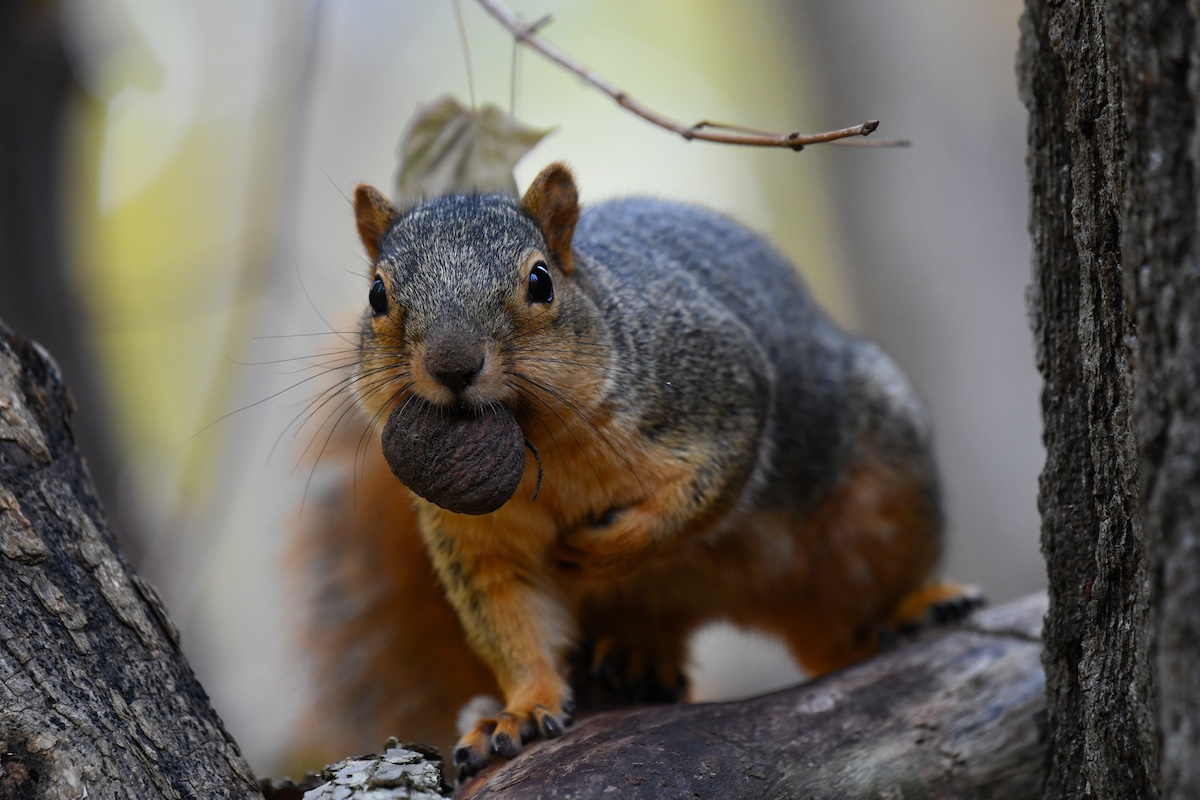
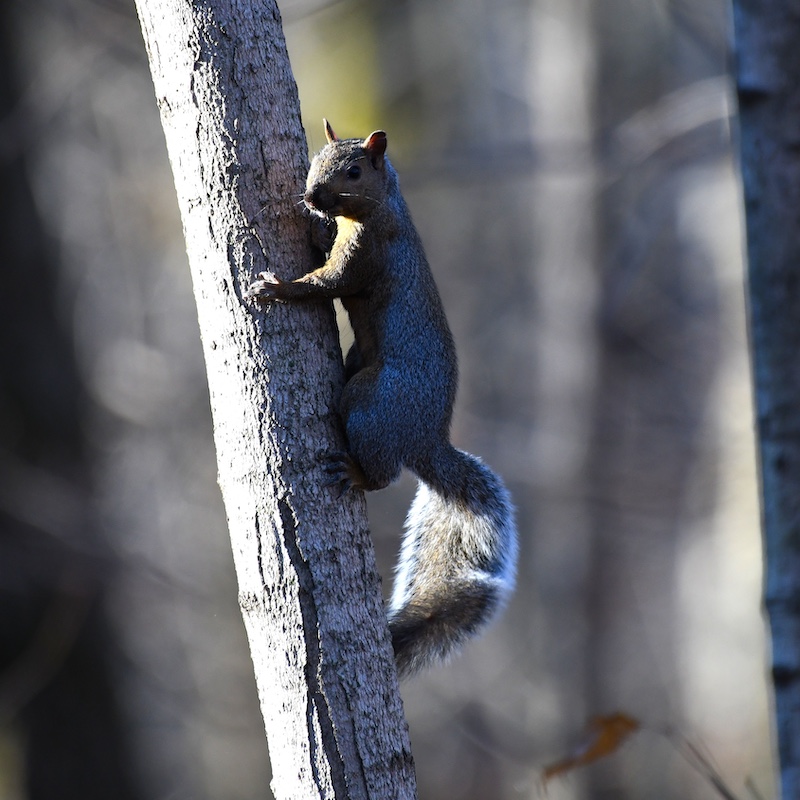
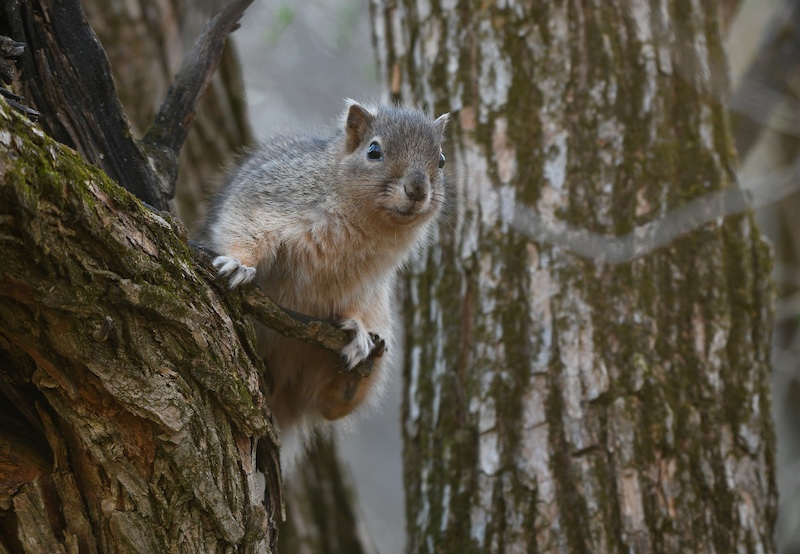
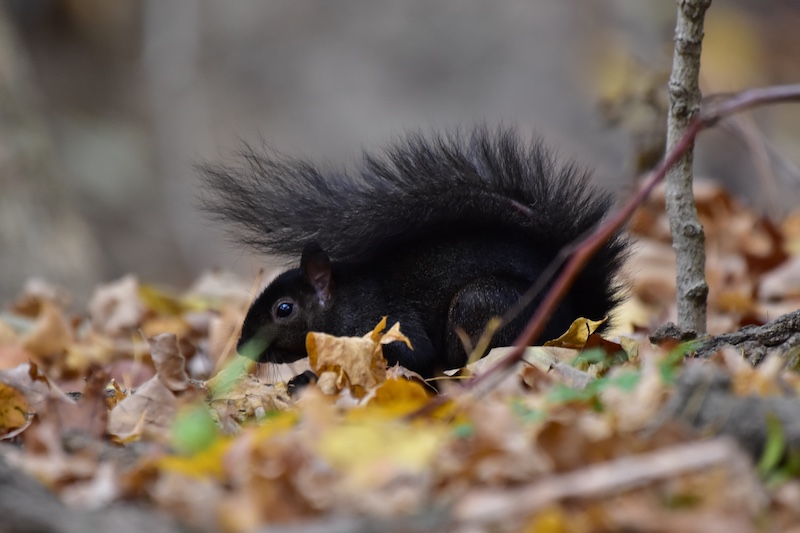
It is the tree squirrel. For years it was your typical color phase (brown) fox squirrel that dominated this local landscape. Then one day it changed, and now an entirely different species pattern and color scheme has taken over. What I see now are both fox and gray squirrels with color variations from the typical brown and gray, to a brown and black combination. And soft grays to squirrels with white tails. Even one all-black squirrel. All existing within the borders of this woodlot.
These colors are not unusual in any way as we have seen pockets of these color variations throughout the state. Some local areas have populations of nothing but gray squirrels or fox squirrels. Some locations have populations that are all black. There is even the white squirrels of Olney (Richland County).
How did we get to this point? How could this woodlot change so drastically in just a few years?
It all comes down to the fox and gray squirrels that have dominated our woodland landscape. Let’s begin with the gray squirrel and how they more than likely ended up in my location.
The gray squirrel is often known as the “migratory squirrel.” In the booklet “Squirrel Hunting In Illinois,” authors Charles M. Nixon, Stephen P. Havera and Jack A. Ellis, report, “Great migrations of squirrels moving southwest from Wisconsin for 4 weeks were reported in the fall of 1842, 1847, 1852 and 1857. In 1848 in the Ohio Valley gray squirrels were reported moving by the millions from the north to the south, destroying whole fields of corn in a few days. In 1914 in Missouri a huge army of gray squirrels was seen moving westward. The mass of squirrels was so dense that there were always 400 to 500 in sight, at least one to the square foot.”
With this information in mind, it clearly suggests that the availability of food sources is the cause of the movements of the gray squirrel. While there were good populations of gray squirrels south of my woodlot historically, none existed there. But in their search for food, gray squirrels slowly worked their way northward and found a home in my forest.
Now that we have a probable idea on how the grays got here, let’s now discuss the color variations.
One might suggest and even think that this all started with the interbreeding of a fox and gray squirrel. However, as two different species, Sciurus niger for the fox squirrel and Sciurus carolinensis for the gray squirrel, they do not interbreed. There are no verified, documented hybrids between the two species.
Most black squirrel colorations are melanistic gray squirrels, but on occasion melanistic fox squirrels occur. In my location I have just one black squirrel.
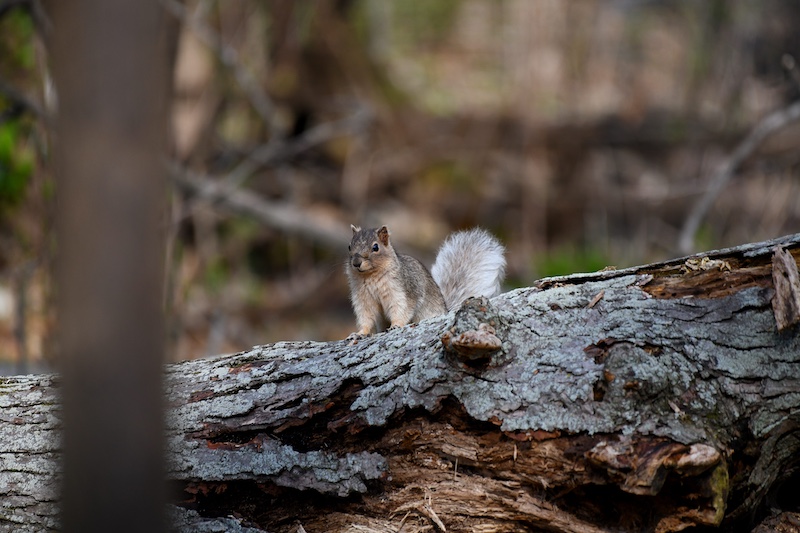
I do have several squirrels—both fox and gray—with all-white tails. These color variations are from a leucistic or piebald gene which could be passed from a parent to its offspring. With squirrels having two breeding seasons a year, you can see how this trait could occur within a population rather quickly.
It is inevitable that things change, that they can’t remain the same. But I believe that my woodlot began to see these changes when the gray squirrels moved in.
In the study “Fox Squirrels and Gray Squirrels in Illinois (1945),” Louis G. Brown and Lee E. Yeager discuss some of the color patterns. “In an early report Kennicott (1857) stated that of 50 gray squirrels killed near Rockford, Illinois, all were black. One adult gray squirrel trapped in Pike County (1941) had reddish thoracic hair and black abdominal hair. A juvenile male fox squirrel with blue eyes was trapped in Pike County (1942). Baumgartner (1943b) reported nine different color patterns in Ohio fox squirrels including melanistic, near albino, brown tail, and variations of black, and red, or rufus.”
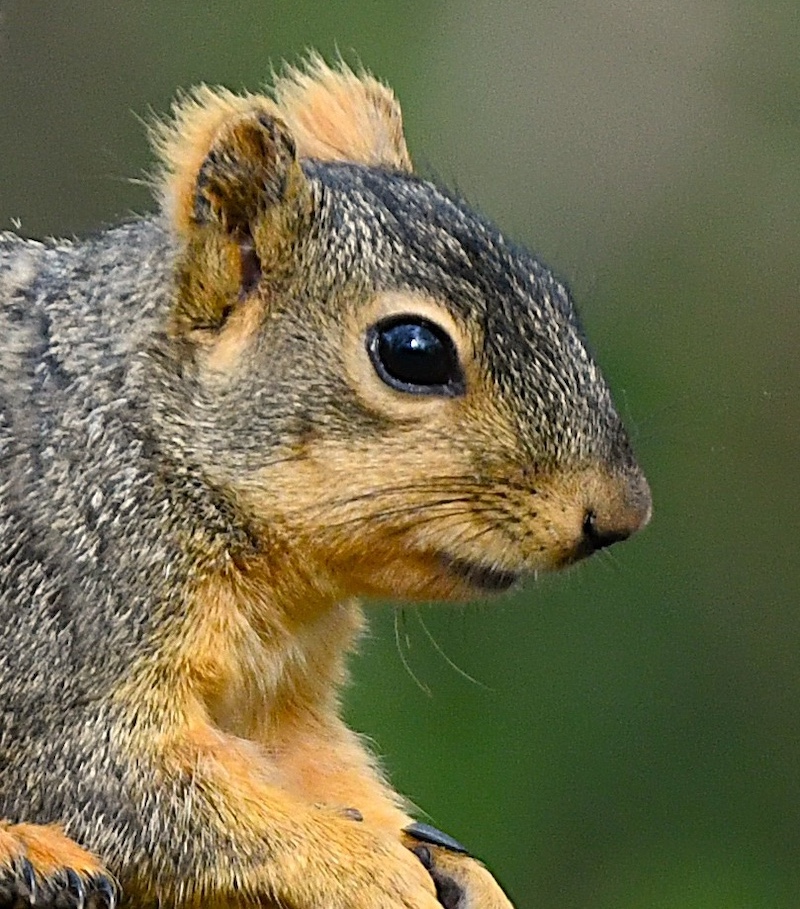
Interestingly, I noticed one squirrel with tiny tufts of hair on its ears. Do I have another variation here? Not really. Just some tufts of hair on its ears as it puts on its winter coat.
In this condensed story of the squirrels of one woodlot you can see that all it takes is just one squirrel, either a different species or one with a specific gene, and how the entire dynamic of a forest can change.
With a watchful eye you may begin to notice changes over time in the squirrels in your area.
Kevin Wright is an award winning outdoor writer and wildlife photographer whose work has been published in a number of publications and websites throughout the country. He lives and works out of central Illinois.
Submit a question for the author
Question: Both in this county and the surrounding counties, (alachua, clay, putnam, fl.) We’ve noticed an explosion of tree squirrels but have noticed how small they are. Im fairly sure it is not bc we are viewing the squirrels at a juvenile age.there are more squirrels and they are smaller but never see the popa/momma squirrel. I live in a rural area, have friends who live in town and other friends scattered about the counties who all seem to agree with the squirrels’ getting smaller. I thought it was a matter of over population bc food is very available. One friends swears they are all sick from viewing condition of tail. The tails are not bushy and full as we are used to seeing. In some the tails do look unhealthy, in others they look healthy but do seem thinner. Thanks for taking time to answer my question since we’ve all noticed the change.
I’ve always wanted a breeding pair of fox squirrels for my yard. Do you know where I might buy a pair?
Question: Wait, so basically you’re saying the changes are just because of gene mutations or albino melanistic and piebald genes, variations in fur color and length, and that there is no new species, hybrids aren’t possible between the different types of squirrels, it’s just their own species decorative genetics not crossbred squirrels?
Question: Love to read this thank.
Question: I have one beautiful strawberry blonde squirrel coming to my yard she is beautiful i think it’s a she she got a little darker for winter but blonde beige stomach i see her now living or visiting g in my big oak tree i live in Lombard illinois she is striking how unusual for this area?
Subscribe to our Newsletter
Explore Our Family of Websites
Similar Reads