
Photo by Illinois Department of Natural Resources.


Photo by Illinois Department of Natural Resources.
An inside look at the education, training, lifestyle, benefits and long-term value of one of Illinois’ most unique law-enforcement careers.
Becoming an Illinois Conservation Police Officer is far more than choosing a job; it’s choosing a life built around public service, outdoor stewardship, and the ability to operate confidently where pavement ends and the wilderness begins. These officers serve as the state’s frontline protectors of wildlife, waterways, and outdoor recreation. Their work blends traditional police authority with environmental law enforcement, search-and-rescue operations, and public education. For anyone considering the career, understanding the pathway from college coursework to retirement planning provides a realistic picture of what lies ahead. Information on education and experience can be found on the Illinois Department of Natural Resources (IDNR) – Office of Law Enforcement’s website in the section Become a Conservation Police Officer.
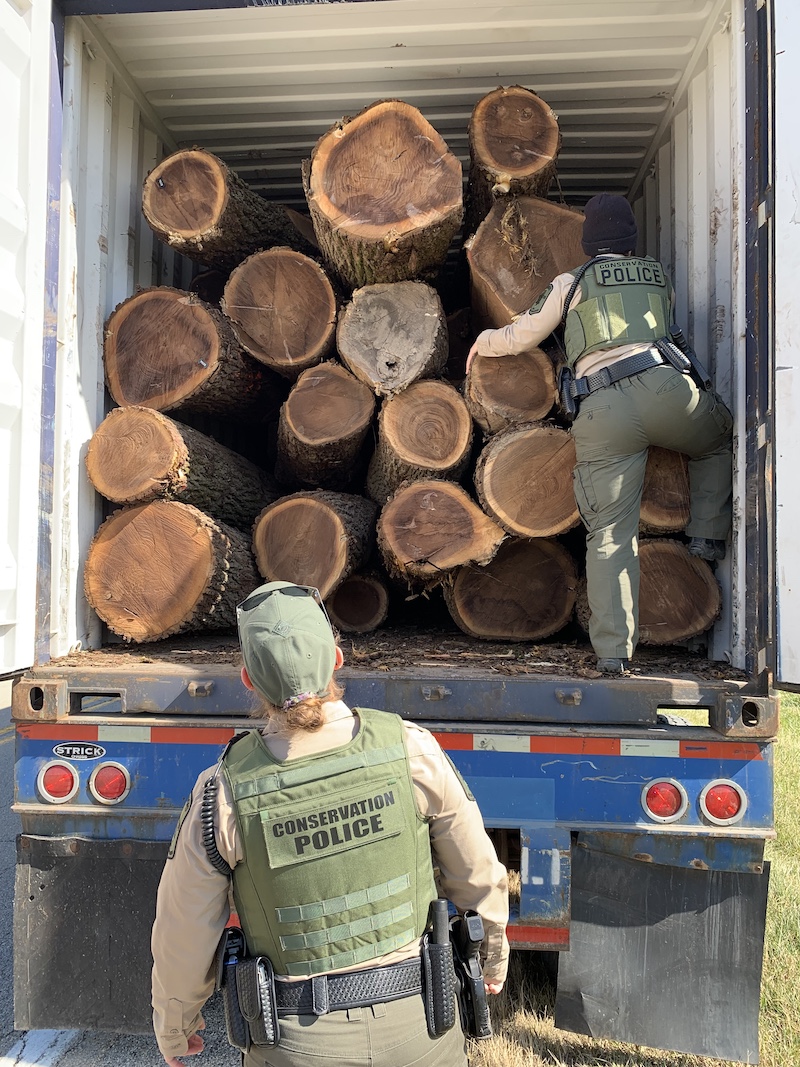
Every Conservation Police Officer undergoes rigorous training that prepares them for both traditional law enforcement and specialized duties in natural resource protection.
Those who are not already certified police officers begin with the Illinois Basic Law Enforcement Academy. This academy lasts 16 weeks and immerses recruits in the fundamentals of policing. They learn criminal law, arrest procedures, emergency vehicle operation, firearms skills, defensive tactics, crisis intervention and scenario-based decision making. The training is intensive and physical, reflecting the realities of a career where officers may work alone in remote environments.
Upon completing the Basic Academy—or immediately for those already certified—recruits move into the Conservation Police Academy. This is where the job becomes highly specialized. Over approximately 16 weeks, depending on scheduling, officers study wildlife and fisheries law, environmental regulations, and the complex set of rules governing hunting, boating and public land use in Illinois. They learn how to operate patrol boats, conduct waterborne enforcement, handle snowmobile patrols and investigate environmental crimes. They also train in search-and-rescue techniques, outdoor survival, fieldcraft and advanced firearms scenarios tailored to rural and remote environments.
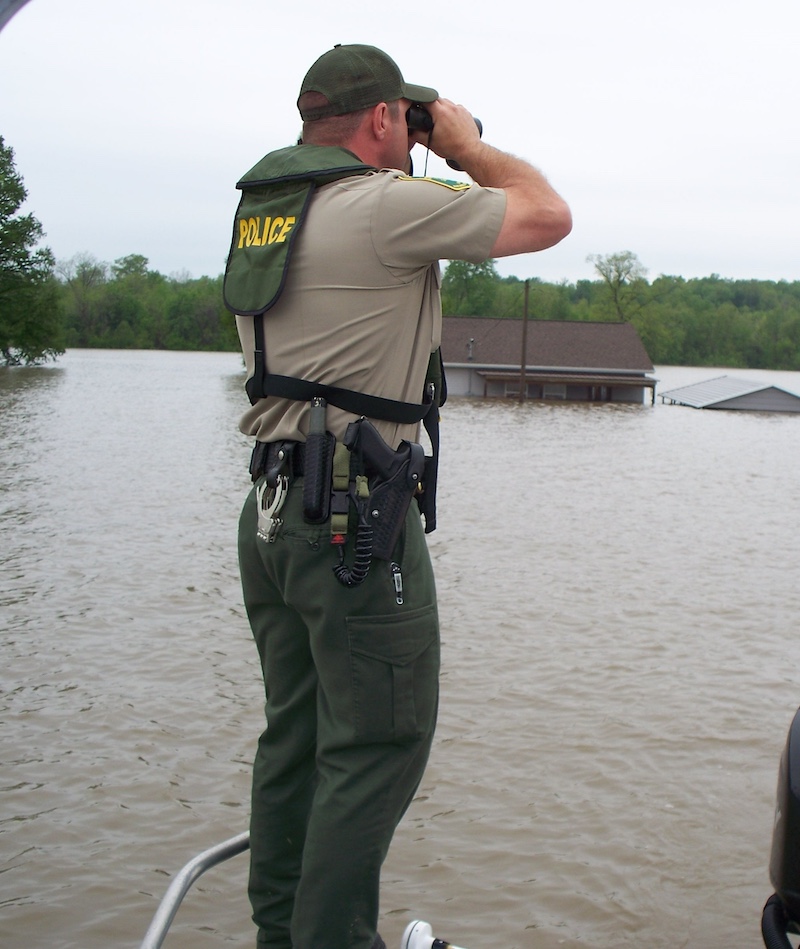
After the academy, new officers enter a structured Field Training Program. For several months, they patrol alongside seasoned Conservation Police Officers, learning how to translate academy knowledge into daily decision-making. They practice conducting compliance checks, performing boat stops, navigating large territories and responding to real-world emergencies. Only after passing each phase are they cleared to patrol independently. Many of these steps are in different counties, allowing the officer to experience different enforcement approaches and cultural diversity.
Successful Conservation Police Officers often share certain qualities. They are comfortable working outdoors in all seasons and weather conditions and have the confidence to operate boats, ATVs and other off-road vehicles safely. Strong communication skills are crucial because officers spend much of their time interacting with the public, explaining regulations, and educating hunters, boaters and families on outdoor safety. Many officers have backgrounds in hunting, fishing or environmental stewardship, though these are not requirements. A willingness to solve problems independently and the ability to stay composed when backup may be miles away are equally important.
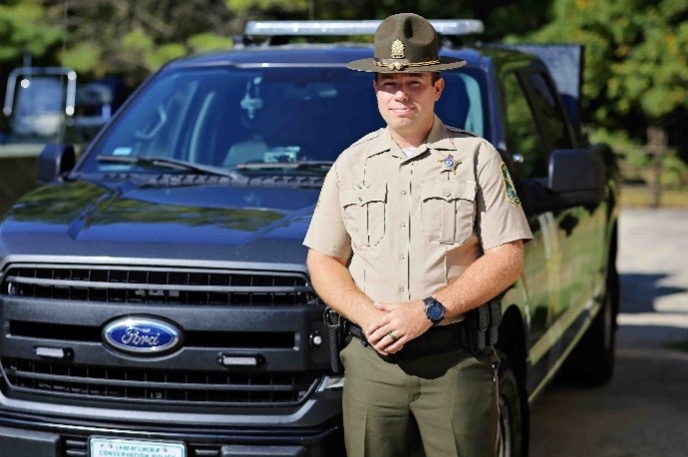
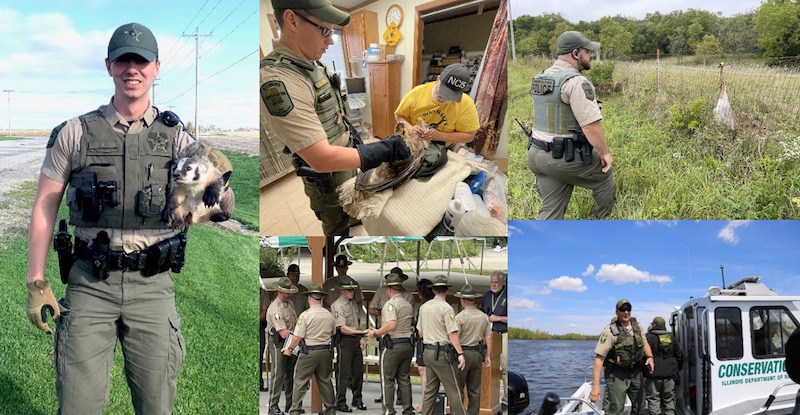
The schedule of a Conservation Police Officer is shaped by nature’s calendar rather than a traditional office clock. Officers work rotating shifts, including nights, weekends and holidays. During the summer, days are dominated by boating enforcement, watercraft safety checks, and high-traffic recreation patrols, including IDNR properties. Fall brings waves of hunting seasons, each with its own enforcement priorities. Winter shifts may include snowmobile patrols, ice fishing safety checks and commercial inspections.
Patrol districts are often large, covering multiple counties, state parks, lakes and rivers. Officers must be comfortable driving long distances, navigating remote locations and working alone for extended periods. Special operations, from undercover investigations to multi-day search-and-rescue deployments, can disrupt regular schedules. While demanding, the variety is one of the most appealing aspects of the job for many officers who prefer a dynamic, ever-changing work environment.
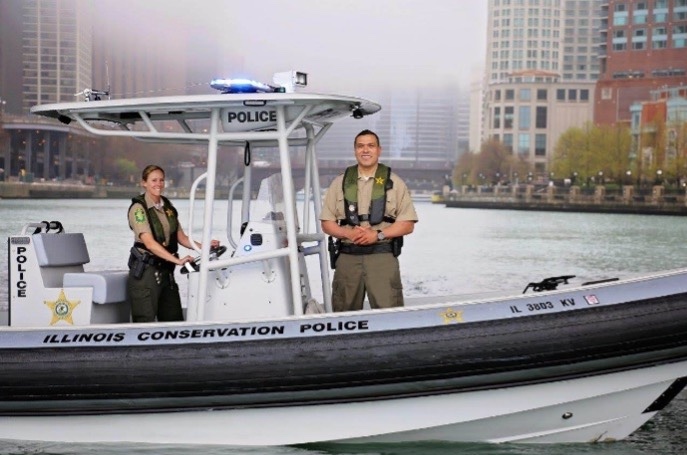
Illinois Conservation Police Officers are state employees and receive competitive salaries that increase with experience, training and annual step progression. Their benefits package includes comprehensive health, dental, and vision coverage, paid holidays, vacation and sick leave, life insurance and access to state employee assistance programs. Officers are eligible for overtime, specialty pay and contractual protections through collective bargaining.
One of the most notable advantages of the career is the retirement structure. A law-enforcement alternative pension formula covers Conservation Police Officers, meaning a long-term career with the Illinois Conservation Police can lead to financial stability in retirement. For many officers, this long-term security is a significant factor in choosing and staying in the profession.
Beyond the financial and structural benefits, the job offers meaningful personal rewards. Officers spend their careers outdoors, patrolling lakes at sunrise, hiking forest trails, investigating poaching cases, teaching safety courses, and responding to emergencies that directly impact public safety and natural resources. Many describe it as a career that blends adrenaline, independence, community trust and environmental stewardship. It requires resilience and a level of self-reliance uncommon in policing, but it also offers a sense of purpose that is difficult to find elsewhere.
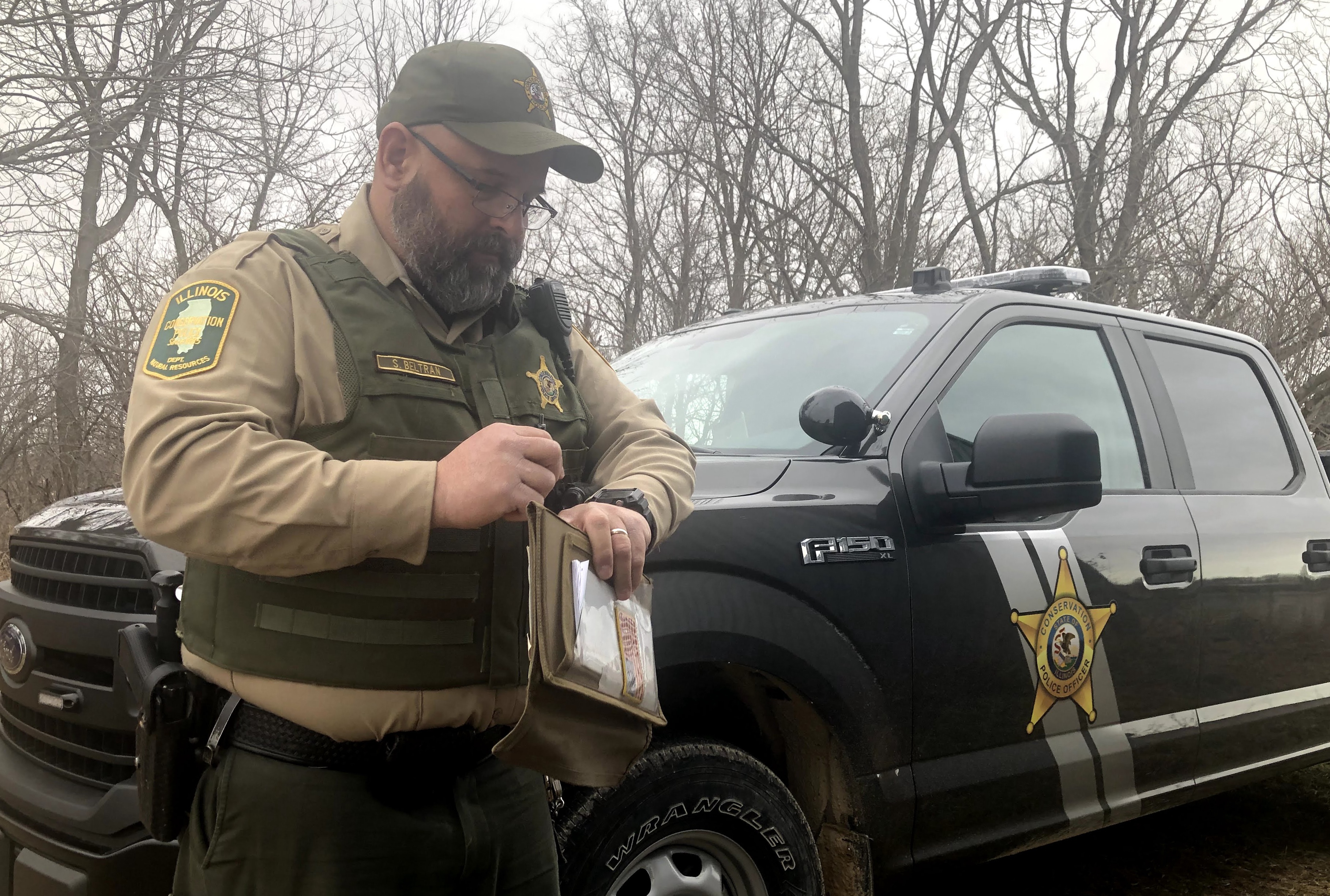
Prospective officers can begin by monitoring the Illinois Department of Natural Resources recruitment postings and preparing their application materials, such as transcripts, résumés and documentation of relevant experience. Building outdoor skills, gaining volunteer experience in conservation or emergency response and maintaining strong physical fitness are all effective ways to strengthen candidacy.
Becoming an Illinois Conservation Police Officer requires determination, adaptability and a genuine respect for the natural world. The pathway includes formal education or professional policing experience, extensive academy training, and a demanding field environment. But for those who feel at home outdoors and are driven by public service, it offers a gratifying career backed by substantial benefits, professional stability, and the unique privilege of protecting Illinois’ natural heritage.
Steven Beltran joined the Illinois Conservation Police in 2000, retiring as a Sergeant in northwest Illinois in 2024.












Submit a question for the author