
Redbud. Photo by Stacey Hayden, Unsplash.

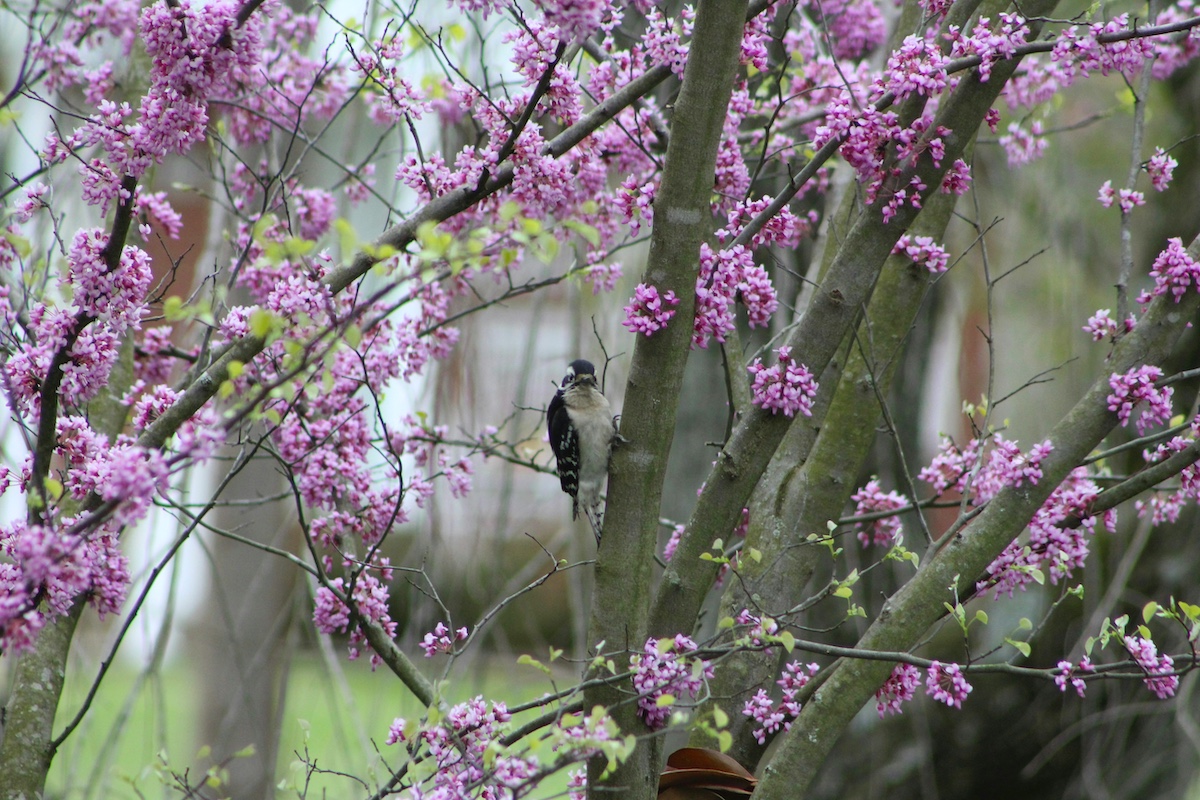

Redbud. Photo by Stacey Hayden, Unsplash.
Casting your eyes on the barren winter landscape surrounding your home you decide this is the year that changes take place. What would be the best plant to replace that tree that died last year? You see the value of cutting back on mowing but what should you grow instead of grass? What plants attract the most species of wildlife? Who can help you choose which plants will work best in your yard?
You’re not alone if you’ve ever considered these questions. In fact, I’ve asked them myself and decided to “phone a friend” to get some recommendations. Here’s what they suggested.
One of Carla Rich Montez’s plant preferences is the eastern redbud (Cercis canadensis).
“Its flowers appear in the early spring before any leaves emerge, so it’s one I look forward to seeing after the long winter,” she explained. “Once the heart-shaped leaves appear, it remains beautiful throughout the growing season. The redbud also attracts bees which pollinate flowers, and it hosts almost 20 types of caterpillars which feed the birds. So, the redbud is not only pleasing to the eye, it does its fair share to support the ecosystem in my urban yard.”
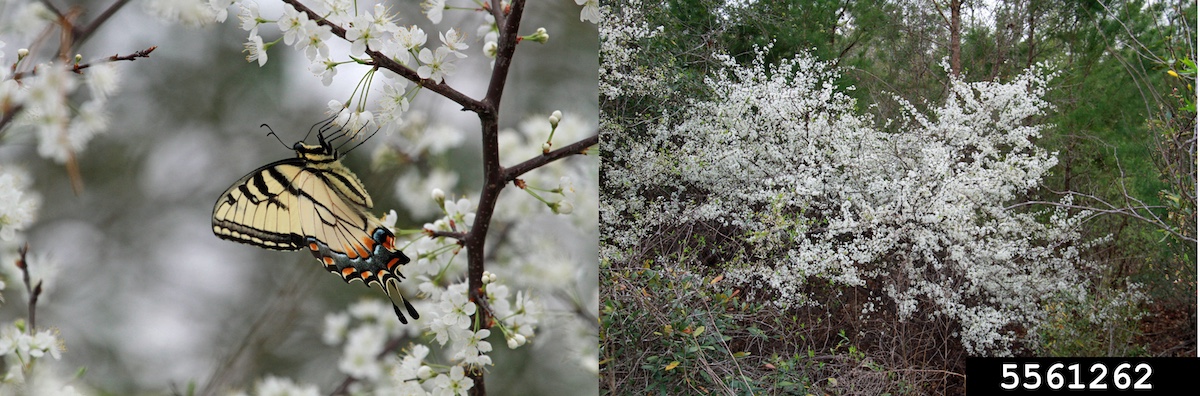
The fragrant white blooms, and the accompanying diversity of pollinators, makes the early spring landscape joyful and one reason why the American plum (Prunus americana) is at the top of Kaleigh Gabriel’s list of favorite native trees.
“In the summer, those blooms are replaced with juicy, red plums that provide food for birds, wildlife and people,” she stated. “It is adaptable to different soils and useful as a windbreak or for fruit production so make it a fantastic choice for native plantings! We had an American plum growing along the side of my childhood home and I always looked forward to its spring blooms. Later in the season, I loved picking the delicious fruit.”
A native shrub-like wildflower that Patty Gillespie has tucked in around the family farmhouse is shrubby St. John’s wort.
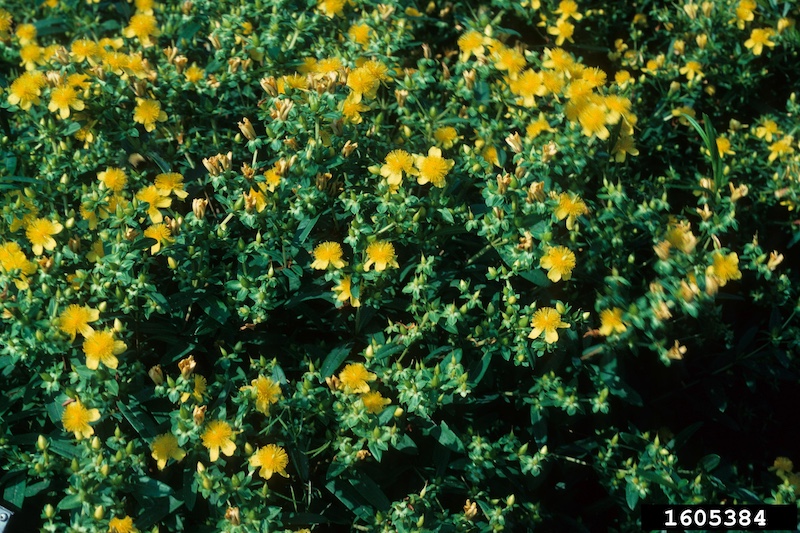
“It was during a late summer hike in the Shawnee Forest that I made the acquaintance of Hypericum prolificum,” she explained. “Along the edge of a creek that flowed merrily over a rocky bottom grew this plant with woody lower stems and green herb-like upper stems. What drew my attention were the plentiful clusters of fluffy little yellow blooms and prolific bright green linear-oblong leaves. When I found shrubby St. John’s wort advertised in a nursery’s catalog with mention of “pompom-like flowers” and of an adaptable nature (good in different growing conditions), I was sold. So, I found the perfect spot for it on the hillside, although I did have to prune back the hazelnut, witch-hazel and chokeberry. As that first shrubby St. John’s wort has grown, along with others which I’ve added, I noticed that the deer and groundhogs and rabbits (who seem to think my landscaping is there for their culinary pleasure) have left the shrubby St. John’s wort alone. It appears that most mammalian herbivores avoid consumption of Hypericum spp. because the foliage often contains an irritating phototoxic chemical, hypericin.”
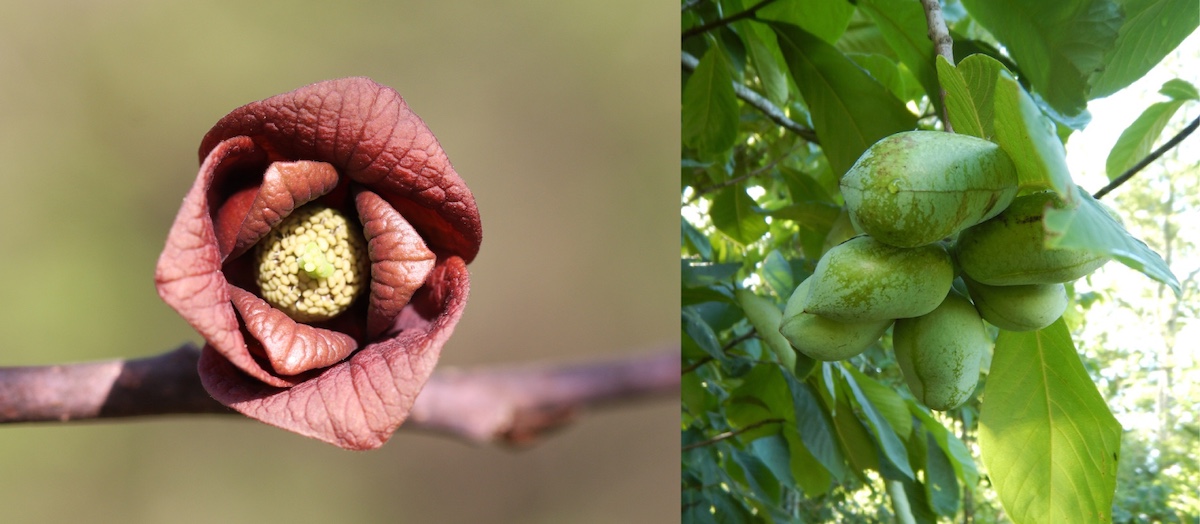
I visit a community garden many times throughout the year, but specifically time at least one trip in the spring to see the flowers on of my favorite woodland trees, the pawpaw (Asimina triloba). Often unnoticed by passersby, the tiny, maroon-colored flowers appear before the leaves emerge. Interestingly, the faint odor from these flowers is reminiscent of decaying meat and attracts the flies and beetles that pawpaws rely on for pollination. If you want to add pawpaws to your planting plan, know it will take at least two genetically distinct plants for pollination to occur. Successfully pollinated flowers may give you the opportunity to sample the exotic flavor of a pawpaw fruit—the largest edible fruit native to North America. Fair warning! You’ll be in a race against wildlife, as raccoons, opossums, foxes, skunks, squirrels and box turtles seek out these tasty treats.
Also a fan of the pawpaw, Laura Kammin said “I’m still on a quest to successfully grow pawpaw. The rabbits got my first pair and my husband’s mowing wiped out the second pair. Maybe 2026 will be the year!”
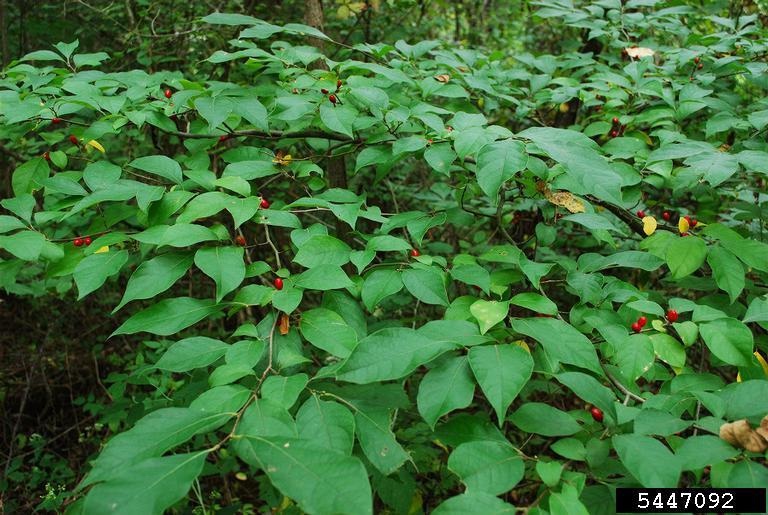
Spicebush (Lindera benzoin) is one of Sarah Marjanovic’s favorite landscape shrubs.
“It is an attractive addition to any garden, but especially so when it blooms in the spring and bears clusters of small yellow flowers and when it dons golden autumn foliage,” she explained. “In addition, a pleasant spicy scent can be enjoyed by simply crushing a leaf. Many pollinators are attracted to the shrub’s blooms, but it is also a host plant to several species of insects, most notably the spicebush swallowtail butterfly. Numerous species of birds also enjoy the spicebush fruits.”
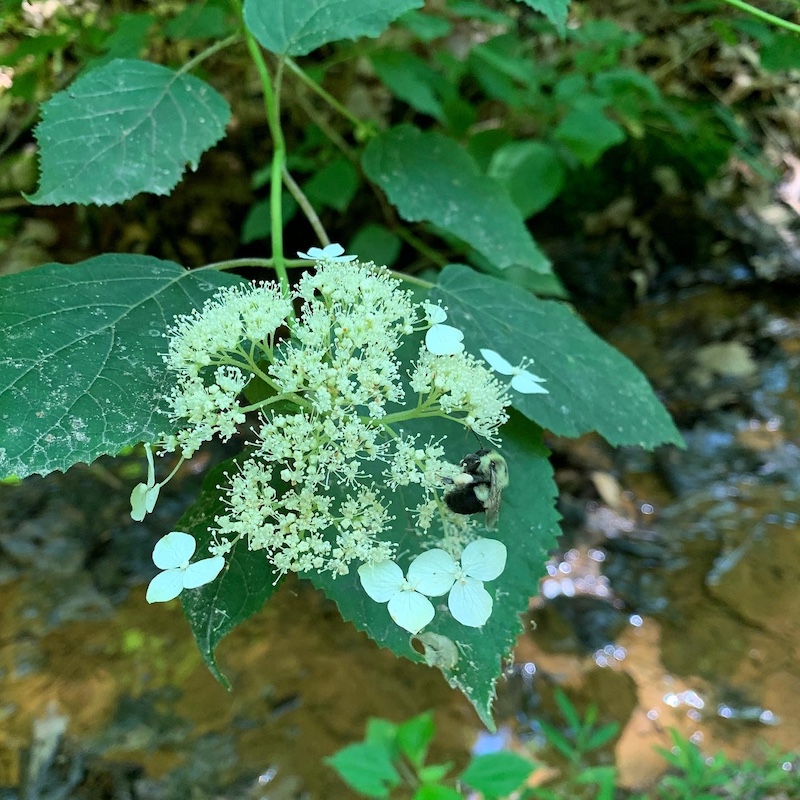
Wild hydrangea (Hydrangea arborescens) is a summer blooming shrub that Marjanovic has added to her landscape. She suggests that you pause and observe the flowers to witness an amazing variety of insect visitors.
“I’ve enjoyed watching bees nearly run across the flowers collecting pollen and nectar as they go,” Marjanovic attested. “These shrubs are also a larval host for many insects. Hydrangeas purchased from a local garden shop often produce sterile flowers which are no use to wildlife, and the plants will wilt under summer heat. Wild hydrangeas far surpass the hardiness of any of their cultivated counterparts and offer a boost to the native ecosystem.”
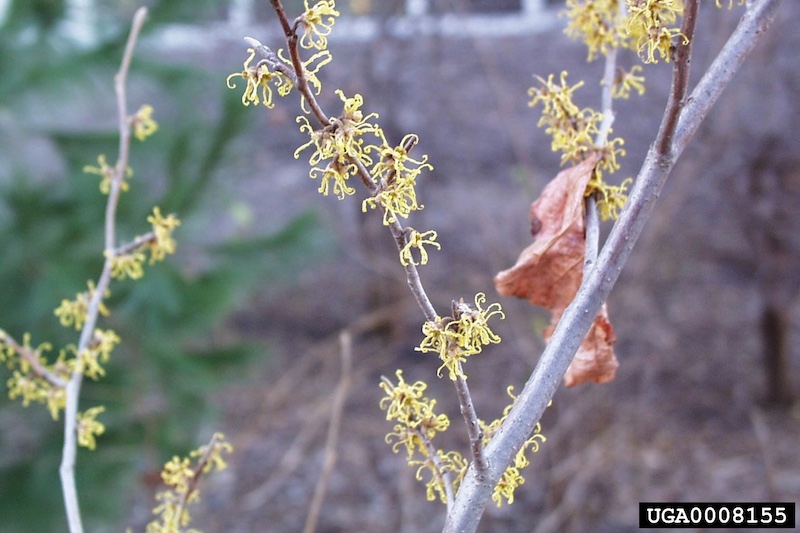
Back at that community garden, I also visit in the fall when the common witch-hazel (Hamamelis virginiana) is in bloom. A fall blooming plant? Seriously! This amazing feat is the work of a shrub that produces spider-like yellow flowers that are pollinated by flies, bees, small wasps, moths and beetles. Scientists theorize that the fall blooming schedule means less competition for pollinators, and that it provides insects with a much-needed nectar source late in the season. A whiff of its fragrance in late winter will buoy the spirit with the knowledge that spring is just around the corner.
Need more justification for planting witch-hazel? How about the yellow fall leaves and the opportunity to create a plant screen consisting of densely clustered stems that provide food and nesting habitat for many species, including bobwhite, wild turkeys, rabbits, tree squirrels and a host of songbirds. And if you want to witness an amazing sight, pay attention as witch-hazel fruits eject their seeds with an explosive pop that can be heard up to 30 feet away.
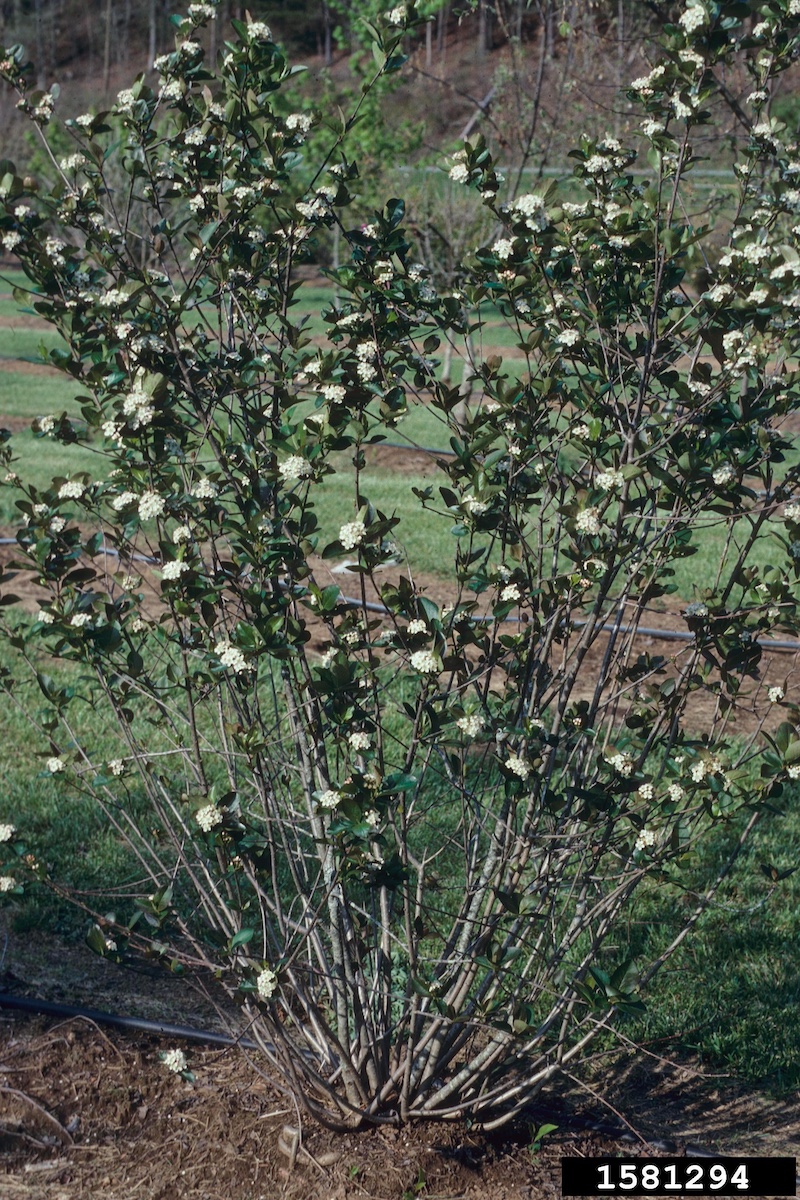
When selecting native shrubs and small trees for her landscape, Laura Kammin’s preferences include species that entice birds to her property.
“I have American black elderberry (Sambucus canadensis) because I love the lacy look of the flowers and the tiny, dark berries it produces,” she explained. “But fair warning that it will sucker…so you have to stay on it in areas where you don’t want it to move!”
“I also find black chokeberry (Photina melanocarpa) to be an appealing addition as it has small white flowers in spring and small dark berries through fall,” she continued.
While not a small tree, Kammin does love seeing the orioles feeding on fruits of a black cherry tree (Prunus serotina).
“The long clusters of delicate white flowers turn to small red cherries then darken to a deeper shade and they always draw in the birds,” she said. “This tree can reach heights of 50 to 80 feet, but it does provide delicate shade to your landscape.”
On my property, the raucous chatter of a flock of robins confirms that the serviceberry (Amelanchier spp.) fruits have ripened and are ready for the picking. I selected it for my urban landscape because it is one of the earliest small trees to bloom in Illinois and is a natural way to celebrate the end of the winter season. At that time of year, I stand close to the showy blossoms to spot pollinators busy at work. With a multi-stemmed growth form, serviceberry was an ideal plant to create a natural screen between the street and my deck. I also enjoy that the gray bark of those stems provides winter interest to my property.
Please take a moment and add a note in the comments section to let us know what your favorite is.
Kathy Andrews Wright retired from the Illinois Department of Natural Resources where she was editor of OutdoorIllinois magazine. She is currently the editor of OutdoorIllinois Journal.




Submit a question for the author
Question: Wher can I purchase the above mentioned trees.