
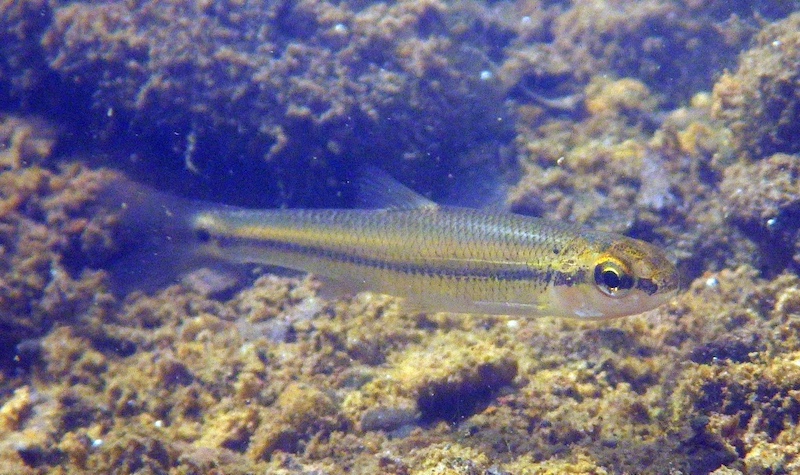
Bluntnose minnow. Photo by Evan Grimes, https://creativecommons.org/licenses/by/4.0/, see location on iNaturalist at: https://www.inaturalist.org/observations/114256344.

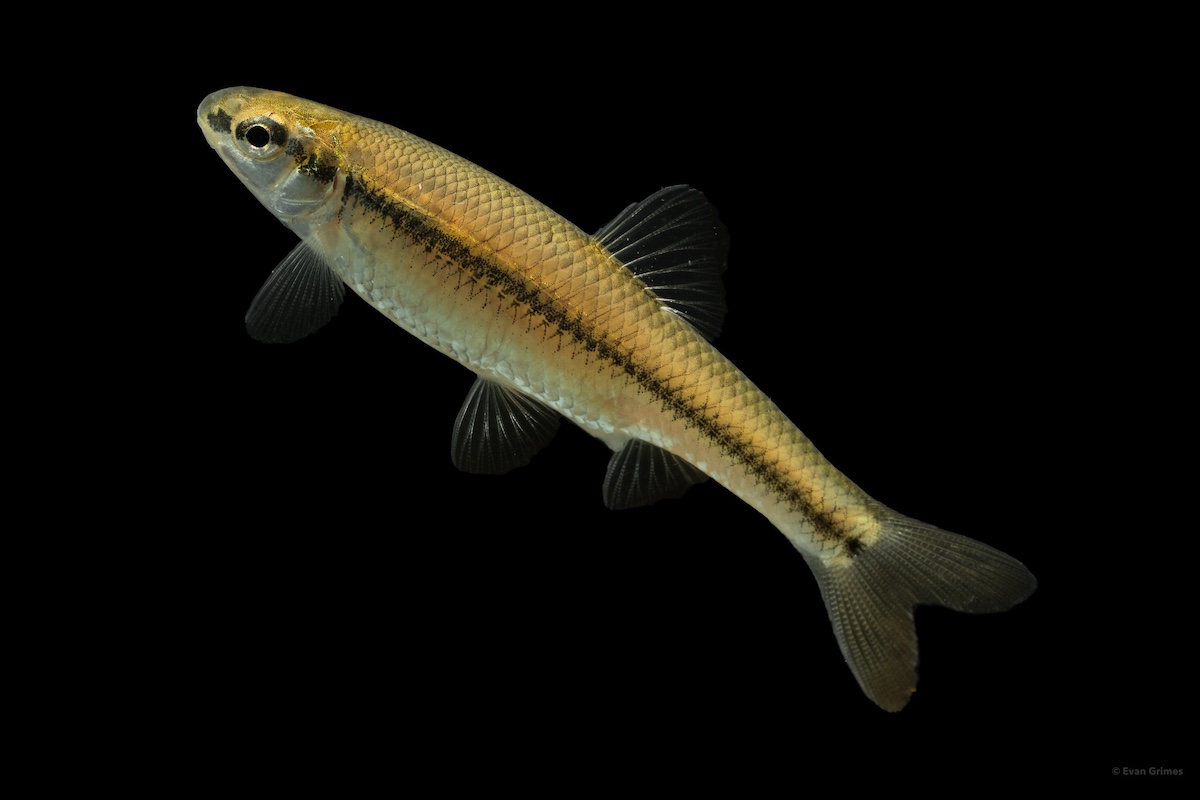
Bluntnose minnow. Photo by Evan Grimes, https://creativecommons.org/licenses/by/4.0/, see location on iNaturalist at: https://www.inaturalist.org/observations/114256344.
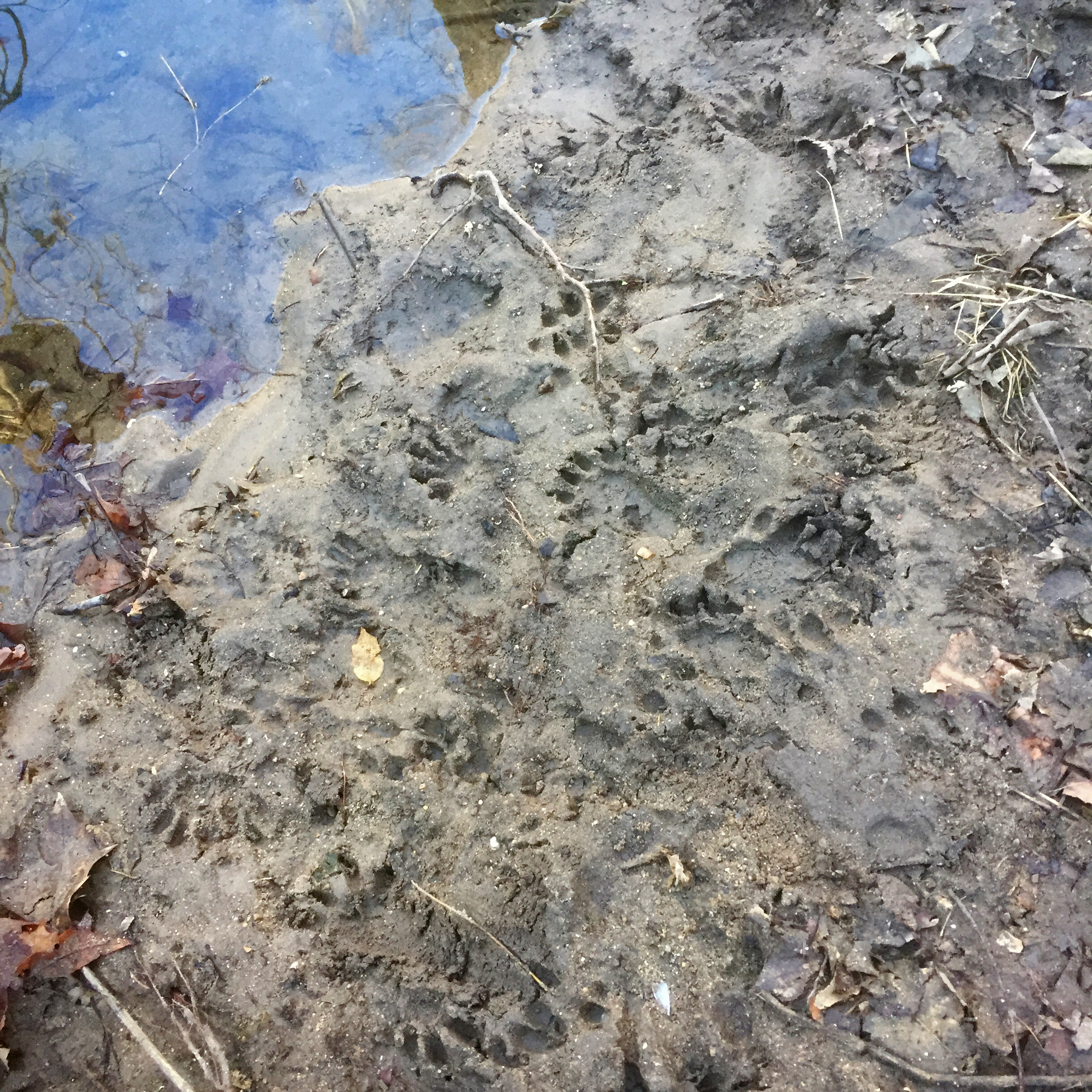
Recently, I spent a day at a lake showing fourth grade students the flora and fauna that live in or next to many of Illinois’ lakes. We looked at animal tracks in the mud on the shoreline, counted shells some creature (likely a raccoon) left behind after a nice meal of freshwater mussels, learned the names of the plants growing in the water and practiced identifying turtle species. Every session started by looking around and calling out the things we saw. Every group, without fail, was excited to report the presence of fish in the water, mostly shouting “baby fish!” and occasionally “minnows!”
There were juvenile sunfish in the water, small and spiky and foraging for small aquatic insects among the pondweed in the shallow areas. There also were schools of minnows, easily visible right at the shoreline, and these were the fish typically being called babies by the students. Minnows are small fish, and some fish sighted were juveniles, so those fourth graders were not wrong. I shared their excitement each time a class noticed those small, unassuming fish searching for food right next to where we were standing. Minnows are interesting and important. Anglers appreciate these fish as a useful live bait. Biologists might tell you that many of these fish are tough survivors and careful parents. A bass or a heron or any number of predators knows these fish as prey.
There are many fish we call minnows. In fact, more than 290 have been documented in North America. The word has been historically used for small fish, and there’s nothing wrong with using it in that way now unless you’re trying to be specific. As exemplified by the fourth graders above, it’s not uncommon for juvenile fish of any species to be called a minnow by someone looking at a group of them in a lake or a river. There are also many species of fish in Illinois that are what we might call minnow-sized as adults that do not belong to any of the families that would scientifically be referred to strictly as minnows. These might include darters, silversides (Family Atherinidae – Silverside Family), mosquitofish (Family Poeciliidae – Livebearer Family), trout-perches (Family Percopsidae – Trout-Perch Family), mudminnows and topminnows.
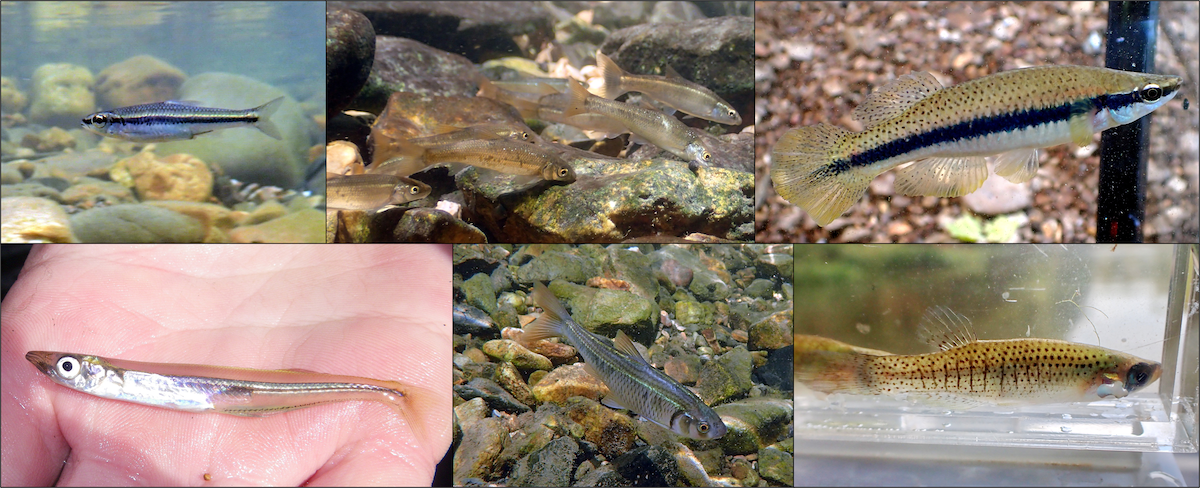
If you click on any of the links above, they’ll take you to the Wild About Illinois Fishes page about each of those types of fish. There is also a page about the scientific family Leuciscidae, or the minnow family (Family Leuciscidae – Minnow Family). If you click on that, you will see that the list of species includes some with official names that don’t include the word “minnow” at all, and yet, we still group them minnows. While many of these “minnows” might not ever exceed 4 inches, you will also see species that grow to sizes much larger. And if you were to look up any of these species in the annual fishing regulation guide, you won’t find any mention of this family, only a statement defining “minnows” as “any fish in the family Cyprinidae except bighead carp, black carp, grass carp and silver carp.”
What’s going on here? The full explanation would be too long and too dry to include in this article, but generally, living organisms are classified by scientists into groups based on shared traits. Scientists recently reclassified many of these tiny-ish fish into new bins of organization and some names have changed. Historically, most of the official minnows you could find in North America, along with other similar fish, were included in the group Cyprinidae, or the carp and minnow family. The best science, utilizing genetics, suggests
Leuciscidae should be recognized as a family and not just a sub-family. The reclassification is more accurate biologically, so our language on this will be changing. Because scientific research informs and precedes many written regulations, many states still regulate this species as part of the family Cyprinidae, including Illinois for the time being. Those laws are still in force even though the language has changed. Look for updates in those regulations in the upcoming years. Calling any of these fish minnows is still understandable and accepted in all except some of the deepest ecological conversations.
Speaking of laws, there are several minnows in Illinois that are protected by regulations intended to conserve endangered and threatened species. Forty species of fish in the state of Illinois have this protected status, and of those 40, 16 of them are in that minnow family discussed earlier, Leuciscidae. An additional nine could possibly be called a minnow by someone unfamiliar with those species, and a further six are minnow-sized, although their body shapes are distinct enough that most folks with basic fish knowledge would be pretty sure they weren’t looking at a minnow. Many of these fish are sensitive to changes in their environment and can be good indicators of ecosystem health. Because we rely on the same ecosystems that the fish rely on, it’s helpful to keep an eye on their populations to help us gauge the effectiveness of our ecosystem management practices. A thorough discussion of the plight of the threatened little fish of Illinois will require its own article, but until one is written, if you are interested in more information on the list of all species protected in Illinois visit the Illinois Endangered Species Protection Board’s website.
There are a few species that are overwhelmingly common across the majority of the U.S, and Illinois is home to three of them. These Leuciscids (minnows) are the fathead, bullhead and bluntnose minnows, which are in the group collectively known as “the bluntnose minnows,” or by their Latin genus name Pimephales. This group also includes a minnow called the slim minnow, but you will not encounter that species in Illinois. Let’s get to know each of these little fish, which in anyone’s books are common minnows.
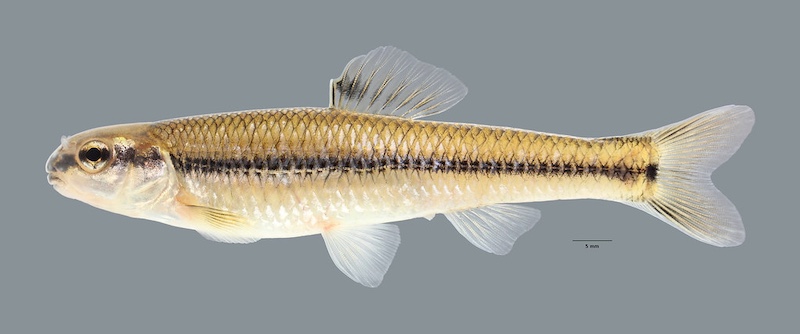
It is possible that this species is the most common freshwater fish in North America. Bluntnose minnows (Pimephales notatus) have a sleeker profile than the bullhead and fathead minnows and sport a dark stripe that runs all the way from its tail into its blunt snout. They are tolerant of a wide range of conditions. Given a choice, they prefer streams and rivers, but they live perfectly healthy lives in lakes and impoundments.
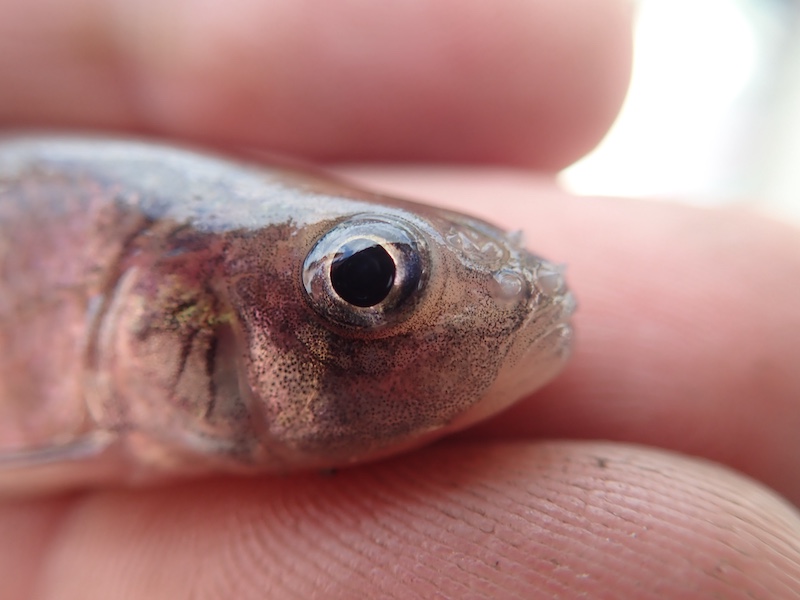
During spawning season, which can run from spring into the summer, male bluntnose minnows develop spiky bumps on their faces, called tubercles. They will exhibit darker pigment on their bodies and their fins will become milky white. They will find a shelter, be it a flat rock, sunken log or even a piece of trash. After meticulously cleaning the underside, the male then courts females, enticing them to lay their eggs in neat rows on the roof of the nest he created. While the eggs incubate, the male guards the nest, fanning the eggs with his fins and chasing off intruders. A single male might care for multiple clutches (groups of eggs) at once. Readers familiar with largemouth and smallmouth bass reproductive patterns might notice the similarities of fish that are devoted parents.
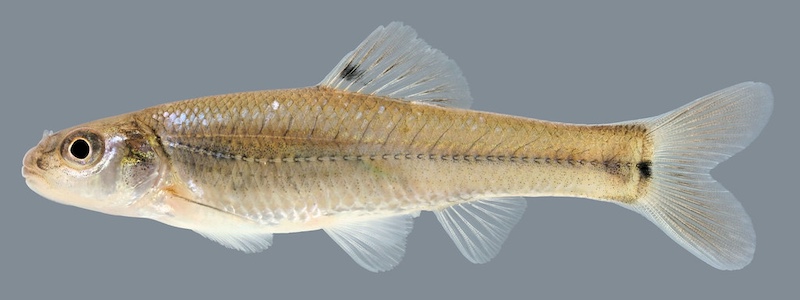
Like the bluntnose, the bullhead (Pimephales vigilax) minnow has a robust shape with a round snout and round fins. They can be found in lakes, but they seem to be more abundant in larger streams and rivers although they will avoid very strong currents. They feed on aquatic insects, algae and any small organisms living in the mud on the bottom of its habitat. As a common prey item in these ecosystems, they provide a valuable link from the resources at the base of the food web to larger predatory animals such as bass, walleye and pike. Their spawning season begins in May and can run into August, with this minnow raising multiple clutches throughout the season. Like bluntnose minnows, these males aggressively defend their nests and keep the eggs clean and free from debris.
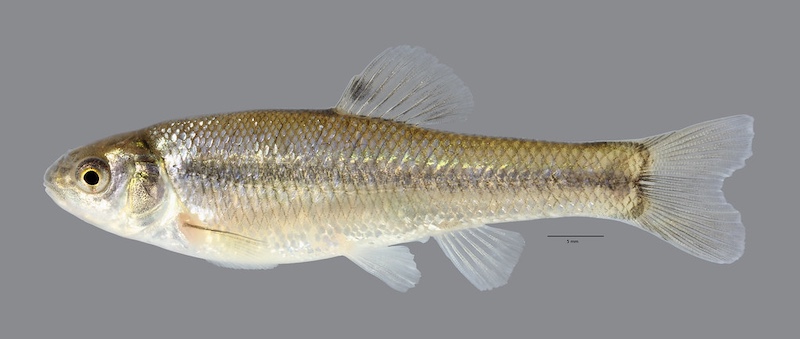
The most famous of this group of minnows, the fathead minnow (Pimephales promelas) is a small, stout fish that can be found in farm ponds, ditches, prairie potholes, creeks and lakes from Canada to Mexico. Similarly shaped to the bluntnose and bullhead, a key distinguishing feature of the fathead minnow is an incomplete lateral line. The lateral line is a visible line of pores along the side of a fish. These pores are part of a sensory organ system that allows the fish to sense movement in the water. In the bullhead and bluntnose minnows, this line extends from the back of the head to the start of the tail fin, but in the fathead minnow, this line does not extend into the caudal peduncle (the region of a fish body behind the dorsal and anal fins, where the tail fin is attached to the body). During reproductive season, which starts in the spring and ends in the height of summer, males will develop bumpy pads on their heads (a fat head, if you will) and the skin along their backs thickens. Like the other minnows in this genus, the males excavate a cavity under a submerged object in the hopes that one or multiple female fish will place eggs on the roof of the cavity. After laying the eggs, the female leaves all the care to the male.
The fathead minnow’s fame comes from its ability to tolerate conditions that would make other fish quit, such as warm water, low oxygen and poor water quality, leading to another common name: the “tuffy.” This resilience makes them suitable for keeping in tanks and laboratories for scientific research, aquaculture, and supporting recreational fisheries. Fatheads are one of the most widely sold baitfish in the U.S., and they’re an important research organism for aquatic toxicology studies. From fertilizers to pharmaceuticals, hundreds to thousands of chemicals have been tested on these finned “lab mice” to understand how these chemicals might impact aquatic life. If you go to a pet store, they might have a tank of feeder fish called Rosy Reds or sometimes Rosy Red Shiners. These are simply a xanthic morph of the fathead minnow (meaning the same species but with more and brighter yellow pigment than most wild fish). Some anglers prefer these as bait for fish, such as crappies.
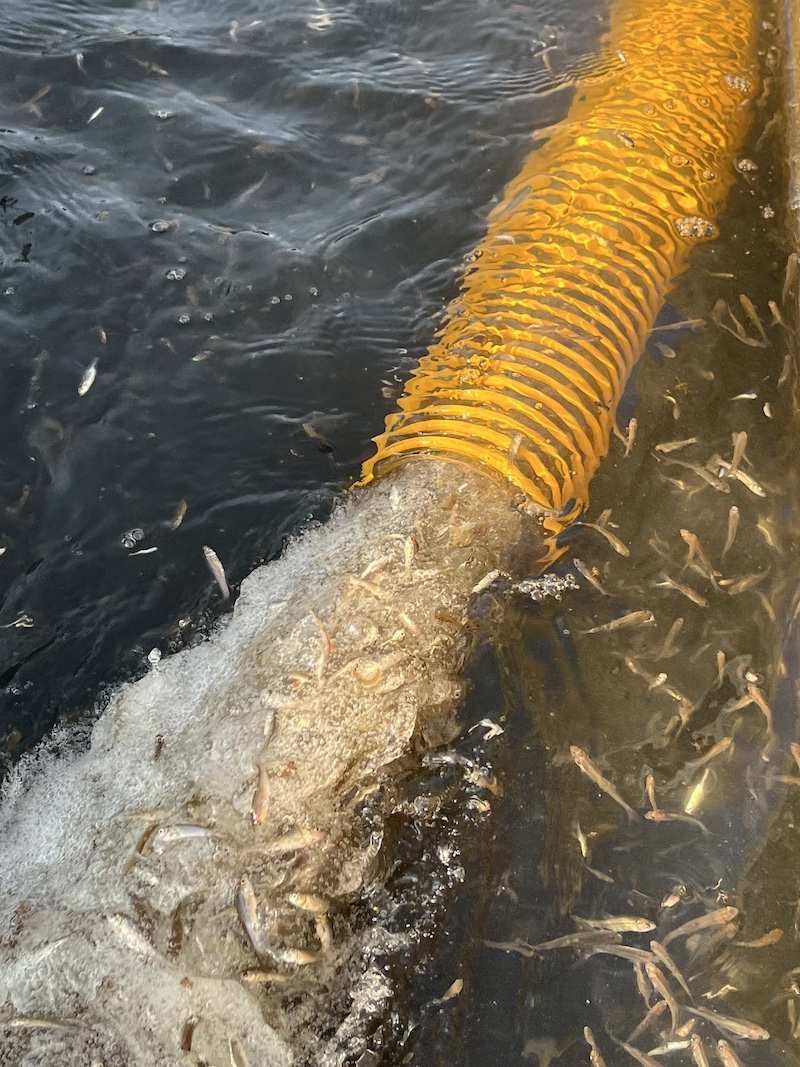
Their role as feeder fish is not limited to fish from a pet store. Anglers might be interested to know that at least in Illinois, fathead minnows are the primary live food fed to fish being raised in fish hatcheries. These minnows, harvested at different sizes to provide food for different ages of fish, are invaluable for raising muskie, pike, largemouth bass, smallmouth bass and alligator gar. Minnow farms are often comprised of wetlands or constructed ponds that may be shallow enough to freeze through in winter. Adult minnows (brood stock) are added early in the year where they likely spawn several times in a season. With no competitors and no fish predators (although frogs, birds and insects are known to feast in fish farm ponds), they can produce many offspring in one season, with the fish farmer harvesting them throughout at various sizes depending on customer demands. These minnows are then shipped across much of the Midwest, a feat requiring a fleet of trucks and drivers as well as the various permits and disease testing results required by each state a truck passes through. Some go to bait shops, others to feed hatchery fish, and yet more are stocked into ponds and lakes as a forage base for developing sport fish populations. A rigorous evaluation is important to protect ecosystem health by assuring that these fish are healthy and won’t spread diseases to wild stocks, and in assuring that other potential invasive species are not included in the mixes.
Next time you’re at a lake or a river, I invite you to look in the water. Chances are, you’re going to see a small fish, and it just might be one of the fish named in this article. Perhaps it comes from a long line of minnows living in that lake, caring for their young generation after generation, surviving temperature extremes and predation. The birds you see nesting by the river, the muskie at the end of your line, the turtle sliding off a log as you approach are all dependent on those tiny fish that don’t often receive a second glance from us.
And those tiny little fish? Like everything else in the ecosystem, they are dependent on humans and the choices we make about the environments we share.
Kayleigh Smith is a Natural Resources Coordinator in the Division of Fisheries, working as the site interpreter at Jake Wolf Memorial Fish Hatchery. While she works full-time at a fish hatchery that is focused on raising sportfish such as salmon, bass, and pike, she has a passion for fish of all shapes and sizes, from the biggest and fiercest muskie to the tiniest minnow.





Submit a question for the author