
A mottled sculpin rests on the substrate of a clear stream, camouflaging with rocks. Photo by Brian Metzke.

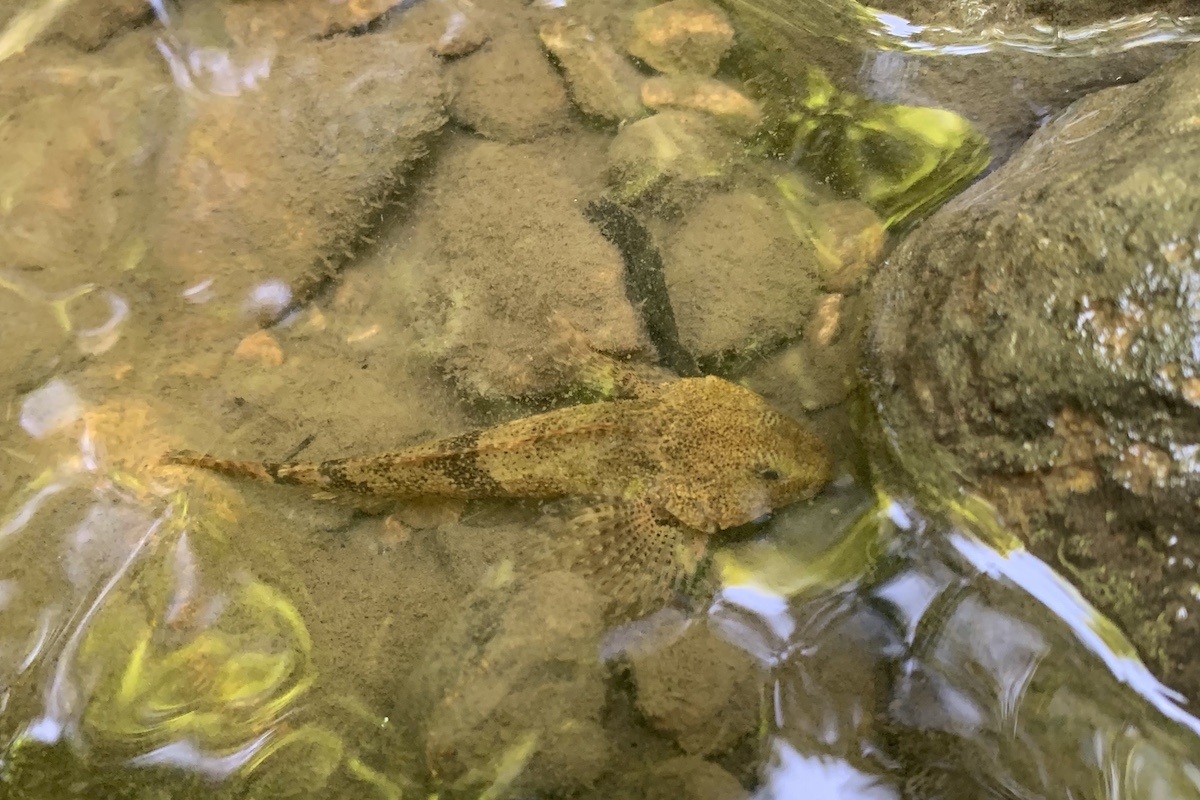

A mottled sculpin rests on the substrate of a clear stream, camouflaging with rocks. Photo by Brian Metzke.
You are not likely to find any anglers along the creek at School Springs Wetland. Cold, clear, and only a few inches deep, the water doesn’t fit the bill for the trophy trout, largemouth bass or introduced muskie that bend rods and land on dinner tables across the state. But this wetland, long serving as little more than a farm ditch, has found new life, thanks to restoration efforts from the McHenry County Conservation District. The engineers and backhoes are gone, the new native plantings are already filling in, and something new lives in this stream, nestled amongst boulders placed by rubber-boot-wearing volunteers.
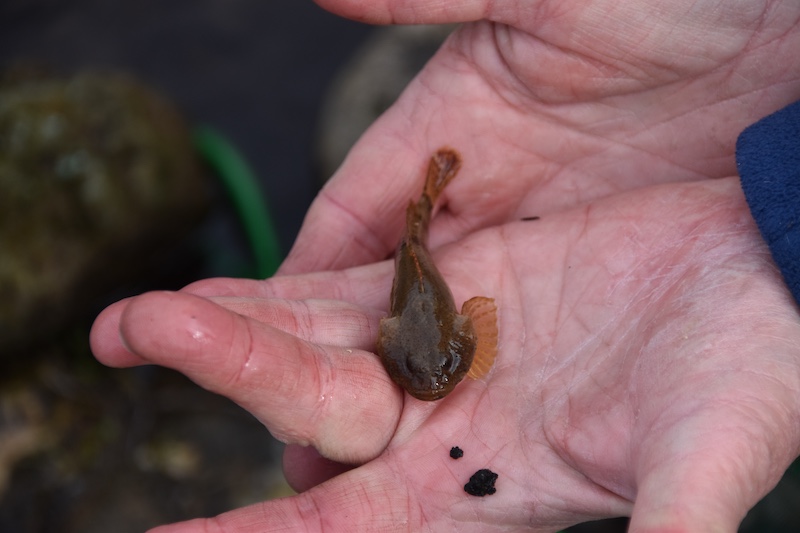
The mottled sculpin (Cottus bairdii) does not attract much notice. The size of a pinky finger, the sculpin’s streambed-colored scales and its knobby fins let it hide in plain sight: from anglers, larger fish, great blue herons and the aquatic larvae it ambushes for dinner. But for the sculpin, that incognito status can sometimes feel like a curse.
The Illinois Department of Natural Resources’ (IDNR) non-game fish program tracks populations of mottled sculpin, alongside a host of other unheralded fish, including rainbow darters, sticklebacks and cave-fish. In 2020, the mottled sculpin was added to the Illinois Endangered and Threatened Species List, after population assessments indicated that the species was in decline. That assessment prompted a lifeline for the sculpin, thanks to Brian Metzke, IDNR’s Aquatic Ecologist and the mottled sculpin species lead. Metzke takes the role of species lead seriously. He published a species status assessment, a species planning document and even jumped in as a coauthor on research examining the fragmentation of the species. He has made it his mission to bring the sculpin back, before most people have even learned to miss them.
It was while researching mottled sculpin that Metzke and colleagues at the Illinois Natural History Survey had what he described — pun intended — as a watershed moment.
“[The mottled sculpin is] a benthic species, which means it lives near the substrate at all times,” Metzke described. “It’s not a great swimmer, kind of the leading thought process was that it can live its entire lifetime within a few hundred square meters.”
A fish that does not move would be especially difficult to bring back to healthy numbers, Metzke went on to say. If a sculpin’s stream was degraded – say by topsoil erosion from a new development – the fish would have nowhere to go, even if another stream nearby had recently been restored. But Metzke and his colleagues, analyzing tiny clips of sculpin DNA in the lab, found something different.
“What we found is that at least some individuals are moving larger distances…it’s still likely that most individuals hang out in the same small area throughout their lifetimes, but… there is the capacity, at least with this species, to recolonize places where they may have been extirpated,” Metzke said.
Buoyed by their findings, Metzke reached out to Cindi Jablonski at the McHenry County Conservation District. Jablonski, the District’s Wildlife Ecologist, had already been working for four years on the restoration of School Springs Wetland. She and Metzke had talked about reintroducing some mottled sculpin to the stream in years past, but it had seemed like a pipe dream. Until it wasn’t.
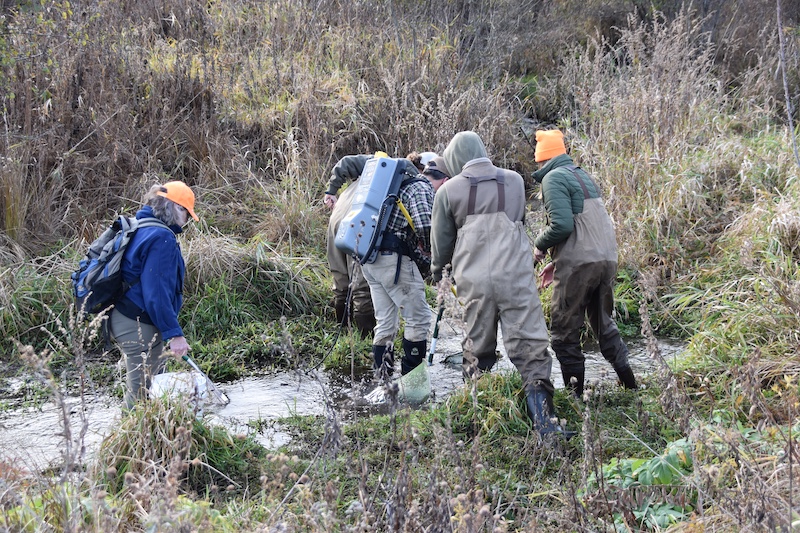
The first mottled sculpin release in Illinois history was a quiet affair. In early November, biologists waded into another stream that was already home to sculpin, and used an electro-fishing wand to stun a number of the tiny fish. Once stunned, one out of three sculpins were picked out at random. Moved in coolers, like tiny organ transplants, the sculpin arrived at the School Springs Wetland. If they had arrived before the restoration began, the mottled sculpin would have likely been choked out by agricultural runoff and warm water temperatures. But thanks to efforts from the McHenry County Conservation District, the stream now flows a winding, rocky route, specially engineered to mimic its pre-European settlement path.
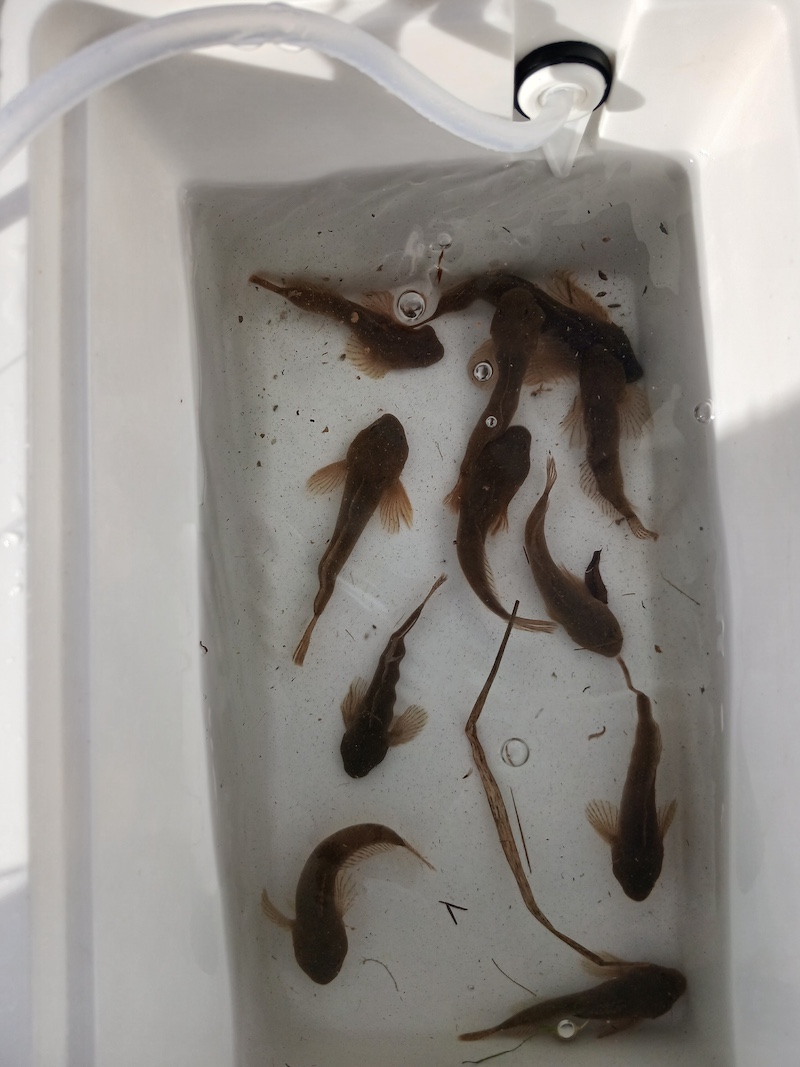
“When we released them we did it one by one because, after five years of waiting to do it, we wanted to savor it,” recalled Jablonski. “It was very rewarding to finally do that. It was kind of just topping off this full restoration at School Springs.”
The 71 tiny sculpin quickly disappeared among the boulders, where Jablonski hopes they will start a breeding population. More mottled sculpin will be added in 2026, with the goal of releasing 200 individuals over the next three years. Jablonski will be keeping an eye on the population, betting that in a state where the mottled sculpin is declining, this small stream can serve as a launchpad for recovery.
School Springs is well-suited as that launchpad: the restoration forms part of the 3,400 acre Glacial Park Conservation Area, Even if a couple of those mottled sculpin move downstream — as predicted by Metzke’s research — new populations could begin to crop up across the region.
Those new populations will become increasingly important as development continues in Illinois, and sculpin habitat declines. While the fishes’ state protected status provides regulation against their intentional destruction, these fish are small and scattered enough that keeping an accurate tally of their numbers is a tricky task.
Wetlands are under threat in Illinois, especially the small streams that mottled sculpin call home. In 2023, the U.S. Supreme Court stripped federal protections from all wetlands that are non-continuous to Waters of the United States, with University of Illinois researchers estimating that 72 percent of the state’s wetlands are now unprotected. The Trump administration has recently proposed regulation that would cement the court’s decision. State lawmakers, in consultation with state agencies, are evaluating options to increase state level wetland protections in light of these federal regulatory changes.
Even the School Springs restoration itself could signal additional wetland destruction. As a “wetland mitigation bank” the restoration allows for future developments to offset their wetland destruction with the purchase of credits from the Conservation District. A similar process happens with the preservation of forest as “carbon credits” in much of the developing world.
Wetland mitigation is regulated by the U.S. Army Corps of Engineers, and the process ensures that some wetland will always survive. For mottled sculpin and other tiny fish that often fly under the public’s radar, that may be enough. Accurate surveys, restoration efforts and public support of wetland protection will all play a role in the future of mottled sculpin. Luckily for these fish, Metzke, Jablonski and a whole host of biologists and volunteers have focused their careers on making sure that sculpin can thrive again.
As Metzke put it: “We probably have more than 200 species of fishes that inhabit Illinois, and I would say that most people are probably just aware of those that are angling species. But we have hundreds of others that most people don’t even get to see in their lifetime. And so getting out to see these places and these species that are just infrequently observed by the public is part of what makes this job really exciting.”
Hugh Gabriel is a writer and occasional herpetologist who calls Minneapolis home. He’s a science communicator for the University of Minnesota, and uses video and print storytelling to bring critical research to the public eye. Gabriel has a special affinity for frogs, prairie flowers and a long day of fishing on a clear lake.






Submit a question for the author
Question: I don’t have a question, I wanted to tell you I found some in the middle fork of the Boise River at Atlanta Idaho. Maybe this can help save the little fish.