
All photos courtesy of Patty Gillespie.

All photos courtesy of Patty Gillespie.
In my part of the country, attending a community picnic is the norm on the Fourth of July, but what I did was no picnic. It was sweat-inducing, sneeze-provoking, sunburn-assuring hard work. The workers were my son Bob Gillespie, employee of the Illinois Department of Natural Resources (IDNR), site manager of Prairie Ridge State Natural Area (PRSNA) and my husband Jim and I, volunteers. With a stretch of the imagination, one could call it a family holiday outing.
Our destination was a parcel of land adjacent to the Loy Land and Water Reserve (LWR) in Marion County. Arrival time was dawn. We carried along with us a picnic of sorts: a jug of cold water and a few snack bars. We also carried along, within the covered bed of the truck, 500 plugs contained in 10 flats. (Plug – a young plant with a 5-inch root system potted within a fertilized soil medium. Flat– a rectangular plastic container sectioned into 50 thin-walled compartments containing plugs.). Our plan for the day was to plant those plants, all of them!
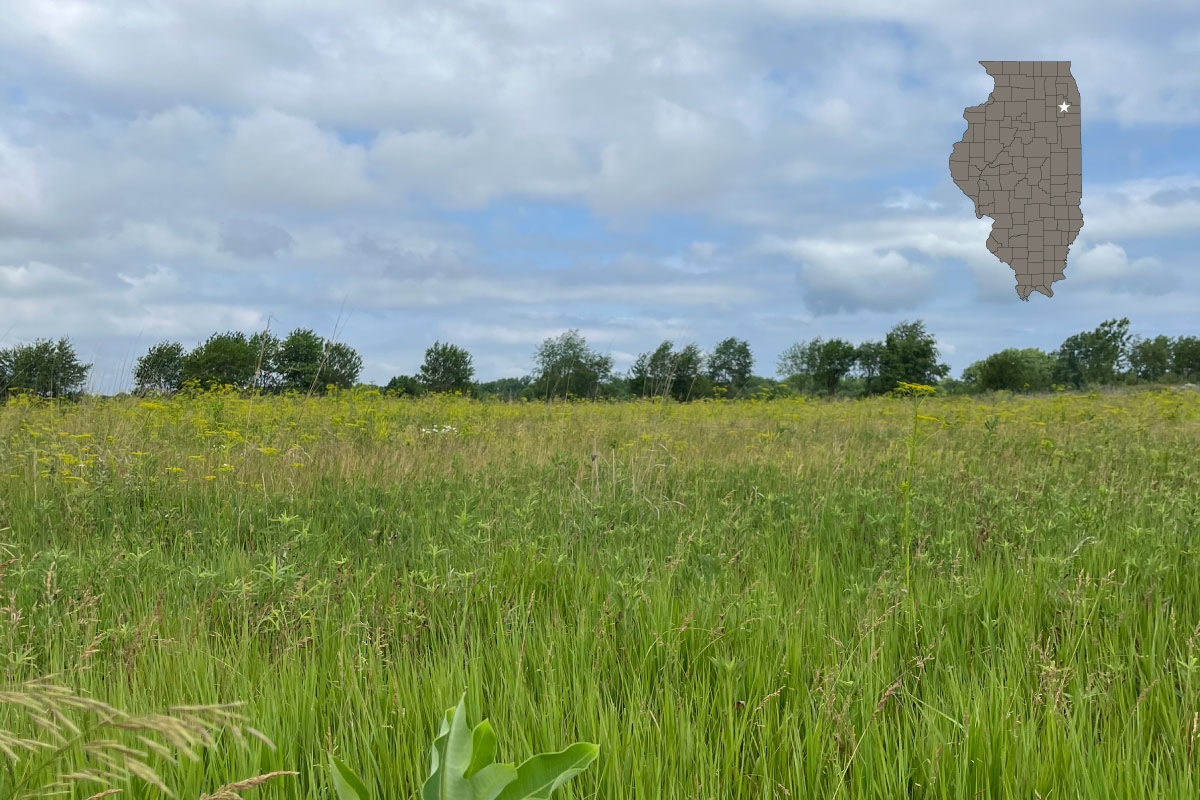
About a year prior, Bob Gillespie had taken a break from cutting and treating invasive woody species at the Marion County unit of PRSNA when he drove by a sign, “Farmland For Sale …” That soon-to-sale cropland adjoined not only the 217-acre Loy LWR but also 12-Mile Prairie, a managed railroad prairie remnant, noted as an Illinois Natural Area Inventory site and an Illinois Department of Transportation scenic easement. Through experience at wildlands management (nearly 30 years’ worth), Gillespie knew that spans of contiguous parcels, offering native prairie grass and wildflower species, consistently optimized survival chances for grassland wildlife. He went to work investigating acquisition possibilities.
Gillespie contacted those with the dough and the guts – to put it bluntly – and the commitment, dedication to the perpetuation and appreciation of native flora and fauna of Illinois. “PRSNA is in dire need of additive acreage to insulate the preserve from encroachment and industrialization pressures. … This additive acreage will grow new prairie habitat for increasingly rare Illinois’s grassland species,” wrote Gillespie. In September of 2024 Illinois Audubon Society purchased the 106.75-acre parcel with the intention of transferring the land to the IDNR when Natural Areas Acquisition Funds were available to buy the acreage.
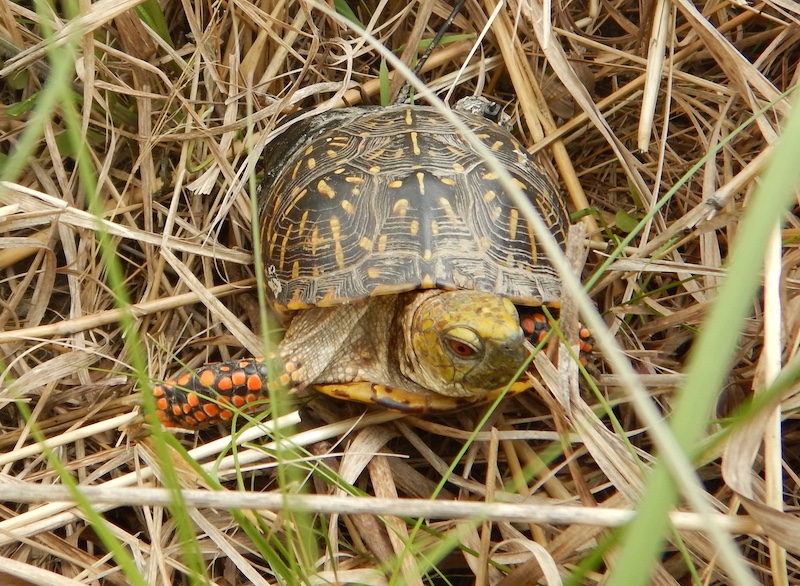
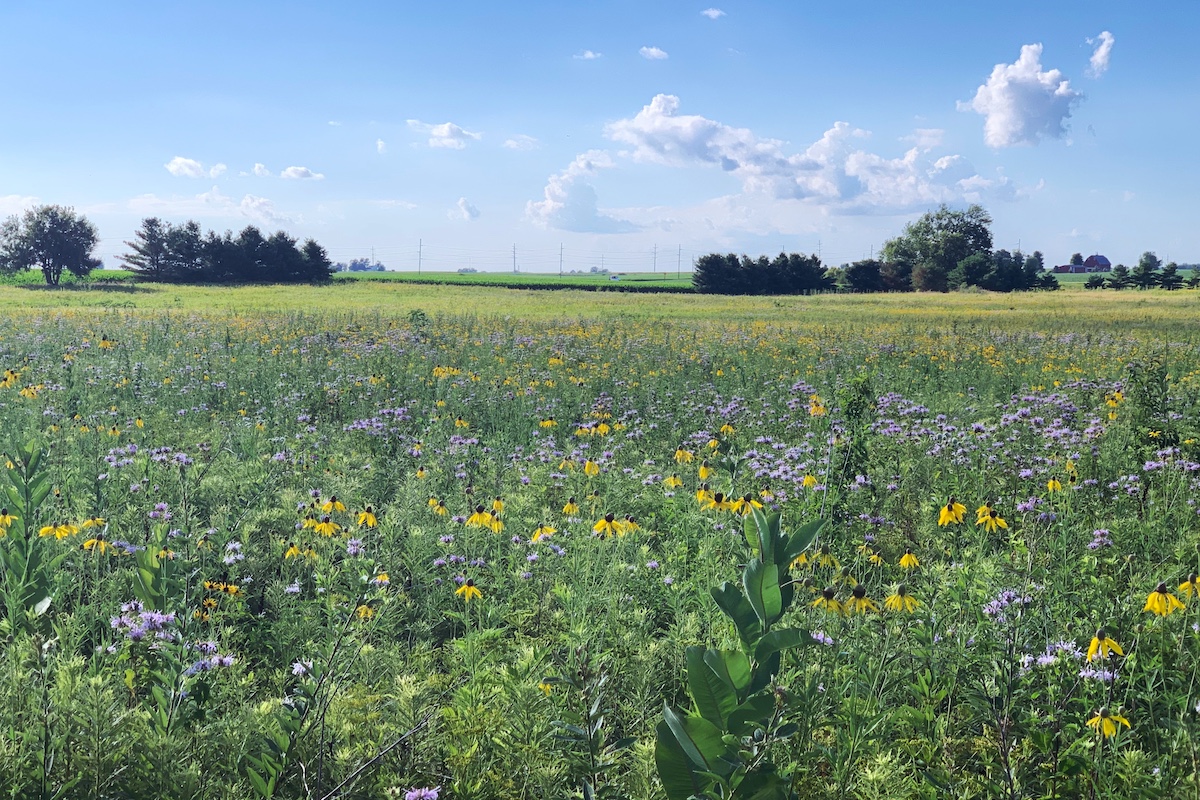
Objective: Reconstruct a grassland with a botanical composition which characterized this area in Illinois during the not-too-distant past. Prairies dominated much of the landscape before plows tilled the soil. Thriving within those prairie natural communities lived diverse species, ranging from short-eared owl to Henslow’s sparrow, from ornate box turtle to eastern massasauga rattlesnake, from badger to bison, from prairie cicada to eryngium stem borer moth, from prairie rose gentian to blazing star, …
Alakazam! A corn field will turn into a prairie before your very eyes! Well, not exactly. The first step was the development of a list of plants that would not bite the dust! Included were hardy native prairie plants such as broomsedge, little bluestem and wild rye in the grass category and ashy sunflower, bergamot and showy tick trefoil in the wildflower category. However, big bluestem and Indian grass were not included on the list of seed to be purchased because Gillespie hoped to avoid limited diversity due to dense stands of tall grasses.
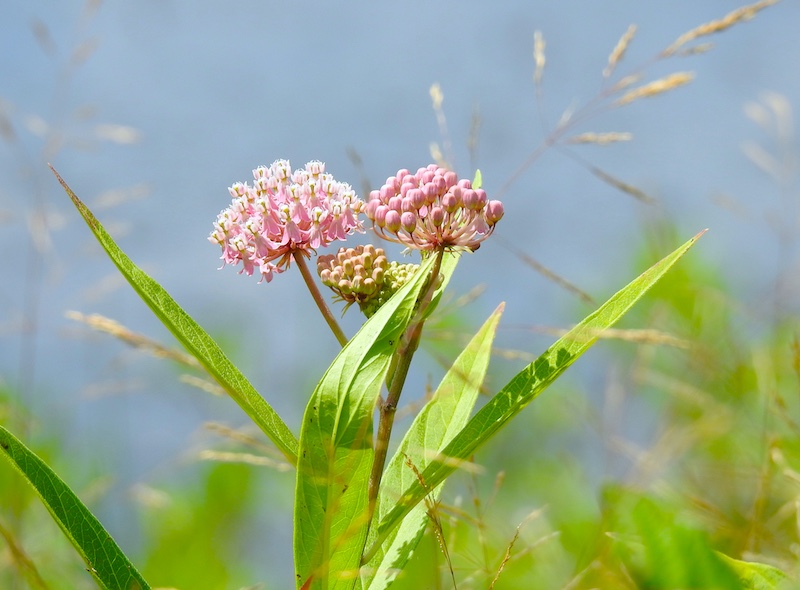
As Gillespie walked the recently purchased acreage, he found the lay of the land to be gently rolling, but he also discovered swales or areas with a tendency to drain poorly and remain wet or inundated during seasonal rainy spells. He added to his list Short’s sedge, fox sedge and dark green bulrush as well as cup plant and swamp milkweed and other “plants that like wet feet.”
In February, prairie planting commenced. Frozen ground allowed a commercial-grade dry fertilizer spreader to be utilized. The huge truck, which was loaded heavy with lime pellet fertilizer and oat grain and the seed of some of the species on Gillespie’s list, rumbled across cornstalk stubble, accomplishing the initial seeding. The oats were sown as a “nurse crop.” The eventual oat plants would minimize wind erosion and compete with emerging weeds, thereby creating havens for the native prairie seedlings, or so Gillespie imagined.
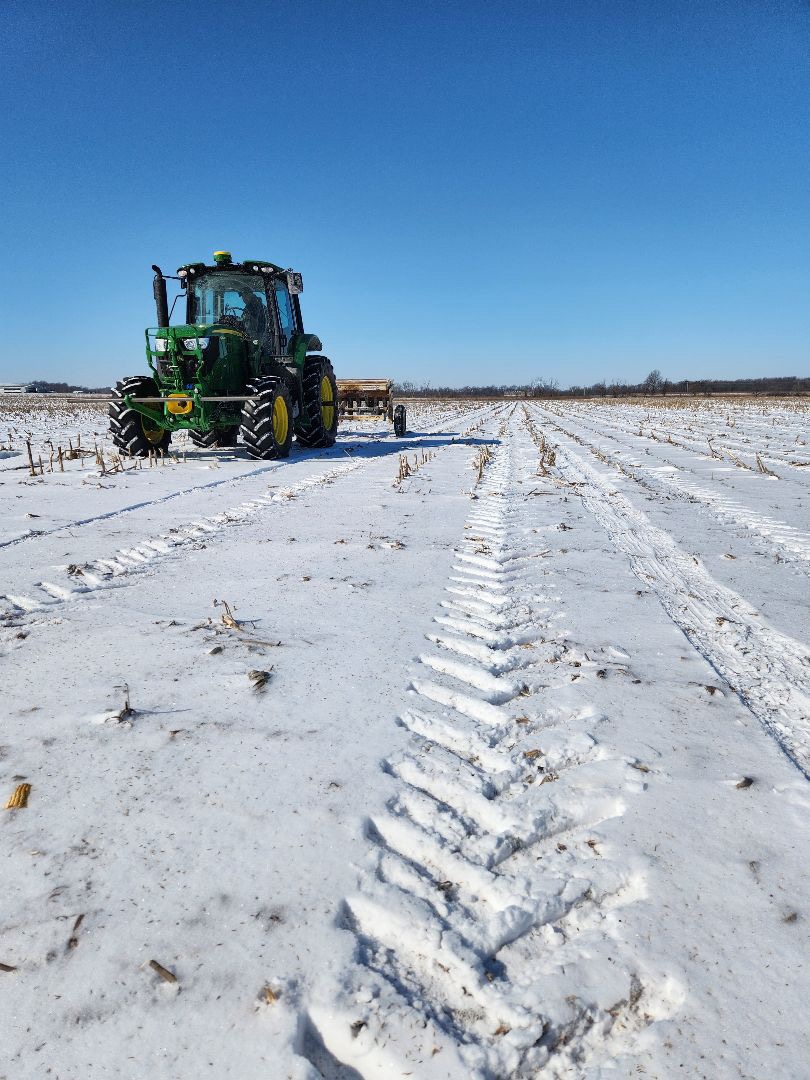
One day when a thin layer of snow blanketed the frozen landscape, a tractor bounced along pulling an old Truax drill. The drill had been modified to allow seeds to fall out of tubes onto the surface of the ground, perfect for completing a frost seeding.
That spring just as the ground began to thaw, Gillespie repeatedly loaded a sled (a child’s plastic sled) with plugs. He planted with a garden trowel – kneel, dig, insert plant, secure root-soil contact, mound soil around stem, stand, repeat. Later he enlisted the help of Wade Ulrey, a district heritage biologist, and others. Gillespie hoped that the plants would hit the ground running. At the ready in clayey soil of depressional areas were slough grass plugs, and set to go were pale purple coneflower plugs in loamy soils of gently sloping areas, and …
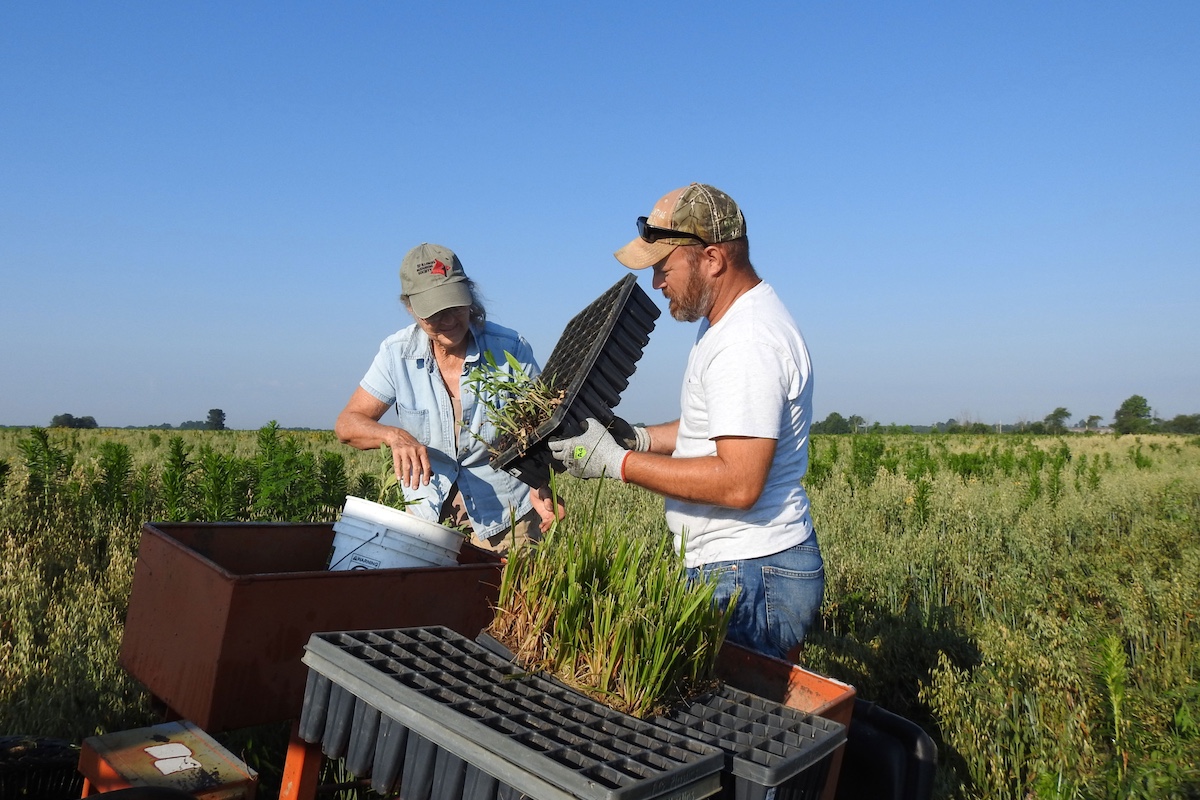
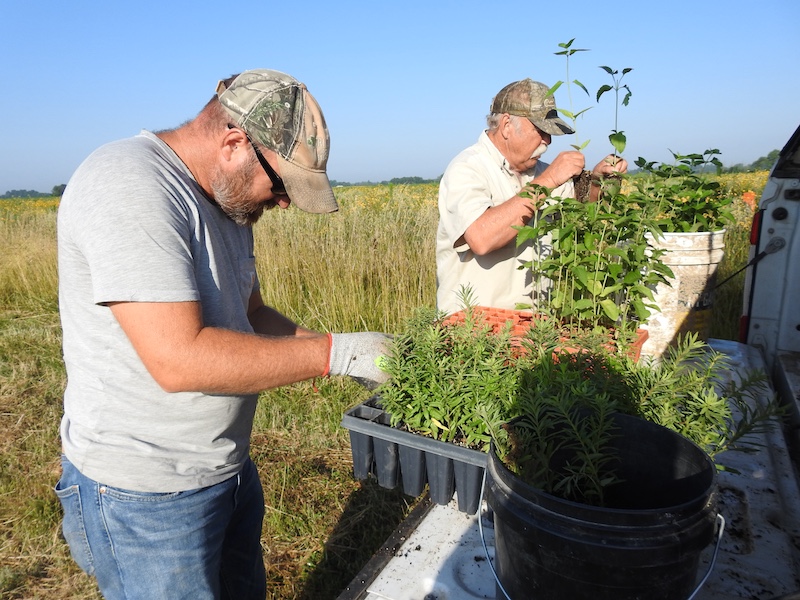
Spring gave way to summer. On that Fourth of July day, there I was with all those beautiful baby plants calling to me. Fortunately, a piece of equipment called a tree planter would be employed. Let me explain this modern convenience: a tree planter is pulled by a tractor with hydraulic hook-up. As the tractor moves forward and the disk is lowered, the disk rotates and cuts a six-inch-deep trough or trench into which the plants are inserted. Closing wheels press against the ground alongside the trench and firm the soil around the roots. Two workers are stationed on each side of the disk and may stand on a platform or sit upon a seat, depending on task requirements or safety needs. Mounted trays serve to hold the plugs.
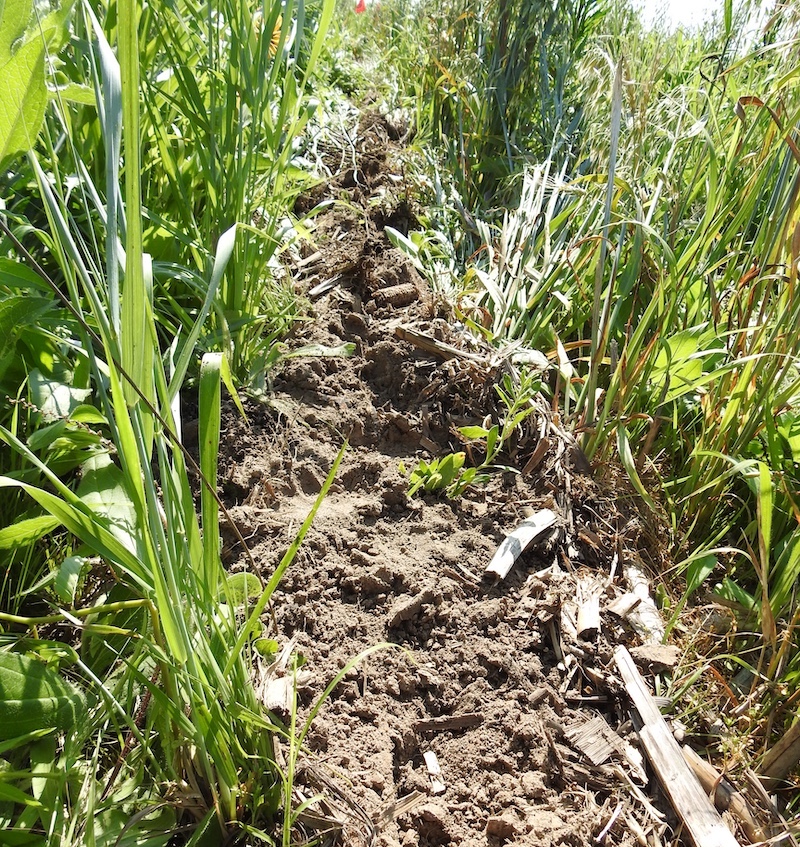
My assigned task was to gently but hastily remove each plug from its container and hand the baby plant to my son Bob who then reached downward and carefully inserted it into the trench. My husband Jim drove the tractor. Back and forth and back and forth we went.
The sun beat down. I slung my sun-protective blouse over a rail and worked in a sleeveless T-shirt. We would have been planting in spring if it hadn’t been for all the prior heavy rain events. Annual weeds had greedily claimed space between the oats and other planted species. I itched. I sneezed.
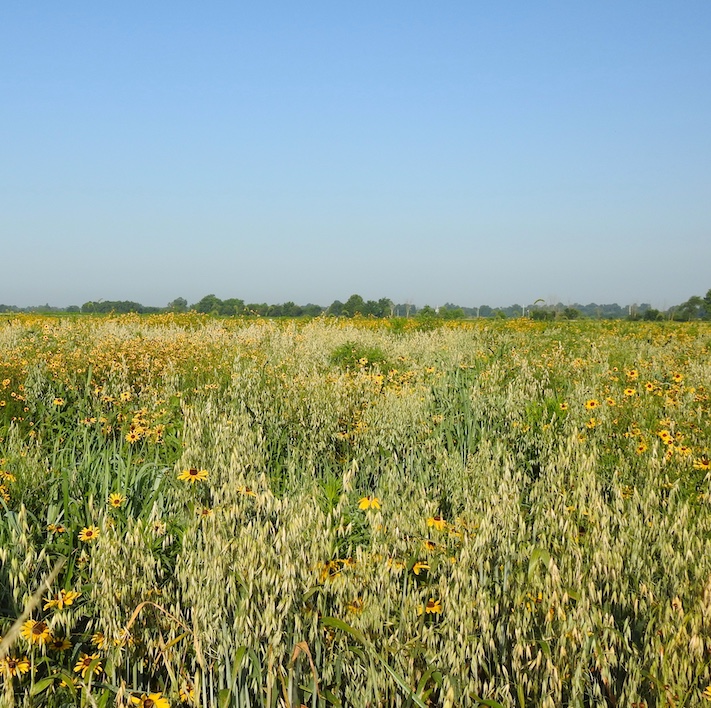
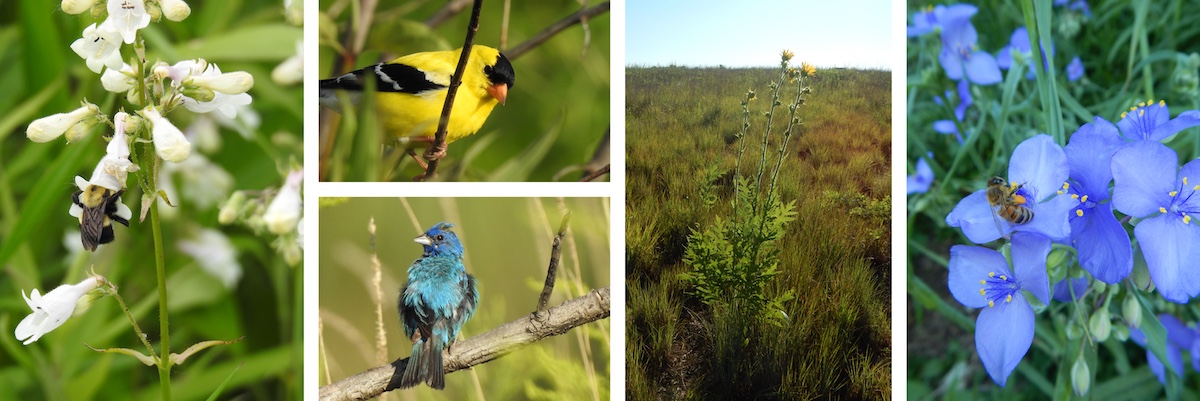
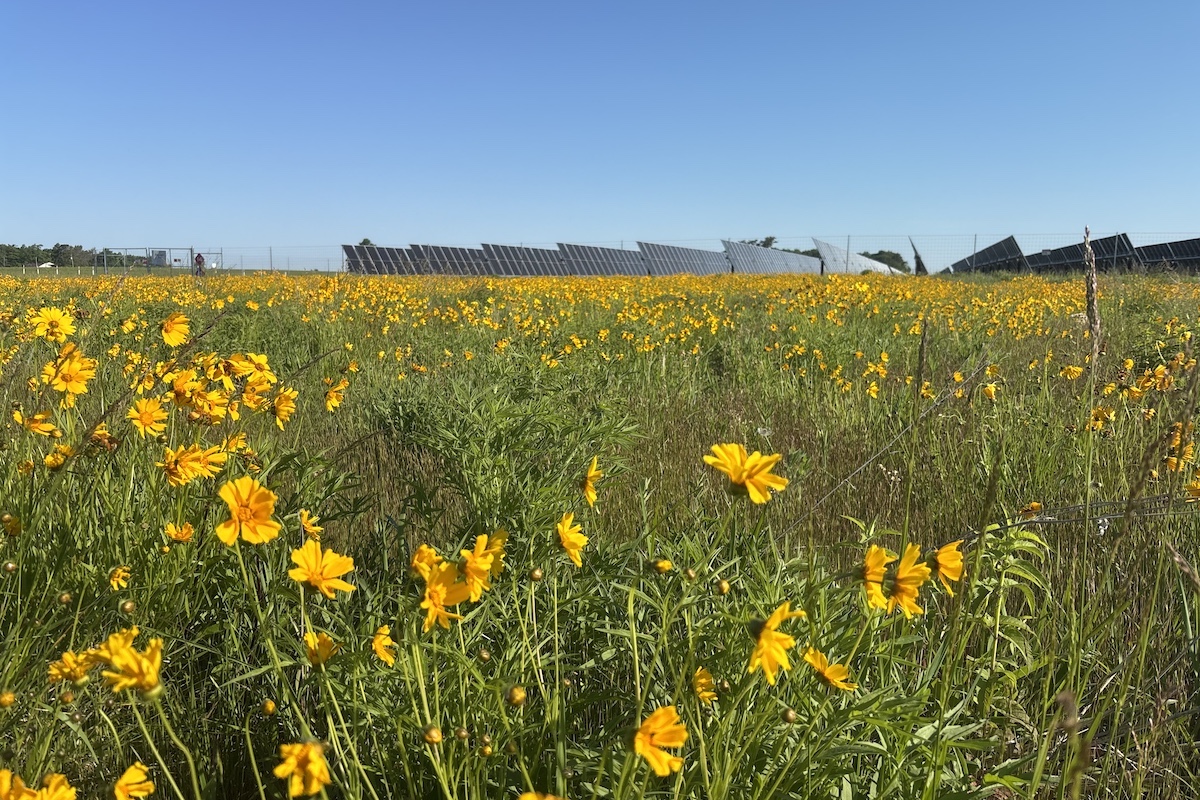
Oops, a mess-up! A royal catchfly’s roots lay exposed. Bob called for a pause, jumped off, and ran back to tuck the young plant into the soil bed. That’s when I noticed the many black-eyed Susans and other forbs that had successfully grown from seed to bloom. As we continued, one plug after another, I pictured each plant growing in a prairie. In my mind’s eye, I saw foxglove beardstongue with its white tubular flowers welcoming bumblebees. Golden Alexander’s lacy leaves nourished black swallowtail caterpillars. Vivid blues of Ohio spiderwort’s blossoms emblazoned a gentle slope. Raising golden inflorescences high toward a summertime sun were compass plant, tall coreopsis, sweet coneflower and prairie dock; while close-by, goldfinches and indigo buntings anticipated the moment when those yellow flowerheads would become platters of delicious seed. And, in my grassland a greater prairie-chicken hen snatched a grasshopper off a purple prairie clover and with a quick, quiet vocalization offered it to her chicks.
“Mom,” said Bob interrupting my daydream. “That’s our last one for today. Tomorrow we’ll plant the rest.”
The fifth of July –– not 500 plants, 682!
Plant and Bird Responses to Bison Grazing at Nachusa Grasslands
Eryngium Stem Borer
Both my son Bob Gillespie and husband Jim should be recognized for their contributions to the writing of this article, but they are too modest to allow it.
For years, Patty Gillespie shared her enthusiasm for language and nature and got paid for it at a public school and at a nature center. Now she plays outdoors as often as she can and writes for the sheer joy of it.




Submit a question for the author
Question: Did the prairie plugs get watered after planting?
What was the survival rate?
Jim Alwill