
Photo by Liz Julian, USFWS.

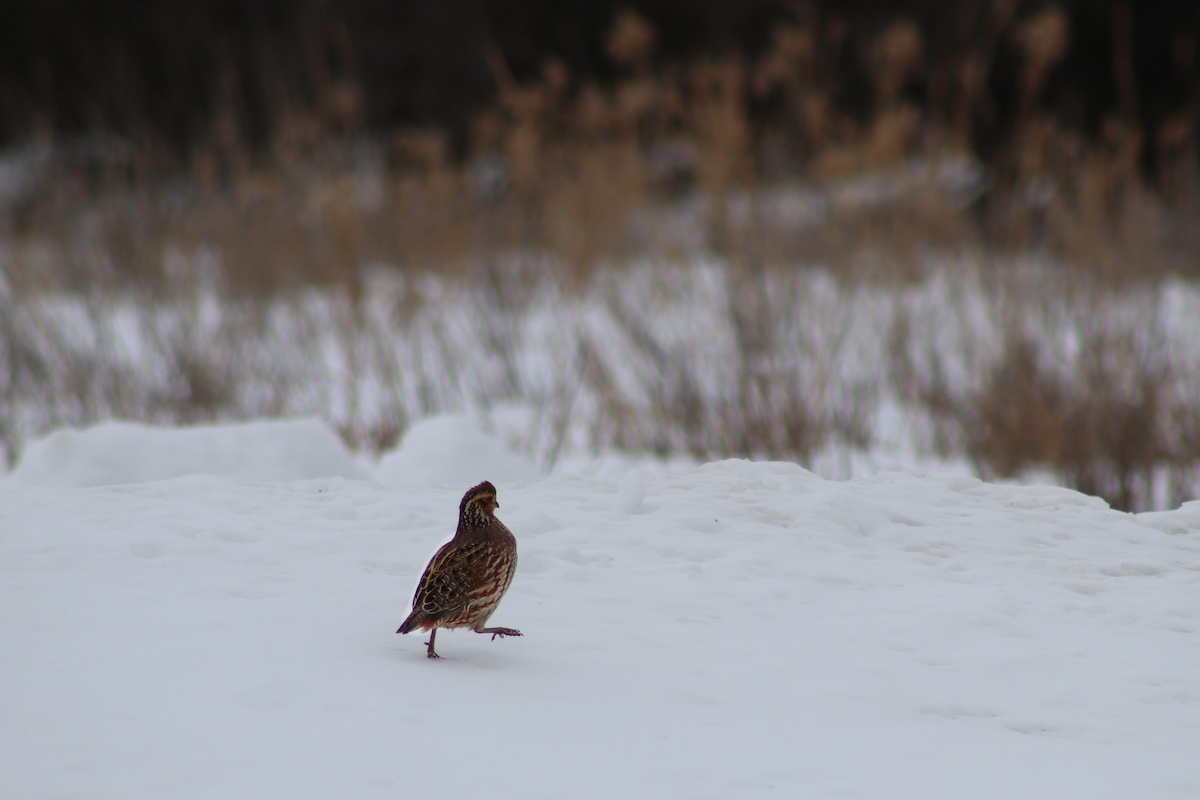
Photo by Liz Julian, USFWS.
The winter of 2024-25 was notable for some extended periods of unusually cold temperatures over most of Illinois. Several snowstorms, combined with cold temperatures, created challenging conditions, especially for smaller winter residents such as northern bobwhites. And the late 2025 weather certainly consisted of some cold snaps. In most discussions of the decline in bobwhite numbers, we focus on long term loss of important habitats including nest cover, brood habitat, food sources and shelter and escape cover. Statewide, these long-term losses of critical habitat are far more important than the short-term fluctuations resulting from adverse weather conditions.
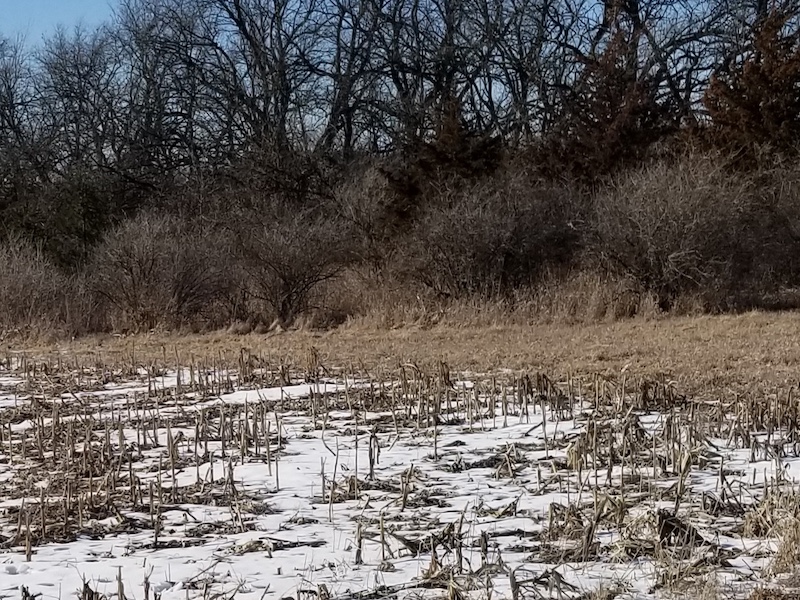
Localized short term changes in abundance are often a consequence of abnormal weather conditions impacting survival of adults post-breeding or impaired production of juveniles. In Illinois, declines in numbers are typically due to adverse winter weather rather than reduced production during the summer.
What winter weather factors adversely affect bobwhites in Illinois? Bobwhites can withstand extremely low temperatures as long as they can access adequate food supplies to maintain a body temperature of 106 degrees. Bobwhites feed on a wide variety of seeds in autumn and winter. In our state, grain fields provide abundant food in the form of waste grain and seeds of weeds associated with crop production, such as foxtail and ragweed. Seeds of native forbs and nuts and fruits of trees and shrubs may also be available on the ground adjacent to cropland.
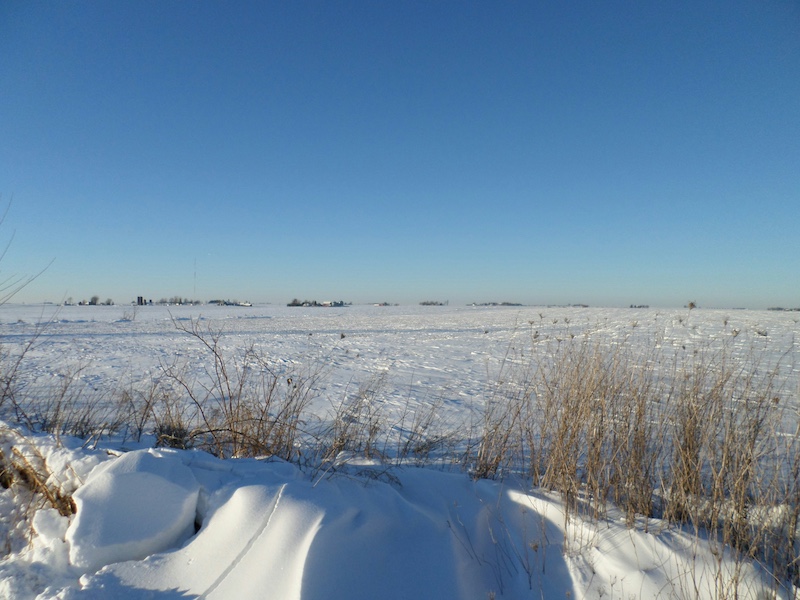
If winter precipitation in the form of sleet, freezing rain or deep snow covers the ground and seeds, bobwhite may be unable to obtain enough food to maintain their body temperature. Naturally, the longer food sources are covered, the more severe the lack of food becomes. When ice or snow events are followed by a week or two of subfreezing temperatures, significant mortality is a likely outcome.
After nesting, bobwhite make seasonal movements from more open areas (idle fields or thin stands of native grasses and forbs) to areas with low, dense shrubs or berry thickets near sources of food such as edges of crop fields or fields containing annual plants associated with disturbance.
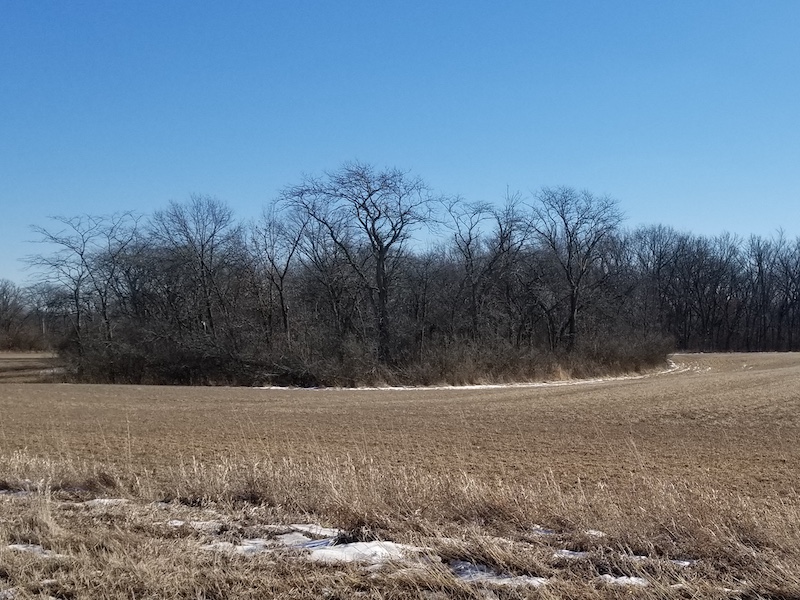
West-central and south-central Illinois have milder winters and a better interspersion of shrubland bordering cropland than east-central and northern Illinois though some suitable habitat exists in almost all counties of the state. However, small, isolated patches of habitat are more likely to suffer winter losses and less likely to be repopulated.
During my career with the Illinois Department of Natural Resources’ Division of Wildlife Resources (1973-2008), some severe winters resulted in population declines in the late 1970s and early 1980s. From 1956 through 1977, the estimated annual harvest of bobwhite ranged from one to two million birds. In late 1977, a blizzard struck Illinois with 10 to 12 inches of snow and strong northwest winds. Windchill temperatures reached -40 degrees below zero. It was significant that the storm began at night, when bobwhite typically roost in short, thin cover such as grazed pasture or wheat stubble. Snow cover persisted for several weeks. In 1978, estimated bobwhite harvest fell 38 percent (1,087,000 to 671,000). Surprisingly, a nearly identical storm struck the following year. Quail harvest in 1979 fell to 393,000, a 41 percent decline from the previous year and an all-time low at the time. In 1983, another severe winter reduced the harvest the following year from 822,000 to 572,000, a 30 percent decline. Fortunately, the Conservation Reserve Program began in 1985. Through this program, large numbers of highly erodible crop fields were retired from production. In the first five years after retirement, these fields developed a thin cover of annual grasses and broadleaved weeds.
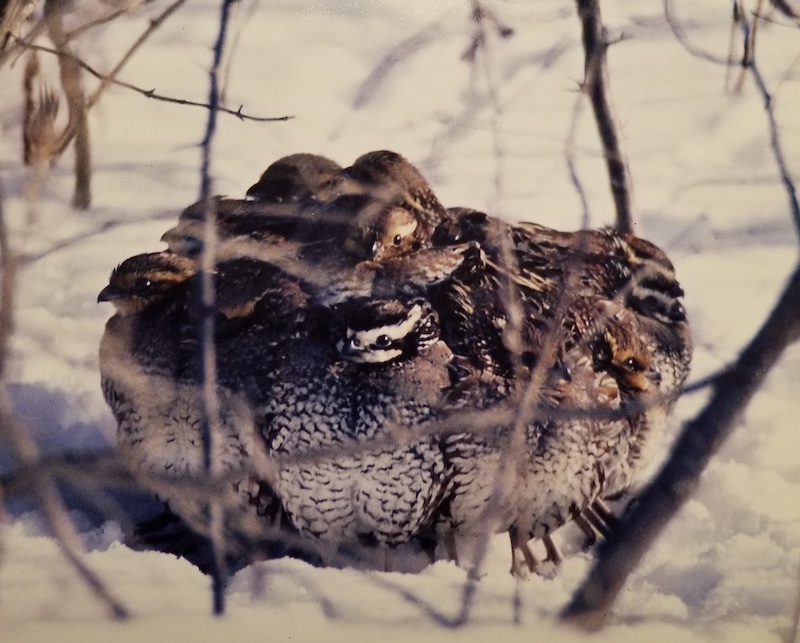
It appears that winter weather, particularly the depth and duration of snow cover, affects the distribution of bobwhite in Illinois coupled with available habitat necessary for shelter. Northern Illinois and east-central Illinois have more severe winters and are generally deficient in suitable winter habitat. West-central and south-central Illinois generally have milder winters and better interspersion of winter shelter and food resources.
Further evidence of winter effects on bobwhite distribution and abundance was revealed in research conducted in 2000 by Thogmartin, 2002. He examined bobwhite observations on 81 North American Breeding Bird Survey routes and found that bobwhite disappeared from 12 of the 81 routes after the severe winters of the late 1970s. Subsequently, five of the 12 routes were reoccupied following winters with below average snowfall perhaps facilitating migration to vacant habitats. However, bobwhite have limited ability to disperse so repopulation may occur over several years and depend on mild winter weather. Seven of the routes were not reoccupied during the course of the study, illustrating the progression of long-term habitat loss.
Roseberry, J. L. and J. Cole. 2006. The Bobwhite in Illinois: Its Past, Present and Future. Illinois Department of Natural Resources. 93 pp.
Thogmartin, W. E., J. L. Roseberry, and A. Woolf. 2002. Cyclicity in northern bobwhite: a time-analytic review of the evidence. Pages 192–200 in S. J. DeMaso, W. P. Kuvlesky, Jr., F. Hernandez, and M. E. Berger, eds. Quail V: Proceedings of the Fifth National Quail Symposium. Texas Parks and Wildlife Department, Austin, TX.
John Cole grew up in Bradley (Kankakee County). He graduated from SIU Carbondale with BA in 1968 then served two years in the U.S. Army as medical technologist at Tripler Army Medical Center in Honolulu. After graduating from SIU Carbondale with an MS in 1973 he began to work for the then Illinois Department of Conservation as District Wildlife Biologist, headquartered in Gibson City in east-central Illinois. In 1993, Cole became the Illinois Department of Natural Resources Ag and Grassland program manager in Springfield, working there until his retirement in 2008.



Submit a question for the author
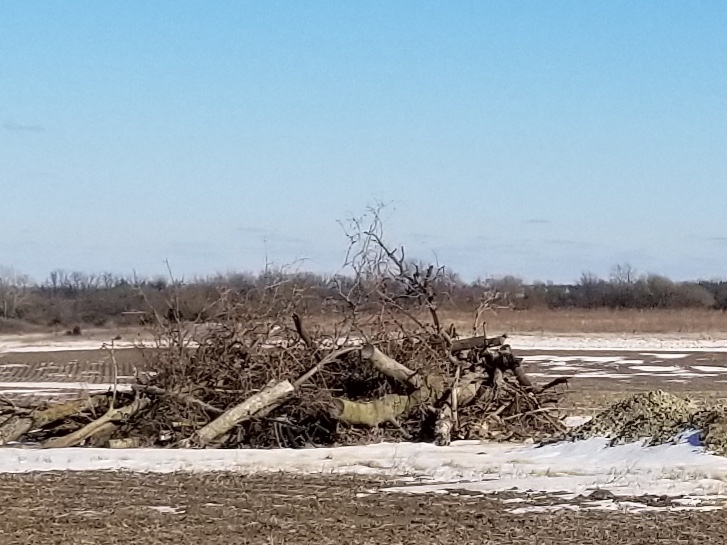
Question: Great article! We have bobwhites in the grasslands on our 20 acres south of Mascoutah, St Clair Cty. I have been worried about them after we had the 12” of snow in late January. We left piles of cut brush in various places around our fields specifically for bobwhite winter protection. There were seed heads left on much of the pasture grasses as we purposefully did not mow this past Fall. The snow hung around for a week and windchills were at zero. Could our beloved bobwhites have survived? The meadowlarks did. They are visible & audible. Haven’t seen or heard the bobwhites for a while. Should we have waded through the snow to put out bird seed for the bobwhites? We are a bit worried about them. Thank you.