
Photo by Thanchira Suriyamongkol.

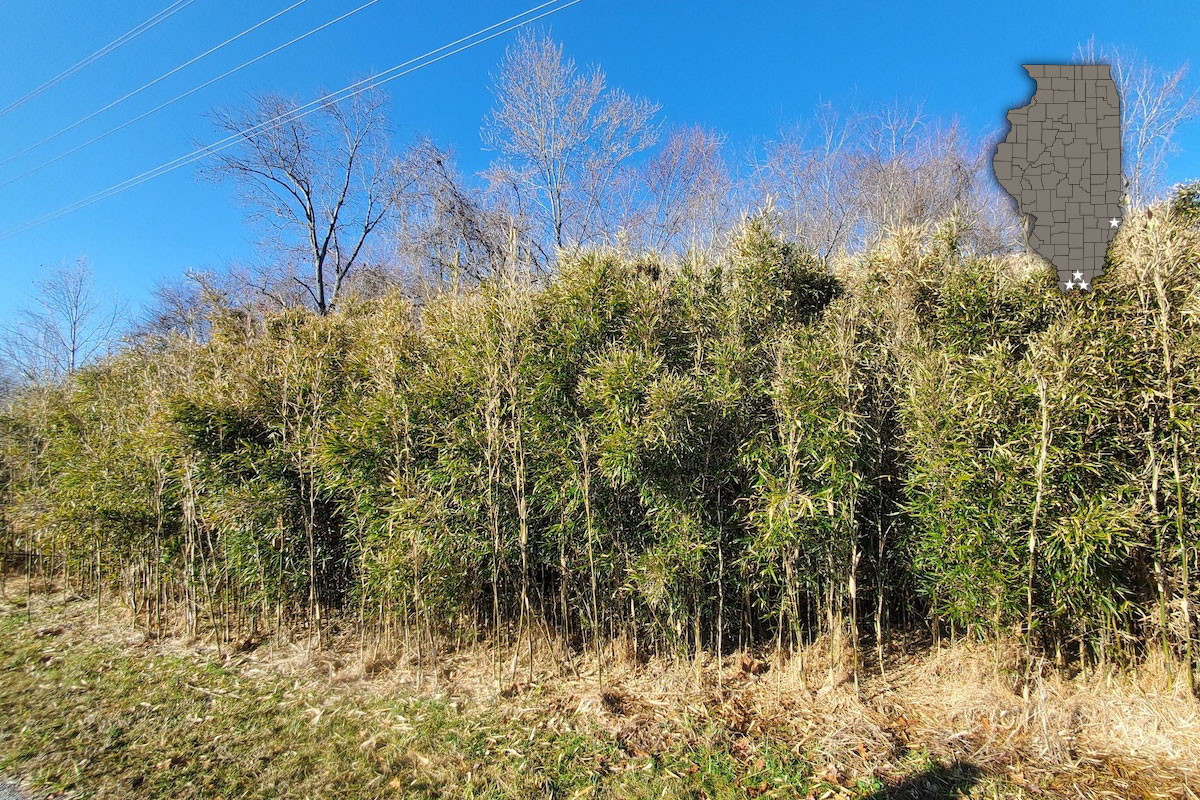
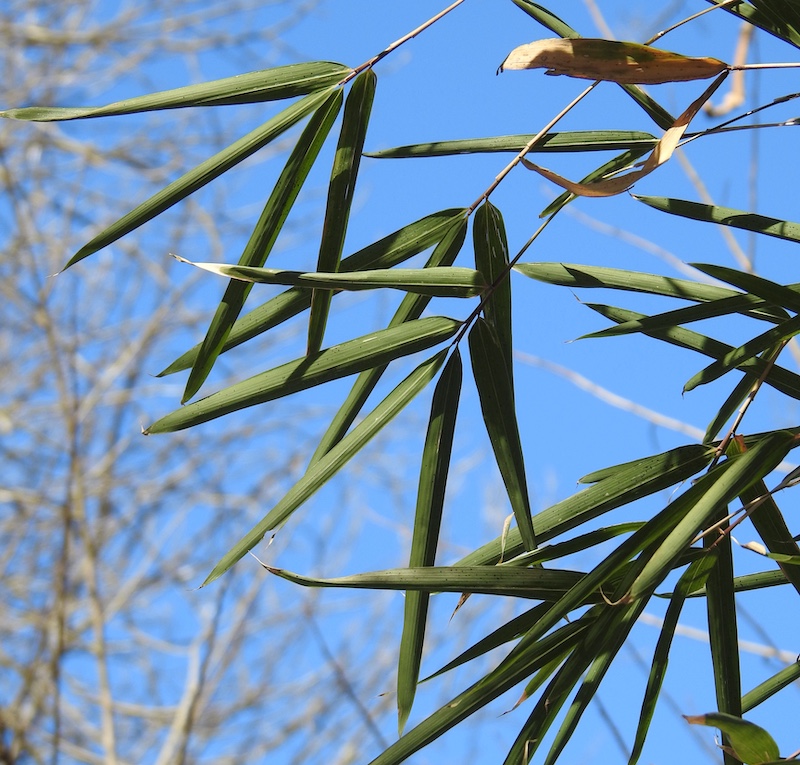
Photo by Thanchira Suriyamongkol.
Perched in a stand of bamboo, way up high on a cane stem was a small coconut! No, it was a spherical woven nest situated amongst a stand of giant cane (Arundinaria gigantea). Upon closer examination, I found it was made of the typical stuff of birds’ nests, such as tree leaves and grass blades, but its domed roof of thatched strands of inner bark led me to believe that no bird had constructed this nest. I saw that the nest had been attached to a cane’s primary stem (culm), a few of its lateral branches and an entwining greenbrier vine. I deduced that the nest had been made by an arboreal mouse, maybe that little, yellow-furred mouse known to favor a cane habitat, the golden mouse (Ochrotomys nuttalli).
I thought to myself: “While I am deducing, I might as well interpret that birdsong to be the teer, teer, teer, we-tee-widow of a Swainson’s warbler (Limnothlypis swainsonii).” I knew that Swainson’s warblers once thrived in their preferred habitat of canebrakes, dense and vast in the past, but that now that warbler species, is rarely seen in Illinois; it is listed as endangered.
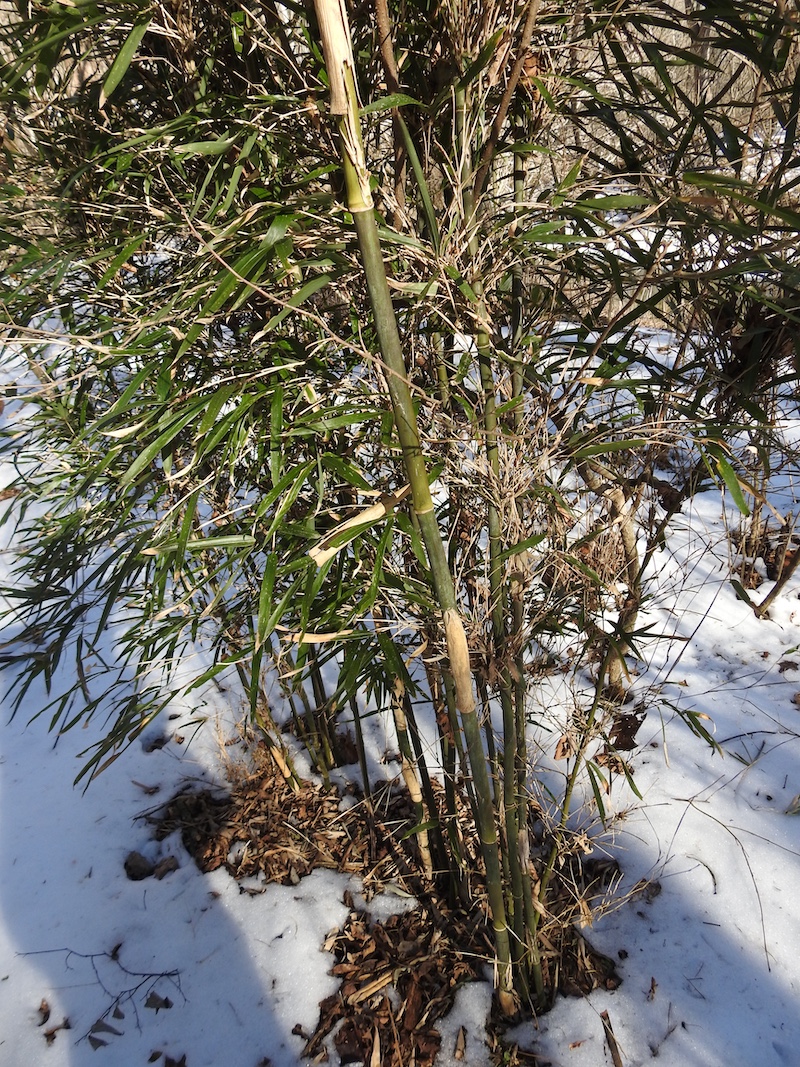
While I was making my way through that thicket of native bamboo in a southern Illinois bottomland, I noticed a cluster of incised cane stems, having been nipped off at about boot-top high. Being an optimistic person, I surmised, “A cane-cutter has emerged from out of the swampy section of this bottomland forest to gnaw upon the cane’s evergreen leaves and stems.” Cane-cutter is another common name for swamp rabbit (Sylvilagus aquaticus).
Cane is a native grass species with erect primary stems or culms bearing evergreen foliage, arising from rhizomes and growing surprisingly tall. Canebrakes (vast monotypic stands of giant cane) were a dominant feature in Illinois’ frontier landscape, especially in alluvial environments. Observations during the 18th century indicated that cane culms could reach more than 30-foot tall with diameters as thick as a man’s arm. One account suggested that a single culm segment could “hold above a pint of liquor.”
During pre-settlement times, canebrakes offered remarkable habitat. Young tender cane culms and the green leaves of cane were consumed by ungulates such as white-tailed deer and bison and eaten by gnawing animals such as beaver, muskrats, mice and rabbits. Even black bears browsed upon cane. Canebrakes were valued hunting grounds for Native Americans. Abundant insects thriving in canebrakes provided food for many various insectivores, including nesting birds and huge flocks of migratory birds.
Less than 2 percent of canebrake ecosystems remain from their pre-settlement distribution and are now classified as critically endangered. An Illinois Natural History Survey (INHS) inventory of the distribution of canebrakes in the seven southernmost counties of Illinois, completed in 2010, indicated the presence of giant cane stands. The largest, most intact canebrakes (those with dense cane growths covering about 600 square yards or about a tenth of an acre) were found particularly along the Cache River and the Post Creek cutoff, and in the Bellrose Waterfowl Preserve, as well as along the Hutchin’s, Cave and Cedar creeks in the western Shawnee National Forest.
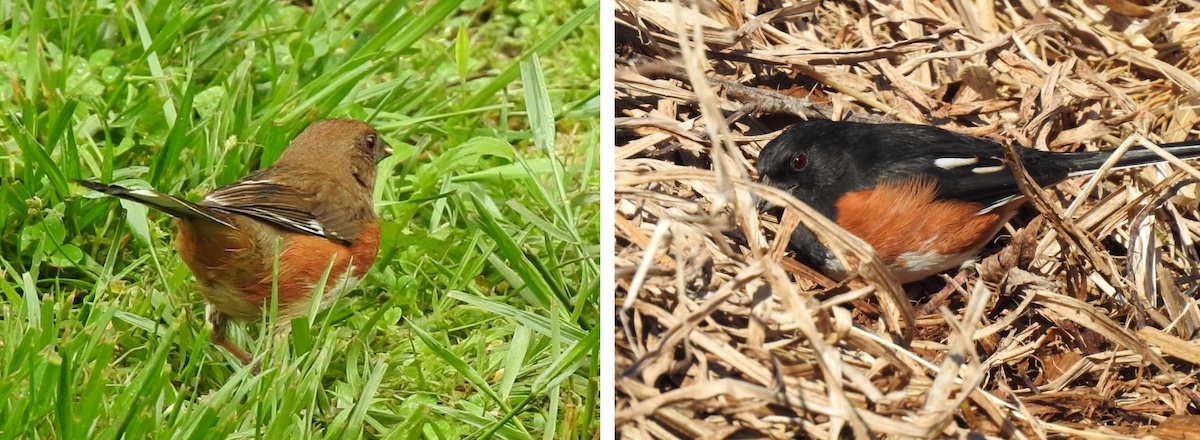
That INHS inventory included a breeding bird survey. Discovered to use cane as a nesting substrate were hooded warblers, Swainson’s warblers, white-eyed vireos, indigo buntings, northern cardinals and wood thrushes. Ground nests in dense structure of cane stands were built by Kentucky warblers, common yellowthroats and rufous-sided towhees.
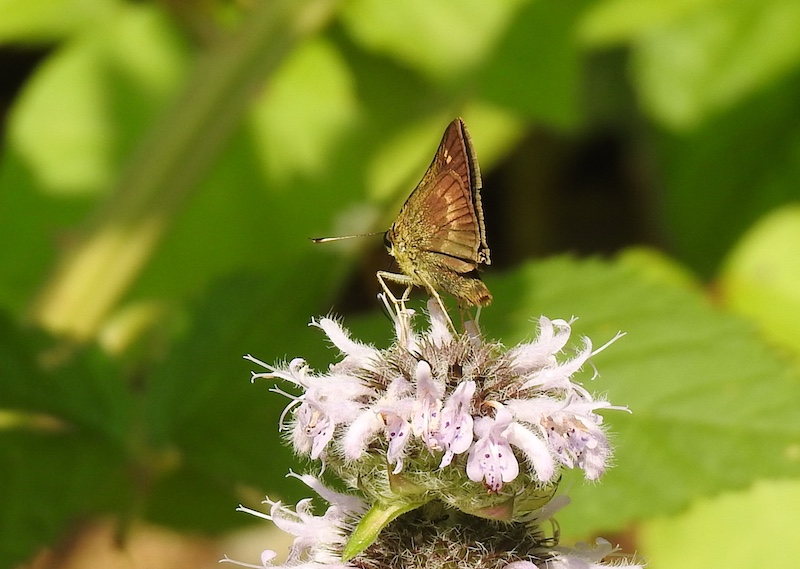
Of the insects utilizing giant cane, certain species have been found to feed entirely on cane. Such obligate cane feeders include certain leafhoppers in the Arundanus genus and caterpillars of specific skippers (Amblyscirtes spp.) and of certain butterflies (Enodia spp.).
At the School of Forestry and Horticulture of Southern Illinois University in Carbondale (SIUC), research into the propagation of giant cane has shown that planting cane’s rhizomes to establish cane thickets is operationally feasible for large-scale restoration. SIUC studies also revealed that the establishment of giant cane serves to mitigate erosion along streams, riverbanks and reservoirs. Riparian buffer zones which include cane reduce agricultural sedimentation and provide nutrient attenuation, thus helping to improve water quality.
In October 2016 a restoration project at the Embarras River Bottoms State Natural Area (ERBSNA) was initiated by the Illinois Department of Natural Resources (IDNR) with the project lead scientist being Bob Edgin, local field representative of the Illinois Nature Preserves Commission (now retired). Giant cane plants with vigorous rhizomes and roots, potted in two-gallon containers of soil, were purchased from a nursery and planted in a stand of mature timber. During the fall of 2017, giant cane was planted at three additional locations.
One location or unit was a 160-acre wetland area within which a hydroaxe had previously been used to remove woody vegetation and to encourage an herbaceous-dominated community. Another was a 40-acre old field/sedge meadow where the cane transplants were placed along both sides of a mowed strip beside a wetland. That wetland had been mapped during the General Land Office surveys of historic United States. Other units were a mature floodplain forest with an herbaceous understory and an old field (fallow agricultural field). Transects were established to monitor long-term survival and lateral shoot recruitment.
During the project at ERBSNA, two units experienced significant, persistent flooding in April and June following the planting in October of the previous year. Despite that seasonal flood, one of those units had a survival rate of 85 percent and the other, 91 percent, after one year.
In another unit during the winter of 2018, beavers constructed a large dam, causing inundation. The deep water restricted access to a study area and created less than favorable growing conditions.
At another unit, during the 2018 monitoring, there was discovered a muskrat lodge along with many animal runways. Apparently, muskrats had travelled through stands of ditch sedge (Carex spp.) on their way to the cane plantings. Edgin observed a “witch’s broom” as a growth aspect of cane which had been cut by gnawing animals. Rodent depredation lessened the vigor of the cane plants.
Interestingly and fortunately, common reed (Phragmites australis), an invasive non-native grass species which often spreads aggressively through wetlands, did not invade the giant cane plantings.
The monitoring of those four introductions of giant cane at ERBSNA resulted in the collection of data for four or five years after transplanting. One lesson learned was that giant cane’s survival rate is greatly reduced within a habitat affected by prolonged inundation, although cane plants may survive short-term or seasonal flooding. The stands of giant cane on well-drained ridges along floodplains (sometimes called secondary bottoms) potentially exhibit vigorous growth and expansion.
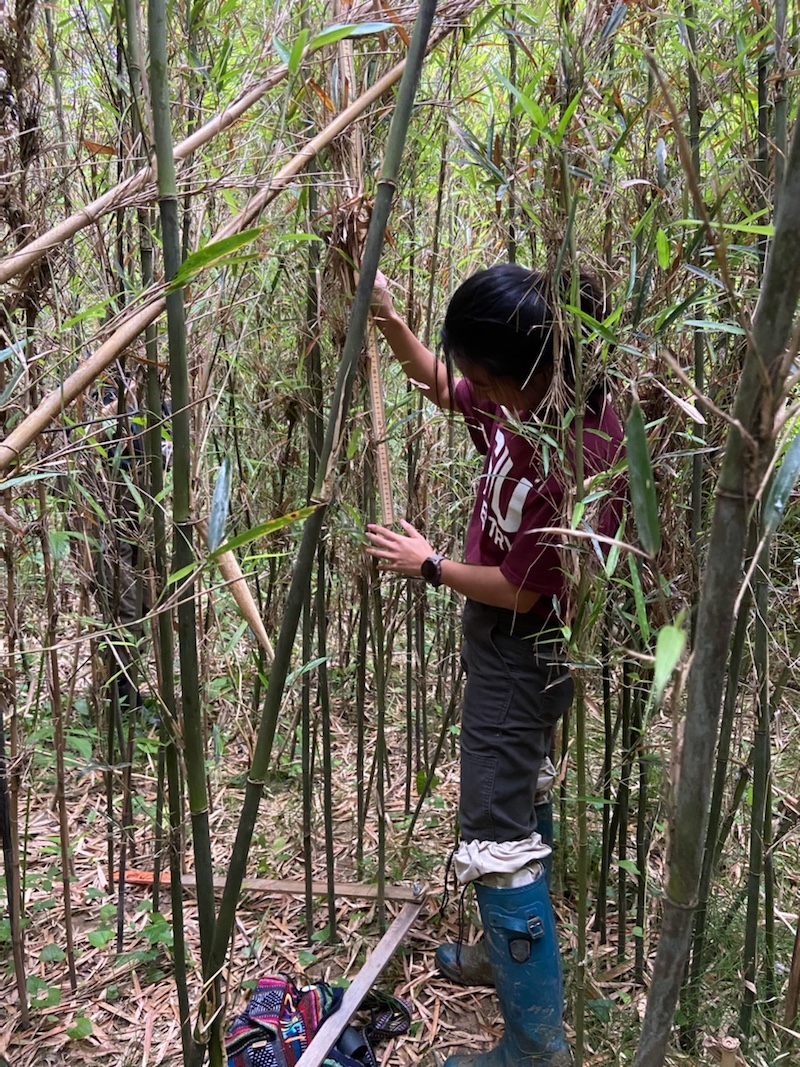
“If a transplanted giant cane made it through the first year, long-term survival and lateral shoot expansion was very good,” stated Edgin. His report was submitted after observations during the 2022 growing season. As the introduced cane plants became established, lateral shoots (clones of the original plant) developed and the cane stand or canebrake expanded.
That’s good news. Also, fortunate is the existence of remnant cane stands within our southern Illinois bottomland hardwood forests, which are home to a diversity of fauna, including those of high conservation concern.
SIUC researchers studied the relationship between forest characteristics and the growth of giant cane as a forest understory and edge vegetation. The lead researcher, Thanchira Suriyamongkol, concluded that disturbances (such as fire and windstorm blowdown) increase light intensity within a forest environment and that such increase in sunlight exposure promotes cane survivorship. Forest management practices that create canopy gaps and reduce woody competition can promote cane growth and expansion of remnant canebrakes in forest habitats.
One spring when I descended from a high forested ridge in Pope County, I found myself in a thicket of giant cane beside Lusk Creek. A skipper landed just long enough for me to snap a shot. Back at home while reviewing that day’s photos, I pulled out my copy of Field Guide to the Skipper Butterflies of Illinois. I just happened to read, “Always found in association with cane.” That phrase makes a significant comment. I hope you agree.
Eager to learn more about canebrakes? Please find the companion article, “Canebrakes—Vegetative Obstacle or Botanical Catalyst.
Personal communications: Bob Edgin, “Arundinaria gigantea (Giant Cane) Establishment at Embarras River Bottoms State Natural Area, Lawrence County, Illinois”; James J. Zaczek, cane-related research publications from collaborators in the Forestry Program at SIU; Taryn Bieri (IDNR District Forester), restoration and management of canebrake ecosystems; and Kevin Sierzega (representative of the Illinois Nature Preserves Commission), canebrake restoration.
Taryn Bieri. “Investigating Native Bamboo Practices for Reservoir Conservation and Habitat Restoration,” March 2024
Jeff Hoover. “Survey of the distribution, size, and development of canebrakes in southern Illinois,” INHS Technical Report 2010 (26)
Steven G. Platt and Christopher G. Brantley. “Canebrakes: An Ecological and Historical Perspective,” Castanea, Mar., 1997, Vol. 62, No. 1. (Mar., 1997, pp. 8-21 published by Southern Appalachian Botanical Society)
Thanchira Suriyamongkol, et al., “Relationship Between Forest Cover and Canebrakes in Southern Illinois,” ERIGENIA, Number 29, Spring 2025.
Jessica L. Esposito, et al., “Evaluating Swamp Rabbits as Indicators of Habitat Quality in Bottomland Hardwood Forests,” OutdoorIllinois Journal, August 3, 2020.
Dr. John Hilty, “Giant Cane,” Illinois Wildflowers website.
For years, Patty Gillespie shared her enthusiasm for language and nature and got paid for it at a public school and at a nature center. Now she plays outdoors as often as she can and writes for the sheer joy of it.





Submit a question for the author