
A deer peers into a camera trap. All photos courtesy of Max Allen.

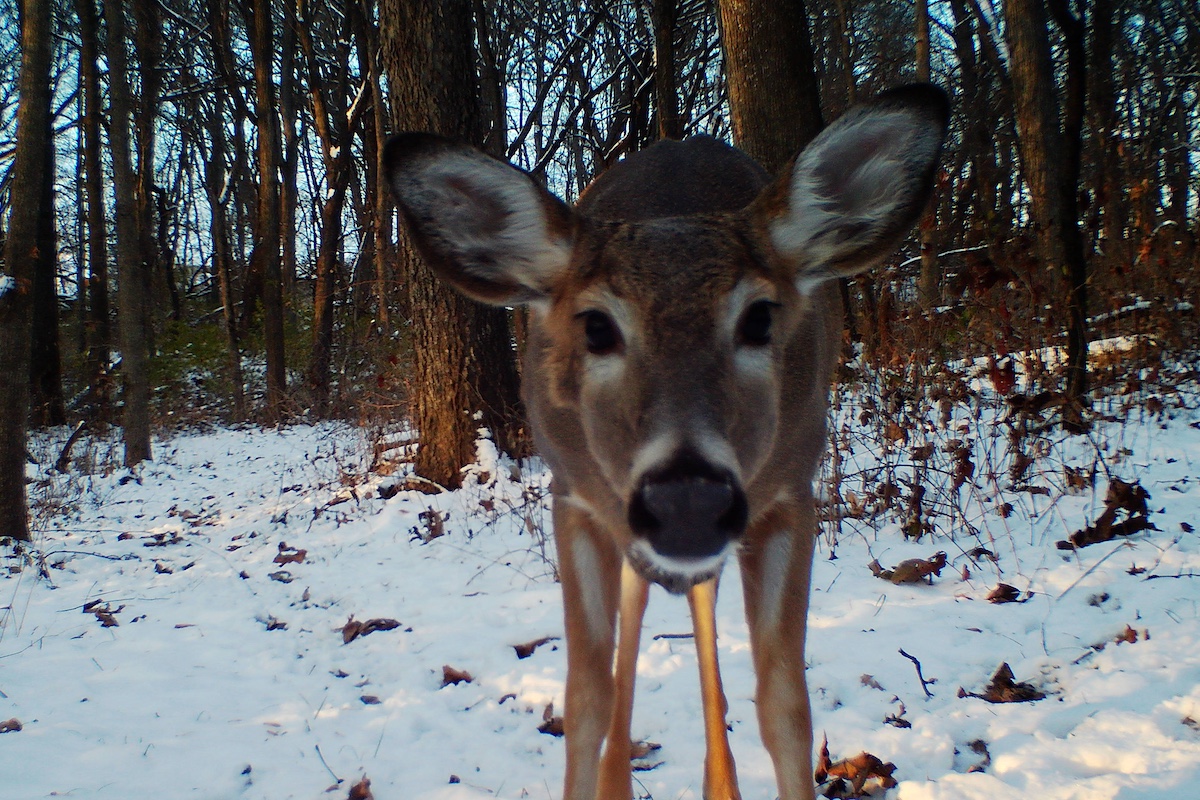
A deer peers into a camera trap. All photos courtesy of Max Allen.
Maintaining diverse wildlife communities is key to healthy, resilient ecosystems. Mammals, in particular, play important roles: squirrels scatter acorns that grow into oaks, beavers reengineer wetlands with their dams, and carnivores recycle nutrients through predation. When mammal diversity thrives, so do birds, insects, and countless other species.
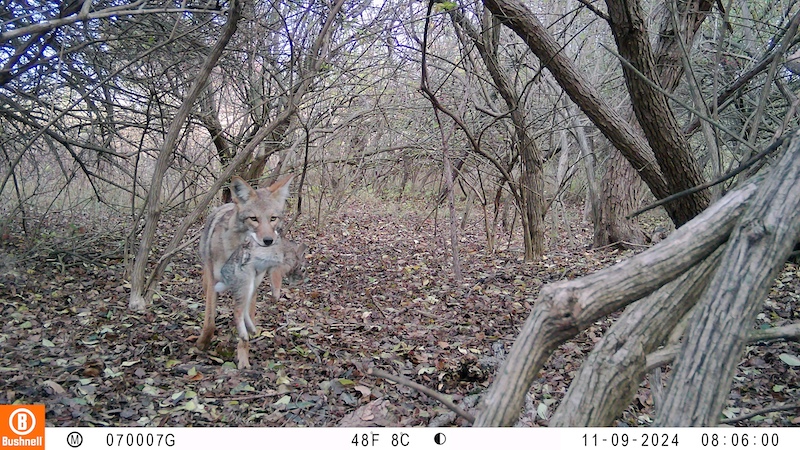
The Midwestern region has seen considerable landscape transformation in the last century. Natural habitat has been converted into agriculture, while urban metropolises have expanded. Illinois is no different. Once dominated by tallgrass prairie, oak woodlands, and wetlands, the state is now a patchwork of croplands, highways, and cities, and as a result, our mammal communities have undergone significant change. Adaptable species such as raccoons, skunks, and white-tailed deer have flourished in human-dominated environments, finding food in the edges of crop fields, trash bins, shelter under decks, and protection from the predators that once kept their numbers in check.
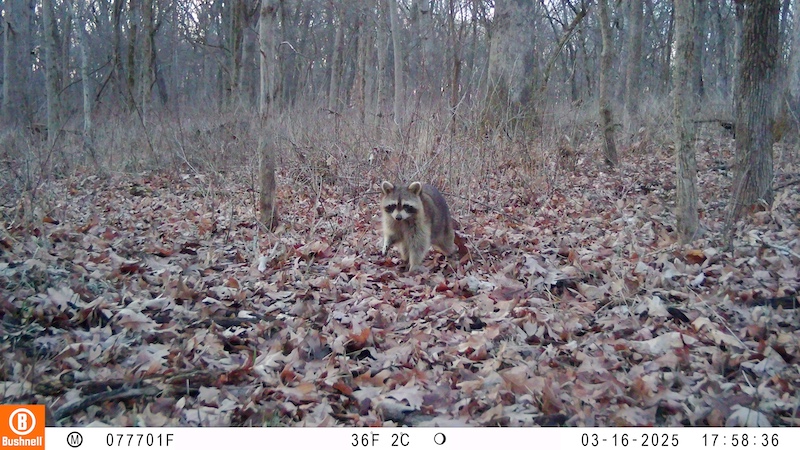
To better understand what drives mammal diversity in Illinois, we tapped into our statewide camera trap grid—a network of motion-triggered cameras placed across forests, wetlands, farms and cities. A long-term project funded by the Illinois Department of Natural Resources (IDNR), these cameras quietly assemble a database of mammal sightings from fall to spring annually. This allows us to monitor mammal trends across the state, in combination with other surveys. We used this photo data to compare the differences in mammal communities throughout Illinois, and publish the findings in the Biological Conservation journal.
Although rare in Illinois, shrublands often occur at the edges of woodlands and fields, and we found that their presence was linked to greater mammal diversity. These transitional, early successional habitats provide food and shelter for species from both open and forested environments. However, it is important to note that not all shrublands may be equally beneficial, and invasives like Amur honeysuckle may have adverse effects on diversity.
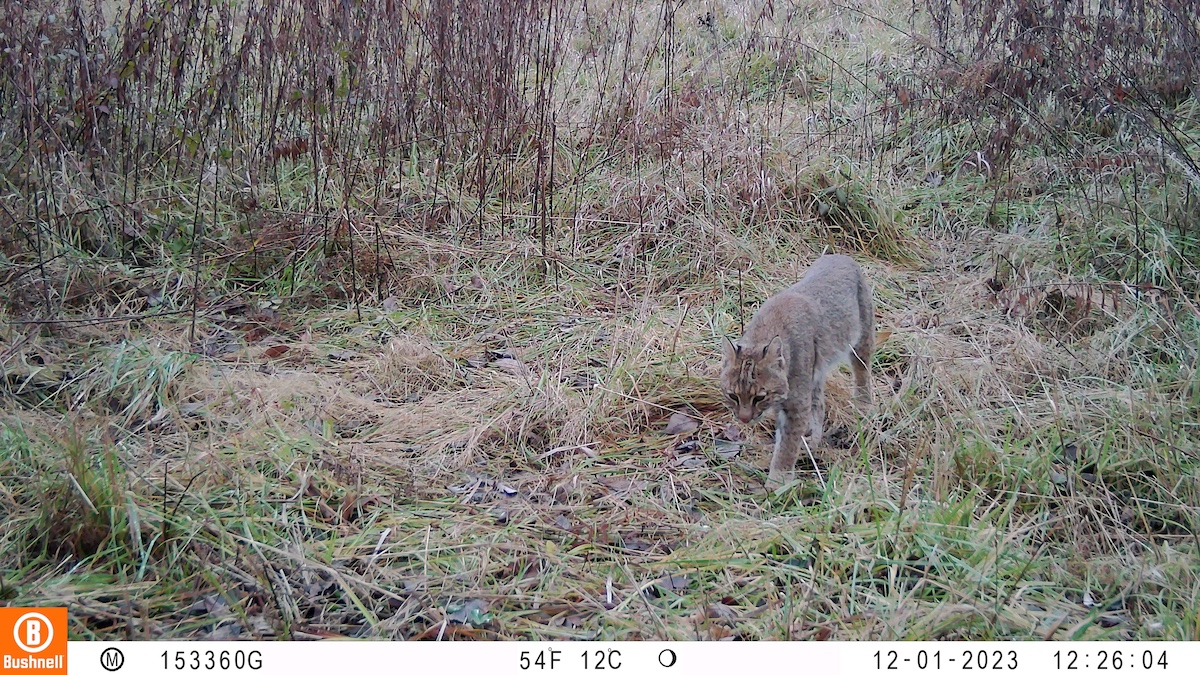
Shrublands are often overlooked in conservation planning because they are frequently thought of as merely transitional zones, rather than valuable habitat in their own right. Our data supports the notion that preserving shrubland areas may be an important tool for promoting mammal diversity.
Our results point to a key strategy for supporting mammal diversity in Illinois: protecting and restoring natural habitat—including underappreciated habitats like shrublands. IDNR’s thoughtful stewardship and support of our camera trapping project ensures we have a robust data source to monitor these trends in mammal populations over time, and having accurate data is vital for making informed and effective management and conservation decisions.
Nathan Proudman is a Postdoctoral Research Associate at the Illinois Natural History Survey. His research has primarily focused on the ecology of mammals. Currently, he is working on a statewide monitoring program for mammals in Illinois.




Submit a question for the author