
Photo by the U.S. National Park Service.

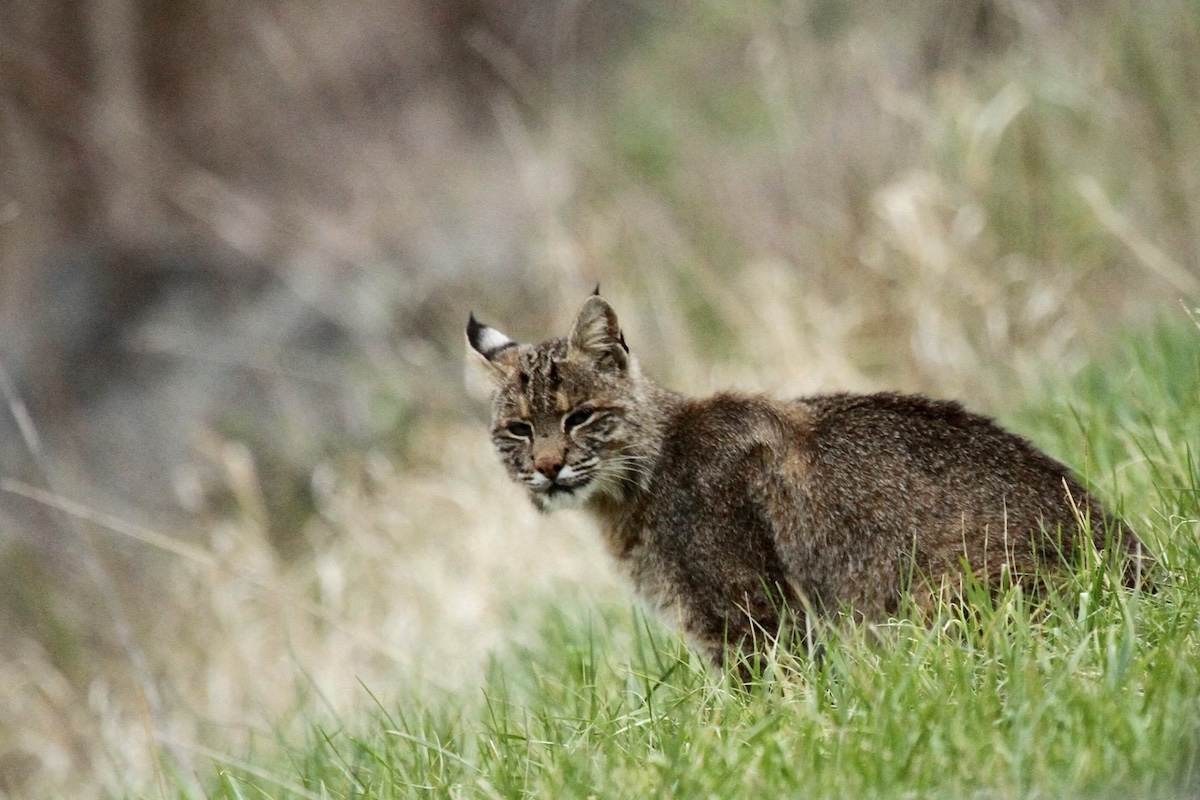
Photo by the U.S. National Park Service.
Bobcats often feel almost familiar; like an animal we should easily understand—but that sense of familiarity can be misleading. They are common enough that most outdoorspeople in Illinois know what one looks like, but elusive enough that seeing one still feels like an event. A few seconds of movement at the edge of a field, a tail disappearing into brush, or a set of tracks in mud or snow is often all the evidence they leave behind.
Part of the bobcat’s mystery comes from how they hunt and move. Bobcats are not built to chase prey over long distances. Instead, they are ambush hunters: quiet, patient and efficient. They slip through shrub or grass cover, wait for the right moment and rely on surprising prey. Like many successful predators, they are flexible in their diet but strictly carnivorous. Across North America, bobcats eat many different types of prey, but what they eat most depends on where they live and what is available around them. That makes bobcats’ diet an especially interesting question in Illinois, where bobcats have made a remarkable comeback over the last few decades. Once reduced by habitat loss and overexploitation, bobcats gradually recovered and are once again part of the Illinois wildlife story.
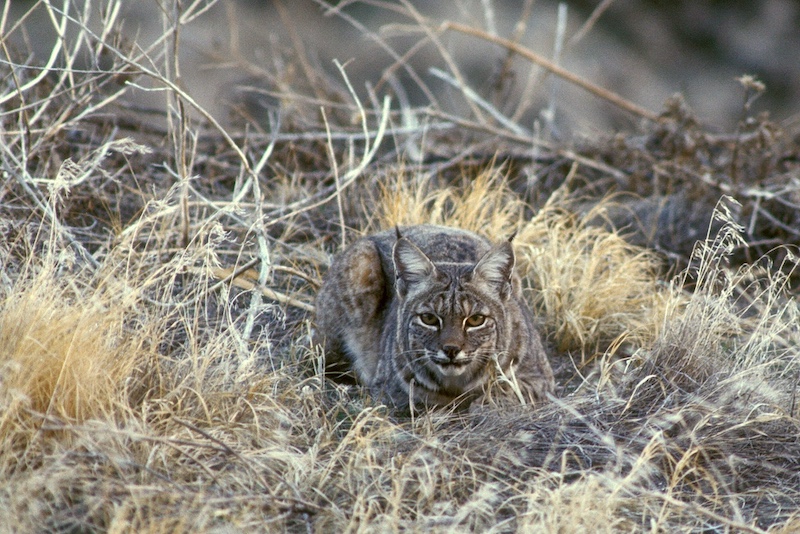
Bobcats are regarded as a classic opportunistic predator. Mammals typically make up most of their diet. Across the Midwest, bobcats tend to eat many of the same types of prey. In a study from Iowa, their diet was found to be made up mostly of eastern cottontail rabbits, squirrels and other small mammals—especially in areas where forests meet grasslands, which bobcats tend to prefer. Study from Indiana shows a similar pattern, with rabbits being the most common food, followed by small mammals like mice and voles, and tree squirrels. But larger animals, such as white-tailed deer, and medium animals, like muskrat, were also part of the diet, particularly in fall and winter. Research from Ohio tells a similar story—rabbits were the most frequently eaten prey, but larger animals like deer provided more energy when they were available, especially during colder months. Bobcats also consumed smaller prey such as rodents and even insects.
Taken together, these studies show that bobcats are flexible hunters. Rather than relying on just one type of prey, they adjust their diet based on what is available in the landscape and the time of year. Bobcats are flexible hunters that take advantage of whatever prey is easiest to find and catch. When rabbits are abundant, they often make the most of the diet. In other situations, bobcats may rely more on squirrels, mice, or other small mammals or insects. During winter, they will also feed on deer carcasses when the opportunity for scavenging arises.
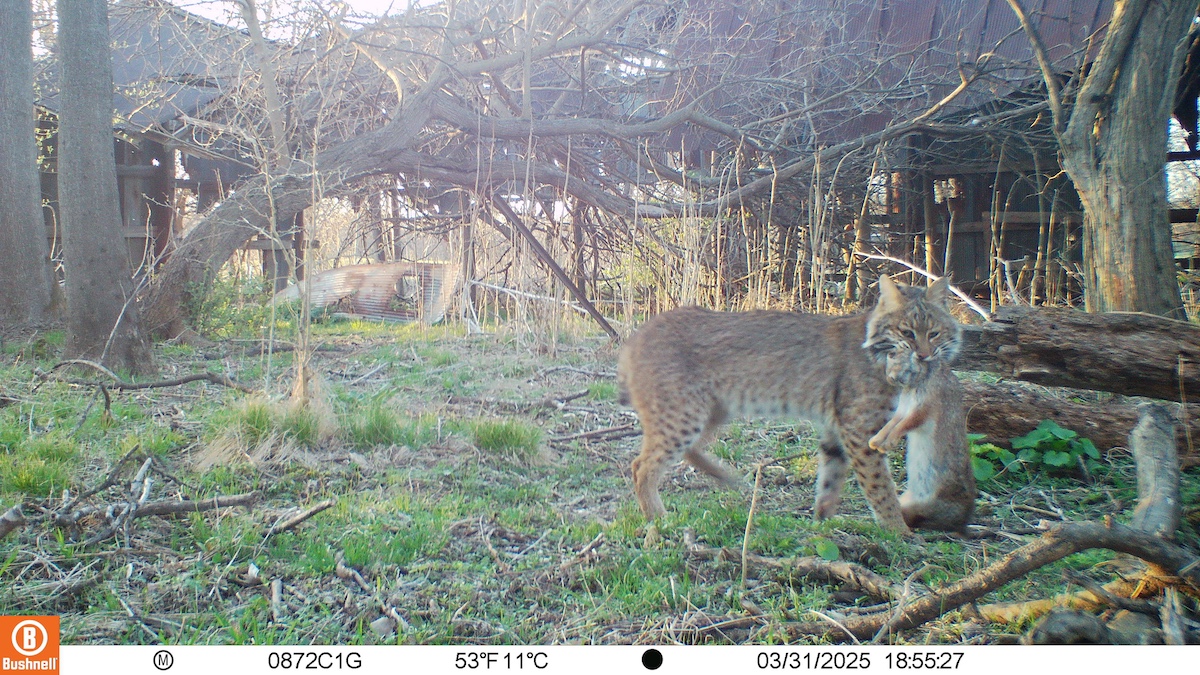
Across the Midwest, one pattern is clear; rabbits, especially eastern cottontails, are often the most common food for bobcats. This is one reason bobcats are frequently found in habitats that support high numbers of rabbits, such as areas where forests and open land meet. What is ecologically meaningful here is that rabbits are large enough to provide a wholesome meal, but small enough for a bobcat to easily capture. They also tend to use the same kinds of edge habitats that bobcats use well: brushy cover, young forest, grassy openings, riparian strips, and the transitions between woods and fields. In working landscapes across much of Illinois, these edges can be found everywhere. That does not mean every farm field is good bobcat habitat, but it does mean that a patchwork of thickets, fencerows, stream corridors, and grass cover can support both bobcats and their prey.
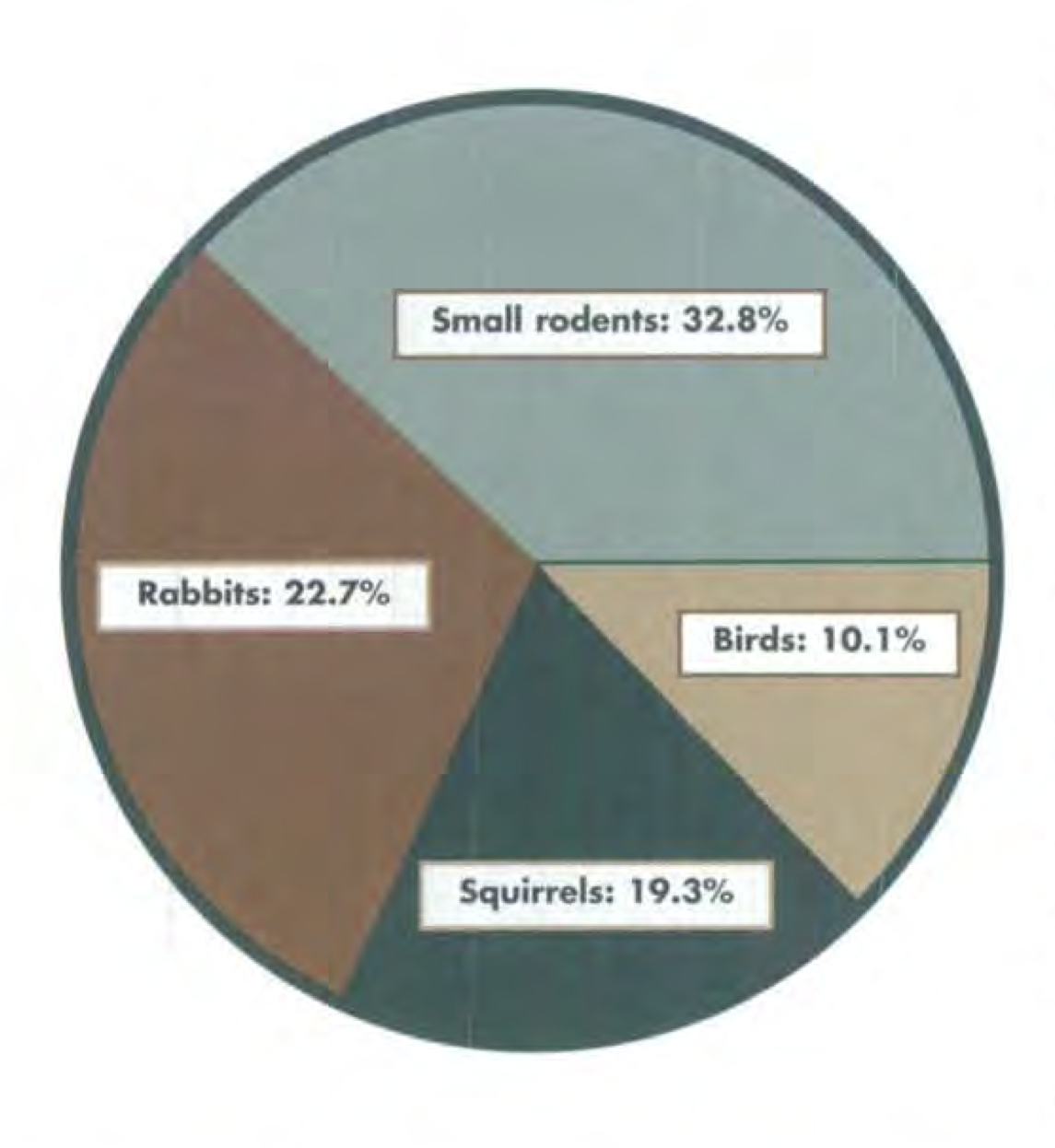
Small mammals, especially mice and voles, show up often in bobcat diet studies. Squirrels are also important in many eastern and Midwestern systems. That matters because it reminds us that bobcats are woven into food webs in more ways than most people realize. A bobcat is not only a hunter of conspicuous prey like rabbits. It also interacts with rodent and squirrel populations, and, seasonally, with larger animals such as deer. Contrasting studies from northern forests show just how adaptable bobcats can be. In northwestern Montana, bobcats ate few snowshoe hares and instead relied heavily on red squirrels and other small mammals. Although snowshoe hare doesn’t occur in Illinois, the broader lesson is that bobcats remained generalists even under difficult winter conditions.
Much of what we know about bobcat food habits comes from diet analysis using scats. For example, one study found that scats produced after eating deer lost mass faster in the field than scats produced after eating rabbits or rodents. That means some prey items could be underrepresented if samples deteriorate before researchers collect them. When we talk about what bobcats eat, we are really talking about the best evidence scientists can gather from remains, and those remains do not always preserve every prey type equally well. So, the big picture is often more reliable than any single percentage.
Surrounding-state studies give us a useful working picture for Illinois. Bobcats here are likely feeding from a broad menu dominated by mammals, especially cottontails, mice and voles, squirrels, And, at times in winter, deer that are most likely scavenged. Exactly which item rises to the top probably depends on habitat, season, and local availability. That flexibility may be one reason bobcats have been able to successfully recolonize this agricultural state.
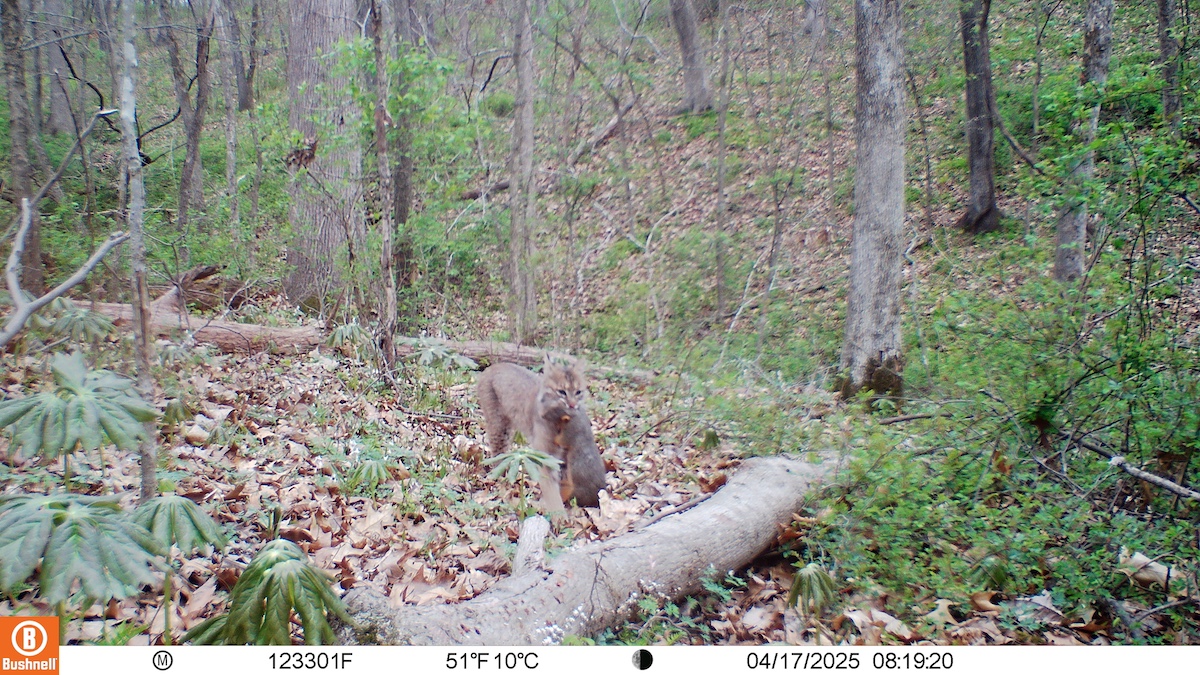
Bobcats do not require untouched wilderness, but they do need cover, prey and room to move. They can also persist in landscapes shaped by people, provided those landscapes still hold the ingredients of habitat. River corridors, woodlots, brushy edges, wetlands and connected travel route all matter. So do healthy prey populations. In that sense, asking what bobcats eat is really another way of asking what kind of landscape Illinois provides for bobcats. The answer appears to be encouraging where prey remains abundant and habitat remains connected enough; bobcats will likely continue to make a living in the Prairie State.
Kathan Bandyopadhyay is a Postdoctoral Research Associate at the Illinois Natural History Survey, working in Max Allen’s lab on statewide furbearer ecology and population dynamics in Illinois. He recently completed his Ph.D. in Zoology and Physiology at the University of Wyoming where his research focused on the ecology, distribution and coexistence of meso-carnivores in human-dominated landscapes of India. His work broadly centers on carnivore ecology and conservation, with a particular emphasis on how species, especially small wild cats native to India, persist and interact within multi-use landscapes shaped by human activity. His research integrates camera trapping, spatial capture–recapture, occupancy modeling, and habitat suitability approaches to understand species distributions, density and niche partitioning across ecological gradients. Prior to his doctoral work, Bandyopadhyay completed his M.Sc. in Wildlife Management and Conservation at the University of Reading. He has extensive field and analytical experience across India, UK and Namibia, including work with the Wildlife Institute of India and the Cheetah Conservation Fund, where he studied predator–prey dynamics, large carnivore populations, and conservation strategies for species such as cheetahs and leopards and other lesser-known carnivores. In his current role, he combines large-scale datasets from camera traps, GPS telemetry, and community science to model the distribution, movement, and habitat use of furbearers, contributing to applied wildlife management and conservation planning.




Submit a question for the author
Question: I was bike touring along the Missouri River during a big irruption of frogs and thought I saw a bobcat in the distance and figured the frogs would draw a bobcat out . Is that a possibility?