
Photo by birdcite-ing (CC BY-NC 4.0) on iNaturalist

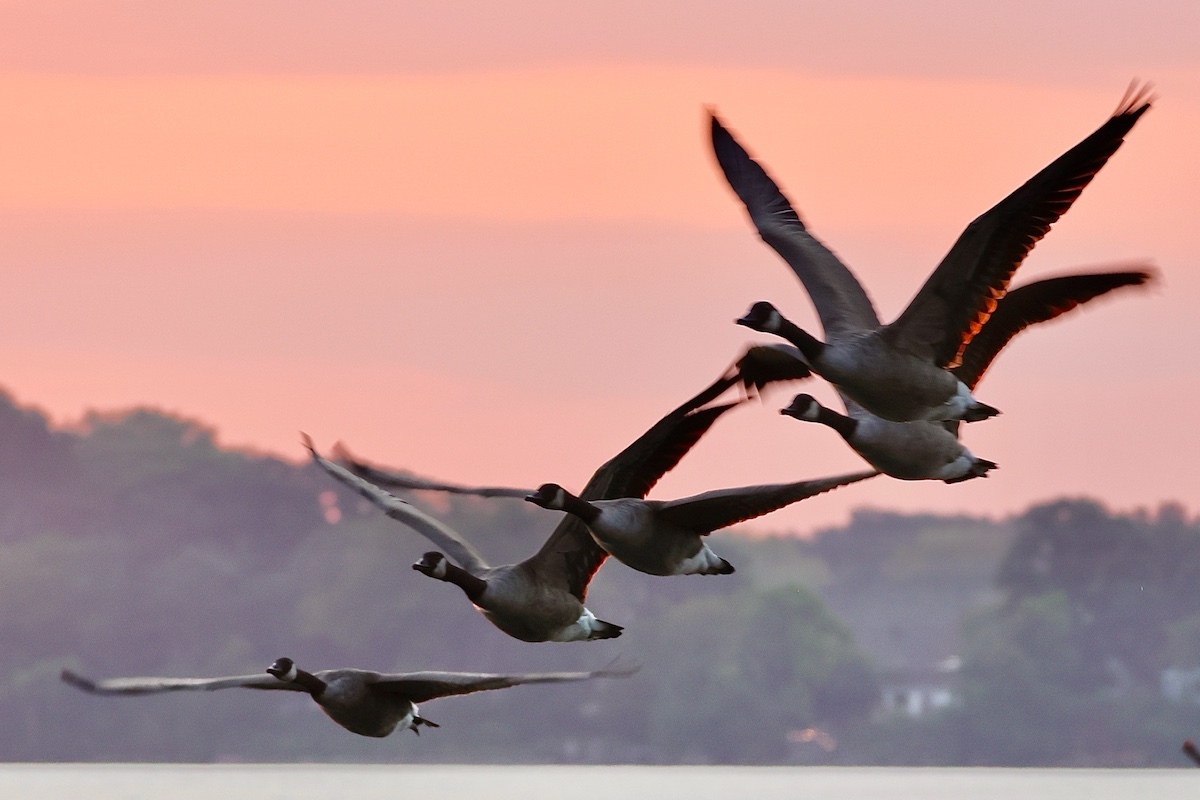
Photo by birdcite-ing (CC BY-NC 4.0) on iNaturalist
Canada Geese. Handsome birds. Monogamous mates. Fiercely protective of family.
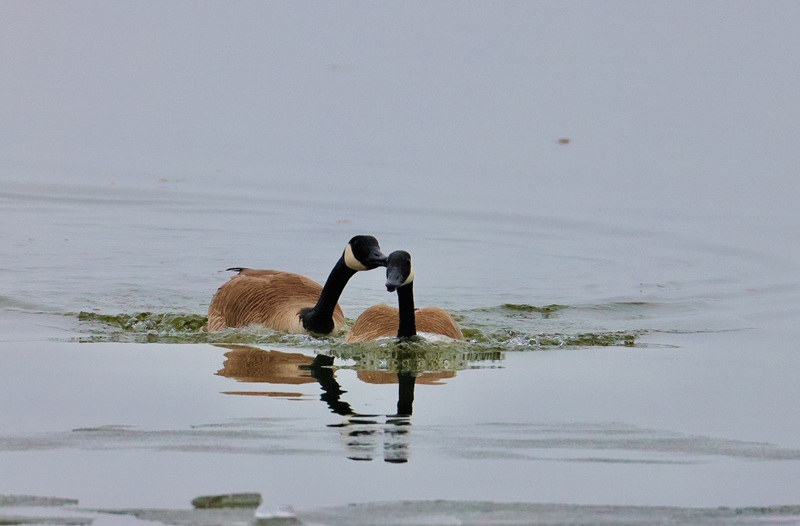
Also known for pooping all over walkways, hissing and chasing customers at businesses, frightening children near neighborhood ponds, and causing extensive crop damage. The geese are just going about the business of survival, but it often lands them on the “birds behaving badly” list. So let’s dive into their ecology to better understand why Canada geese are sometimes considered nuisance wildlife.
Canada geese are diurnal, meaning that they are active during the day. And they spend much of their day grazing and foraging for food either on land or in the water. Basic waterfowl behavior. But when it comes to geese, it’s not so much the behavior (usually) that’s the issue…it’s the numbers.
A pair of geese is lovely. Watching a couple of geese families grow up is fun. Dealing with a big flock of wild geese in a residential area or business district can quickly become, well, a mess.
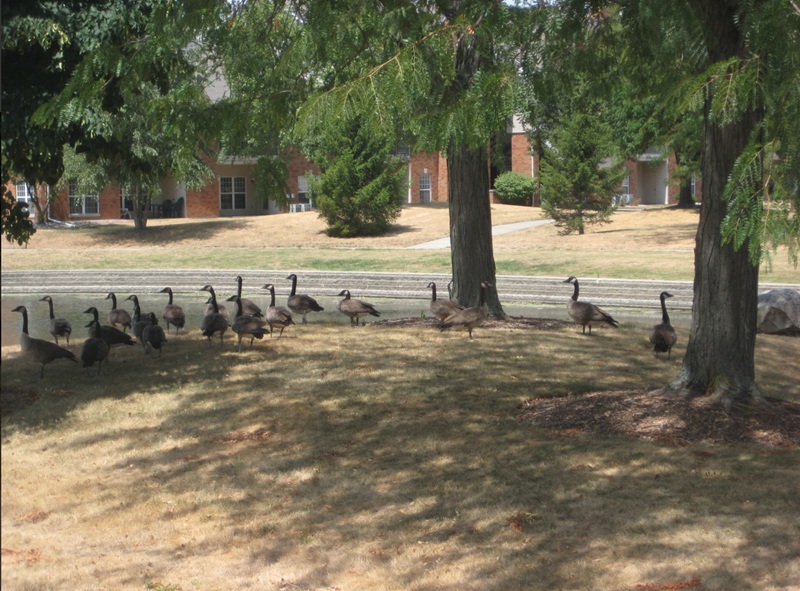
Canada geese are not likely to do much damage when there are only a handful of birds. However, large flocks of geese can lead to problems. Geese that have successfully raised young in an area are likely to return to that area again the next year. Thus, over the course of a few years, a pair of geese can quickly multiply into a large flock of geese. Then add to that equation the fact that Canada geese are highly social birds. So, the presence of a few geese on a lake or pond attracts even more geese to the area.
Plus, these birds aren’t short-lived songbirds. Canada geese can live more than 20 years. Based on bird-banding records, the oldest known wild Canada goose in Illinois was almost 30 years old when it died. Additionally, healthy adult Canada geese have few predators besides coyotes. Hunters harvest some of the Canada goose population each year, which helps control goose populations. But math doesn’t lie: high annual survival + high reproductive success = lots of geese.
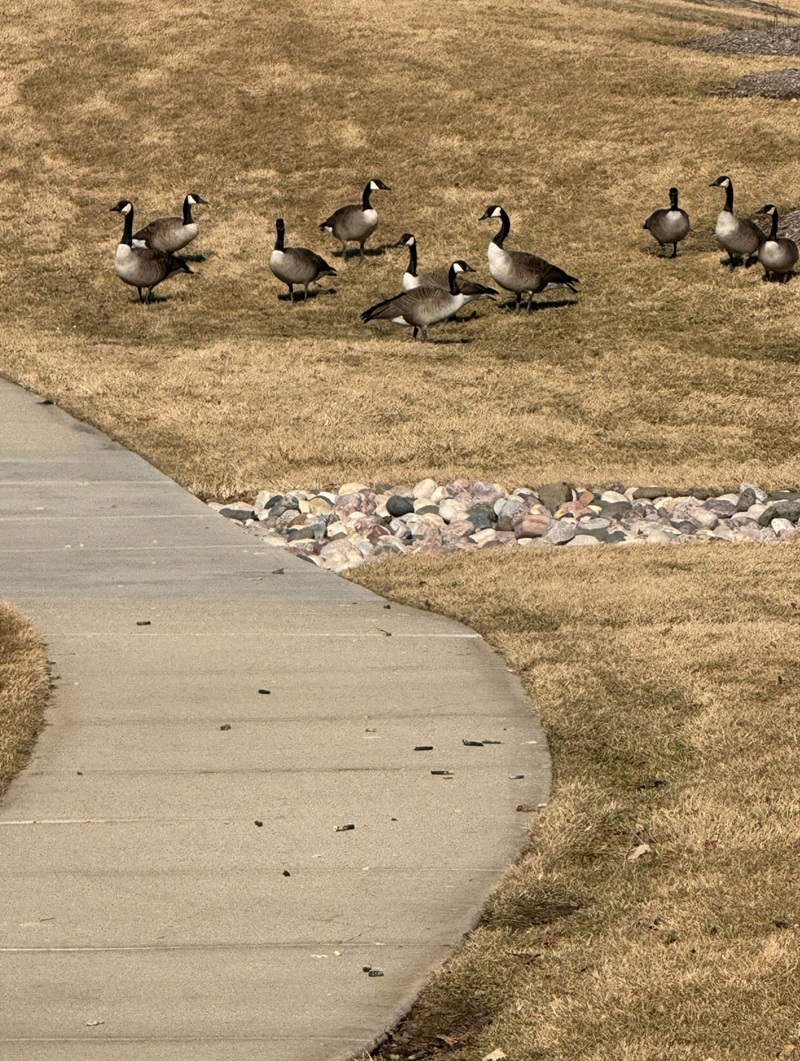
Canada geese are now common throughout Illinois. Golf courses and ponds in residential developments are prime habitat for urban geese, and they also hang out in parks, in parking lots, and in people’s front lawns. And as the saying goes: everyone poops, including wildlife. Which means that goose feces become a problem when there are large numbers of big birds in urban areas. Besides just being gross, their droppings can make the ground challenging to walk on and may also increase the bacterial load in waterbodies — which can contribute to human health concerns.
Of course, anyone who’s run into a gander during the breeding season knows from experience that it isn’t (always) numbers that are the issue. A Canada goose, especially the male, will aggressively defend their eggs and goslings. They will honk, hiss, flap their wings, fly at and even bite intruders to drive them away.
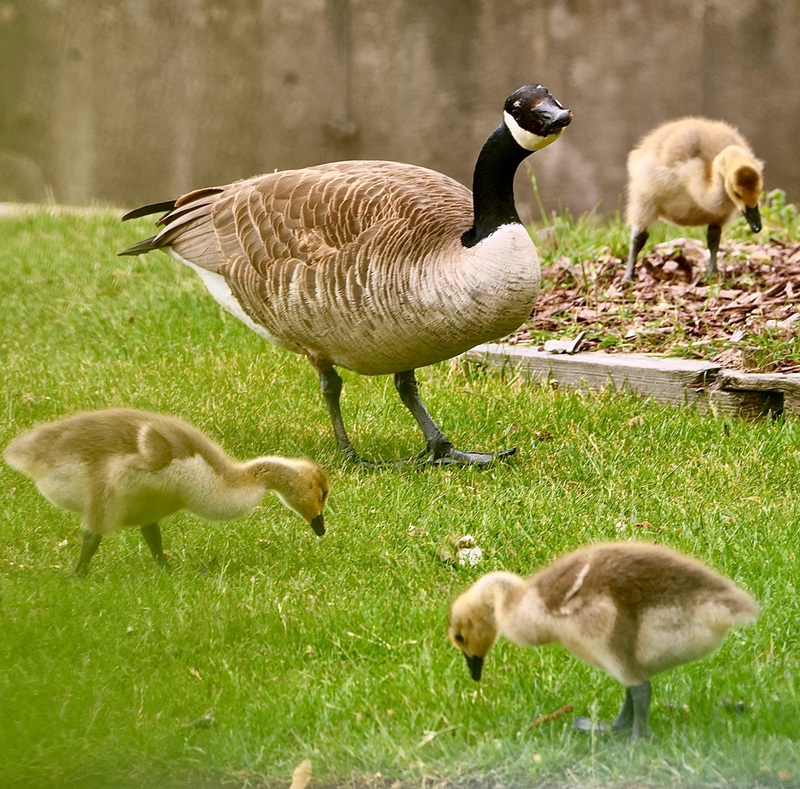
This can become an issue when the geese decide to pick a residential pond, parking lot or a planter next to the front door of a business to build their nest. It is also fairly common for mallards or Canada geese to nest near homes, in landscaping, on roofs or next to swimming pools.
The female builds the nest and incubates a clutch of four to ten (usually five to seven) eggs. Once the last egg is laid, incubation lasts 25 to 30 days. The goslings will typically all hatch within the same day and will then leave the nest and head toward water. Canada geese raise one brood per year, renesting only if their first attempt is unsuccessful.
If possible, give the nest plenty of space until the young have hatched and left the nest. Canada geese are federally and state protected, so it is illegal to disturb or remove their active nests, eggs or young without a permit.
Canada geese also cause damage to agriculture crops. Damage is usually limited to areas close to an open body of water. As grazers, geese are attracted to new growth. According to a study by Purdue Extension researchers, “most goose damage occurs after emergence…or when the plants are about 1-ft tall. Canada geese focus their feeding in open areas where they can easily detect predators…Geese feed by grabbing and pulling on the soybean plants; therefore, damaged leaflets may be torn or the plant may be broken off at the stem.”
In addition to the behaviors discussed above, Canada geese also cause traffic jams, force beach closures due to water quality concerns, damage turf by over-grazing, and can pose a safety threat when they fly near airports.
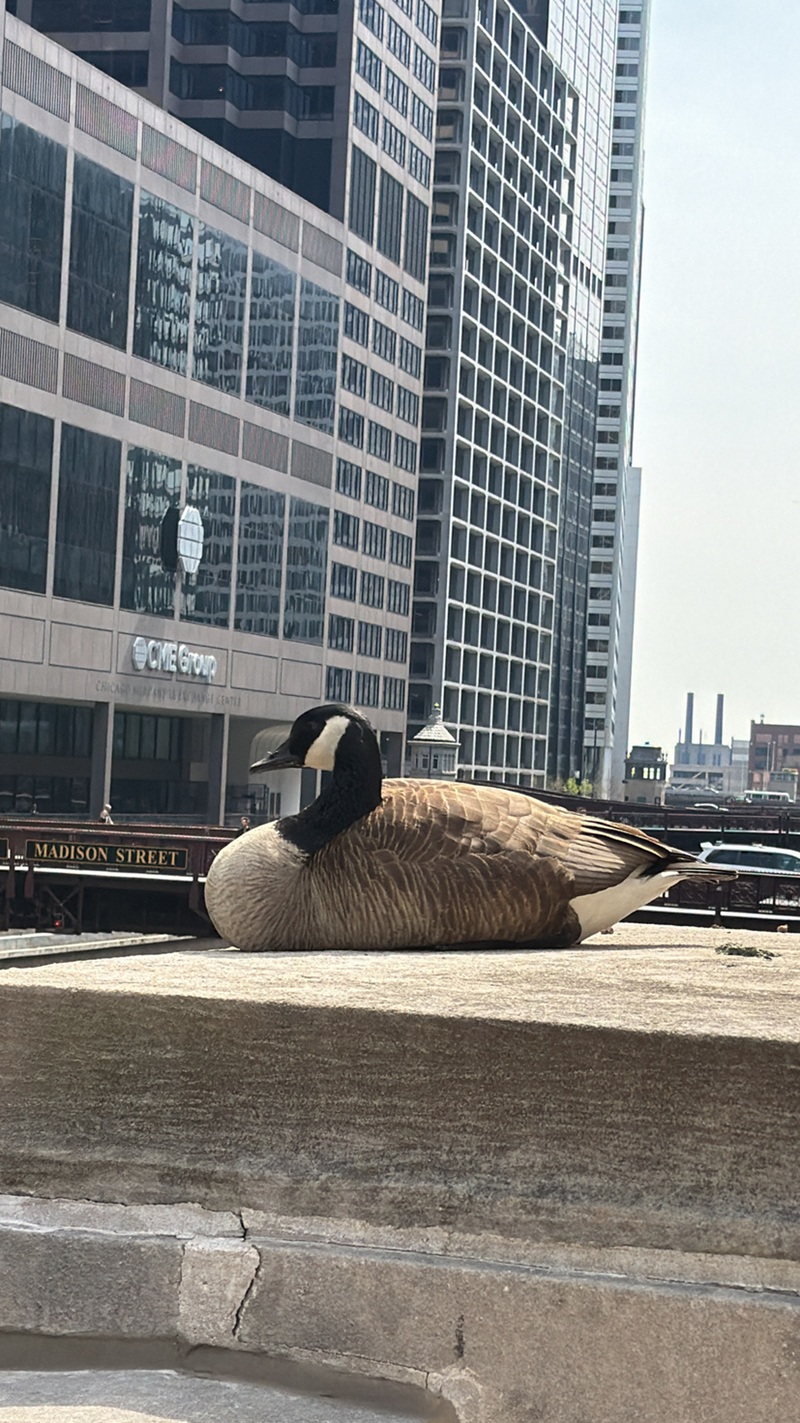
Preventing geese from using an area is much easier than discouraging them from using a site once they are established. Once geese have found suitable habitat, it is very difficult to discourage them from using the site. If geese have already established themselves on your property, the best way to control them is to use a combination of the management techniques listed below.
The USDA Wildlife Services has several resources, including a guide to help people prevent and handle conflicts with geese. For more information about a conflict with Canada geese, contact the Illinois Department of Natural Resources Urban Waterfowl Project Manager at (847) 608-3177. Additionally, the Wildlife Illinois website provides much more information about the ecology and biology of Canada geese as well as resources for reducing conflicts. Here is a sample of some of the techniques described on the site.
Geese prefer to use ponds with gently sloped banks that are surrounded by short grass. Tall vegetation can impede their flight or obstruct their view of potential predators. Habitat modification can help to discourage geese from using a pond.
Three-foot-high poultry wire fences will help keep geese out of gardens or yards, especially during summer. Good results have also been reported using 20-pound or heavier monofilament fishing line or light rope to make a three-strand fence. The first line should be 6 inches above ground, the second line is fixed at 12 inches high, and the third at 18 inches above ground. The monofilament fence is most effective at exclusion if it is in place before geese start to use the area for nesting in early March.
Harassing geese* is legal unless they have an active nest. They may be physically chased from a site, or various other techniques can be used to deter them from establishing a pattern of use in a particular area. Radio- or remote-controlled vehicles such as boats, trucks, and drones may be used to frighten geese away.
The use of trained dogs to harass geese has proven to be an effective way to keep geese from using a site; however, the dogs are not allowed to make contact with or injure the geese. The use of artificial dog or coyote decoys can help deter goose use of an area when moved frequently and used in combination with other disturbance methods.
In rural areas and outside of municipal boundaries, hunting can be an effective way to reduce goose numbers while also deterring future use and providing recreational opportunities.
While commercially available lights, lasers, and other products are available, they tend to have limited effectiveness.
It is sometimes easy when listing off ways that Canada geese become “nuisance wildlife” to lose sight of their broader ecological role, not to mention how we connect to them them personally. As a remedy to that I leave you with a passage by Aldo Leopold:
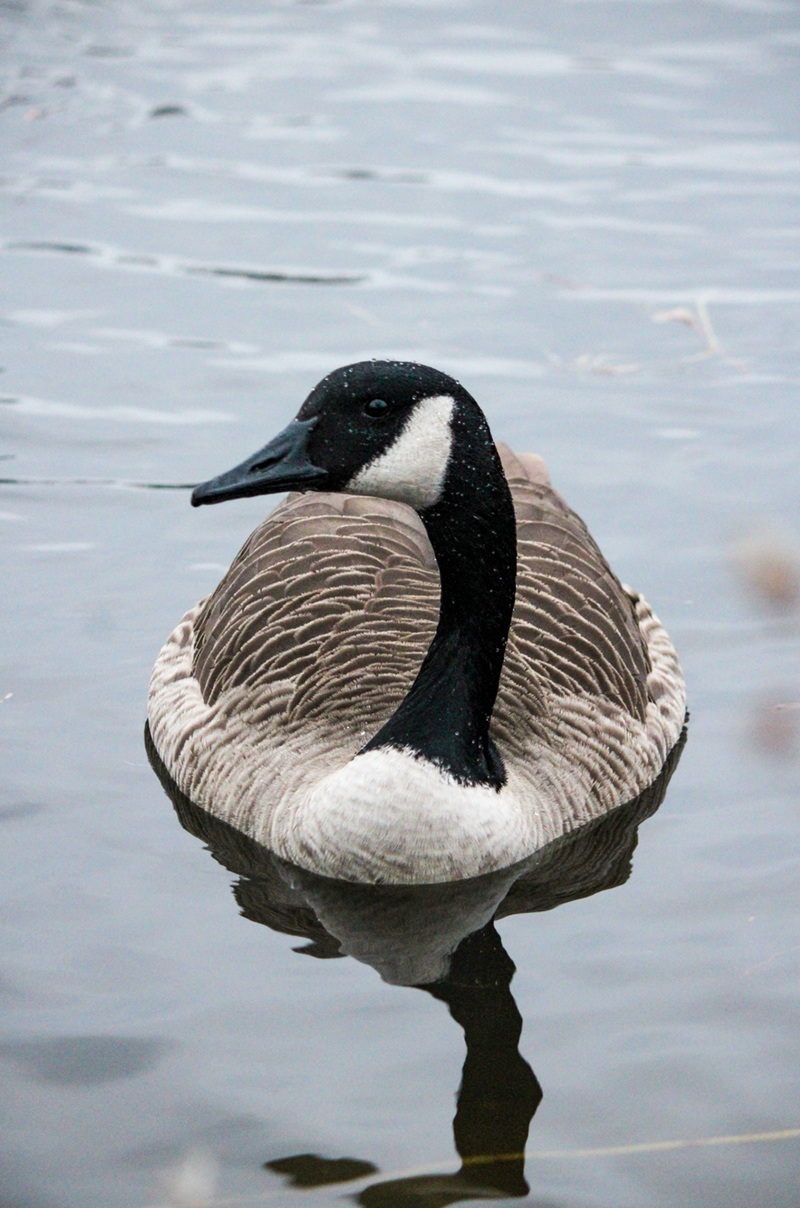
“One flock perhaps has thrilled a score of schoolboys, and sent them scurrying home with tales of high adventure. Another, passing overhead of a dark night, has serenaded a whole city with goose music, and awakened who knows what questionings and memories and hopes. A third perhaps has given pause to some farmer at his plow, and brought new thoughts of far lands and journeyings and people…If, then, we can live without goose music, we may as well do away with the stars, or sunsets, or Illiads. But the point is that we would be fools to do away with any of them.”
Passage from: “Goose Music” in Round River: From the Journals of Aldo Leopold. 1993. pgs. 166-173.
*Scroll down to the Developing Science-based Solutions to Waterfowl Conflicts section for a selection of resources on this topic.
Laura Kammin is a Natural Resources Specialist with the National Great Rivers Research and Education Center. She formerly held positions at Illinois-Indiana Sea Grant, University of Illinois Extension, Prairie Rivers Network and the Illinois Natural History Survey. She received her master’s degree in wildlife ecology from the University of Illinois, Urbana-Champaign.



Submit a question for the author