
Photo by Jonathan Schlesinger.

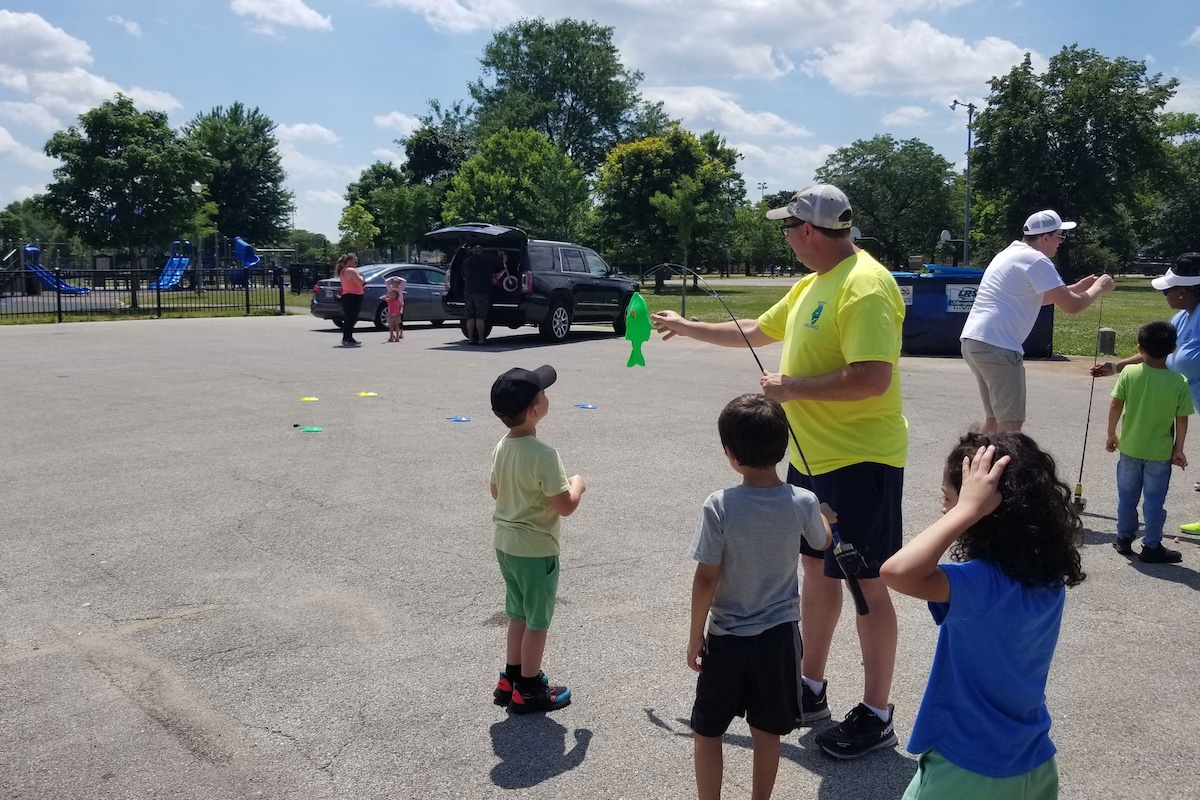
Photo by Jonathan Schlesinger.
Fishing is a great way to experience the outdoors, and Illinois has no shortage of places to drop a line in the water with 4.1 percent of the land surface covered by water and 63 miles of coastline along Lake Michigan. However, what if you are itching to fish or teach a new angler, yet lack quick or reliable access to a river, lake or lagoon? Visting the local bait shop or watching fishing videos on YouTube might fuel your enthusiasm but both lack the action of the real thing.
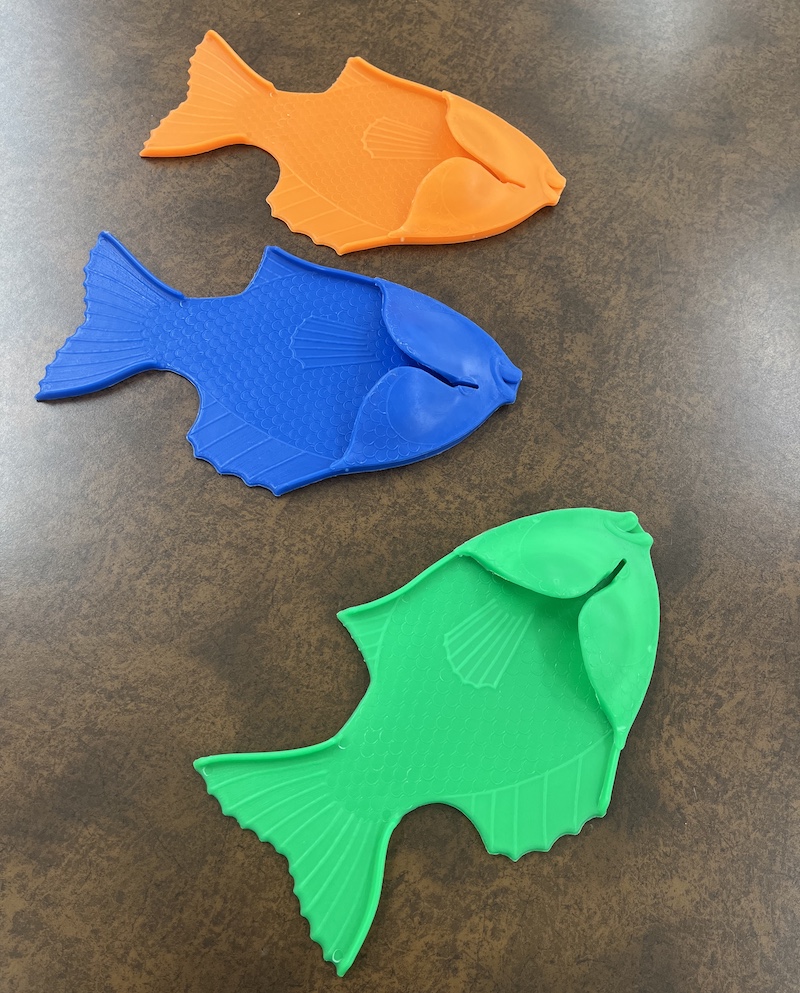
Fortunately, there are ways to practice casting and feel a bent rod until the opportunity arises to visit a lake or river. You can experience the thrill of fishing on dry land through Backyard Bass, a game that works on casting and how to use a fishing rod by catching colorful plastic fish. The plastic fish even float so the game can be played on water, but personally, I am generally too focused on the live fish swimming around.
The game includes hookless weighted plugs for casting and colorful plastic fish that remind me of Dr. Suess’s One fish, two fish, red fish, blue fish. Participants cast a plug, catch it on the lip of a fish and reel it in. Backyard Bass comes with small orange fish casting plugs, but most other casting plugs should work as well.
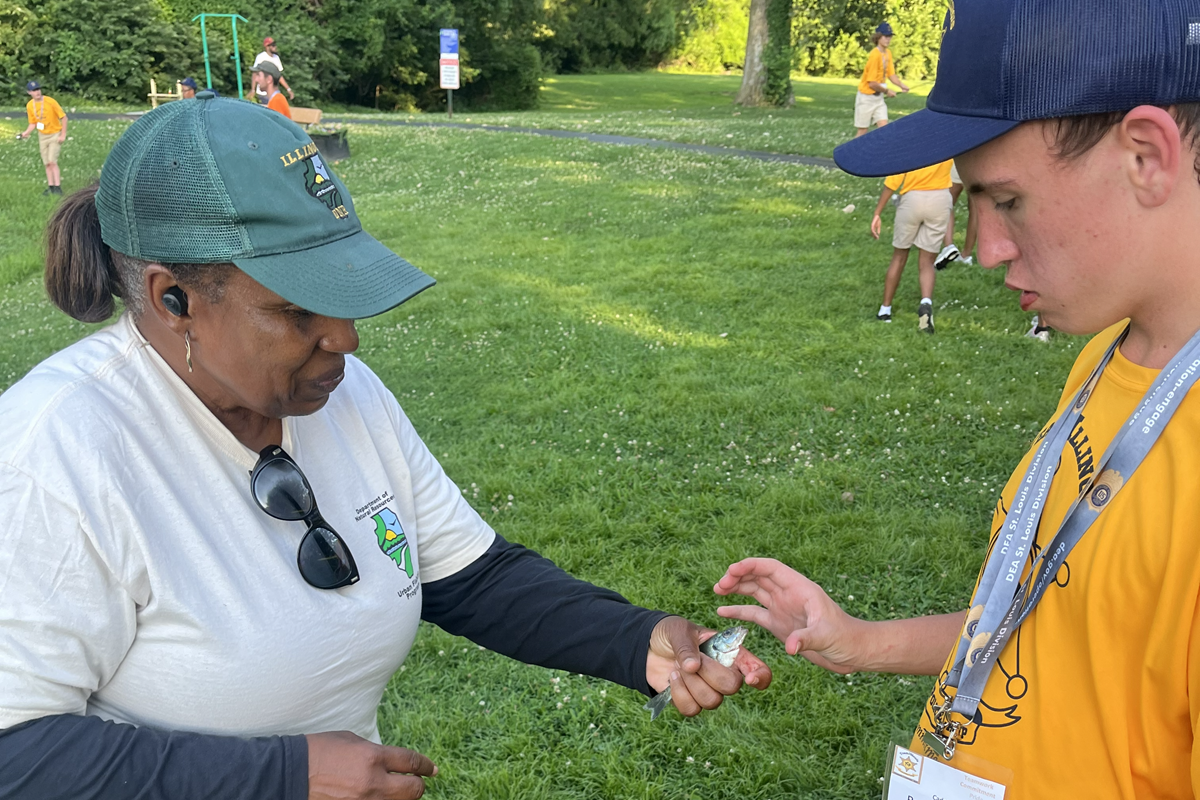
Working as a Conservation Education Representative (CER) for the Illinois Department of Natural Resources during the summer of 2025, I took full advantage of Backyard Bass. In Chicago, I worked for the Urban and Community Fishing Program with the goals to teach people of all ages to fish, to provide local fishing opportunities and to give participants a greater appreciation for natural resources.
Many of the groups we worked with were Chicago Park District summer camps, and not all Chicago Parks have a lagoon. If travel to a lagoon or Lake Michigan proved challenging, we conducted “dry clinics” which included a presentation about freshwater ecosystems, show-and-tell of invasive species and a game of Backyard Bass.
I remember my first dry clinic at Blackhawk Park in June with two fellow CERs, Tony and Nate. It was a beautifully sunny morning, lacking the humidity of some Midwest summer days, and Tony started with a presentation on local freshwater ecosystems. The campers enjoyed watching his demonstration of how to properly hold a fish, and everyone wanted a closer look at the invasive round goby (Neogobius melanostomus) preserved in a jar.
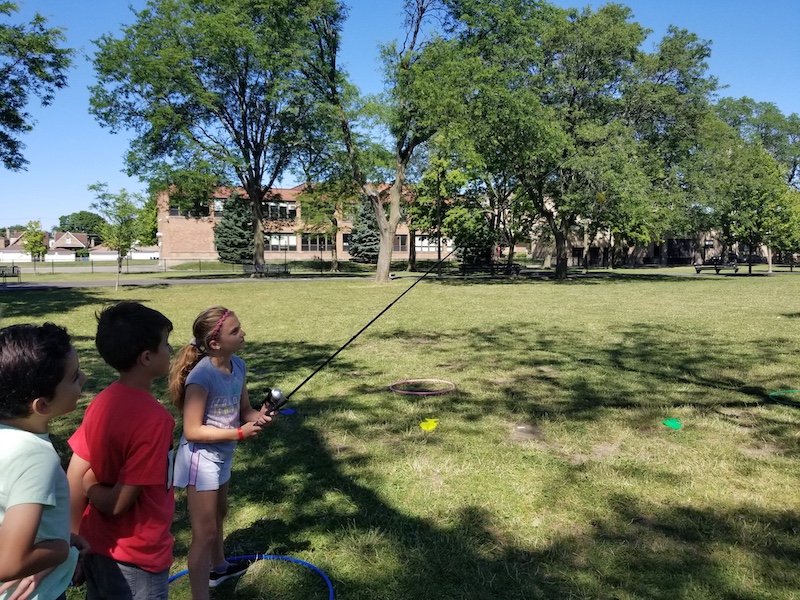
While Tony was speaking, Nate and I spread out the Backyard Bass in a grassy field. After a brief casting demo and splitting the youth into groups, we lined up each group about 15 feet away from the fish to approximate casting from a pier. The stage was set.
Soon enough, excited yells filled the air as campers reeled in the colorful plastic fish across the grass. Not every cast yielded a fish, however, and snags were present on land just as in water, particularly when catching a casting plug in clover. Our team of leaders walked between lines to make sure campers were taking turns and each camper caught at least one Backyard Bass.
Luckily, Blackhawk Park provided a space relatively free of trees in the direction the youth were casting. After my first dry clinic, I soon learned that if any tree was within casting distance, a plug would inevitably get tangled in its branches. During a dry clinic at Pitrowski Park, I was impressed to see a plug caught 20 feet up in a tree and 30 feet from the person casting it.
Heading into the summer, I did not think I would spend much time in Chicago Park District Fieldhouse gyms, but ease of scheduling and inclement weather proved otherwise. The casting plugs slid easily across the wooden gym floors, and the lines on the floor provided excellent imaginary piers to cast from.
Unsurprisingly, I observed campers becoming quite competitive during Backyard Bass. They often kept count either as individuals or as groups. We gave a two-minute warning each game, and a few games came down to the wire with a buzzer-beating fish getting caught.
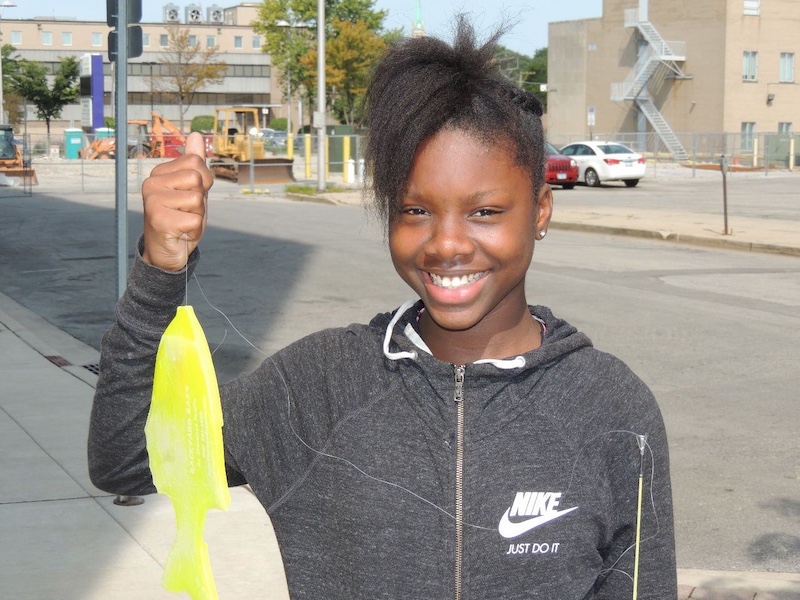
While I am not working this winter, my supervisor, Jonathan Schlesinger, is ensuring that Chicagoland schools learn about freshwater ecosystems and how to fish. He will be visiting schools across Chicago during the academic year to give presentations and run spirited games of Backyard Bass. As a great teaching tool for all ages, Schlesinger also will be using Backyard Bass during programs at libraries and senior centers. Illinois Department of Natural Resources staff will be attending many winter fishing shows and are available to answer questions about fishing or Backyard Bass opportunities.
True, catching a 12-inch plastic fish is not the same as catching a lively bluegill or a largemouth bass leaping from the water. Nevertheless, Backyard Bass is a creative way to educate new anglers and engage people in fishing when access to natural water bodies is limited or the weather refuses to cooperate. After playing Backyard Bass, people are more ready than ever to catch a live bass.
In 2026 Michael Kamp accepted a position as the Public Relations Specialist at Openlands. Previously, he worked in outreach and communication for the Illinois Department of Natural Resources, the Wisconsin Department of Natural Resources and the Nelson Institute for Environmental Studies at UW-Madison. A lifelong birder, he enjoys sharing his love of birds and nature with others.




Submit a question for the author