
Bucks and does are particularly active during the rut, or deer breeding season. All photos courtesy of the Illinois Department of Natural Resources.

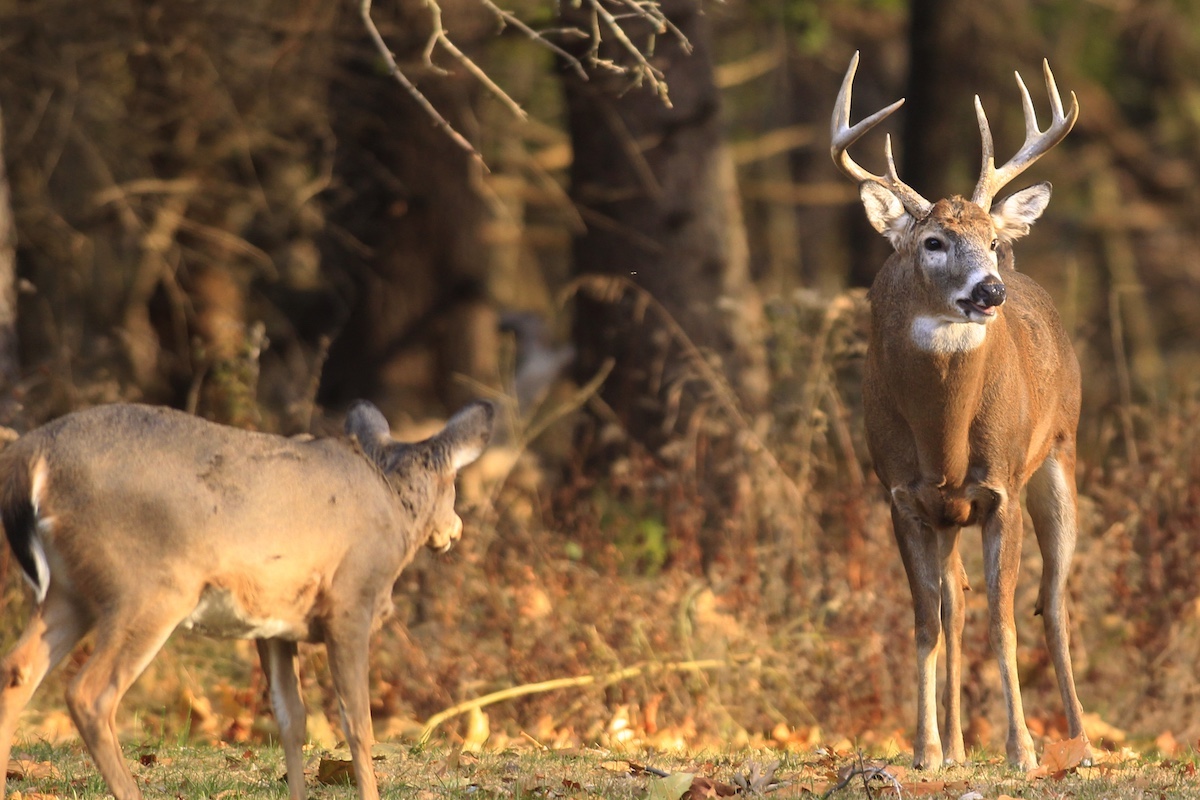

Bucks and does are particularly active during the rut, or deer breeding season. All photos courtesy of the Illinois Department of Natural Resources.
The Illinois Department of Natural Resources (IDNR) has shifted its white-tailed deer chronic wasting disease (CWD) management strategy to continued disease surveillance (monitoring), public outreach and education, and strengthening partnerships with hunters and landowners as it ends its long-standing targeted removal program. Learn more in the OutdoorIllinois Journal story CWD Management Program Changing.
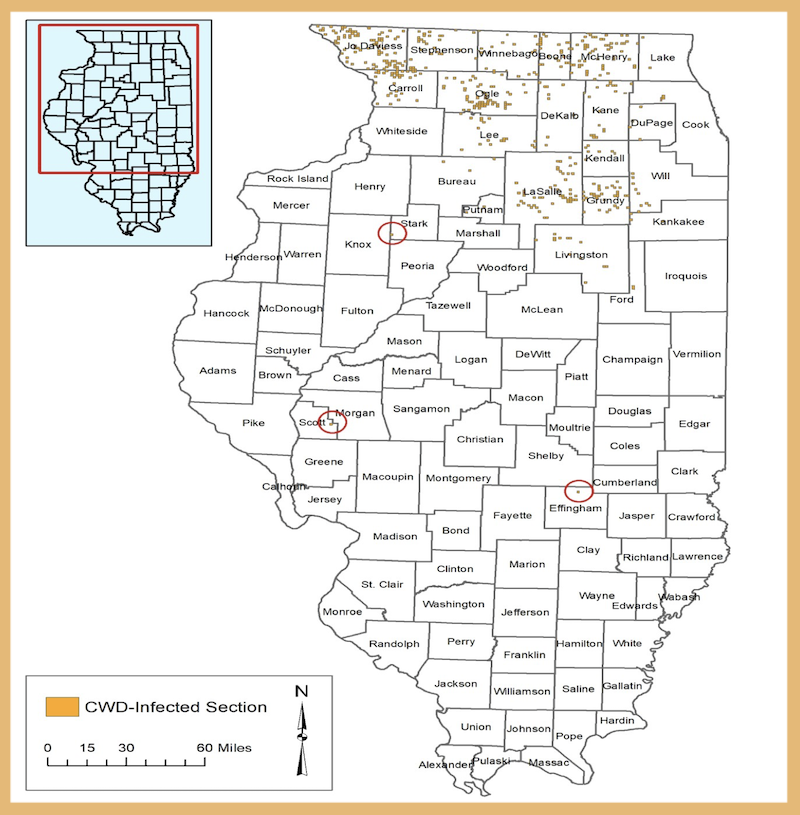
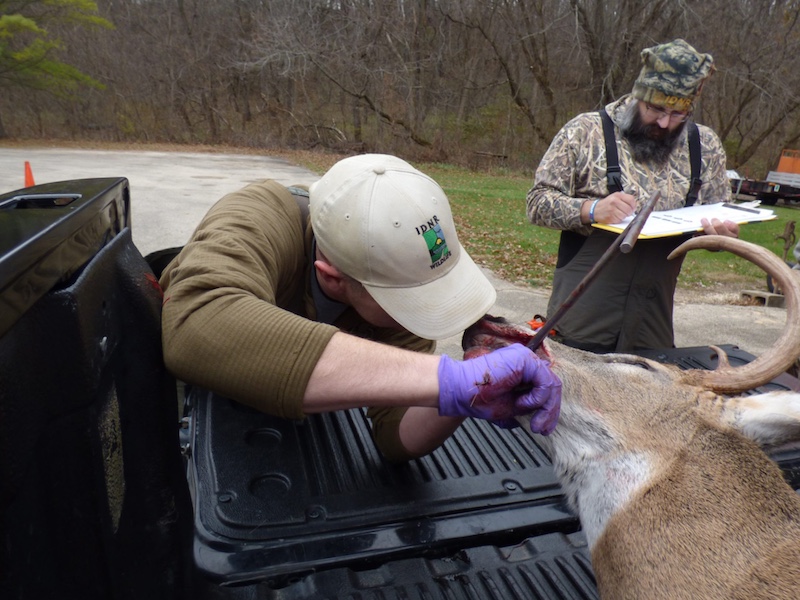
“The change in management strategy was prompted by the detection of CWD detections in three additional counties outside the northern endemic region during 2025: Stark, Scott and Effingham,” explained Chris Jacques, IDNR Wildlife Disease Program Manager. “This fall our program is offering hunters the opportunity to voluntarily collect lymph node samples from their harvested deer and mail in the samples for testing.”
Sample collection must be limited to yearling and adult deer harvested in Illinois. Fawns and deer harvested out of state will not be tested.
“All tissue samples collected will be examined at a federally approved laboratory,” Jacques explained. “There is no quick test that a hunter or a meat processor can perform to ensure that an animal does not have CWD. Determining if a deer has CWD requires staining the tissue and examining it under a microscope to identify if CWD prions are present.”
Sampling options include mail-in kits, mandatory check stations, and drop-off barrels/sampling vendors.
Sampling kits will be available on a first-come, first-served basis while supplies last. Hunters may request up to two kits at a time and additional kits if they harvest more deer. In addition to the online request option, hunters can request kits by contacting a local district wildlife biologist or picking up a kit at the IDNR Headquarters in Springfield.
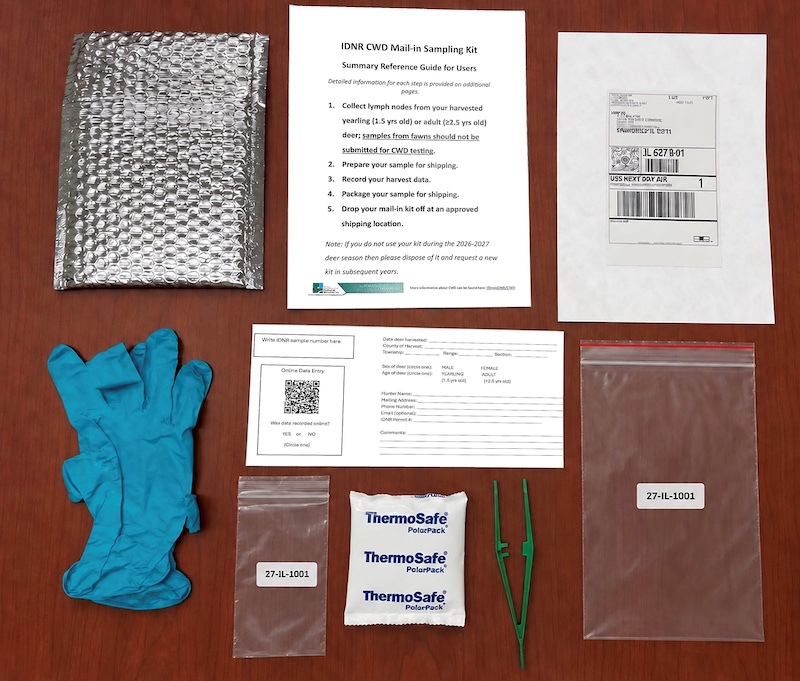
“Each kit includes instructions for removing lymph node samples from harvested deer,” Jacques explained. “The kits and laboratory testing are provided free of charge. An instructional video is also available and the associated data may be entered online.”
Included in each kit (see photo) are an instruction and a data sheet; Tyvek envelope with prepaid return label; pair of nitrile gloves; sample collection and data submission instructions; pre-labeled 3-by 5-inch sample bag for lymph nodes; tweezers; freezable cold pack and a thermal bubble mailer.
Test results will be posted online when available, generally within two to four weeks. Priority will be given to samples from counties with known CWD cases (see box). Hunters can check test results through IDNR’s CWD test results database.
“If the test results show that a harvested deer is positive for CWD that hunter will receive a text or email notification from IDNR,” Jacques noted. “With the transition to CWD surveillance only, IDNR wildlife biologists will limit follow-up phone calls to hunters who harvest CWD+ deer to newly detected counties or to cases where hunters fail to provide harvest locations from deer harvested in an endemic county.”
Voluntary CWD sampling is available to successful firearm deer hunters in CWD positive counties at mandatory check stations during the 7-day firearm season. Use this map and list of addresses to find a check station near you. A story on what to expect at these check stations is available here.
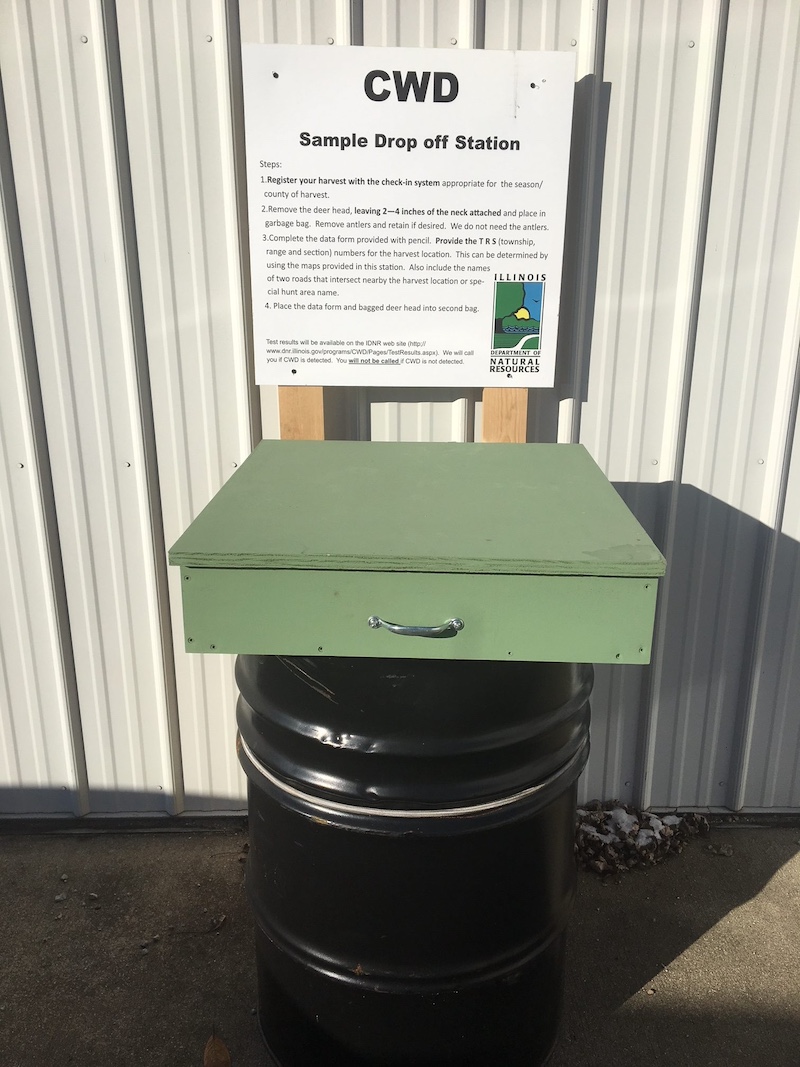
Archery deer hunters can drop off heads of adult deer in CWD sample drop-off barrels or at a sampling vendor. Use this map or list to find locations of drop-off barrels and sampling vendors. Drop-off barrels will not be available during the firearm deer season in counties where check stations are mandatory. Harvest information will not be accepted from hunters harvesting deer from counties with a mandatory check station.
Firearm deer hunters harvesting deer outside of CWD positive counties can use sample drop-off barrels or sampling vendors to have CWD samples taken. Use this map and list of addresses to find drop-off barrels or sampling vendors.
Hunters wanting to mount a deer they have harvested should have an IDNR cooperating taxidermist collect the sample. Testing procedures will not damage the deer skull. Hunters not using an IDNR cooperating taxidermist can take the caped-out skull to an IDNR sample drop-off barrel location.
CWD is a fatal disease of the central nervous system that affects deer and elk. It was first detected in Illinois in 2002 in a suspect adult female deer from northwest Boone County. Since then, IDNR has sampled 199,136 wild deer statewide, with 3,410 testing positive for CWD.
For more information about CWD surveillance visit IDNR’s CWD or Hunt Illinois information pages or contact Chris Jacques, IDNR Wildlife Disease Program Manager, at chris.jacques@illinois.gov.
Kathy Andrews Wright retired from the Illinois Department of Natural Resources where she was editor of OutdoorIllinois magazine. She is currently the editor of OutdoorIllinois Journal.





Submit a question for the author