
All photos courtesy of the Illinois Department of Natural Resources.

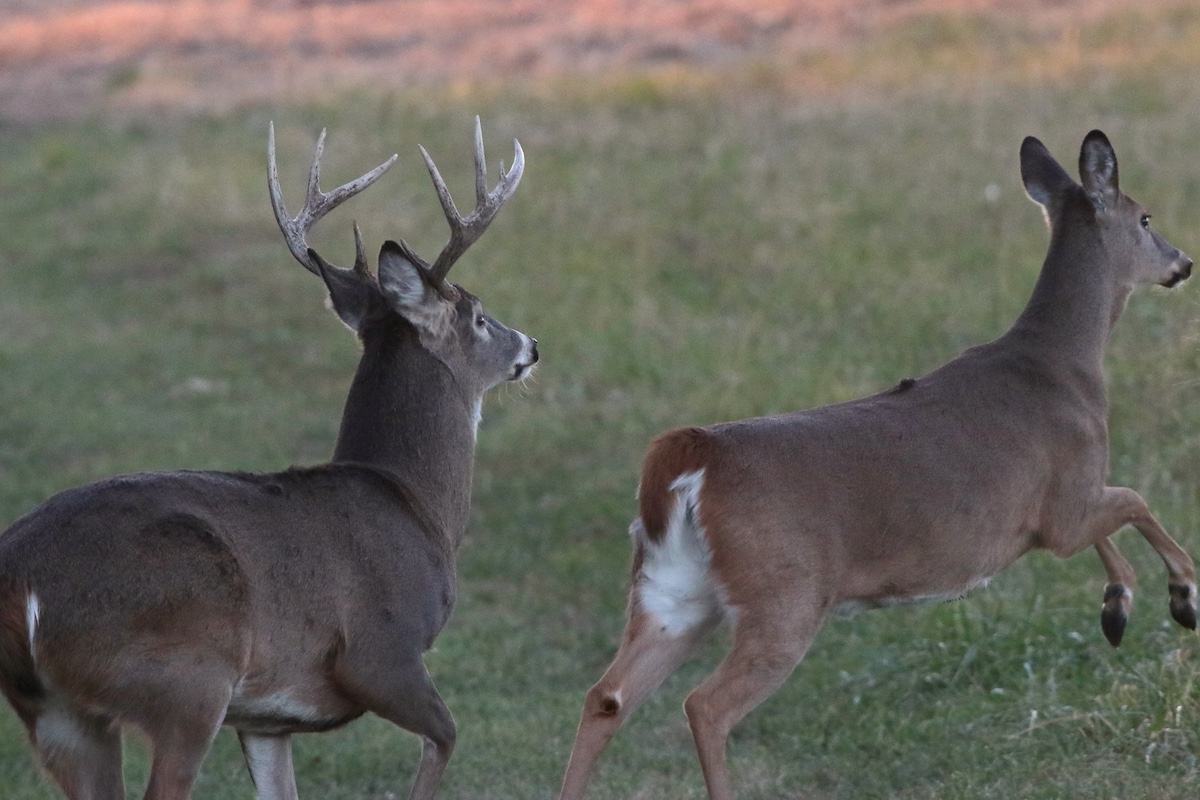
All photos courtesy of the Illinois Department of Natural Resources.
Whether you’re a first-time hunter or a seasoned pro, deer check stations are an annual part of firearm deer season that may be worth brushing up on before heading out. Knowing what to bring, what to expect and how the process works can help you spend less time in line and more time enjoying the season.
Check stations are mandatory harvest-reporting locations in designated Chronic Wasting Disease (CWD) counties in Illinois. During the first and second firearm deer seasons, the online harvest-reporting system through ExploreMoreIL is locked, meaning hunters cannot report their harvest by phone or online.
Instead, hunters must bring their deer to their county’s check station or the nearest available station to register the harvest and receive an orange confirmation leg tag. A list of check station locations is available on Hunt Illinois.
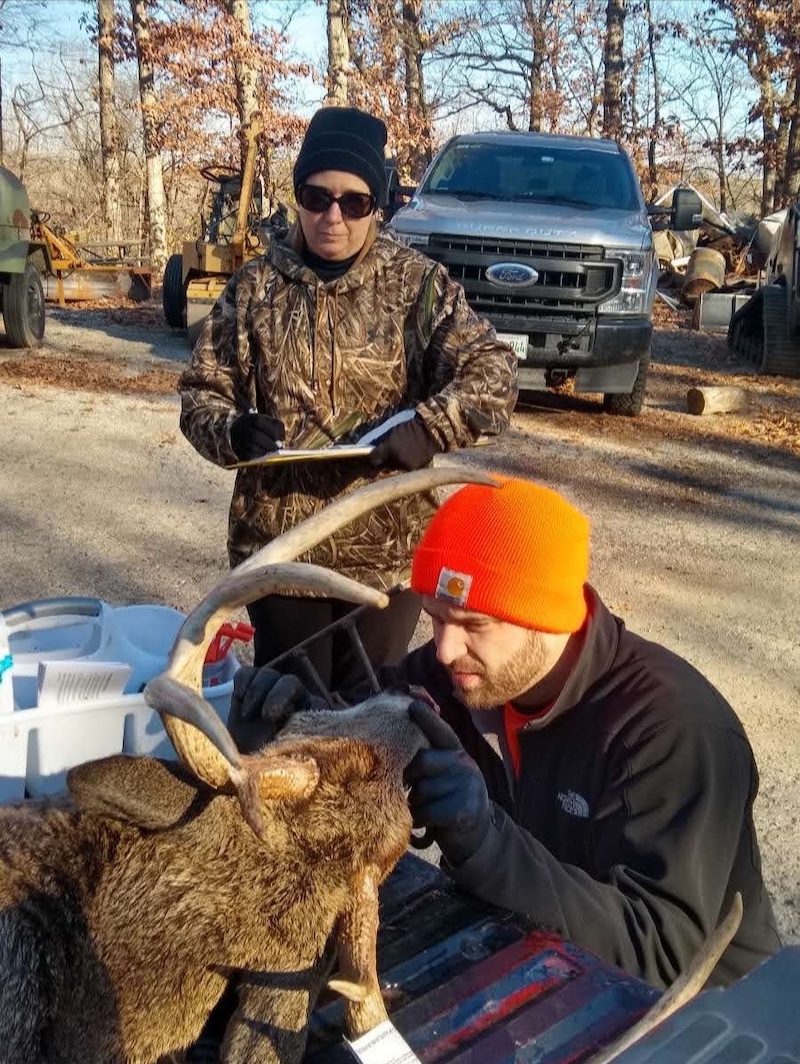
Check stations also offer free CWD sampling by a District Wildlife Biologist (DWB) or another qualified conservation professional.
In 2026, check stations will operate from 8 a.m. to 8 p.m. on Nov. 20-22 for the first firearm season and Dec. 3-6 for the second. Traffic often increases as daylight fades, so plan accordingly. Follow designated traffic lanes, watch for other vehicles and follow staff directions to help prevent accidents and injuries.
Before leaving home or the field where you hunted, make sure your deer is properly tagged, with your permit affixed to the appropriate leg or antler as required.
Hunters using landowner permits should attach the tag the portion labeled Head/LegTag and bring the other portion labeled Check Station along with them. Staff will collect the “Check Station” portion during check-in.
Hunters using standard over-the-counter print permits should have their hunting license and the duplicate portion of their tag available. Staff will use these to verify the permit number and hunter information needed to register the harvest.
The hunter who harvested the deer must be present. If your hunting party arrives in multiple vehicles, park extra vehicles outside the check-in line and have the hunter meet staff at the vehicle transporting the deer.
During check-in, staff will record the method of harvest (compound archery, crossbow, rifle or shotgun) along with biological information including the deer’s sex, age and number of antler points, when applicable.
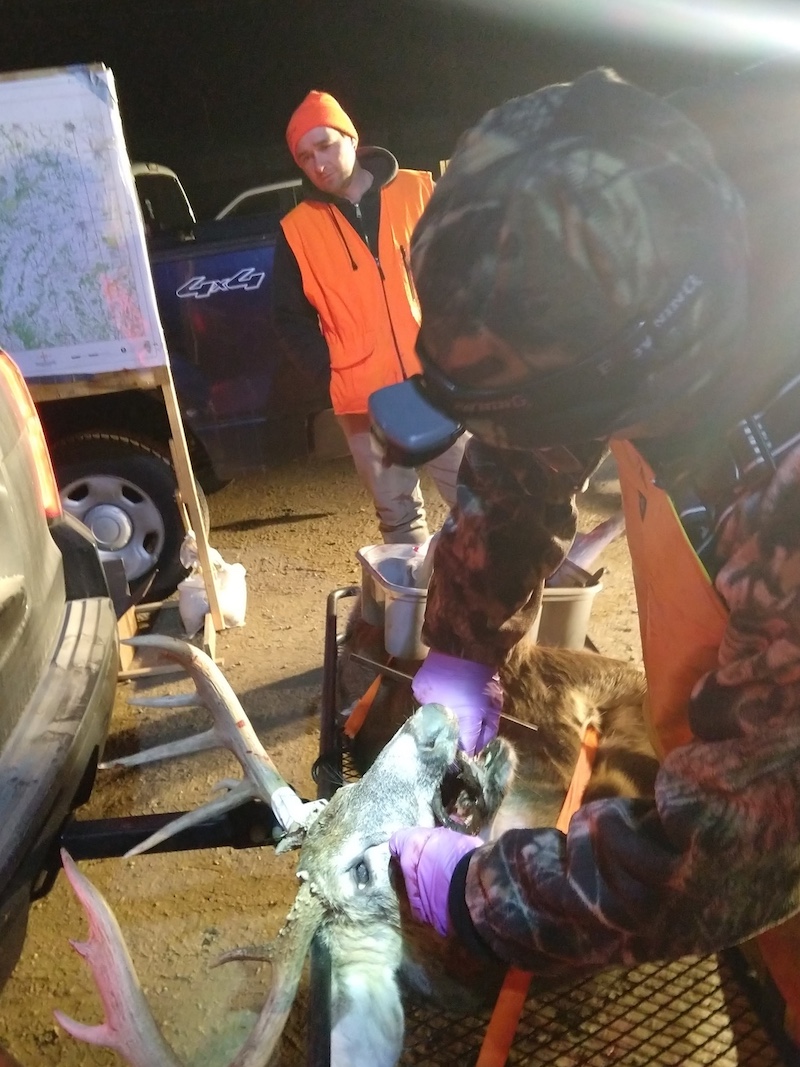
To determine age, a DWB or other qualified conservation professional may use a metal jaw jack to gently separate the upper and lower jaws and examine the teeth. Patterns in tooth wear and replacement are examined to help determine the deer’s age. This process is separate from collecting lymph node samples for CWD testing. Visit Wildlife Illinois’ Deer Page to learn more about how biologists determine a deer’s age.
Hunters may also request free CWD sampling. If you are interested, let staff know during check-in and have your deer readily accessible. If it is in a truck bed or trailer, be prepared to help unload it or reposition the animal by placing the head and neck on the tailgate. During busy periods, staff may need to assist other hunters and may not have time to repack your vehicle.
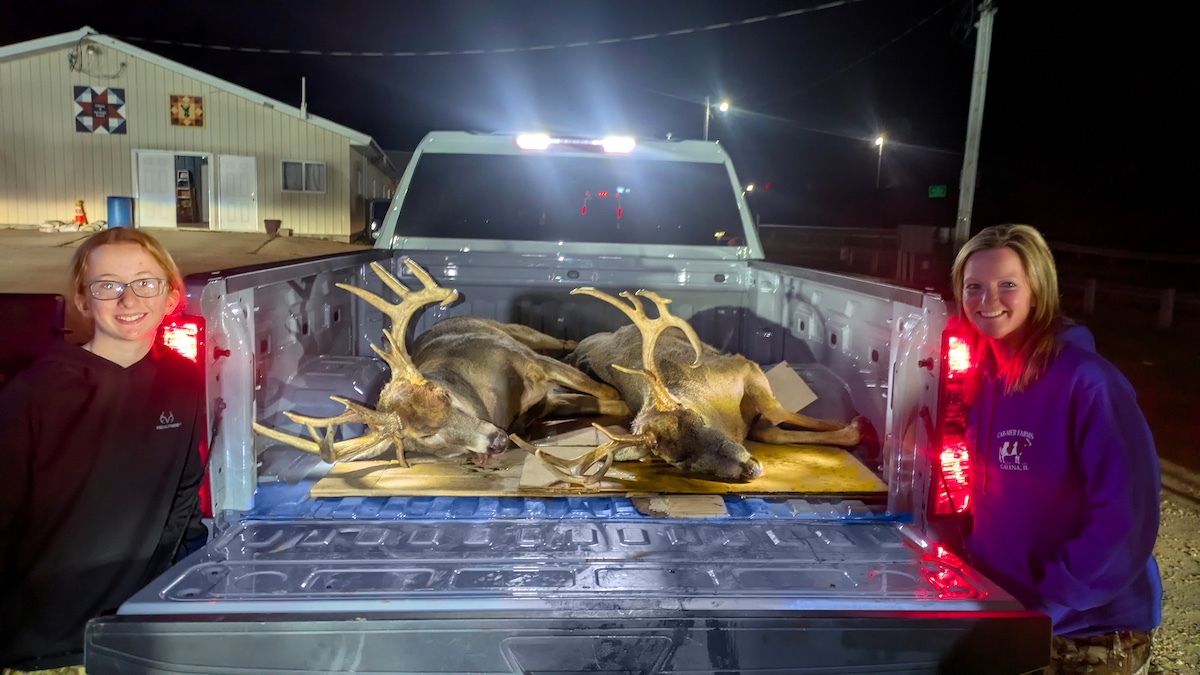
Harvested a record-book deer or a trophy you plan to cape or mount? Let staff know before any procedures begin. You can politely decline sampling or other procedures that could damage the hide or skull. If you still want CWD testing, ask your taxidermist about collecting and submitting the appropriate samples or obtaining a mail-in sampling kit. Visit Hunt Illinois’ CWD sampling page for details.
If you recover a deer after 8 p.m. on most firearm season days, bring it to a check station first thing the following morning. You may contact your local Conservation Police Officer (CPO) for guidance, but you will generally be directed to the station when it opens.
If you recover a deer after 8 p.m. on either Sunday, when stations are closed for the remainder of the season, contact your local CPO to complete the harvest report. Find contact information through the Illinois Conservation Police Officer directory.
One of the benefits of check stations is getting to see what other hunters are harvesting in your area. Feel free to mingle, share stories and admire impressive deer, but stay close to your vehicle and keep an eye on the line of vehicles. Wandering too far can delay your check-in or require staff to track you down when it is your turn.
A little preparation and patience go a long way toward making the experience enjoyable for everyone.
With your permit ready, your deer accessible and a little knowledge of the process, you’ll be ready to make your check-station visit as smooth and time-efficient as possible. Good luck, hunt safely and enjoy the season!
Kaleigh Gabriel is a Wildlife Outreach Specialist with Lewis and Clark Community College, working out of the Illinois Department of Natural Resources building to assist the Division of Wildlife Resources. Growing up just between Sangamon and Christian counties, she spent a lot of her time hunting and fishing in Illinois. She received her bachelor’s degree in writing/journalism from Manchester University, Indiana.


Submit a question for the author