If you’ve spent any time near the water, you’ve probably seen an osprey.
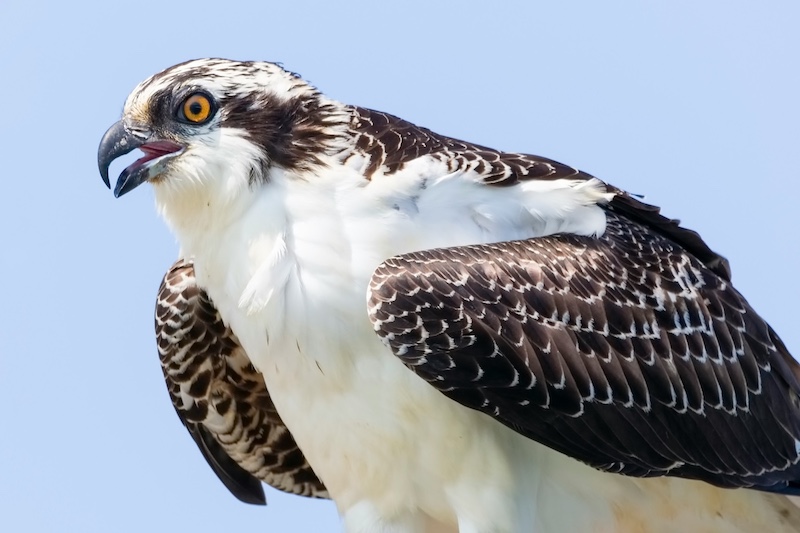
Photo by Mathew Schwartz, Unsplash.
Ospreys are large, fish-eating raptors reaching a wingspan of nearly 23 inches – almost as large as a bald eagle.
They have brown backs and wings, white bellies and heads, and piercing yellow eyes.
Crossing their face is a horizontal black stripe resembling a mask.
The black bill of the osprey features a distinctively curved hook.
Ospreys glide with a noticeable M-shaped silhouette due to a bend in the wrist of each wing.
Aside from their striking appearance, ospreys are also exceptional hunters. As the only raptor to dine almost exclusively on fish, ospreys are known for their remarkable feet-first dives into the water to catch their prey. Here’s a snapshot of fishing the osprey way.
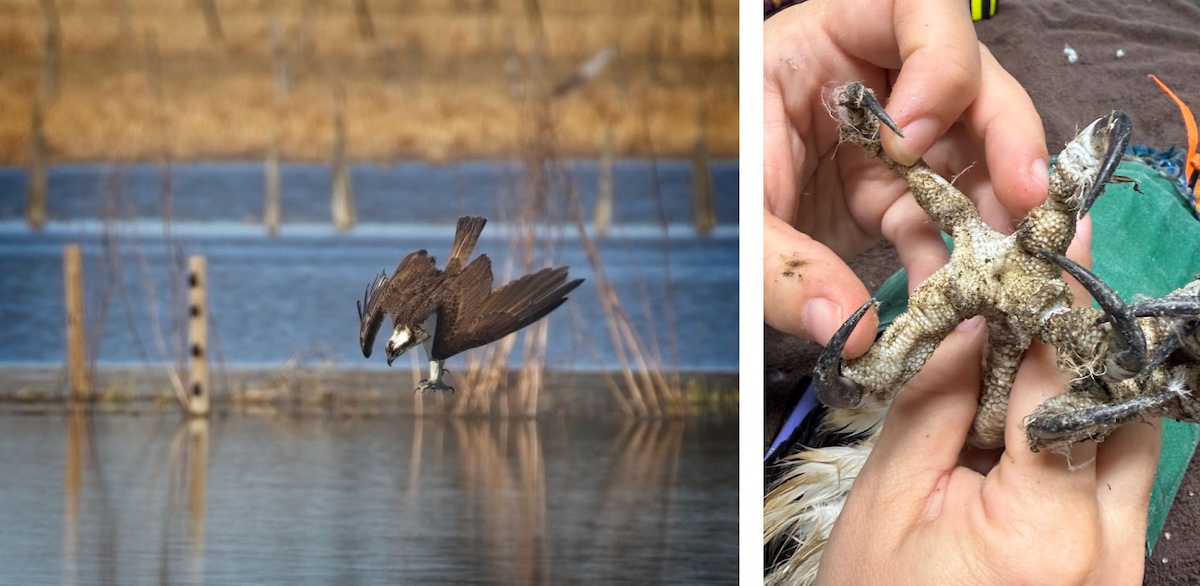
Left: An osprey diving talons first. Photo by Olavi Anttila, Pixabay. Right: A biologist examines an osprey’s talons, and the spines that help the osprey grasp a wriggling fish are clearly visible. Photo by Carla Rich Montez.
They soar over the water looking for fish, hover when one is located and tuck their narrow wings before diving toward the water.
Their dives may reach up to 100 miles per hour, and they often hit the water at 30 to 40 miles per hour.
They adjust the trajectory of their dive to accommodate the refraction of light on the water.
They close their nostrils prior to hitting the water.
With their feet outstretched in front of them and their fishhook-like talons extended, the osprey spears the fish on impact with the water.
Ospreys have a third transparent eyelid, the nictitating membrane, that closes from bottom to top enabling them to protect their eyes while also visualizing their prey while underwater.
Tiny spines, called spicules, on the bottom of ospreys’ feet help them securely grasp a wriggling fish.
A deep crook in each wing enables the bird to rotate its wing to achieve a powerful near-vertical liftoff. Such strength is a necessity for lifting its 3-pound body out of the water while carrying the additional weight of a now-impaled fish.
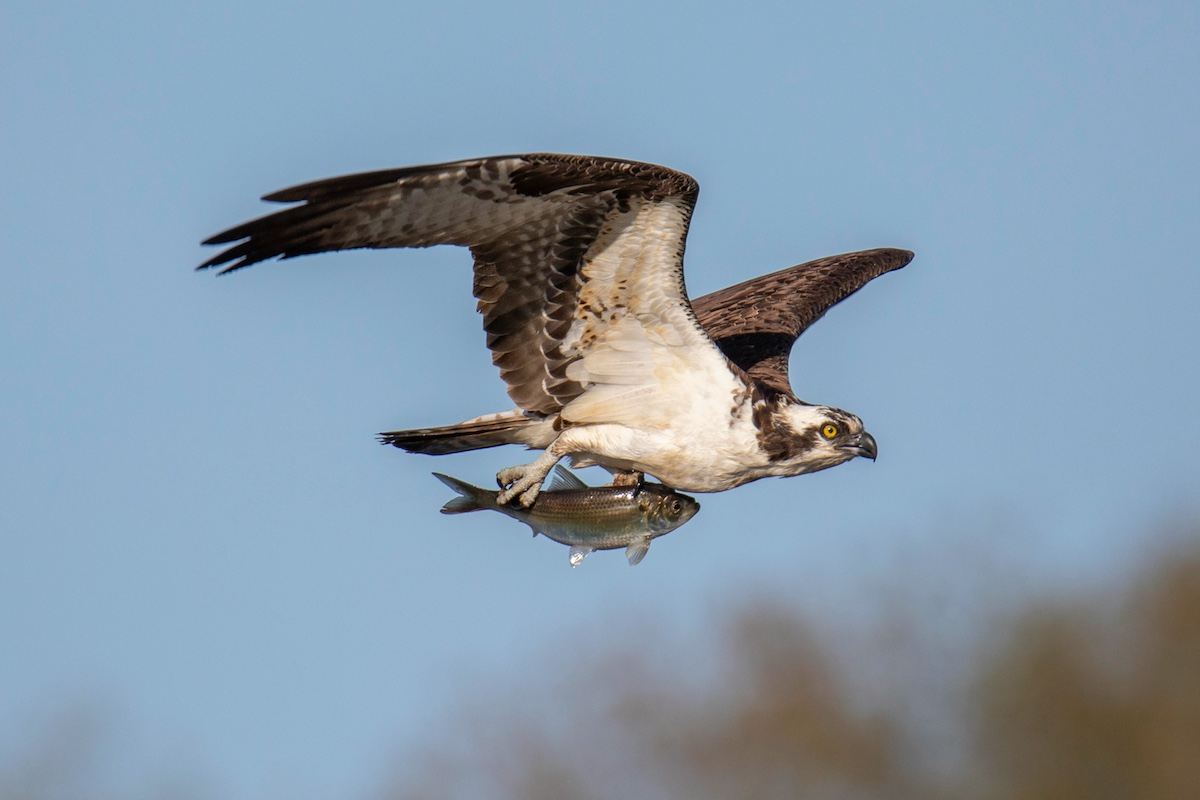
With its prey secured, the osprey rotates its outer front toe allowing it to hold the fish with two toes in front and two toes in back.
This foot structure allows the osprey to position the fish, head-forward, to cut wind resistance during flight.
Once aloft, the osprey conducts a midair “dog shake” to rid its dense, oil-covered feathers of any remaining water.
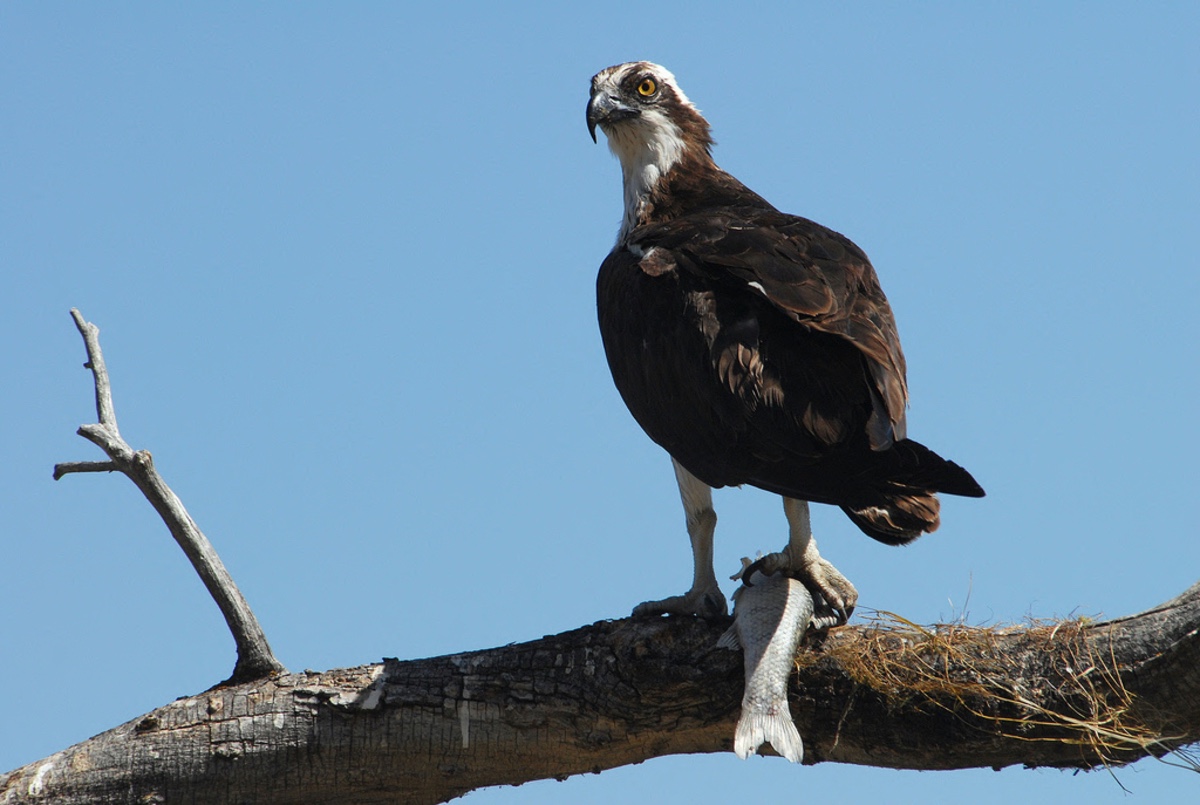
Mission accomplished, the osprey then flies to a nearby perch to enjoy its hard-won meal.
Photo by USFWS.
Altogether this process delivers impressive results. The Cornell Lab of Ornithology estimates that an osprey hunts for about 12 minutes before catching a fish.








Submit a question for the author