
A female chick that later successfully fledged and migrated. Photo by Carla Rich Montez.

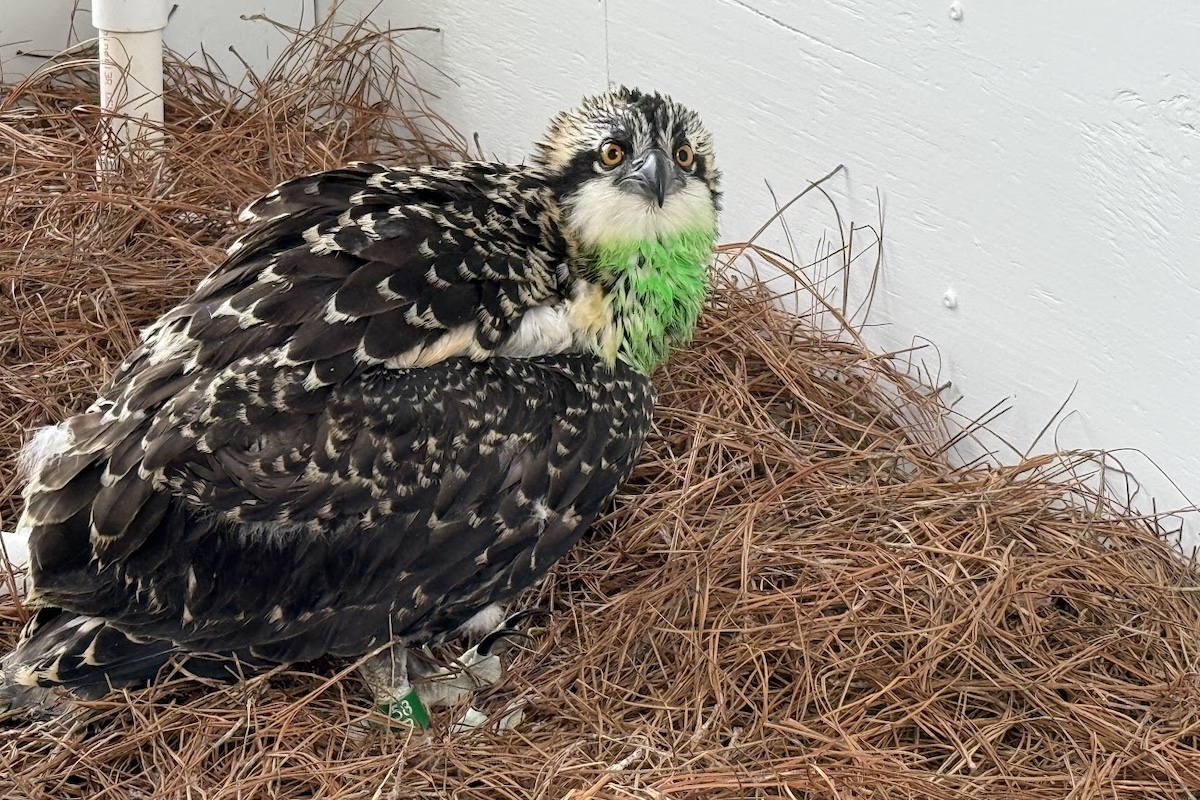
A female chick that later successfully fledged and migrated. Photo by Carla Rich Montez.
In The Summer of the Ospreys – Part 1, we meet six osprey chicks from Massachusetts who have been translocated to Illinois. In this first installment of our 2-part series, we follow the chicks as they adjust to their new life at Banner Marsh State Fish and Wildlife Area.
We also meet the team overseeing the young ospreys: Pat McDonald, a veteran biologist with the Illinois Department of Natural Resources (IDNR) and the leader of IDNR’s osprey recovery project; Dr. Tih-Fen Ting from the University of Illinois Springfield (UIS), who studies threatened and endangered species; and four UIS student field technicians who will monitor the chicks.
We encourage you to read The Summer of the Ospreys – Part 1 before you read Part 2. By doing so, you will have a better sense of the extraordinary steps taken by this team to help restore the breeding population of this state-listed threatened species.
An osprey chick can learn to fly, hunt and migrate without an adult to show it how to do these critical operations. But that doesn’t guarantee everything will go smoothly.
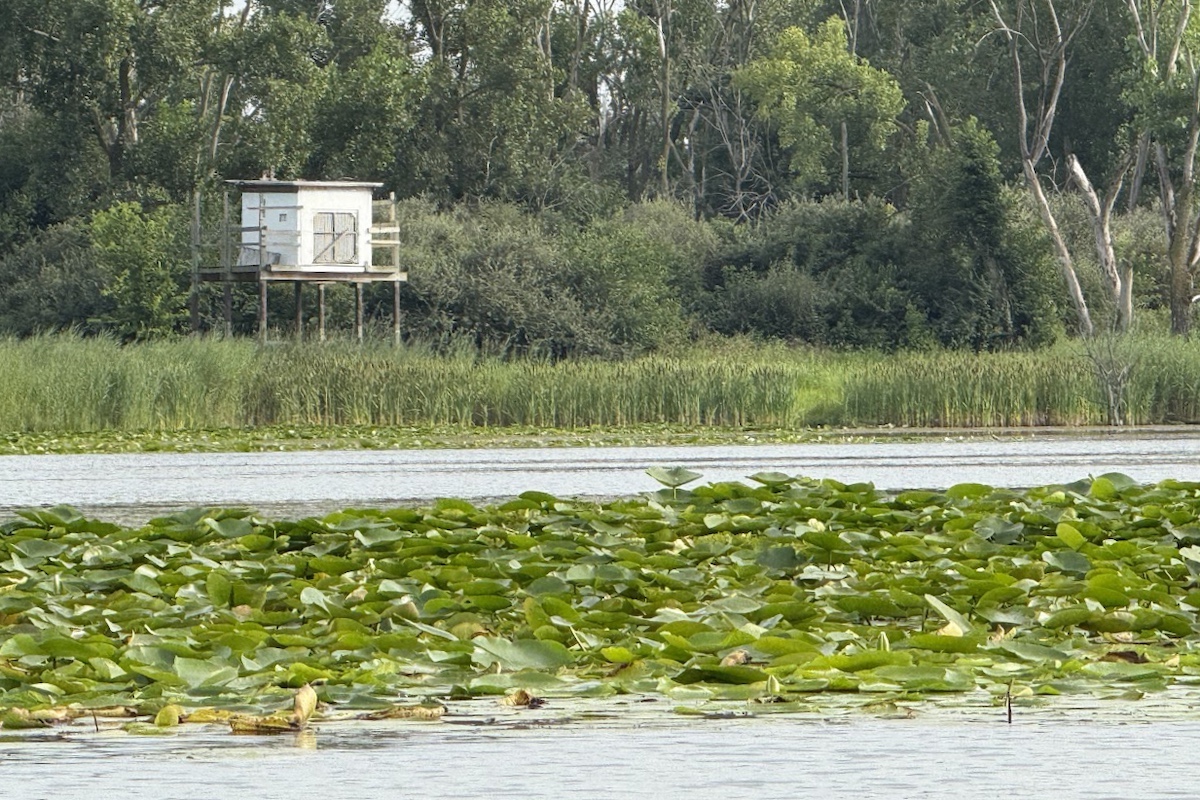
Sometimes fledging doesn’t go so well. Chicks may tumble to the ground or into the water when they attempt their first flights. In such cases, the field technicians will quickly grab a kayak or run on foot to rescue a young osprey and return it to the hack box to try again.
So the technicians are on watch as the chicks start practicing their flight skills. One of the female chicks falls in the lake on her first attempt. Fortunately, a fast-acting technician pulls her from the water and returns her to the hack box. Two days later, she fledges without incident.
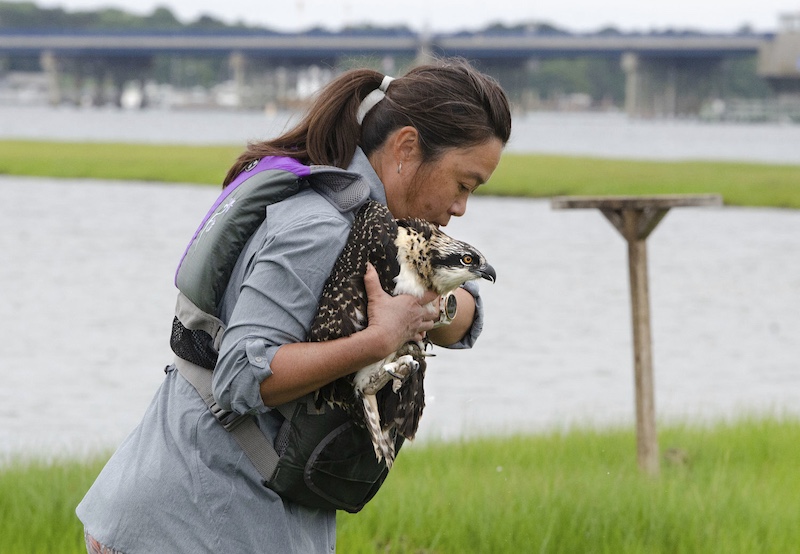
Over the next few days, the remaining chicks test their wings. Initially their fledging attempts consist of clumsy glides from the hack box to the ground. But eventually each chick catches on to the currents in the wind and the dynamics of flight. By the end of July, at two months of age, all the chicks are airborne.
Now that the ospreys can fly, they won’t go back inside the hack box and their food is moved to the roof. This offers the fledglings a guaranteed meal in the event their hunting attempts don’t go so well. Food will continue to be provided for the young birds until the last chick has not been seen for three consecutive days.
While the fledglings are practicing their flight skills, resident ospreys will pose some danger. They are intent on defending their territory from would-be invaders, even other ospreys. So they harass the chicks in the air or at the hack box.
One of the male chicks is eventually mobbed by a pair of local ospreys, but he manages to escape and returns to the safety of the hack box. A second osprey, a female, is later retrieved from the water after an exhausting chase by one of the neighborhood ospreys.
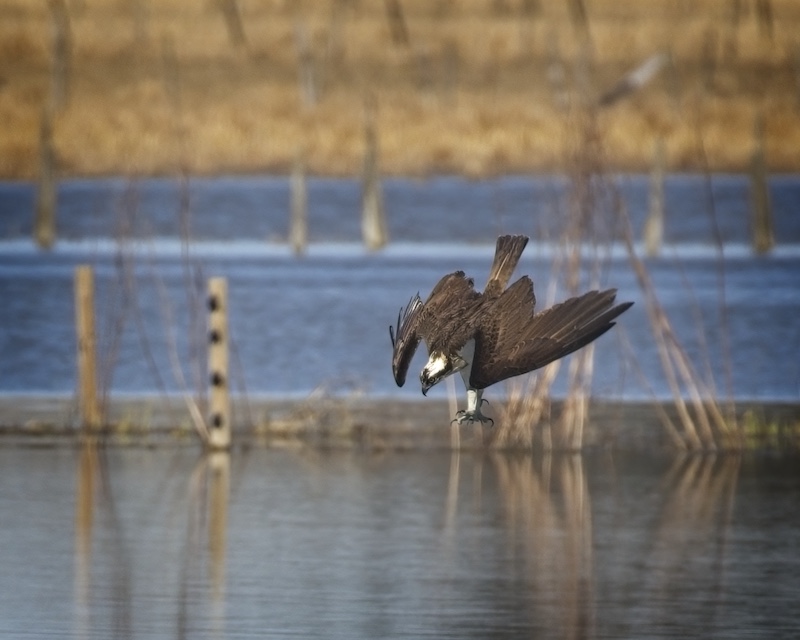
Eventually all the chicks master flight and escape resident osprey attacks. Meanwhile, they’re polishing their fishing skills.
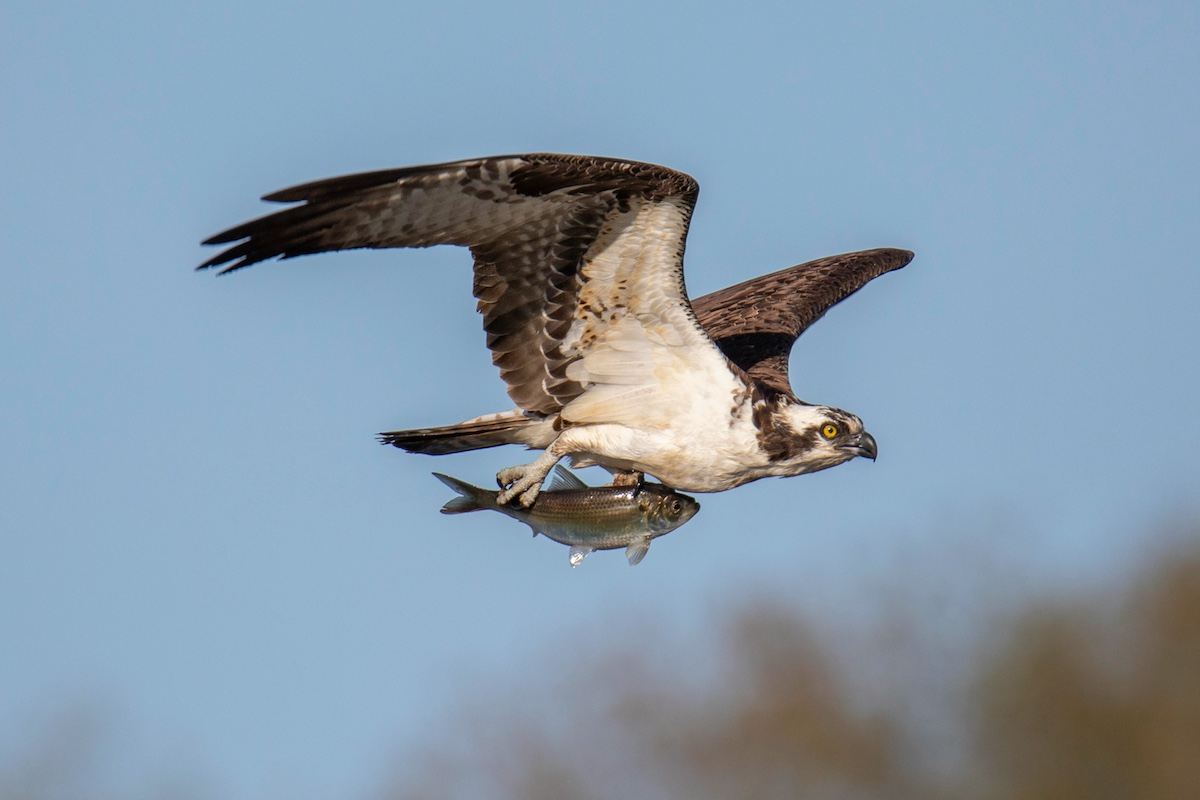
At first, the young birds explore the water by raking their knuckles across the surface. Eventually they start practicing the osprey’s signature feet-first dive into the water – sometimes unsuccessfully. But practice makes perfect, and soon the young ospreys start catching fish.
By early August, four of the ospreys have stopped showing up at the hack box and have not been sighted again. Since none of them is wearing a satellite transmitter that tracks their location, it’s impossible to confirm where they have gone. The team can only document when the birds were last observed and hope they are thriving in other locations within the marsh.
It will be September before the remaining two chicks, both females, start their migration to their wintering grounds in Central or South America. One of them departs mid-month. The other female, now fitted with telemetry that will report her movement, leaves the marsh on September 7.
On that day, the transmitter indicates that the young osprey has started flying south, a clear sign that she is migrating. Without an adult to lead her or any navigational experience to guide her, she is starting an intercontinental journey guided only by her instincts and her DNA. She is just four months old.
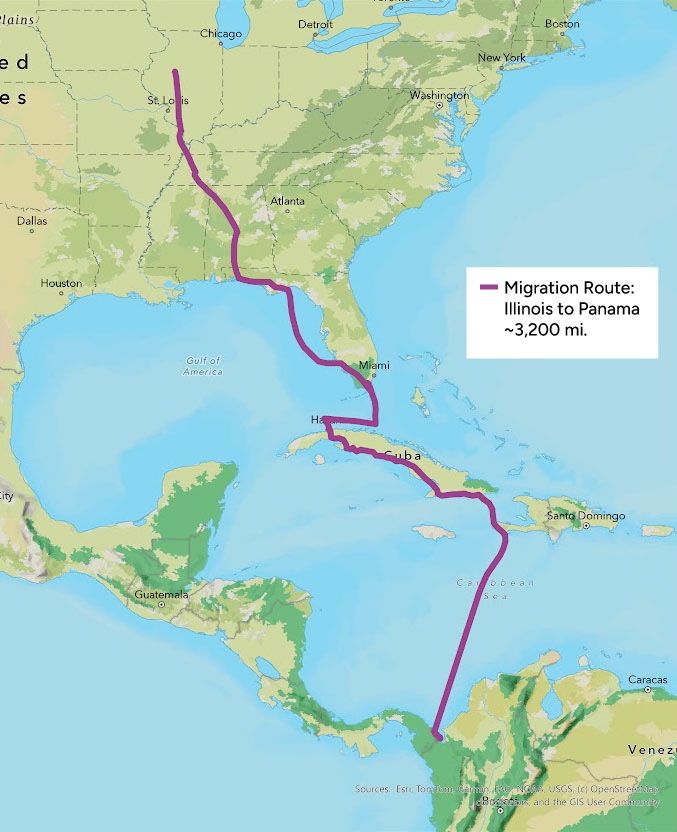
Dr. Ting tracks the route of the now-migrating osprey. The young bird flies over four states, visits the Everglades, crosses the straits of Florida, flies on to Cuba, navigates along Haiti’s southern peninsula and concludes her trip in the dense rainforests and mangrove swamps between Panama and Colombia – ideal habitat for a fish-eating raptor. The trip lasts 15 days; she covers nearly 3,200 miles.
Unfortunately, the transmitter stops sending signals in mid-October, and Dr. Ting loses contact with the migrating female. It’s possible that the osprey’s transmitter has failed. It’s also possible that the young bird has perished.
By the end of October the six osprey chicks brought to Illinois in July are no longer being sighted at Banner Marsh State Fish and Wildlife Area. Five have dispersed to unknown places. The sixth has migrated to South America, but her transmitter has stopped sending location signals. This should be the end of the story.
But McDonald and Ting have been hacking ospreys since 2013 and know that there are sometimes setbacks like these.
They also know that hacking works. During the time the osprey recovery project has been active in Illinois, the team has watched the number of osprey breeding pairs increase from 16 to 90. Moreover, ospreys have been downlisted in Illinois from endangered to threatened.
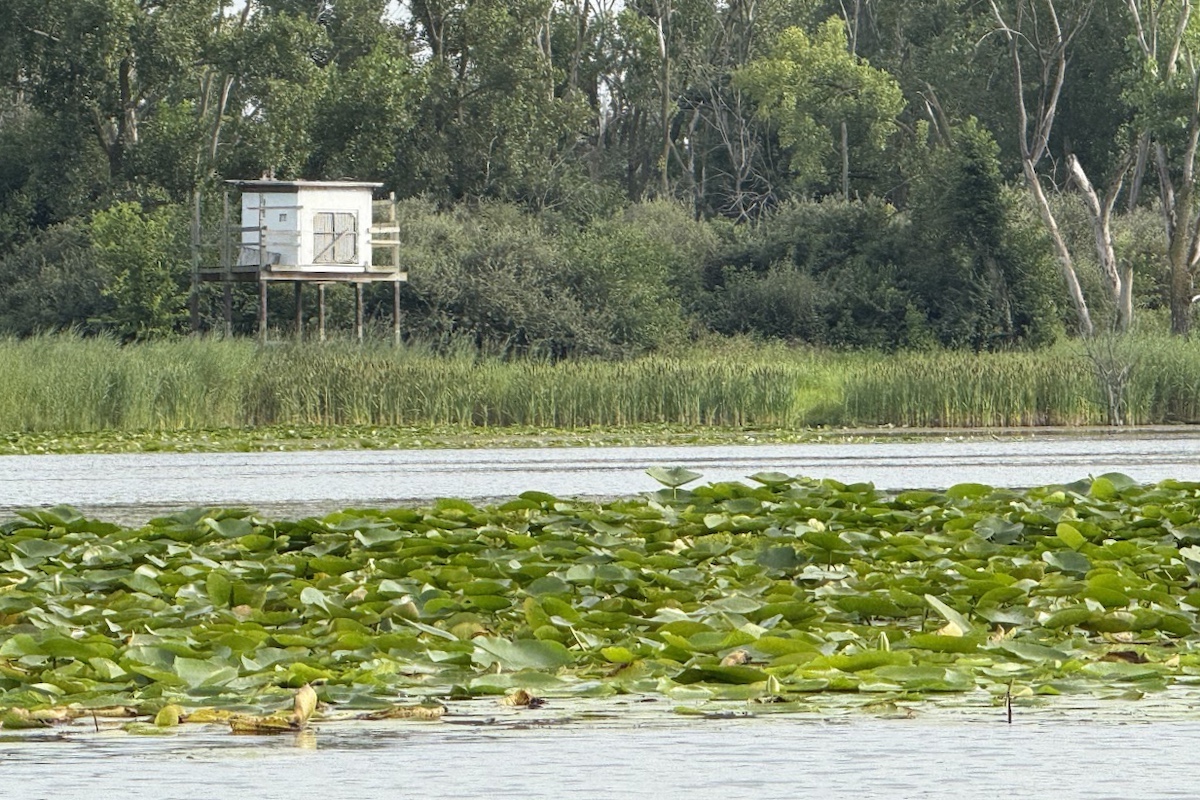
While there’s more work to be done, it’s clear that IDNR’s hacking program is showing progress. This is a remarkable outcome for a bird once sliding towards extinction.
As for the six ospreys released at Banner Marsh, McDonald and Ting know they may never see the birds again.
But it’s also possible the birds will return, with a mate, when they reach breeding age in three to four years. Ideally, they’ll build a nest and raise a family – the result the hacking program was designed to achieve.
Though the paint will be gone, and the birds will have reached their adult stature, McDonald and Ting might one day see an osprey wearing a leg band they recognize. It might just be a chick they relocated to Banner Marsh in the summer of 2025.
Funding to help restore breeding colonies of osprey in Illinois is provided by the Illinois Department of Natural Resources, the University of Illinois Springfield, and the U.S. Fish and Wildlife Service with additional support provided by numerous partner agencies, organizations and businesses.
For this story, the author is especially grateful for assistance from Pat McDonald and Tih-Fen Ting.
Carla Rich Montez is an outdoor writer living in Peoria County. She is a regular contributor to OutdoorIllinois Journal.





Submit a question for the author