
View of the hack box from the river. Photo by Carla Rich Montez.

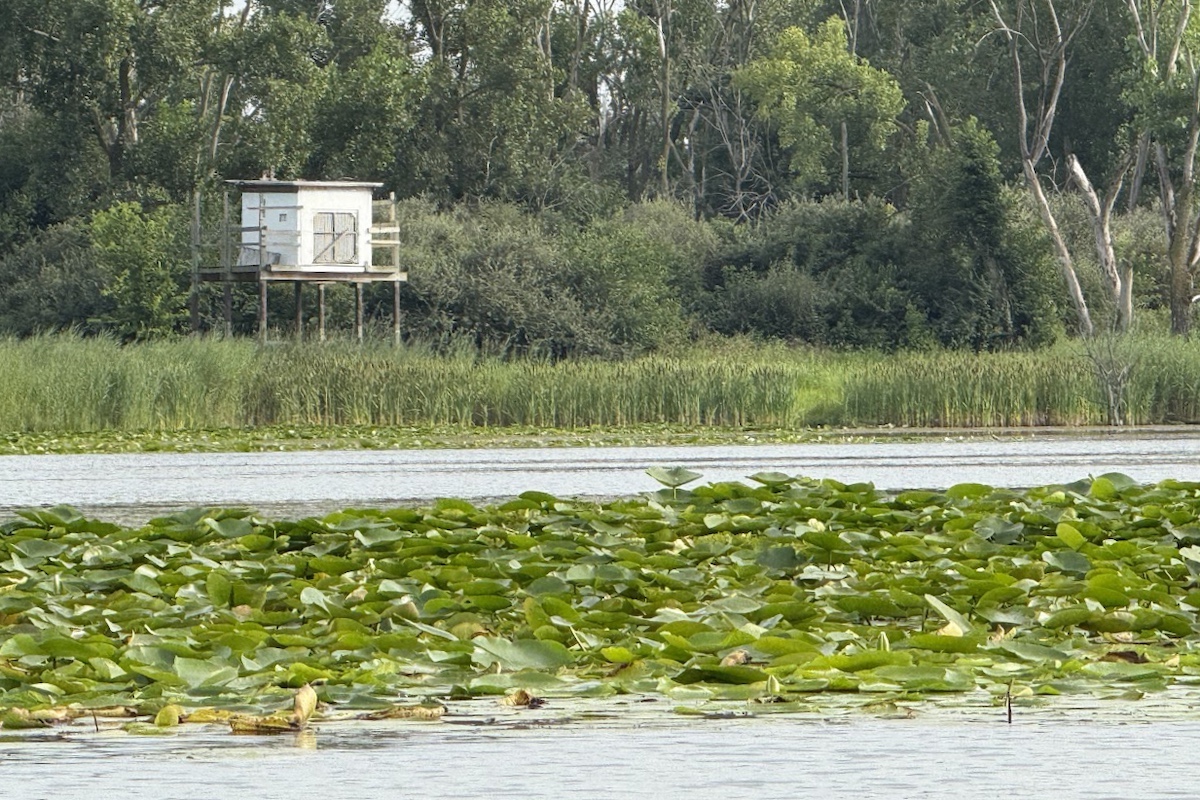
View of the hack box from the river. Photo by Carla Rich Montez.
Overlooking a freshwater marsh near Peoria, a biologist, university researcher and team of college students have embarked on an extraordinary initiative to help restore the breeding population of ospreys in Illinois.
Though ospreys have historically been uncommon breeders here, pockets of established nesters have resided near Illinois’ major rivers and lakes. These areas have provided a ready source of fish, the osprey’s primary food.
In the mid-20th century, conditions abruptly changed for ospreys. Due to the widespread use of the pesticide DDT, ospreys experienced catastrophic nesting failures. Prey contaminated by the poison and consumed by the birds led to a thinning of the shells of osprey eggs. Now weakened, the eggs then broke during incubation. The osprey population crashed.
DDT was banned in 1972, but ospreys were slow to recover from the nesting failures they had experienced. By 1997 the number of breeding pairs in Illinois was so low that state officials feared the osprey would disappear as a nesting bird in the state. To protect them, the state listed ospreys as endangered in Illinois.
In nearby states with similar declines, osprey translocation programs were seeing some success. By transferring chicks from states with robust populations, there was some evidence that the relocated birds would adopt their new surroundings as their home. This process, of acclimating young birds to a new habitat and caring for them until they could survive on their own, was called hacking.
Recognizing this method as an opportunity to help restore the state’s breeding population, the Illinois Department of Natural Resources (IDNR) launched its first osprey hacking program in 2012. The project plan was developed; partner agencies were identified; and high-quality habitats were located. In 2013, the first osprey chicks were relocated to Illinois.
What follows is the story of six chicks that arrived at Banner Marsh State Fish and Wildlife Area in the summer of 2025.
Overseeing the hacking program is Pat McDonald, a veteran biologist with the Illinois Department of Natural Resources and the leader of IDNR’s osprey recovery project. Along with Dr. Tih-Fen Ting from the University of Illinois Springfield (UIS), who studies threatened and endangered species, and four UIS student field technicians who will monitor the chicks, McDonald and this team will oversee the ospreys until they migrate in the fall.
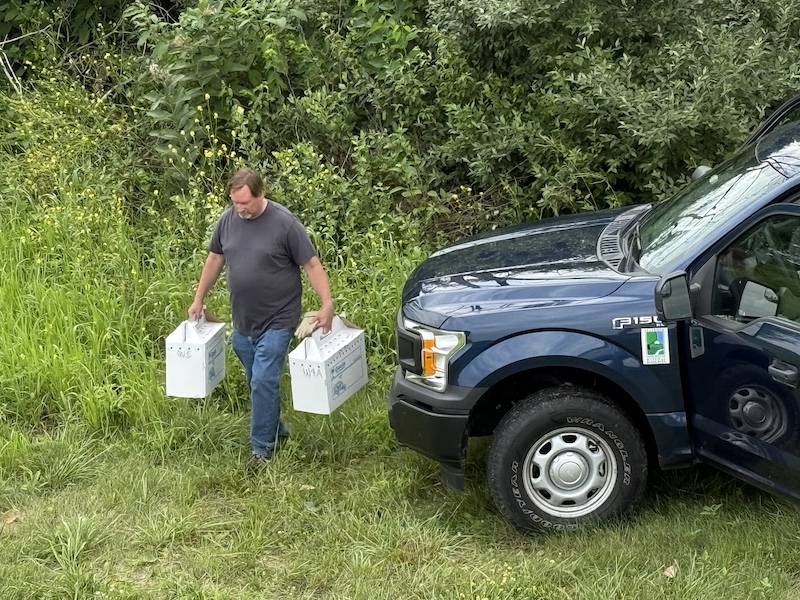
On this July morning, McDonald has collected six-week-old osprey chicks from the Illinois Raptor Center in Decatur. They have spent the night at the Center after being collected from nests in Massachusetts along the Westport River and near New Bedford.
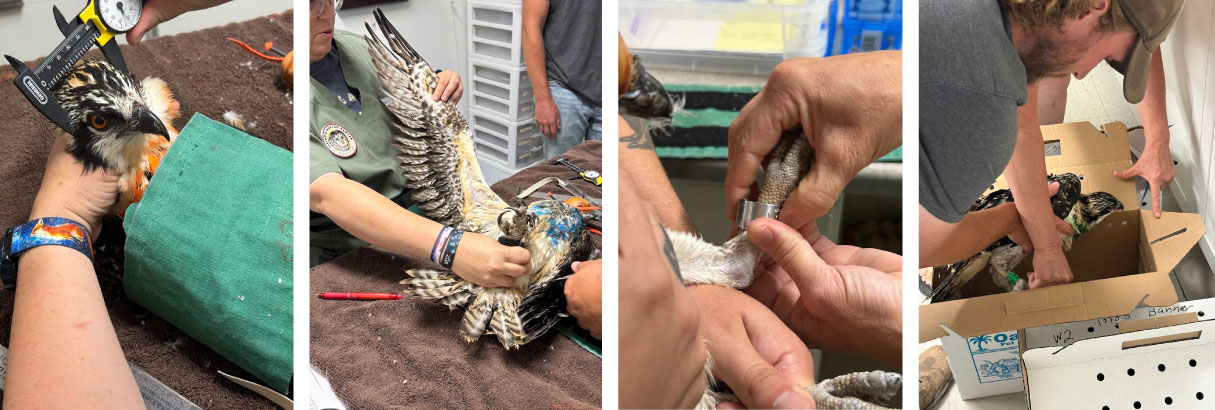
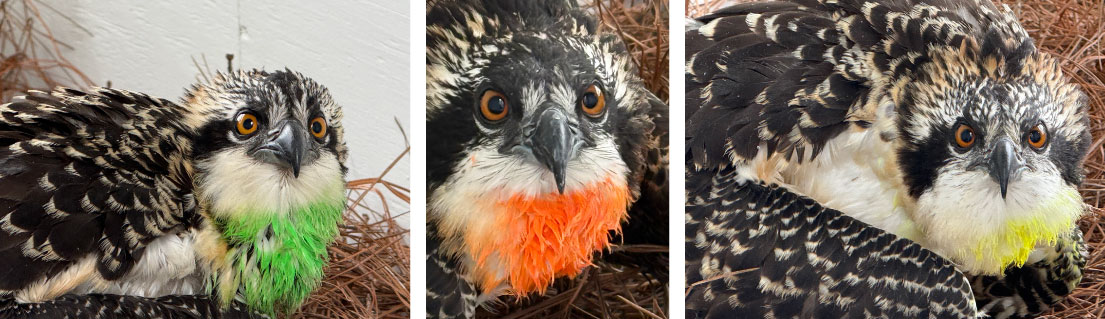
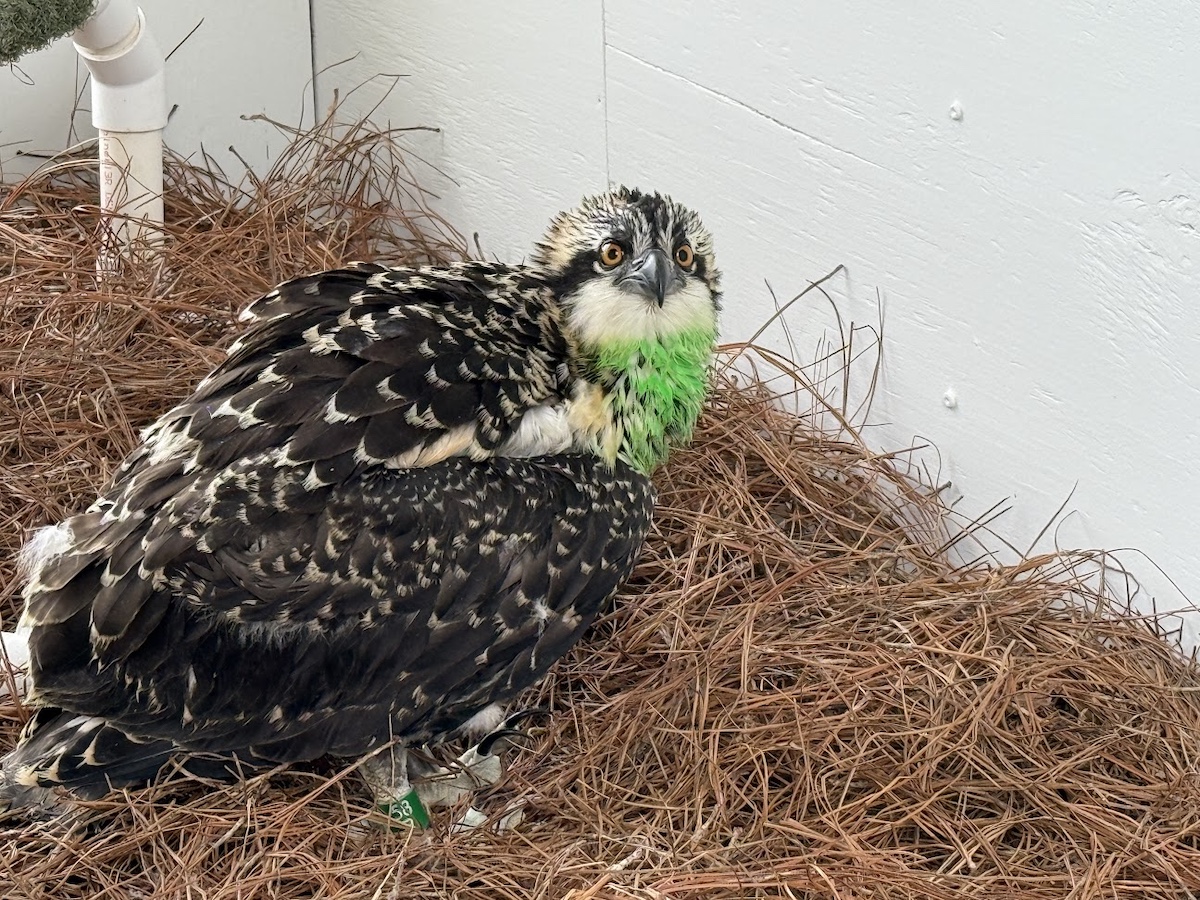
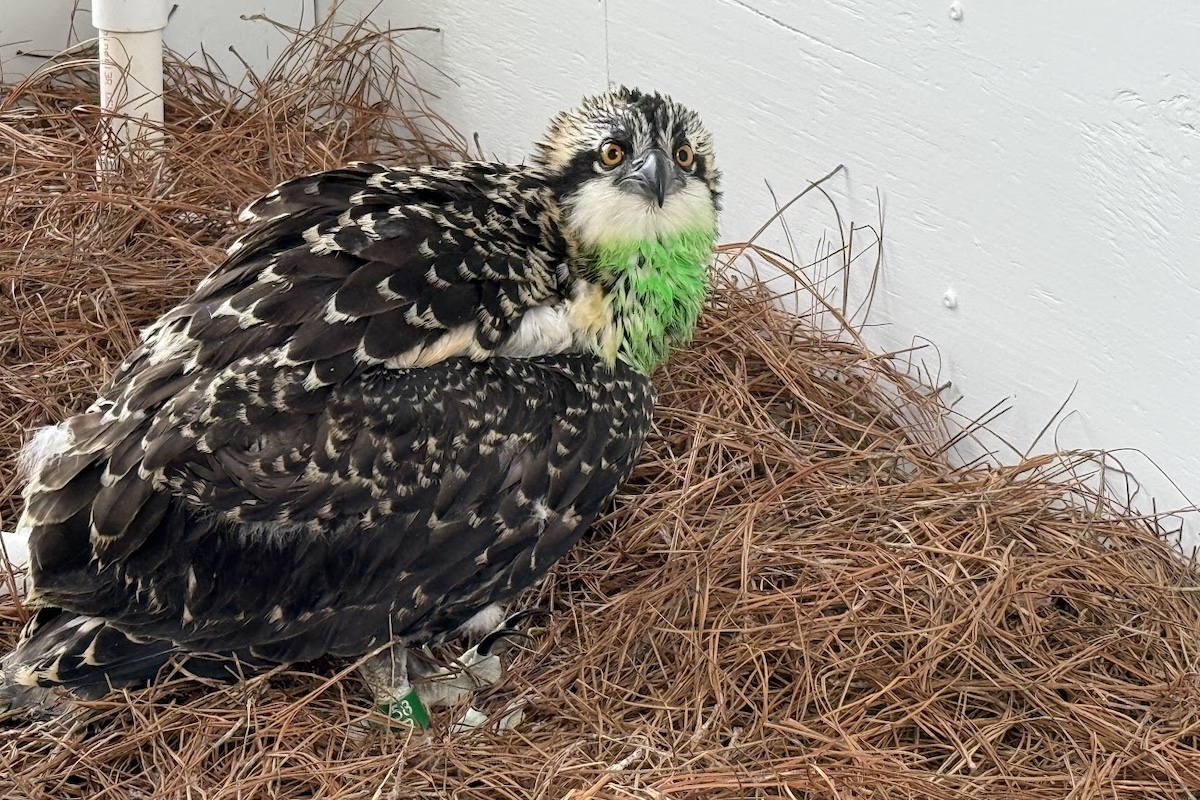
At the Raptor Center, the chicks have been examined, measured, weighed and fitted with numbered leg bands that will identify them. They have also had blood drawn to determine their gender and health status and had their chests painted with temporary colors that will help observers recognize them at a distance.
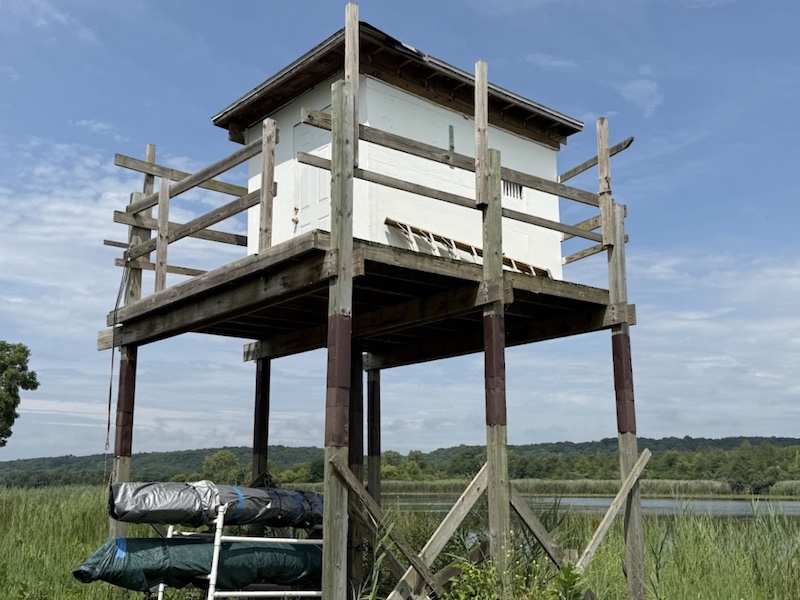
With the check-up completed, the chicks are moved to individual carriers and driven to their new home at Banner Marsh about two hours away. When they arrive, the chicks are carefully placed in a large wooden structure on tall poles, called a hack box, where they will be sheltered while they get accustomed to their new surroundings. The box is ideally located overlooking a channel connecting two marshland lakes – a perfect spot for six fish-eaters.
The chicks stay in the hack box for the next two weeks observing their new habitat through a large bar-covered door. Meanwhile, the student technicians monitor the chicks daily through a web camera mounted inside the box. Not only does the camera allow the technicians to confirm whether the young birds are eating and getting along, it also assures minimal human contact with them as they adjust to their new location.
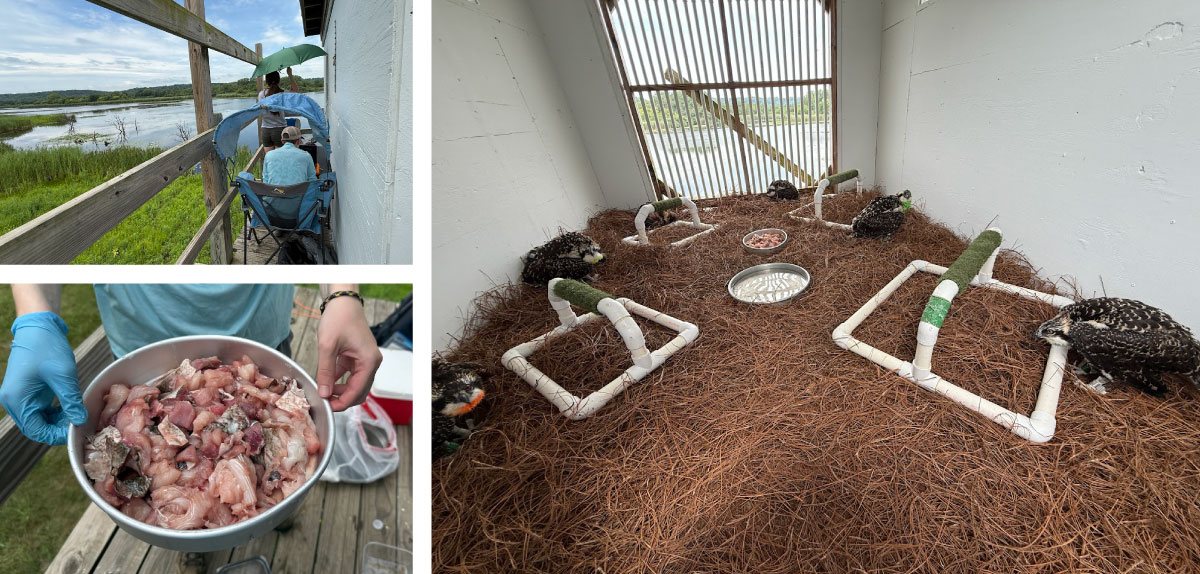
Osprey chicks require a lot of food, so the team relies on the staff at the lllinois Natural History Survey’s Illinois River Biological Station who supply the fish that are the ospreys’ main diet. Fortunately, the Station has a ready source of invasive Asian carp that have been caught in the river and frozen for research purposes, or in this case, as osprey food.
Inside the hack box, the chicks are fed bit-sized pieces of carp twice a day. As the birds grow, so do the portions until their meal eventually reaches the size of a filet. This feeding continues until the birds leave the hack box.
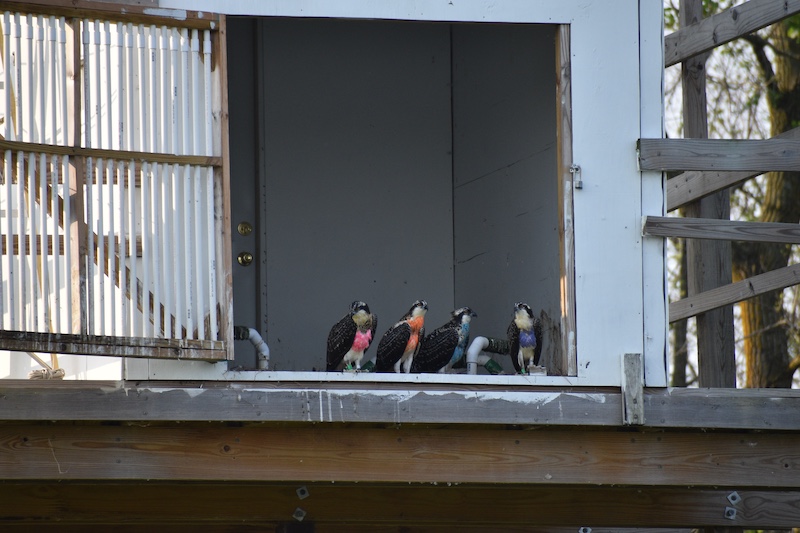
Within days of their arrival, the chicks start exhibiting pre-flight behaviors. They pump their wings, jump to and from their perches and practice hovering. They are preparing to fledge.
Thirteen days after arriving at the marsh, the door of the hack box is opened, and the chicks experience their first unobstructed view of their new home. One chick fledges almost immediately. But the remaining five birds decide to stay in the hack box. They are not quite ready to leave.
So every evening, the door of the hack box is closed to protect the remaining chicks from predators. And every morning it is opened in anticipation that they might fledge.
For now, the team waits.
Funding to help restore breeding colonies of osprey in Illinois is provided by the Illinois Department of Natural Resources, the University of Illinois Springfield, and the U.S. Fish and Wildlife Service with additional support provided by numerous partner agencies, organizations and businesses.
Carla Rich Montez is an outdoor writer living in Peoria County. She is a regular contributor to OutdoorIllinois Journal.





Submit a question for the author
Question: Hi Carla, I was so happy to see the article about ospreys at Banner Marsh. I don’t live too far from that area and was aware of the hacking program. For several years there has been an active osprey nest on a tower just south of Canton on the west side of Rt. 78. The adults seem to return in June and have their young. Every so often I see the pair soaring over the area corn fields. There is a body of water for them on the east side of 78 and another one further west off of Taylor Road. Again, glad to see the article.