
Emily Jones holding a newly banded red-shouldered hawk prior to release, under Dr. Travis Wilcoxen’s master banding permit. Photo by Dr. Travis Wilcoxen.

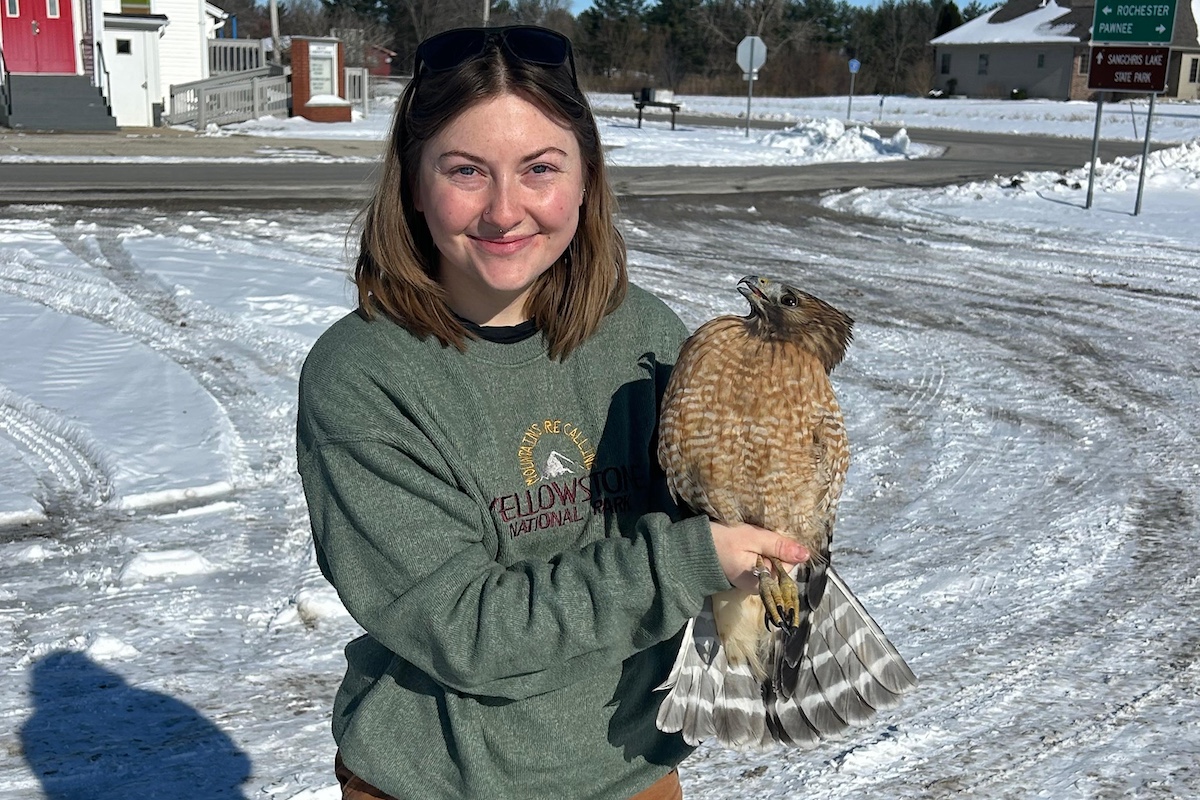
Emily Jones holding a newly banded red-shouldered hawk prior to release, under Dr. Travis Wilcoxen’s master banding permit. Photo by Dr. Travis Wilcoxen.
Despite the decline in many raptor species worldwide, Illinois is teeming with these skilled and elusive creatures. They are separated from other birds by the combined physical characteristics needed to hunt for their food: keen eyesight, hooked bill and sharp talons. Illinois was once known as the Prairie State, and while the nickname still remains, most of its prairies have been converted to agricultural land. Regardless of intense habitat alteration, raptors are resilient, and have learned to survive in human-dominated landscapes. Illinois is home to more raptor species than you might suspect, all with different habitat and prey requirements.
Some species breed in Illinois, while some spend the winter months here, and others are year-round residents or just migrate through. Accipitridae is a genus of 250 raptor species, including hawks, eagles, kites and harriers.
Buteos are soaring raptors, characterized by their short tail and broad wings. They use their broad build to soar during migration, using the earth’s thermals to gain altitude. Sharp-shinned hawks (Accipiter striatus) and Cooper’s hawks (Astur cooperii) have short, broad wings and long, narrow tails that act as rotors while they navigate through dense forests with agility. Northern harriers (Circus hudsonius), an Illinois endangered species, can be differentiated from other birds of prey by their long, narrow tail, and longer, rounded wings. They have a facial disc similar to owls, and their hunting behavior also resembles that of some owl species, where they glide low over the ground in search of small mammals and birds.
Turkey vultures (Cathartes aura) and black vultures (Coragyps atratus) are in their own family called New World Vultures. They utilize sight and smell to find carrion. Vultures are nature’s clean-up crew, effectively getting rid of bacteria and preventing disease from spreading amongst humans and other wildlife.
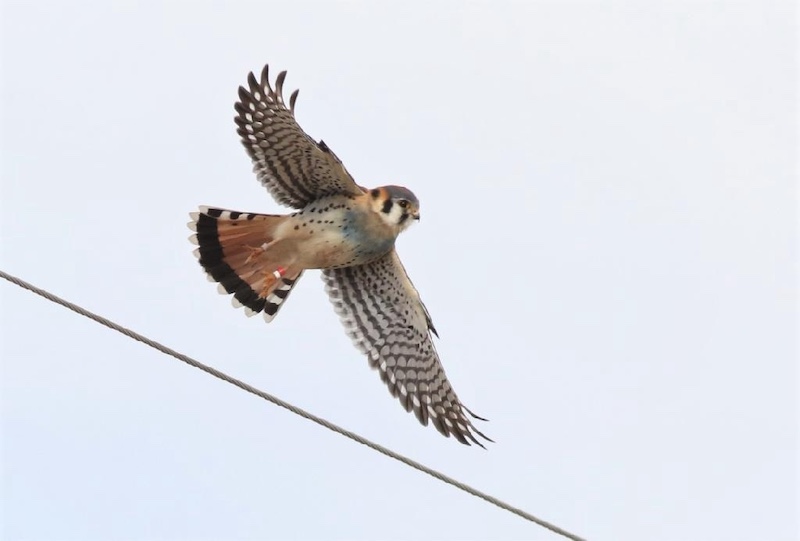
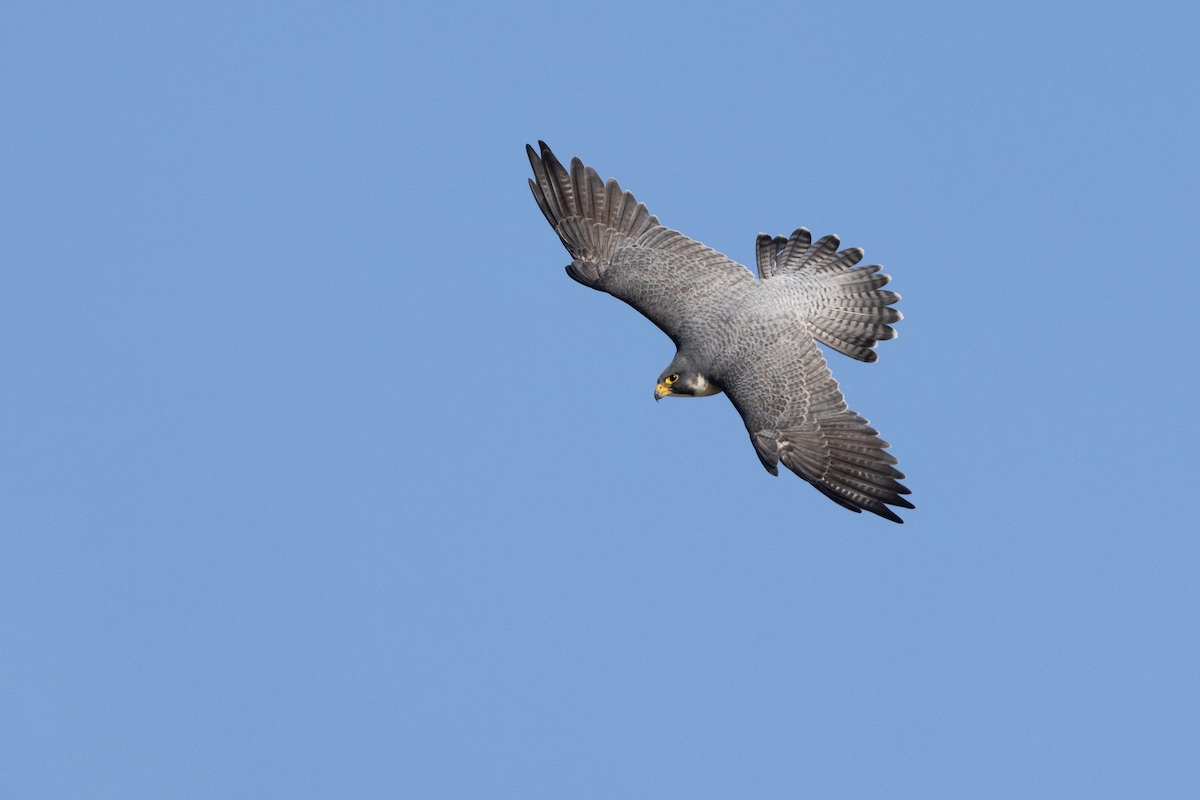
Three species of falcons can be found in Illinois: American kestrel (Falco sparverius), merlin (Falco columbarius) and peregrine falcon (Falco peregrinus). Falcons are streamlined raptors, with pointed wings and tapered tails.
American kestrels are known as farmland raptors because they readily hunt agricultural fields. Unfortunately for this small falcon, its population has decreased steadily over most of its range; the primary cause unknown. As a research assistant, I was able to gain my first in-the-field experience with raptors under University of Illinois-Springfield researcher Dr. Tih-Fen Ting’s guidance. In 2022, her lab began a wintering ecology study on American kestrels in Sangamon County. In 2023, as a continuation of this project, I assisted Dr. Ting and Sarahi Porcayo in capturing and color-marking 25 kestrels. We then resighted each individual kestrel weekly to calculate their wintering survival, and the site fidelity of the kestrels marked in 2022. Studies like this one are important in determining what is causing the decline of this species, and whether or not individuals are experiencing mortality during their nonbreeding period or during another stage of their life cycle.
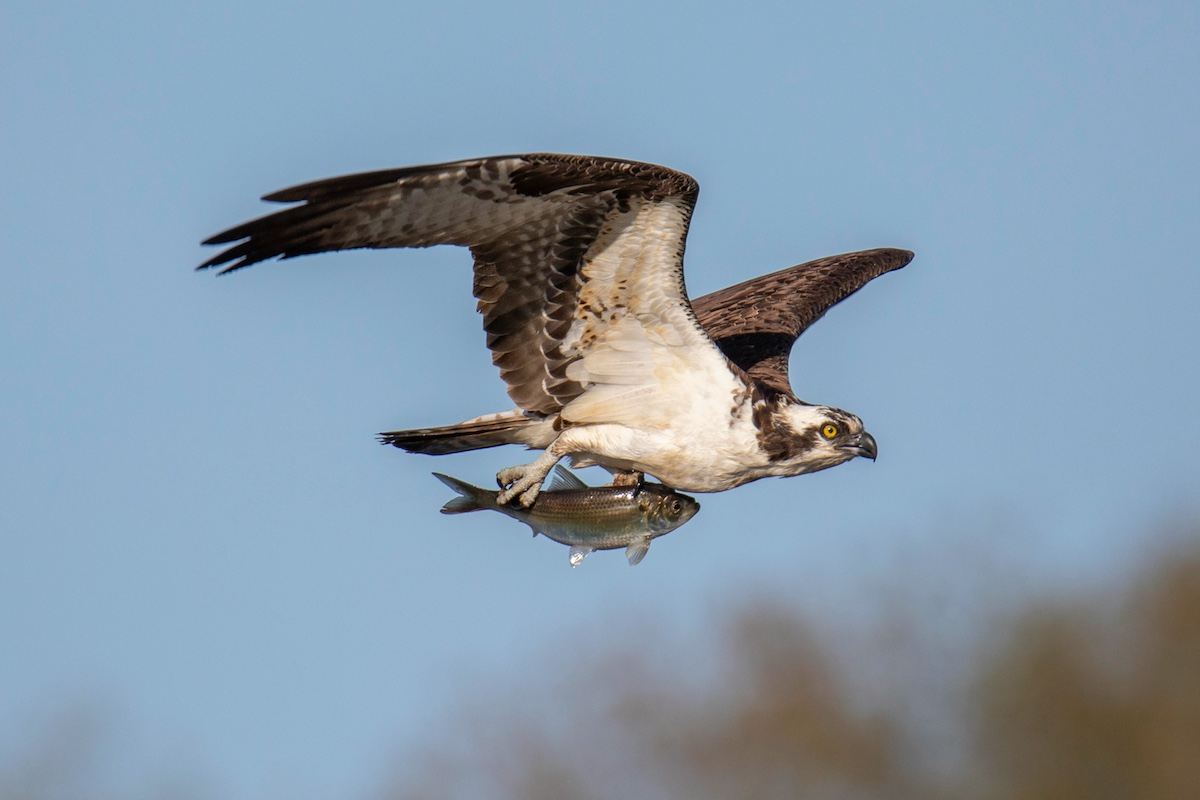
Two species of fish-eating raptors have faced major population declines in the past, but through policy changes and human intervention they are now major success stories: Osprey (Pandion haliaetus), an Illinois threatened species, and bald eagle (Haliaeetus leucocephalus). DDT was a powerful insecticide used in the mid-20th century. The pesticide entered the environment through the spraying of agricultural fields, and contaminated water, soil and plants. Bald eagles, ospreys and peregrine falcons all faced eggshell thinning and reproductive failure due to this toxin, causing severe population declines among these species. In 1972, DDT was banned in the United States due to the adverse effects it had on bird populations, among other reasons. Since then, these species have recovered greatly, with the help of captive-breeding programs and other conservation efforts.
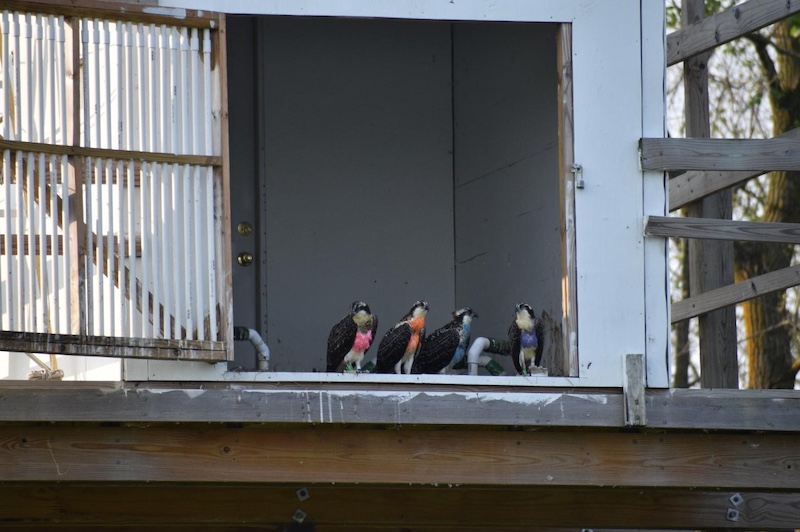
The increase in osprey populations has largely been due to the banning of DDT, but also because of reintroduction programs such as the Illinois Osprey Hacking Program. This project has been a collaboration between the Ting Lab at University of Illinois Springfield and the Illinois Department of Natural Resources, with funding support from the U.S. Fish and Wildlife Service and the Illinois Department of Natural Resources. As a field technician on this project, I was able to experience the complexity of reintroducing back to Illinois a species as unique as the osprey.
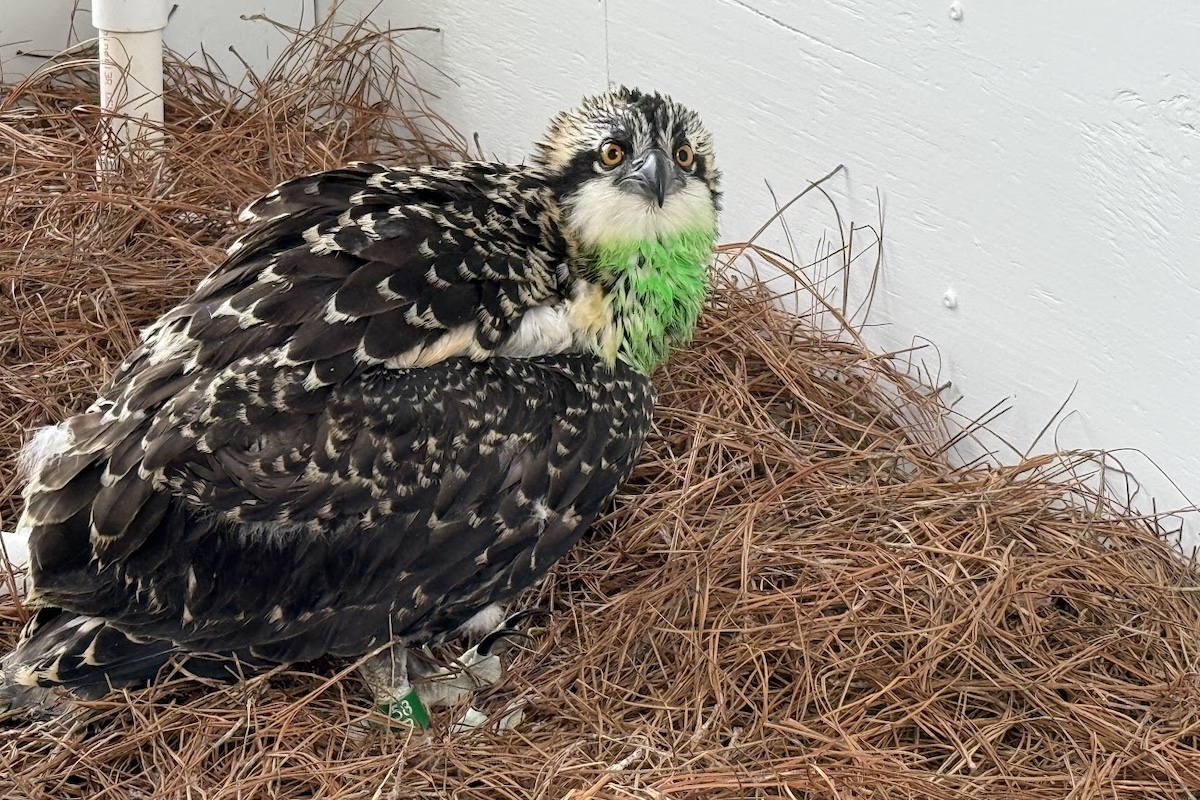
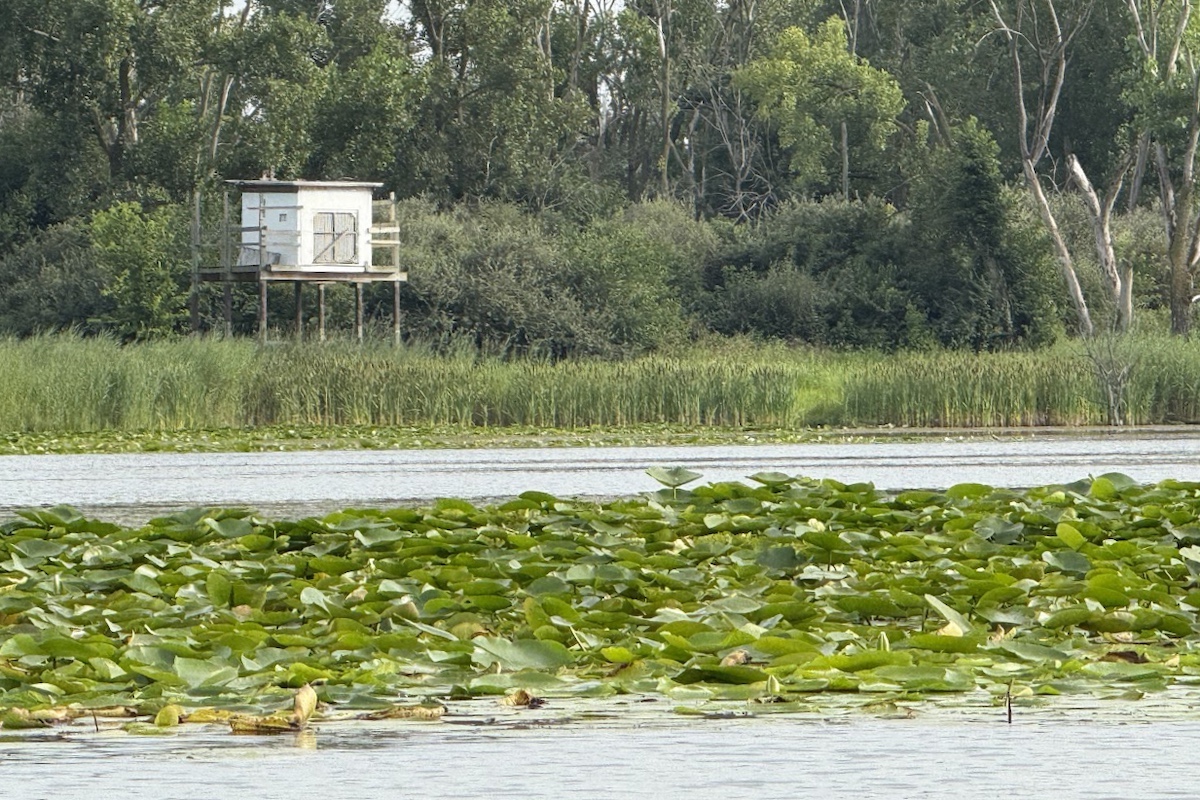
The year I was on the project, 12 chicks were taken from separate nests in Massachusetts and processed at the Illinois Raptor Center. The staff and Dr. Ting took morphological measurements, blood samples and banded the chicks. The birds then were taken to two separate field sites in Illinois where they were placed in an artificial nest, called a hack box. Using a camera placed inside the hack box my coworkers and I monitored the behavior and growth of these chicks for two weeks. The birds were fed twice a day. Before we released them, Dr. Ting affixed a satellite transmitter to one osprey from each hacking site, typically a male as they have a higher site fidelity than females. When the birds were ready to fly the hack box door was opened and we watched from the kayaks as, one by one, they fledged from the hack box. For the next 12 weeks, or until they began their fall migration journey, we attempted to resight the fledglings and record their locations and behaviors. Now, the osprey population in Illinois is making a comeback thanks to the conservation efforts by everyone involved in the Illinois Osprey Hacking Program, as well as the banning of DDT.
Illinois is also home to many different species of owls. Nocturnal birds of prey that are equipped to camouflage during the day, owls are more commonly heard than seen. With an incredibly wide range in diet, plumage, behavior and vocalizations amongst species, seeing or hearing an owl is always a special experience.
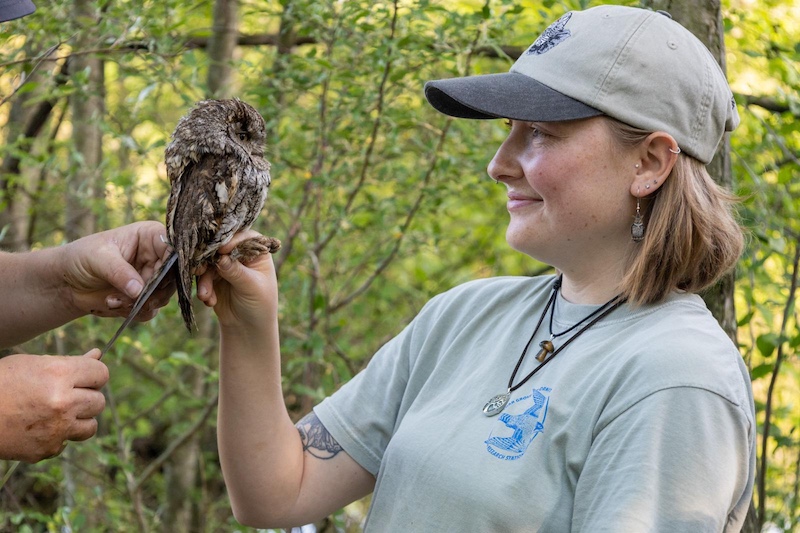
Great horned owls (Bubo virginianus) are a large and powerful species that is highly adaptable to most habitats. They frequently take over nests of other raptors, such as a stick nest made by red-tailed hawks or natural cavity in trees. Barred owls (Strix varia) are one of the most commonly seen and heard owls in Illinois. Their characteristic “Who cooks for you? Who cooks for you all?” call is easily distinguishable from other owls. Snowy owls (Bubo scandiacus) are an irruptive migrant and can typically be found in northern Illinois in the wintertime. Long-eared owls (Asio otus) are named after their long ear tufts, which are not actually ears at all, but rather feathers called plumicorns. An elusive predator, the long-eared owl is susceptible to human disturbance, making it important not to get too close or disrupt them. Short-eared owls (Asio flammeus) are one of the world’s most widely distributed owl species and an Illinois endangered species. They can be found hunting Illinois prairies, grasslands and agricultural fields in the winter. These ground-nesting owls are quite charming and watching them hunt at dawn or dusk is a truly magical experience. Another cavity-nesting owl in Illinois is the American barn owl (Tyto furcata), which received its name due to its tendency to nest in man-made structures such as barns and silos. It is said these owls may be responsible for the origin of ghost stories, since they are a white, floating presence at night with a call that resembles a distressed scream. Eastern screech-owls (Megascops asio) are cavity-nesters with two color-morphs, red and gray. Sometimes, an intermediate morph, or a brown morph, also appears in these small owls. The smallest owl in Illinois, the northern saw-whet owl (Aegolius acadicus), is named after its vocalizations, which are said to resemble sharpening a saw on a wetting stone.
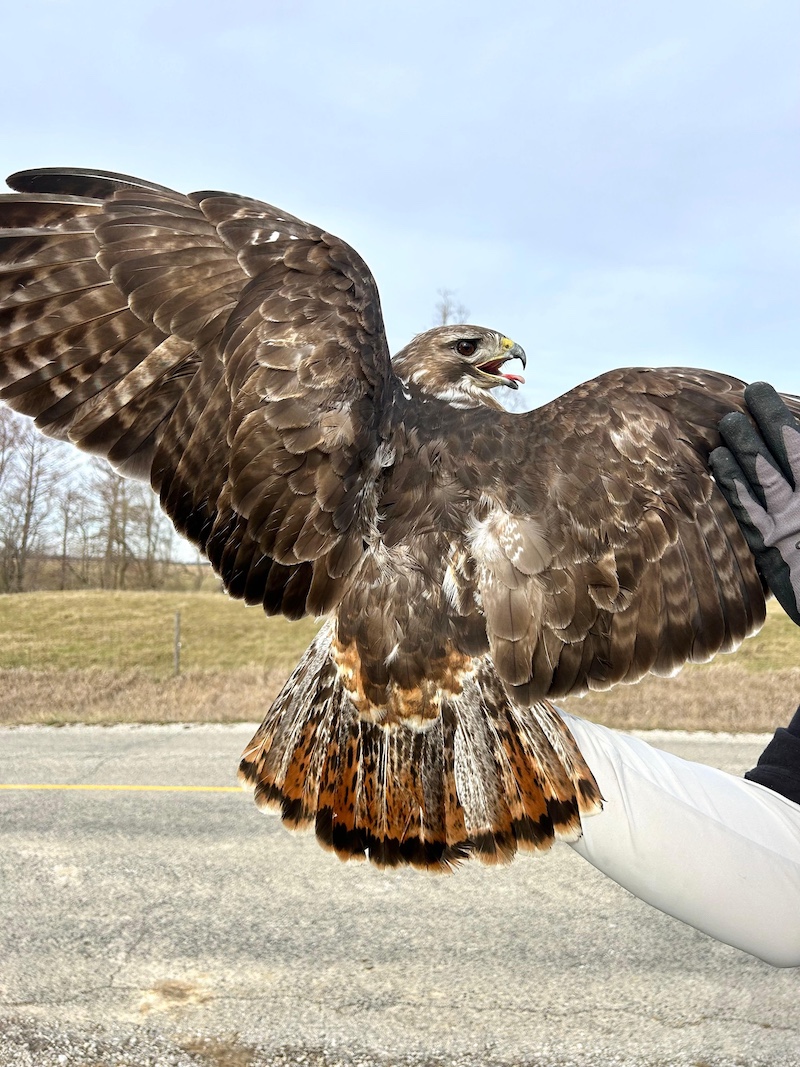
I have been fortunate enough to work with Illinois raptors, both at a distance and up-close. For the past two winters I have been joining a professor at Millikin University to study overwintering and resident birds of prey in central Illinois. Dr. Travis Wilcoxen, in collaboration with the Illinois Raptor Center, is permitted to catch, band, sample and release raptors under a master banding permit issued by the United States Geological Survey’s Bird Banding Laboratory. After many hours of learning from Dr. Wilcoxen and working other jobs that have allowed me to band hundreds of raptors, I am now a sub-permittee under his master banding permit. This means that when Dr. Wilcoxen is not present, I can still trap raptors using his methods and collect samples using the protocol for his projects. This allows me to gain valuable skills as well as contributing data to Dr. Wilcoxen’s research. His lab focuses on studying immune defenses to diseases in wild raptor populations, as well as comparing these immune defenses to raptors admitted to rehab for injuries or illnesses. Dr. Wilcoxen has written for the OutdoorIllinois Journal before, describing his research in more extensive detail.
Hopefully the next time you see a red-tailed hawk soaring in the sky, a northern harrier hunting a prairie field or a turkey vulture eating carrion, you’ll want to stop and watch. The status of raptor populations is an important indicator of environmental health, and Illinois is a great place to experience a diversity of raptor species in the Midwest.
Illinois Department of Natural Resources. (2026). Illinois Prairies.
Illinois Department of Natural Resources. (2026). Wild About Birds – Illinois Raptors!
McClure, C. J., Westrip, J. R., Johnson, J. A., Schulwitz, S. E., Virani, M. Z., Davies, R., … & Butchart, S. H. (2018). State of the world’s raptors: Distributions, threats, and conservation recommendations. Biological Conservation, 227, 390-402.
United States Environmental Protection Agency. (2026, January 22). The Case of DDT: Revisiting the Impairment | US EPA. EPA.
Emily Jones is an early-career raptor biologist who is passionate about conserving not only threatened and endangered species, but common ones as well. She graduated from the University of Illinois Springfield in 2023 with a Bachelor’s degree in Environmental Studies and has been working seasonal field jobs across the U.S. since then. She plans to continue studying raptors as a Master’s student at Southern Illinois University in Carbondale next spring.



Submit a question for the author