
A female largemouth bass about to be transferred into a holding tank after being removed from a broodstock pond. Photo by Frank Sladek.

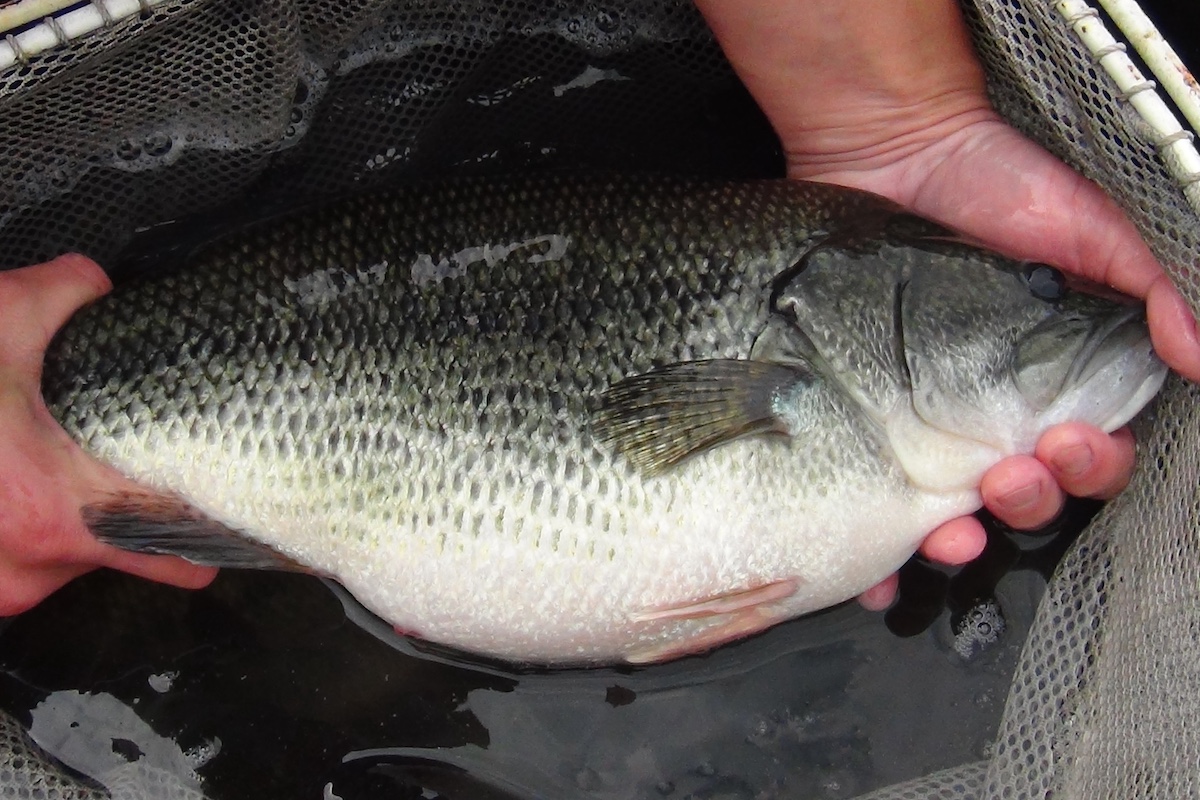
A female largemouth bass about to be transferred into a holding tank after being removed from a broodstock pond. Photo by Frank Sladek.
Largemouth bass spawning season at the hatchery begins with a turn of a wheel.
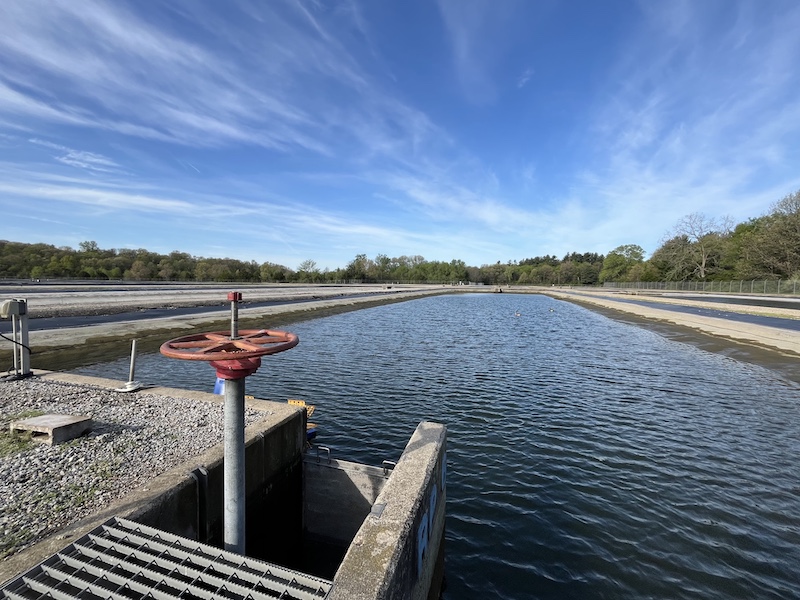
In nature, spawning season begins as soon as the water is warm enough to let the bass know that it’s time, but at Jake Wolf Memorial Fish Hatchery, where water levels and temperatures are controlled by humans, it’s a more mechanical process.
All year long, adult largemouth bass have been living in ponds at the hatchery, fed a steady diet of small fish, such as minnows, and enjoying the relative safety from environmental stresses. A healthy and well-fed fish is more likely to produce healthy and hardy eggs than a fish that has poor nutrition and a stressful life, so these brood fish live a quiet life until some evening in mid-April.
After the sun has set over the hatchery, someone starts the process of draining a pond. After turning the valve to the appropriate setting, they’ll head back home, enjoy a relaxing evening, and return at midnight to close the valve. The pond has not finished draining but giving it a head start in the evening makes the next day go faster…without leaving the fish in a shallow and crowded pond overnight. A few hours later, before the sun is up, someone will return to the pond and open the drain valve again. Some hours later, all the hatchery staff head out to the pond to move broodstock fish into spawning tanks.
As the pond approaches its lowest level, a U-shaped structure at the bottom is revealed. Following the receding water, the fish in the pond all end up in this concrete trough, called a “kettle” by folks in this field. Using nets and buckets, hatchery staff scoop adult broodstock bass from the kettle and into buckets, which are carried and passed up a set of stairs into the tank of a stocking truck parked at the edge of the pond. Numbers are shouted over the sound of buckets of water being emptied. When the tank hits the safe limit of fish, the truck pulls away, and another takes its place. The fully loaded truck drives a short distance and backs up to a concrete raceway. Too large for the stocking tubes, the fish must be netted out of the truck tanks and placed into raceways, segregated by sex.
After the bass have had a few days to adjust to the raceways and their physical condition has been evaluated, they are placed into spawning tanks, with 10 males and 12 females placed in each tank. After the fish enter the tanks, hatchery staff adjust the water flowing through the tank, and the water temperature is slowly raised from 54 degrees Fahrenheit to 72 degrees Fahrenheit.
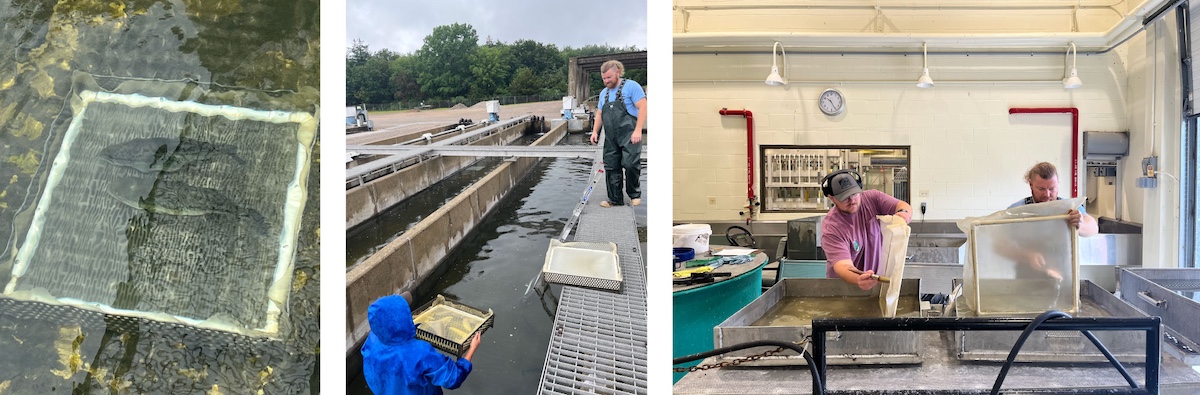
Spawning typically commences after the fish have been at 72 degrees for two days. Ten nest boxes have been placed in each tank. The nesting structures consist of an aluminum housing unit holding a square frame made of mesh and PVC pipes. Lacking other structures in the tanks, each male will claim a box as their nest. Hatchery staff check the boxes for spawns every day. While a daily check would be sufficient, the hatchery is staffed and visited by curious people, so the nests get plenty of attention. Spawns never get missed.
The bass do not seem to notice all the activity outside the water. The females choose their preferred males, and spawning takes over a period of several hours. When she’s done, the female swims away, leaving the eggs in the care of their other parent. Her job is done.
In nature, the male would remain with the eggs for several days, defending them from predators and gently fanning water over them with his tail to ensure that the eggs have a steady supply of oxygen. At the hatchery, however, a technician will wade through the tank and pick up the nest boxes one at a time, placing them into a tank of water and carting it into the hatchery building.
Human hands never touch the eggs. Instead, water, nets and paintbrushes are used to carefully remove the eggs from their inner nest frames into a tank where they will soak in a sodium sulfite solution that breaks down the adhesive that, in the wild, would keep the eggs from floating away from the nest. Once that adhesive is gone, the eggs are placed in incubation jars where they will roll in a flow of slow, fully oxygenated water until they hatch, which only takes a couple of days. The eggs are treated with peroxide once a day to prevent damaging fungal growth from taking hold.
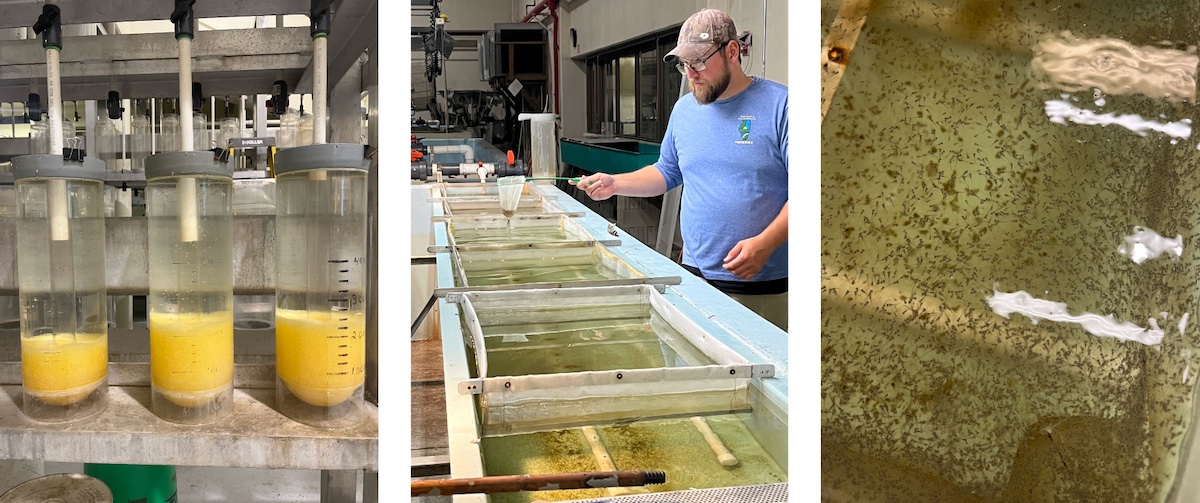
After the eggs hatch, peroxide treatments stop, and the hatched fish, or fry, are left in the jars for two days while they finish absorbing their yolk sacs. At that point, they are transferred to “swim-up baskets,” which are exactly what they sound like: baskets where fish will either swim up…or not. They are given a couple of days to start swimming; any of the fry that do not swim up during that time frame are fry that never would have swum up. The living fry are then taken to outside ponds that have been prepared just for them, where they will feed on zooplankton in the water for the next three weeks.
Parent bass are returned to their holding ponds, where they will continue living a life of luxury until the next spawning season.
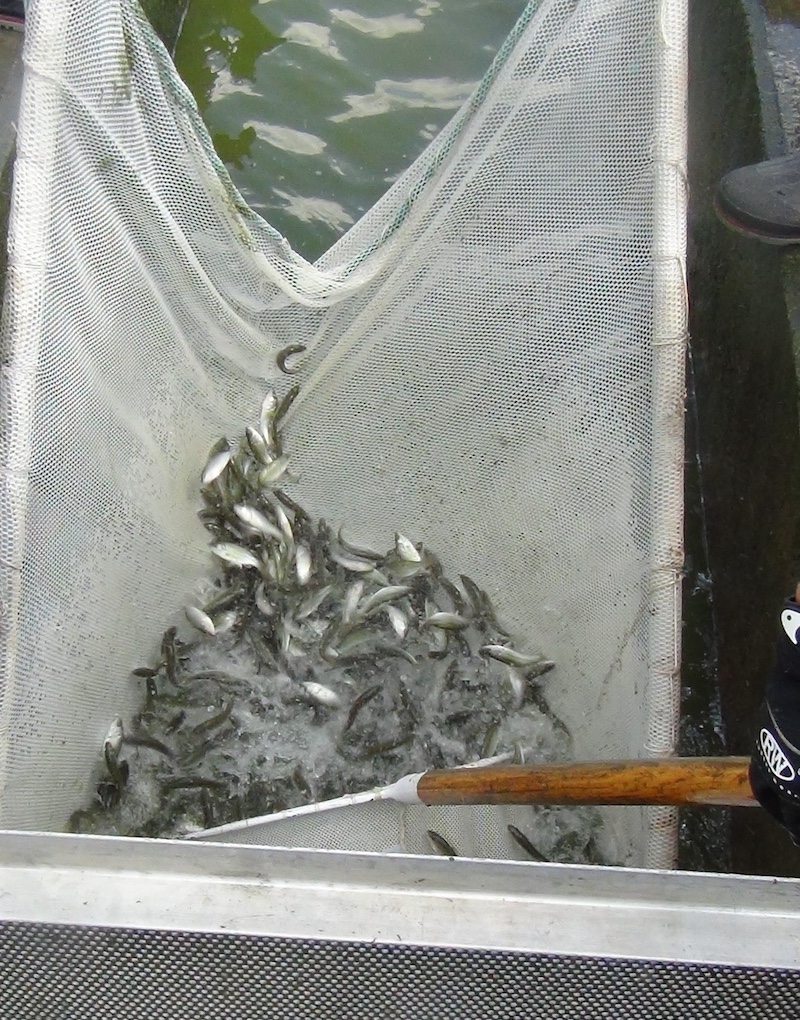
After three weeks on a zooplankton-rich diet, the young bass are between 1 and 3 inches long and are ready to leave their ponds. They are removed from their grow-out ponds in the same way that their parents were removed from their holding ponds. The ponds are drained, the fish are netted from the kettle at the bottom, and a truck takes them to the next stop on their journey. For many of those fry, their time at the hatchery is done, and they will get stocked into a public water body at this stage. They are healthy and well-developed thanks to their access to zooplankton, and this can be a great age for them to be introduced to their wild homes. In 2025, the State of Illinois stocked nearly 500,000 largemouth bass of this size. More than half of those fish came from Jake Wolf Memorial Fish Hatchery, with the rest hailing from Little Grassy Fish Hatchery and LaSalle Fish Hatchery.
The rest of the fry will be moved to large indoor tanks at the hatchery. In 1,100 gallons of water that is constantly being refreshed, with an automatic feeder perched overhead, the young bass will grow rapidly. Recognizing that powder falling from the sky can be food is a learned skill for the bass, and a unique blend of feed consisting of krill powder and commercial fish food is used to train them. They get fed every five minutes over a 24-hour period, and during 10 hours each day additional feeding happens. These additional feedings give smaller or less aggressive fish a chance to eat and grow. Those fish might have other traits that would be helpful for long-term survival after stocking, and without being certain, keeping them fed and alive keeps those traits in the wild populations.
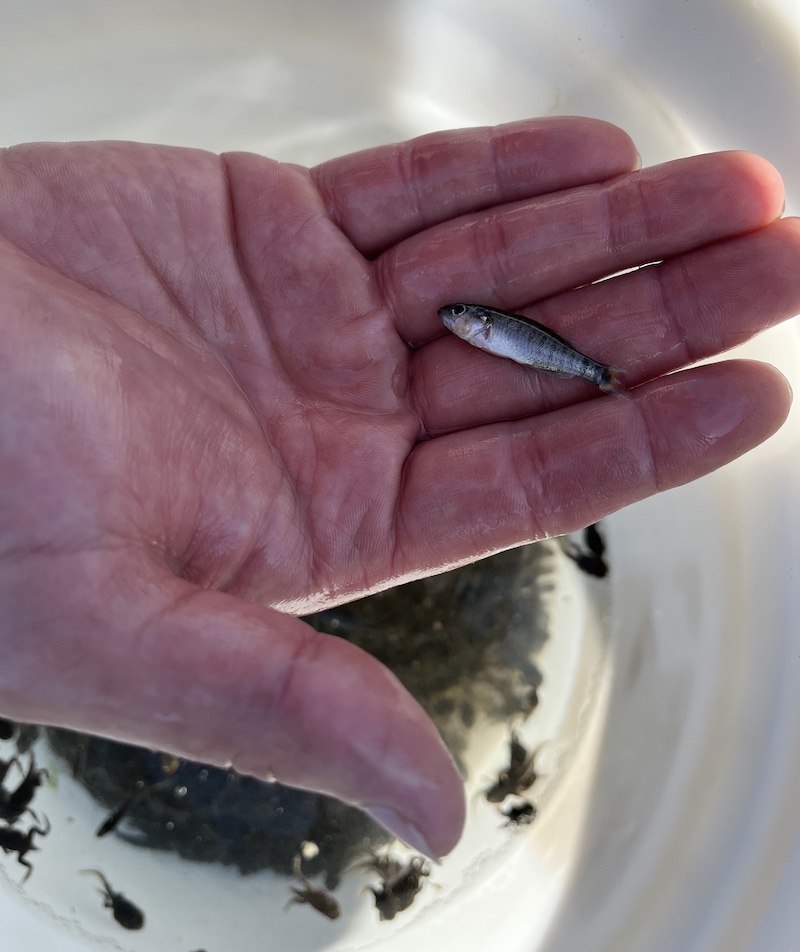
After the fish have gotten accustomed to their new diets and had some time to grow even more, they are separated into different tanks based on size. Like many fish, the largemouth bass are not sentimental about how they obtain food, and a smaller fish will always look like a tasty meal, regardless of species or even the possibility of being genetic relatives. If the smaller fish were left with larger fish in these tanks, which have plenty of room to swim but are still enclosed, there would be no escape from being cannibalized.
At this point, all that’s left to do is wait. The automatic feeders are refilled daily, the tanks are cleaned every morning, and hatchery staff track fish growth, until they are within the 4- to 7-inch length that qualifies them as “advanced fingerlings.” Some of the fingerlings will be retained by the hatchery in brood ponds, where they will spend the next few years growing until they are ready for their turn in the spawning tanks, like their parents before them.
As for the rest? Annually, between 150,000 and 165,000 advanced fingerlings are stocked by Jake Wolf Memorial Fish Hatchery throughout central Illinois. Fish are carefully loaded into trucks, with each netful of fish being weighed and recorded in lieu of counting them individually. After trucks leave the hatchery, the drivers check on the fish regularly until they reach their stocking site. The driver will check the water temperature at the lake, and if there is a great difference between the lake water and the tank water, they will use a pump to steadily exchange water until the fish are accustomed to the temperature of the water in their new home. Once all is safe, the fish are sent down a tube and into open water, never again to see the inside of a hatchery tank. Last year, 165,000 of those advanced largemouth bass fingerlings were stocked by Jake Wolf Memorial Fish Hatchery throughout Illinois, in addition to 105,000 that were raised at LaSalle Fish Hatchery, 1,000 at Otter Slough Fish Hatchery and 5,000 that grew in rearing ponds in Pittsfield and Shabbona.
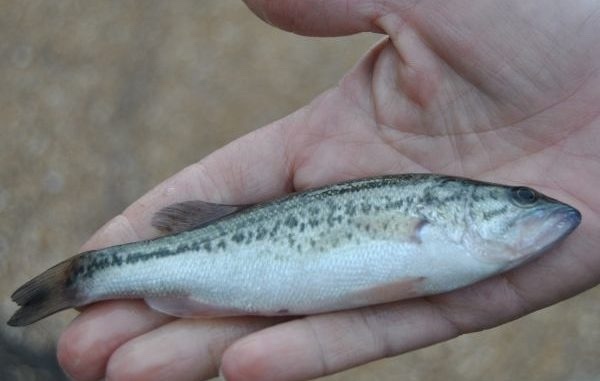
For staff at the hatchery, stocking is a time of excitement, celebration and relief. Months of careful timing, feeding and care pay off as we watch these fingerlings swim away (often eagerly) from the stocking trucks. Altogether, Illinois stocked more than 767,000 largemouth bass in 2025, which sounds like a lot, but those numbers only represent 3 percent of the total number of fish stocked in public waters in Illinois. Last year, more than 22 million fish were stocked. But these fish are more than just numbers on a stocking report—they represent months of careful planning and hard work, where they are cared for by hatchery staff and monitored by biologists in the wild, all with the support of the people of Illinois who want to be able to keep fishing at their favorite spots.
Fishing license purchases make all this possible. Fishing license funds directly support the work done by the Division of Fisheries on behalf of Illinois anglers. By using that revenue to support fishing in Illinois, we are able to access even more funding through the Sport Fish Restoration Act.
Whether you are an angler, outdoor enthusiast, field biologist or hatchery worker, you play an important role in this annual cycle. Working together means we can all look forward to many more years of enjoying healthy and robust fish populations in Illinois waters.
Kayleigh Smith is a Natural Resources Coordinator in the Division of Fisheries, working as the site interpreter at Jake Wolf Memorial Fish Hatchery. While she works full-time at a fish hatchery that is focused on raising sportfish such as salmon, bass, and pike, she has a passion for fish of all shapes and sizes, from the biggest and fiercest muskie to the tiniest minnow.





Submit a question for the author