
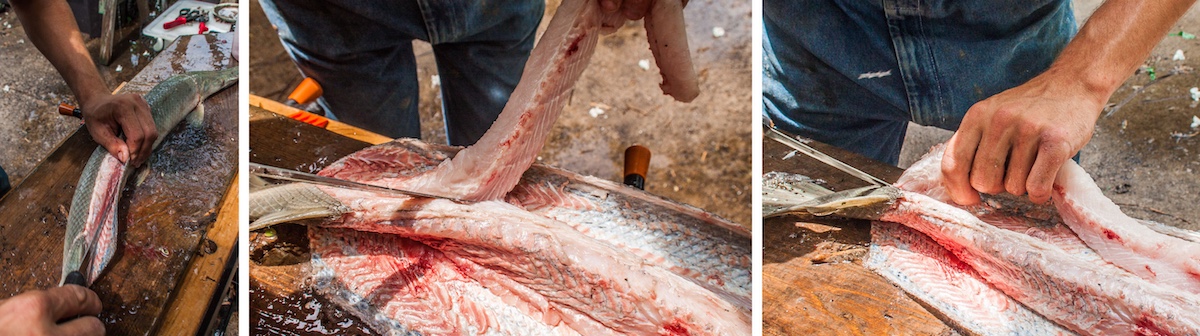
The author teaching particpants how to clean and prepare gar for the table at a Learn to Bowfish event. Photo courtesy of the Illinois Department of Natural Resources Division of Fisheries.

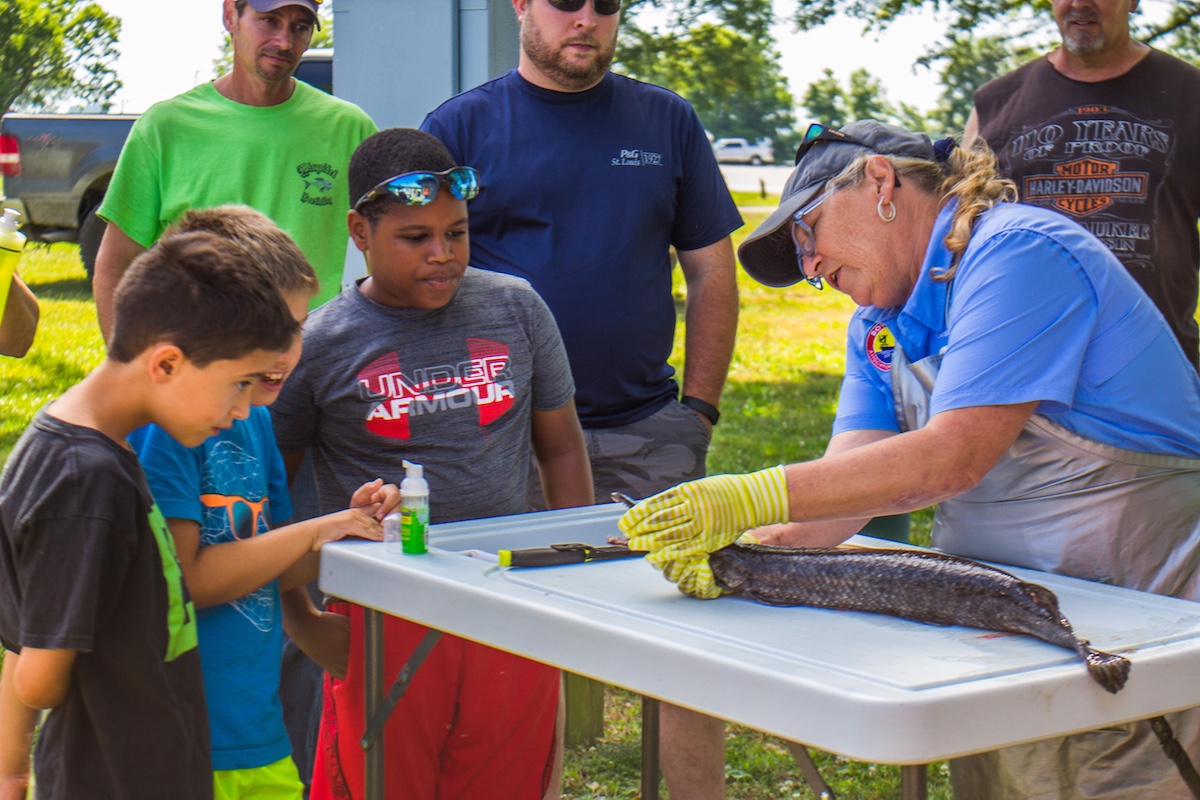
The author teaching particpants how to clean and prepare gar for the table at a Learn to Bowfish event. Photo courtesy of the Illinois Department of Natural Resources Division of Fisheries.
On quiet summer mornings along southern Illinois backwaters, a slow roll near the surface of the water often appears before the fish does. A long shadow gliding between lotus stems. Then a quick gulp of air, and the ripple disappears into reflections of cottonwoods leaning toward the river.
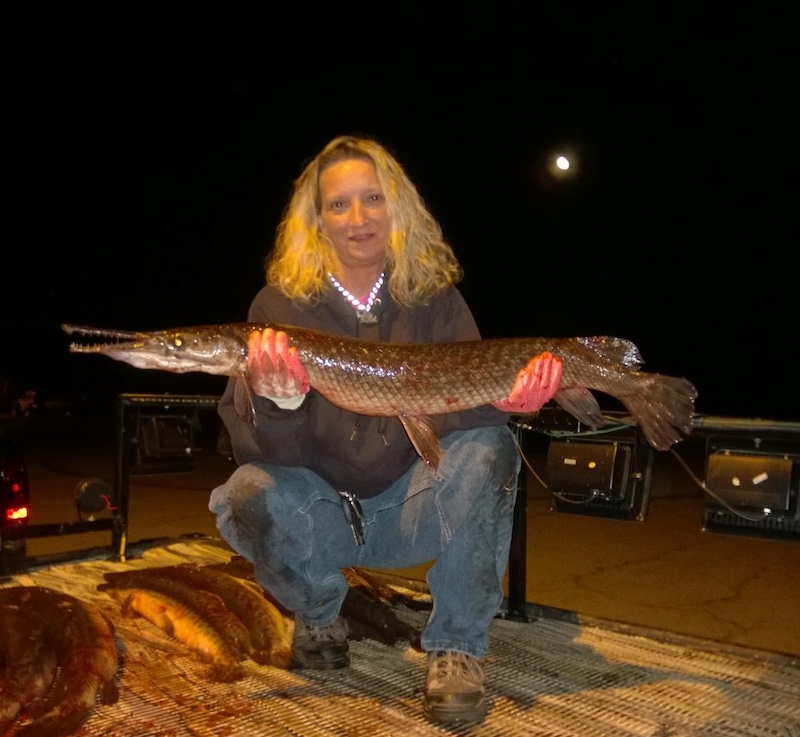
To many anglers and outdoor enthusiasts, the gar is a creature out of time — armored, elongated and sporting a toothy grin that seems more fit for a prehistoric swamp than our own Illinois waters. But these remarkable fish are not relics of the past. They are thriving, native residents of rivers, lakes and backwaters across the Prairie State, playing a meaningful role in aquatic ecosystems and offering a unique, if underappreciated, experience for those willing to look past the myths.
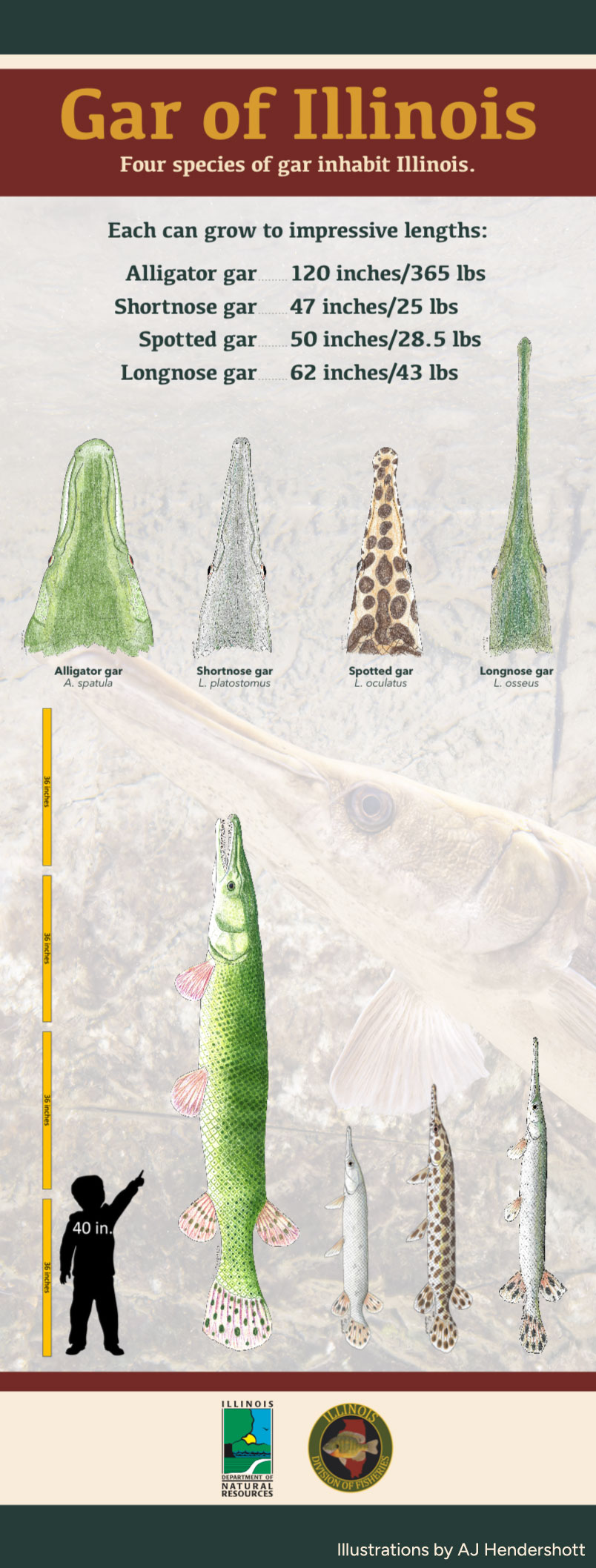
Gar belong to one of the oldest lineages of freshwater fish still swimming today. Covered in armor-like ganoid scales and equipped with elongated jaws lined with needle-sharp teeth, they resemble creatures from another geological era — because in many ways, they are.
Illinois is fortunate to be home to several species of gar, each adapted to life in the slow-moving, vegetated waters that fringe our great rivers and inland lakes.
Across the state, from the Cache River’s shadowed channels to the widening arms of the Illinois River, gar are part of the natural tapestry. They lurk among submerged timber, cruise near surface weeds and occasionally surprise an unsuspecting angler with a powerful tug.
For decades, gar have worn a reputation nearly as fierce as their rows of teeth. Let’s take a moment to separate fact from fiction:
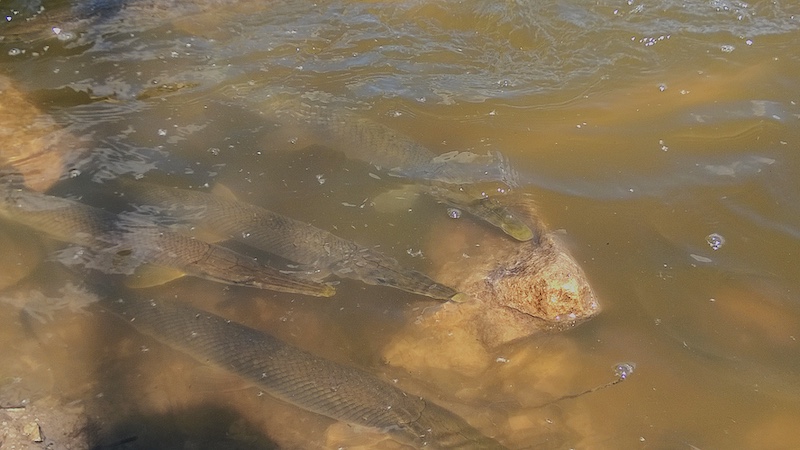
At first glance, gar may seem like oddities as living fossils in a modern world. But to spend time on the water where they dwell is to understand their place in Illinois’ natural heritage. Gar are survivors, athletes and, for those who open their minds to them, worthy quarry.
The next time you paddle a quiet slough or drift a backwater bend, keep an eye on the surface. That slow, rolling wake might just be a gar — a reminder that not all beauty swims the mainstream.
For generations, that moment has stirred mixed reactions among anglers. Awe for some. Disdain for others. Few Illinois fish are more misunderstood — or more fascinating — than the gar.
These prehistoric predators have cruised Midwestern waters for millions of years. Far from nuisances, gar are among Illinois’ most resilient native fish species. For anglers willing to learn their story, gar offer sporting challenge, sustainable harvest opportunities and surprisingly excellent table fare.
For decades, gar have been labeled “rough fish,” a term shaped more by cultural perception than ecological reality. Research shows that gar feed heavily on abundant forage species such as shad and minnows, often targeting weak or injured fish and contributing to balanced aquatic communities.
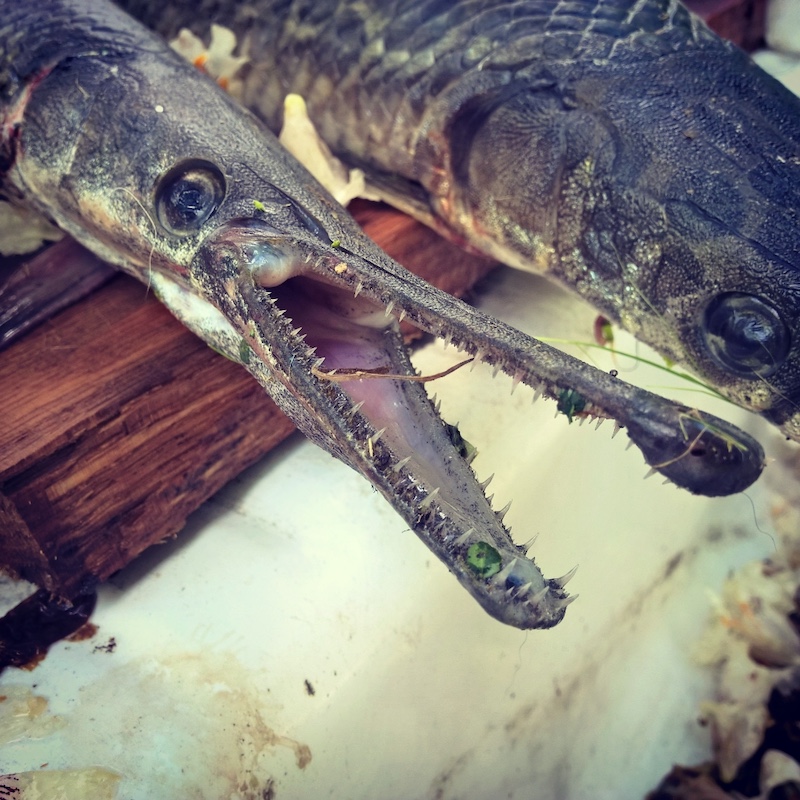
Gar are not aggressive toward people. While their teeth require careful handling, documented injuries are rare and typically occur only when captured fish are mishandled. It’s safe to say that anyone who actively targets gar, whether by net, arrow or rod and reel, has had at least one war wound, and often still sports the scar.
Gar are most active from late spring through early fall. During warm months, they frequently hold near the surface in backwaters and sloughs. Live bait, such as shad or creek chubs, is effective, as is cut bait in river systems. Spawning season usually starts in southern Illinois around the first of April, especially if there is some spring high water. This makes wading through flooded vegetation to search for gar to harvest easy, and yet another way to get some nice ones for the table. Gigging, spearing and bowfishing are particularly popular methods during the spring spawn.
Gar often take bait slowly. Allowing the fish time to take the bait fully improves hook-setting success. Heavy line and abrasion-resistant leaders are recommended. Once hooked, gar are known for powerful surface runs and dramatic fights. The sight of a big longnose gar flipping through the air is a sight to behold!
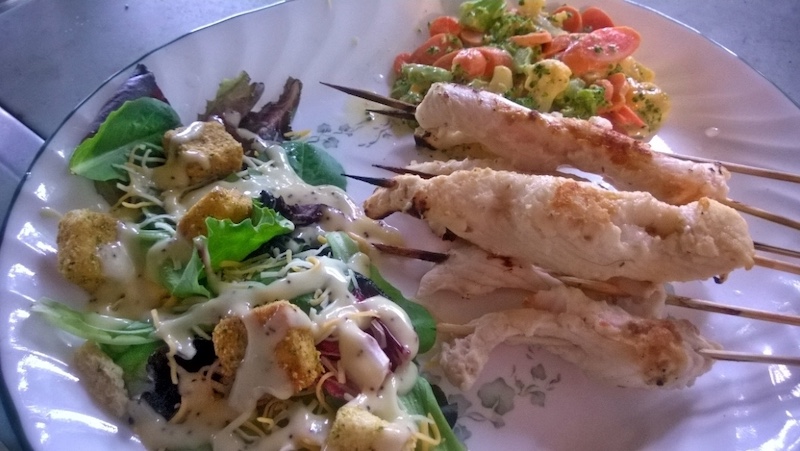
Gar produce firm, white fillets with mild flavor when properly prepared. Cleaning requires cutting through their tough, armored dorsal scales and separating the fillets from the backbone. Gar eggs are toxic and should never be consumed. Carefully rinse any harvested female fish to ensure no stray eggs are clinging to it. Additionally, the eggs are toxic to most mammals and many birds, so dispose of them responsibly. However, the flesh is safe and widely enjoyed. Its firm flesh lends gar to some delightful and tasty preparations such as fried nuggets, blackened fillets, smoked gar and hearty stews.
Indigenous peoples of the Mississippi and Ohio river valleys relied on gar for food, tools and protective materials. Gar scales were used for arrow points, scraping tools and sewn armor. Early settlers adopted similar harvest techniques during seasonal river floods. Illinois waterways exist within lands historically stewarded by Indigenous peoples whose traditional ecological knowledge guided the sustainable harvest of native species, such as gar, long before modern fisheries management.
For current fishing regulations, seasons and conservation information in the annual Illinois Fishing Regulation Information book. More on gars can be found here.
In Illinois backwaters where lotus blooms drift and river currents slow, gar continue a cycle older than memory. They surface for air beneath summer sunsets just as they did when Indigenous fishermen set weirs along floodplain channels and when early settlers depended on seasonal harvests for survival. Today, they ask little from us beyond understanding. By recognizing gar as native partners in healthy waterways — not nuisances to be discarded — anglers and conservationists alike help preserve a living piece of Illinois’ ecological and cultural heritage.
Sometimes stewardship begins with simply seeing a species differently, and in the case of gar, that shift in perspective may be the most important conservation tool we have.

Gretchen Steele hails from Coulterville. Steele is a freelance outdoor communicator. Her award-winning work appears as a regular columnist and contributing feature writer for Illinois Outdoor News and several Illinois newspapers. She enjoys spending her time afield as a volunteer for the Illinois Department of Natural Resources, Delta Waterfowl Foundation, Retrievers Unlimited, and various other conservation organizations. Steele is a member of the Illinois Conservation Federation Outdoor Hall of Fame. She is the Past President of Missouri Outdoor Communicators and remains an active member. Steele is a current and active member and formerly served on the Board of Directors with Association of Great Lakes Outdoor Writers.





Submit a question for the author