Looking southwest across the spring landscape with just developing overcast skies in the early morning could signal the approach of a warm front rain later in the morning. Photo by Robert J. Reber.

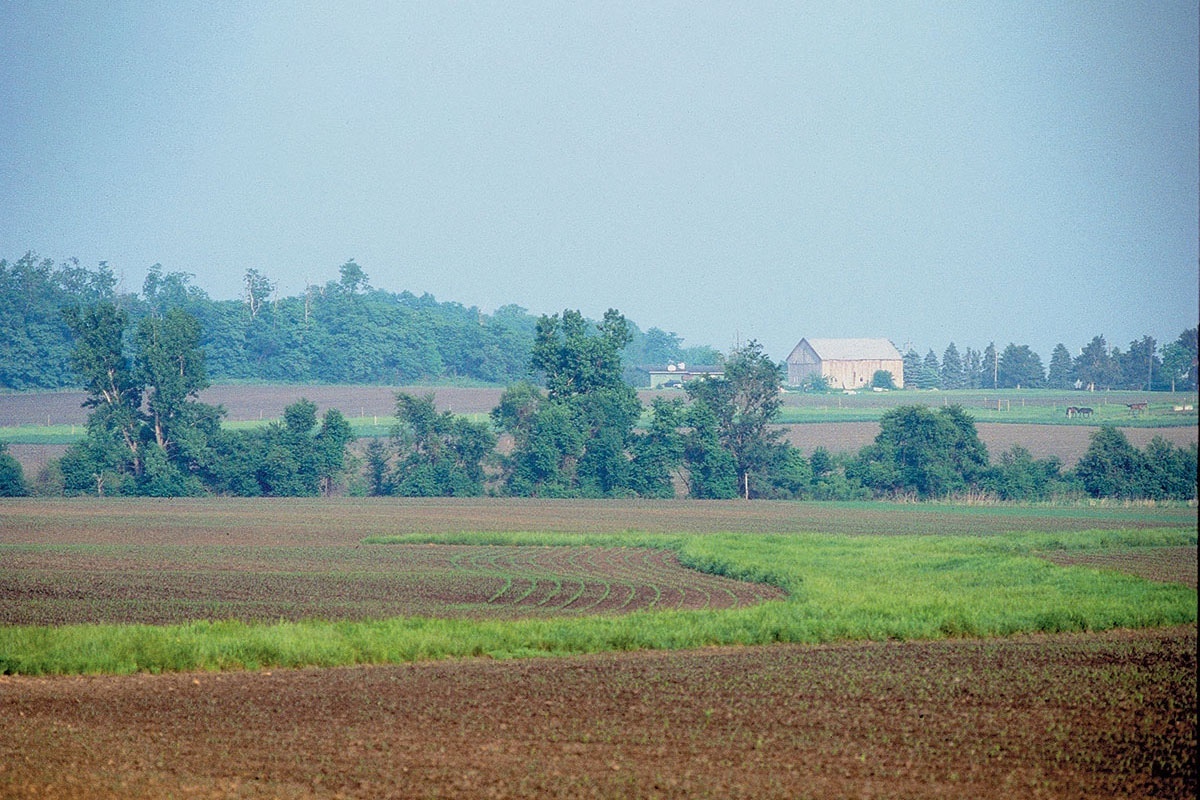
Looking southwest across the spring landscape with just developing overcast skies in the early morning could signal the approach of a warm front rain later in the morning. Photo by Robert J. Reber.
What is a good rain? To a certain extent which rains are thought of as good are the ones held as such in the eyes of the beholder. The ones discussed here are favorites of many farmers. Mine, too!
A good rain is gentle and soothing to your soul. Cares on your mind are washed away. It was always welcomed on the farm except when hay was cut and ready for bailing, or oats or wheat were being combined.
Such rains could happen at almost any time of the day or night. Although, my most memorable occurred mid- to late-mornings, often brought on by an approaching warm front from the southwest. Thickening overcast skies often signaled their coming. No ominous roll or shelf clouds on the horizon. No sharp cloud-to-ground lightning or loud claps of thunder.
Often, only the faintest rumbles of thunder high above in the distance announced their coming. More than an inch of rain sometimes fell, but usually less. Rain often lasted for an hour or more, and sometimes for the better part of the morning. Complete calm or very little breeze prevailed at the start. However, breezes often picked up as the rain began to subside.
A good rain was most enjoyed on mornings when we had already worked up a good sweat, doing an especially dirty or particular dusty job. Our places of retreat were the large, wide-open doors of a garage or tool shed where we sat on the bottoms of upturned empty 5-gallon buckets soaking it all in, just barely under the eaves, with raindrops within our reach.
The freshness of a slight breeze and sweet smells of cleansed air were exhilarating. Sustenance was given to continue on toiling when the rain stopped. Such rains were considered a godsend, especially if we had been suffering through a long dry spell.
A few nearby neighbors sometimes came over to join us. More empty 5-gallon buckets were needed. Together, we enjoyed the rain, took pause and rested, and caught up with one another on the goings on in our neighborhood. Future farming plans came up: Who need help and when were discussed. In addition to field work, carpentry projects were also “hammered out” during a good rain. Repairing a roof or side building could require many skilled hands. Rafters often needed repair or replacement: This could be very dangerous work to do alone.
Sharing a good rain with one another put everyone in a mood to work selflessly to help each other. Even though individual farmers were very self-sufficient and resilient in one sense, they realized how dependent they were on one another.
All realized how tied we were to the Natural World for survival—the rain, soil, Sun, weather, and plants and animals we grew and raised. Even other species seemed to be affected by a good rain as well. Putting anthropocentrism aside, barnyard birds played in the barn lot mud puddles and appeared to be happier and enjoying themselves. Regrettably such a holistic mindset is being lost in our evolving everyday society that increasingly relies on money rather than each other.
A good rain makes you feel better all over more than anywhere else. The words of English poet Robert Browning come to mind: “God’s in His Heaven—All’s right with the world.”
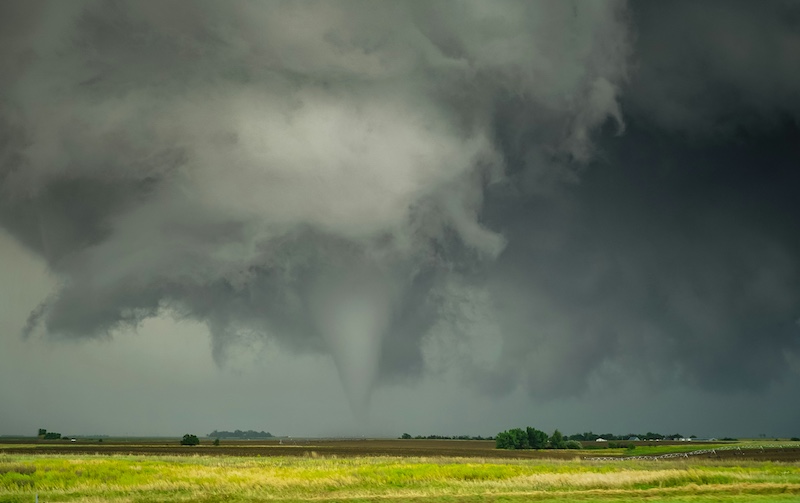
Morning warm fronts and the warm air masses they ushered in were often followed by cold fronts. Later that day in the afternoon or evening, or even days later, cold fronts pushed in. These cold fronts helped trigger thunderstorms. Sometimes, tornados were spawned.
Tornados can also form in large warm air masses without a nearby approaching cold front to trigger them. In these warm air masses, large supercell thunderstorms can develop that cause very turbulent updrafts of warm air. This rapidly rising air often begins to spin and may eventually develop into a tornado.
As a youngster, I saw my first tornado funnel cloud while helping Dad walk beans one afternoon. Low along the horizon, we could see it about 20 miles south of our farm. The next day, we drove down to see the damage to the west end of Champaign. What I saw had a lasting effect on me.
To this day, when severe storms develop, I’m watching the sky, looking at weather radar, listening to weather radio and planning our family’s action if the brunt of the storm could hit us. Our pets are taken to the basement, too!
Thanks to Duane Friend for reviewing this story. Photo above by Greg Johnson, Unsplash.
Robert J. Reber is an emeritus faculty member in the Department of Food Science and Human Nutrition of the University of Illinois at Urbana–Champaign. He has been a lifelong student of many aspects of the Natural World, including archaeology. Bob has served as a managing editor and author for publications such as The Illinois Steward magazine and the Illinois Master Naturalist Curriculum Guide.








Submit a question for the author