Photo by Jennifer Uppendahl, Unsplash.


Photo by Jennifer Uppendahl, Unsplash.
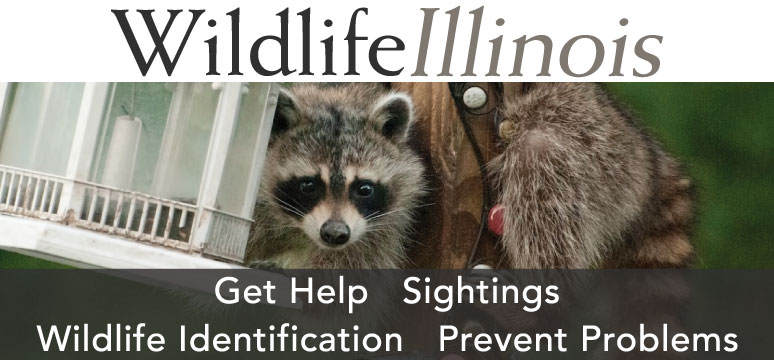
I’m with Laura Kammin and Gretchen Wieshuber to talk about a major update to the Wildlife Illinois website. Laura, you have been working with this website since the beginning. Can you tell us the story?
Laura:
This website has a long history. In 2006, John Buhnerkempe, then Director of the Wildlife Division at the Illinois Department of Natural Resources (IDNR), called Dr. Richard Warner at University of Illinois Extension and explained that IDNR could use some help getting information out to the public on two topics: how to develop habitat on private property, and what to do about problems with wildlife on your property. The Living with Wildlife in Illinois website was created. It was well publicized and had good success. I was in Extension at the time, and I helped get the word out at the Illinois State Fair and other outreach venues. Over time as things changed and people moved on, we realized that it was time to update the website. I think that is when Dr. Warner reached out to you at 2wav.
Anderson:
In 2016, we moved the site from Extension into the portfolio maintained by our team at the National Great Rivers Research and Education Center, including sites like Outdoor Illinois Journal, Hunt Illinois and White-tailed Deer Illinois (Note: decommissioned in 2026). We did a design uplift and some content reorganization, and it has been rocking out ever since. Laura, can you give us an idea about the size of this website and the usage that it gets?
Laura:
Before this recent revision, there were more than 300 pages supporting content for the website. So, there was a lot of content for people to access. From April 2019 through June 2023, we had almost 3 million page views and over a million users. The traffic typically boosts in the spring and summer, then tapers off in the fall and winter. Between 20,000 to 30,000 people come to the website each month–so a lot of folks are using the website.
Besides educational information about common species of Illinois wildlife, we added features over the years, including a web form to help people get nuisance wildlife removal permits. Before that, people had to call the IDNR biologist directly, or email, or go into an office to get a permit.
Anderson:
We had a web form that customers could fill out to apply for a permit, but each application had to be handled individually by the biologists. We’ll talk later about how the new Wildlife Illinois has stepped up that game.
For all these years the site has served well, but it was beginning to get a little long in the tooth. On one hand, the technology was aging and it was time for a new platform. Also, it was time to take a new look at the design and organization. Gretchen, could you tell us about the organization of the site and how you and Laura worked together to improve usability?

Gretchen:
I believe that the life of a website is about five to seven years. Technology changes. Trends in how people use websites change. One thing that Laura and I both saw in the old site is that there was a lot of clicking. It was supposed to help people drill down to the information that they need by clearly answering one question after another, but these days website visitors want to get to their information with as few clicks as possible. In this revision we flattened the site’s structure. In places where it took five clicks to get to information, we reduced that to two or at most three clicks. We started with more than 300 pages, and we eliminated almost half of them, getting people to where they want to go much quicker.
Laura:
Another important consideration is that when we started out, most of our web traffic was from PCs. Now almost 70 percent of the traffic is coming from mobile. We wanted to make sure that the content and images looked great and were easy to access by phone. Gretchen did a fantastic job with the design.
Anderson:
Gretchen, can you tell us some about the design decisions that you made?

Gretchen:
We kept the tiles on the homepage for the main areas of the website. The homepage has eight major categories, and then underneath are feature topics which can change seasonally. I gave the stakeholder group three color palettes, starting with some of the browns and beiges of the previous site, and also palettes with brighter—but still natural—colors. Our stakeholders liked the brighter colors; it just gives it more life. I chose a san serif typeface which is easy to read on the web, but then I paired it with a serif typeface that is very close to the Wildlife Illinois logo, so it all ties together. We did not change the logo because it has a brand identity going way back.
The Identify Wildlife page was one of those areas where you had to drill down, down, down to get to the animal you were looking for. Now we have one page with all of the thumbnails, so you can scroll through until you see the animal that you are trying to identify.
Anderson:

Wildlife Illinois now connects directly to the new Nuisance Animal Removal Permit system. This is a dramatic improvement for both citizens and IDNR staff. Users can begin a permit application on Wildlife Illinois, many of which are issued automatically. For applications that need to be reviewed by a biologist, the system helps manage the review process and notifies the customer when the permit has been issued. The new system will save hundreds, perhaps thousands of hours of work for the District Wildlife Biologists annually.
Is there anything more that either of you would like to add?
Laura:
It’s great that the website has had such a long life, and that people are consistently coming back. It shows the value of the content, and now we have a design and usability that matches that. Visitors can still contact a biologist or see the maps for finding a wildlife rehabilitator. If people want to dive in more deeply for information about deer or about habitat development, there are links to the other websites. I think this is a beautiful and effective upgrade.
Anderson Wiese's computing career began at the University of Illinois’ PLATO system in 1977. He has been President of 2wav for 25 years. For 10 years, 2wav and the National Great Rivers Research and Education Center have worked with the Illinois Department of Natural Resources’ Division of Wildlife Resources to build outstanding websites and services related to the wildlife of Illinois.


Submit a question for the author