
King rail. Photo by Vicki Miller, no rights reserved (CC0), iNaturalist.

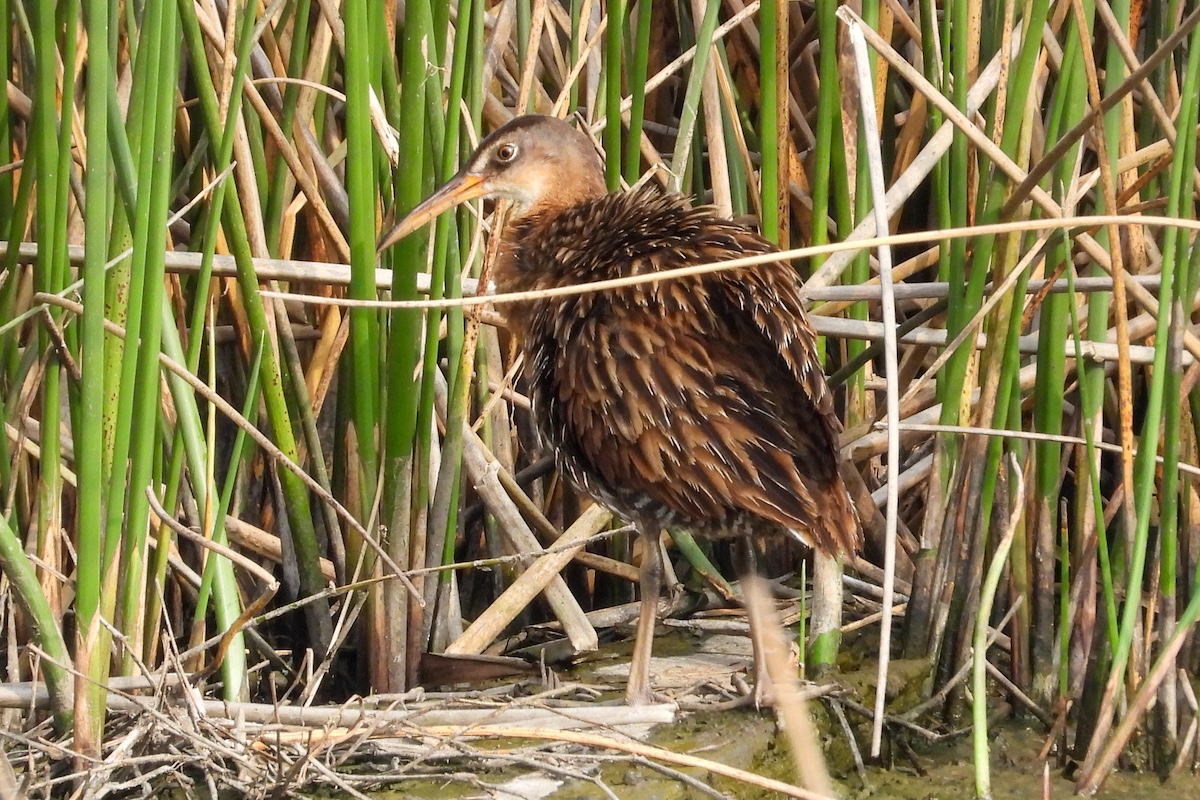
King rail. Photo by Vicki Miller, no rights reserved (CC0), iNaturalist.
Forbes Biological Station staff have caught a lot of ducks and other wetland birds over the years, but over the spring of 2026 we set out to catch a rare species in our state and region, the king rail (Rallus elegans).
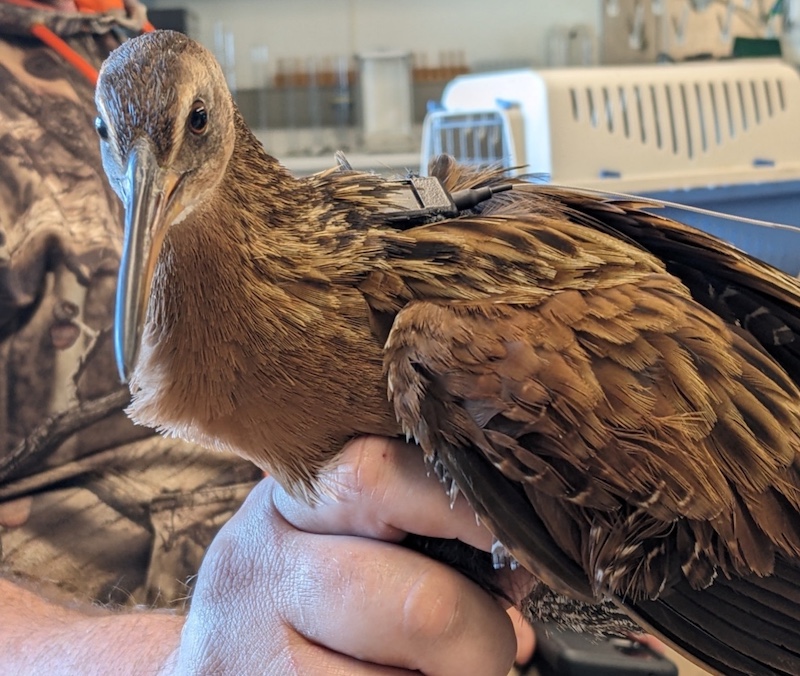
King rails are secretive marshbirds that inhabit emergent wetlands around the Midwest, eastern and southeastern United States. Once abundant in many places kings are now rare in Illinois and many other midwestern states. The Illinois Endangered Species Protection Board lists the king rail as an endangered species. Using walk-in traps with an audio lure, Forbes Biological Station Assistant Research Scientist Andy Gilbert and his team captured three king rails this spring. The work took place at the Emiquon Preserve, owned and managed by The Nature Conservancy, as part of a larger flyway-wide effort to study king rail movement ecology, genetics and more.
King rails are one of several rail species with a split migration strategy, where part of the population annually migrates and part is fully resident, staying the entire year in one area. King rails in Illinois are migratory, present in the spring and summer before heading south to the southern U.S. and Gulf Coast. Forbes Biological Station graduate student Jess Novobilsky’s masters work in Arkansas showed that southern Arkansas breeding king rails are fully resident, suggesting the line where birds shift to migrating may be in northern Arkansas or southern Missouri.
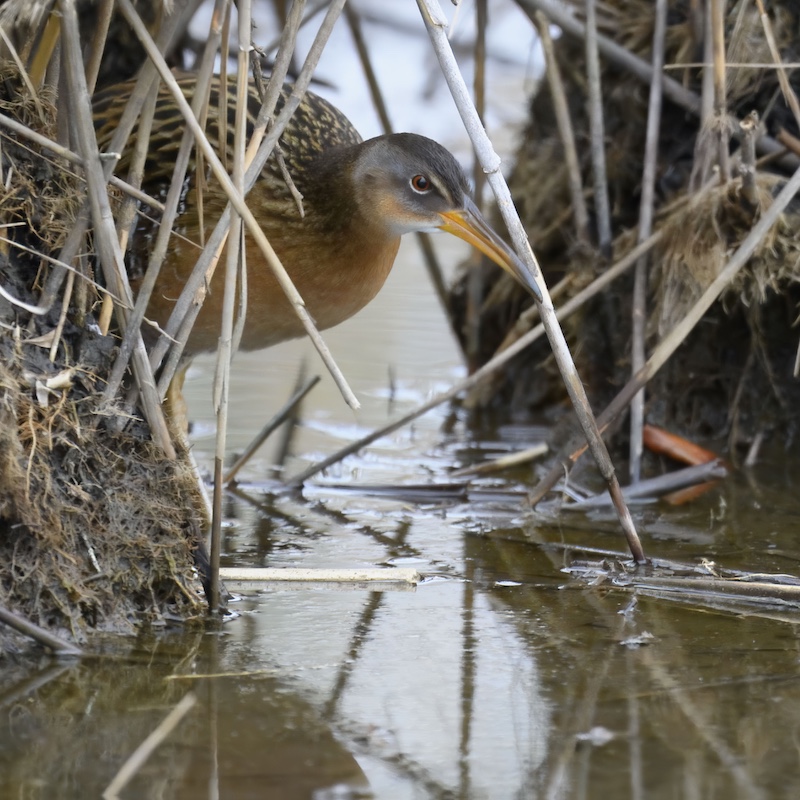
Through a collaborative effort led by Dr. Dustin Brewer at Lake Superior State University and Dr. Leah Moran at Mississippi State University, collaborators across the flyway are tagging king rails and taking blood and feather samples to address a big unknown about the species: Does a king rail always make the same choice to migrate or not? At this point in time we assume that a chick hatched to migratory parents always migrates but we have little data to support this idea. Either answer is important in conserving a species that has declined more than 90 percent in the past several decades. Blood samples collected from migratory and resident birds will be analyzed by Dr. Mark Davis and the Collaborative Conservation Genetics Lab at the Illinois Natural History Survey. That information, along with the data from GPS transmitters, will help us answer this big question about their migration ecology.
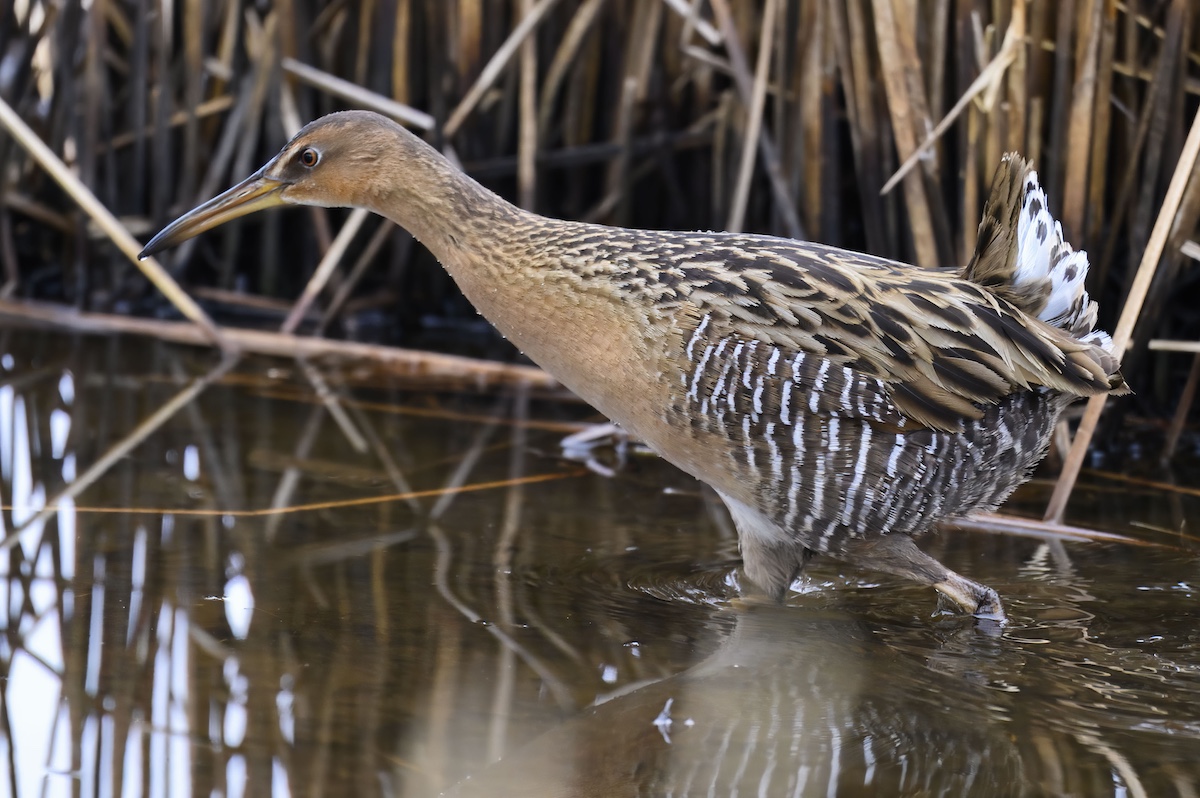
Along the way we will also be looking at where king rails stop during spring and fall migration, and whether they use areas managed for other wetland wildlife, such as waterfowl. We’ll learn how quickly king rails migrate and when, which will help aid future studies of wholistic wetland management for a wide suite of wetland wildlife in Illinois and beyond.
Auriel M.V. Fournier is the Director Forbes Biological Station, Illinois Natural History Survey.
Andy Gilbert is an Assistant Research Scientist with the Forbes Biological Station, Illinois Natural History Survey. Andy did his masters at WIU and has been on staff at Forbes Biological Station since 2018 where he has worked on a variety of waterfowl and wetland bird projects. Andy currently leads the station's work at The Emiquon Preserve studying the long term restoration of the preserve.





Submit a question for the author