
Whether spelled pawpaw, paw-paw or Paw Paw, Asimina triloba is an interesting native tree with unique leathery-brown flowers that turn into delectable and flavorful fruits. Photo by Patty Gillespie.

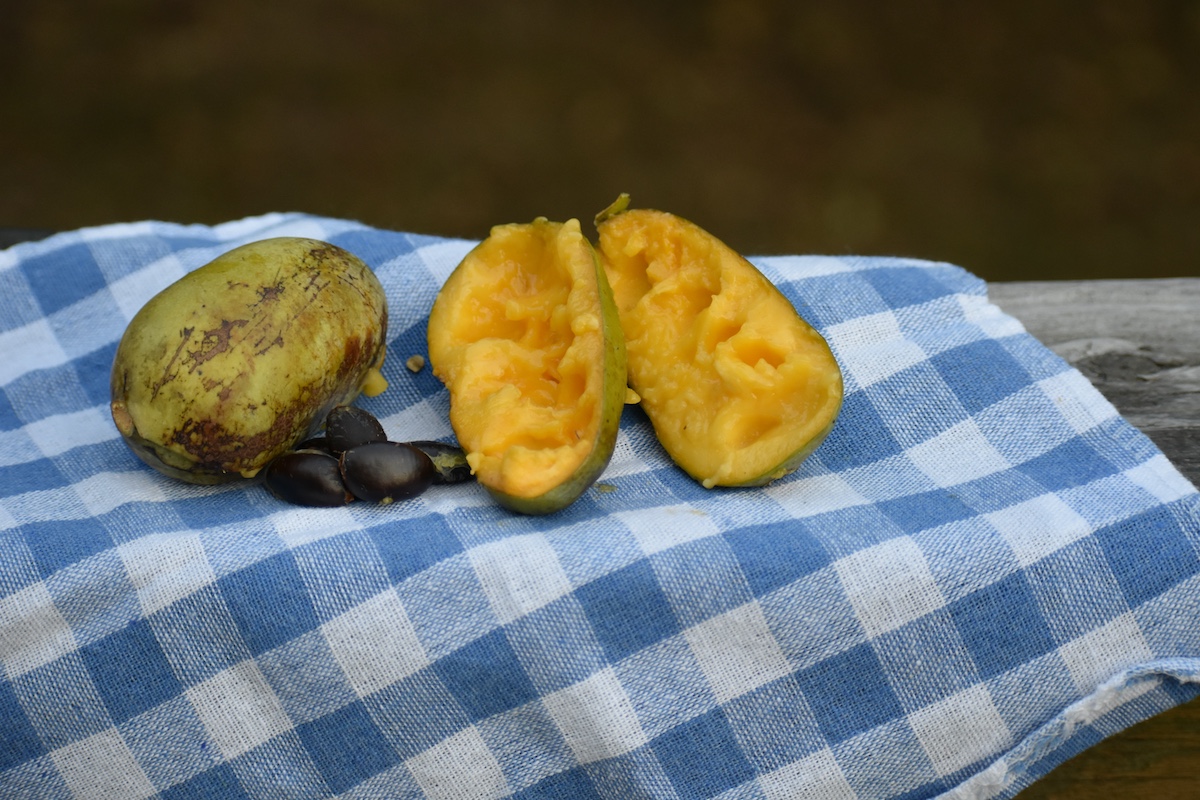
Whether spelled pawpaw, paw-paw or Paw Paw, Asimina triloba is an interesting native tree with unique leathery-brown flowers that turn into delectable and flavorful fruits. Photo by Patty Gillespie.
My first introduction to the pawpaw was on the playground of a small, rural school in Pope County. The chorus of a tune sung as part of a game has stuck with me for life.
Pickin’ up paw-paws, puttin’ ’em in her pockets,
Pickin’ up paw-paws, puttin’ ’em in her pockets,
Pickin’ up paw-paws, puttin’ ’em in her pockets,
Way down yonder in the paw-paw patch.
Little did first-grade me know that the song was a traditional 19th century American folk song, “Way Down Yonder in the Paw Paw Patch,” which tells the story of a lost child gathering fruits from a patch of pawpaw trees.
Fast forward many years to a beautiful early October day when I was on a nature hike with fourth-grade students. Rounding a corner the air was suddenly filled with a heavy, sweet scent that momentarily caught me off guard. Within seconds I realized we were standing in a patch of pawpaws and a ripe fruit was hanging from a low branch. As often occurs in nature, a spontaneous teachable moment occurred.
My fascination with the pawpaw continues today as I frequent some local patches each spring to stand and marvel at their unique flowers, returning later in the summer to see if fruits have formed. My visits become more regular in the early fall in hopes that I may, once again, catch the wind-borne scent signaling a ripened fruit.
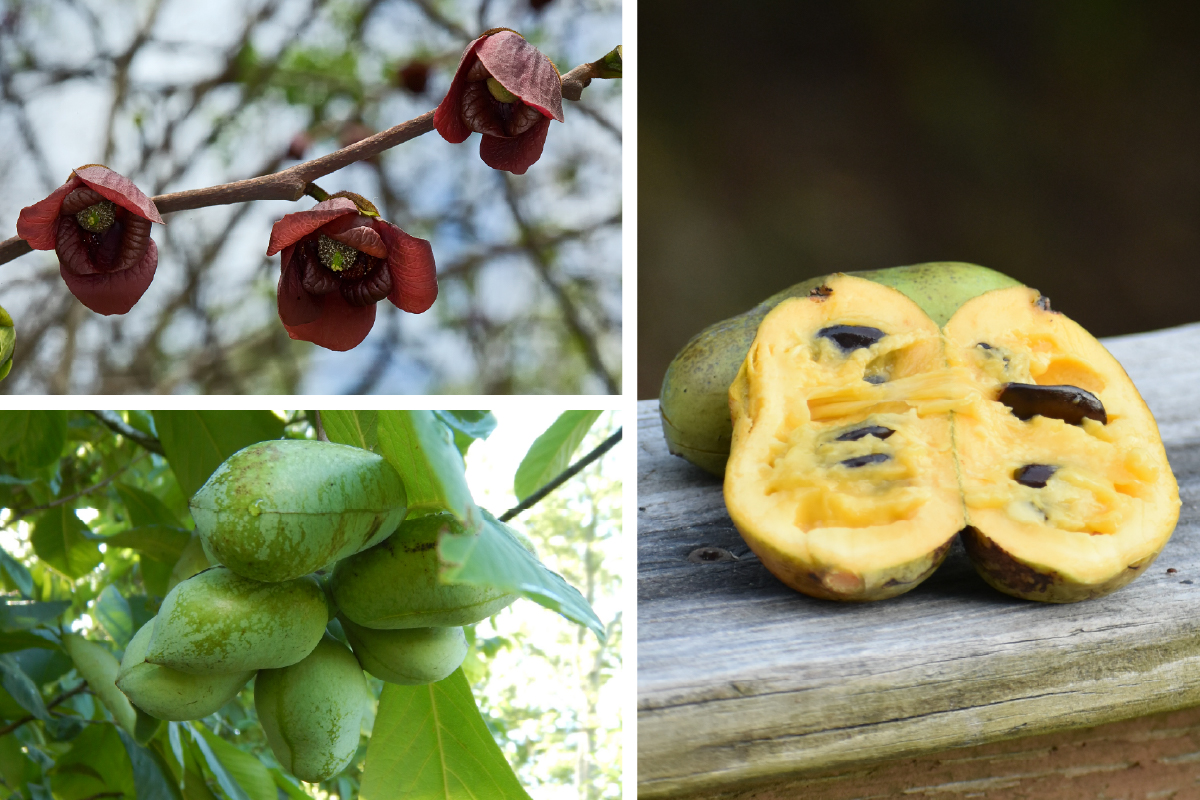
The largest native fruit of North America, the pawpaw (Asimina triloba) is also known in some regions as the American custard apple, West Virginia banana, prairie banana and hillbilly mango. Technically not an apple or banana, pawpaws are a member of the custard apple family, with most of its closest relatives found in tropical and subtropical climates.
Pawpaws are common in the understory of moist to mesic deciduous woodlands and small woodland openings in southern and central Illinois, but it is uncommon or absent in northern Illinois. Considered a shrub to small tree, pawpaws rarely grow taller than 30 feet. Its leaves are alternate in arrangement and when mature may be a foot in length and up to 4 inches across.
Pawpaw flowers are remarkably distinct. Appearing in mid to late spring, the reddish-brown flowers have a leathery, veined appearance and curve back when mature. The genus name triloba is telling: each flower contains three sepals, three petals and three inner petals. Like most similarly colored flowers, pawpaws smell faintly like rotten meat which attracts an assortment of pollinators, such as flies and beetles. Although you may discover a patch of pawpaws in the woodland they may not bear fruits as the flowers must cross-pollinate with genetically distinct plants.
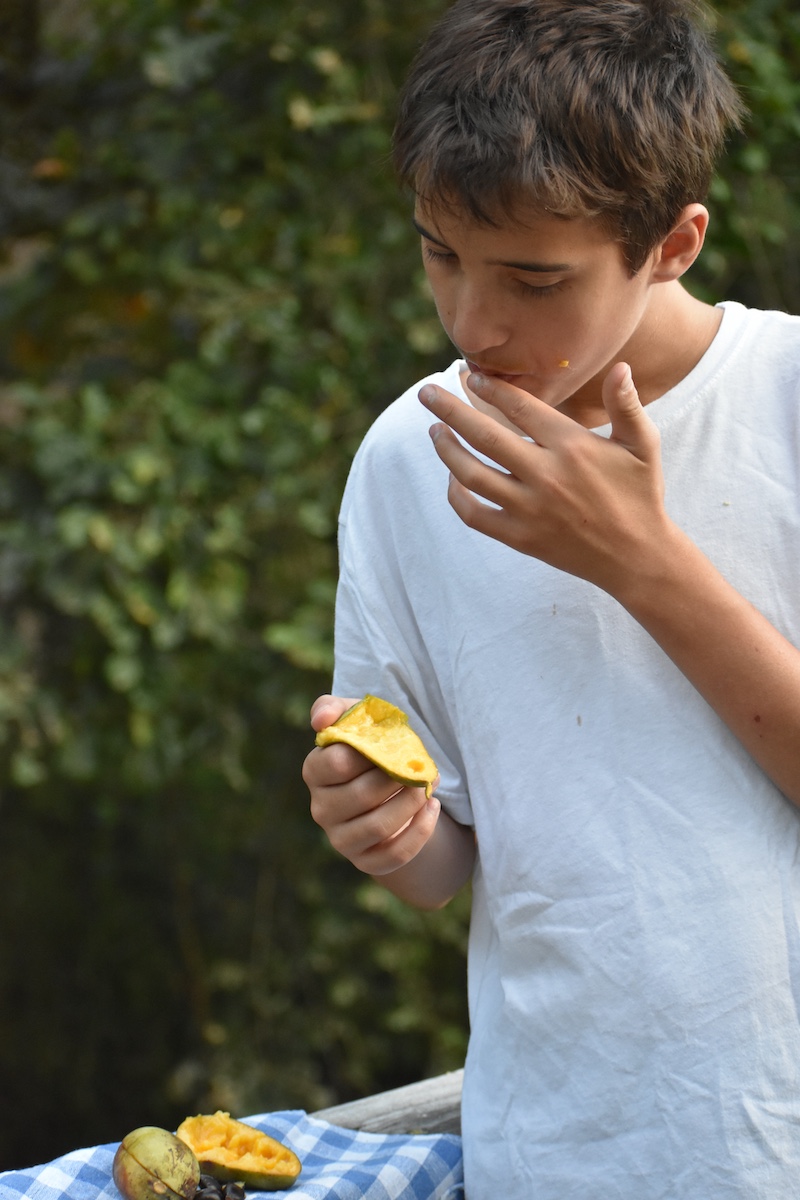
Although most commonly referred to as fruits, technically pawpaws are a berry. Ripening in the fall, the fruits are 3 to 6 inches in length and may weigh up to a pound. The edible interior is yellow in color and contains two rows of orange-brown seeds. Opinions vary on the taste of the flesh. Some people say custard while others say banana or papaya. Others chime in saying the flavor is reminiscent of pineapple or mango or cantaloupe. Hopefully one day you can experience a ripe North American pawpaw and cast your vote on the flavor.
Less than 2 hours west of Chicago, and just east of Route 51 in Lee County, is the village of Paw Paw. Located along a former stagecoach line running between Chicago and Galena that originally was a trail created by the Potawatomi, Paw Paw was established in the mid 19th century. The unique moniker is attributed to the area having the northernmost native grove of pawpaws in Illinois. Several native pawpaws persist today, with supplemental trees planted over the years. The community of 850 people swells on a late September Saturday thanks to a celebration of its namesake tree/fruit.
It takes mere seconds to learn about Austin Cliffe’s lifetime association with pawpaws.
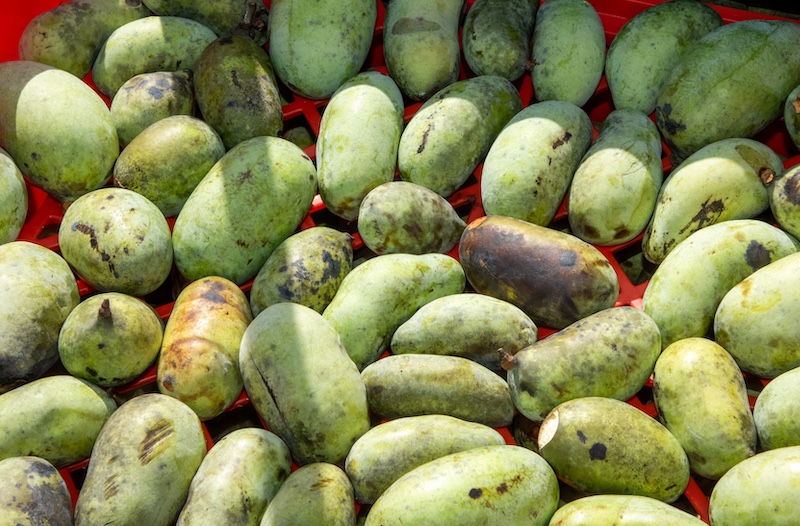
“I recall finding green-colored fruits on the ground when walking home as a grade school student in DeKalb,” Cliffe explained. “They reminded me of black walnuts except for the shape and skin texture. Years later as a Boy Scout I found two pages with tree illustrations in a manual which became a source of fascination for learning about trees.”
Fast forward to 2010 when Cliffe admits to going down a rabbit hole to learn about pawpaws.
“I was fascinated by all the fun facts I learned online and became obsessed with wanting to eat one,” he continued, explaining that he returned to the original trees he had walked by as a student. That led him to attending the 2015 Ohio Pawpaw Festival with some of those DeKalb fruits, which earned third place in the flavor competition.
Today Cliffe is propagating and growing pawpaws in his yard, and is distributing seedlings to interested persons and organizations throughout northern Illinois. He’s also a founding member, and Executive Director, of the Pawpaw Foundation and a driving force in creation of the Pawpaw Festival, held annually in Paw Paw since 2024.
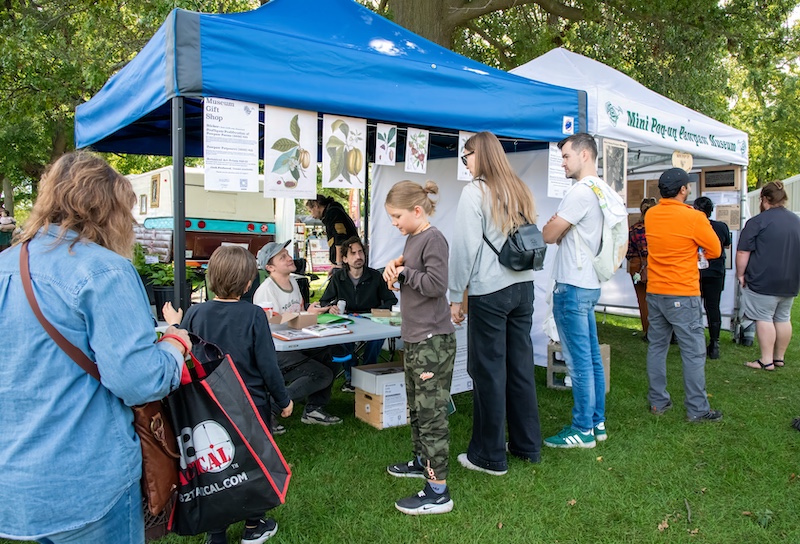
Conceived in 2024 by Cliffe’s friend and Paw Paw native Shawn Beck, the initial year the Pawpaw Festival drew an estimated 1,500 people, with about 5,000 attendees the following year and an estimated 10,000 in 2026. The festival is possible through sponsorships and help from the Paw Paw Lions Club.
“People remark how well organized the festival is,” Cliffe noted. “We’re drawing a crowd of people interested in rearing a fruit crop that is hardy and cold-tolerant, and pawpaws fit that bill,” he continued, noting that in a good year a mature pawpaw can bear 60 to 100 fruits but that harvesting them can be a challenge as there is a short window before the ripe fruits fall to the ground.

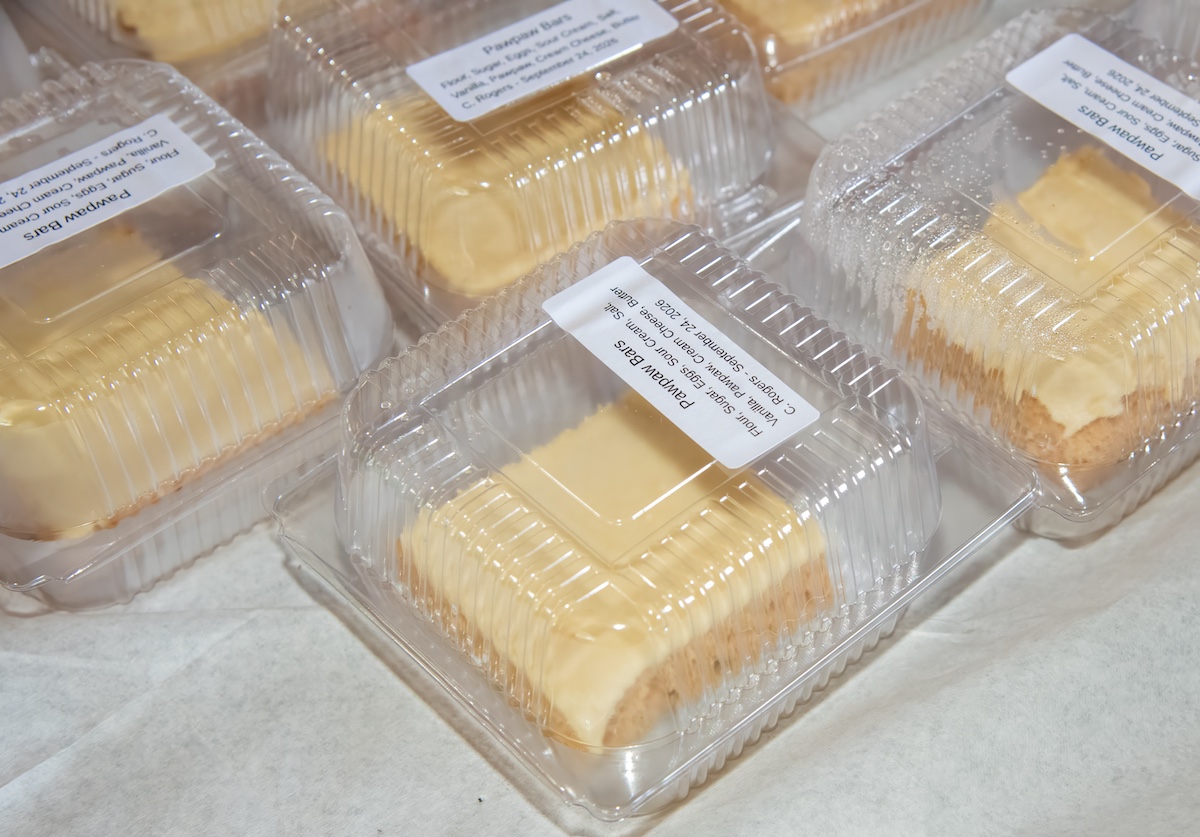
Among the festival activities are a series of speakers, a tent dedicated to educating attendees about pawpaws and the opportunity to sample foods and beverages with pawpaw as an ingredient.
First cultivated by Indigenous peoples and enjoyed as food and utilized for medicinal purposes, today there is a resurgence of interest in consuming pawpaws. But they’ve always been a favorite spring and fall food for wildlife.
While some songbirds and wild turkeys may eat pawpaw flesh, they are a more popular food with mammals. The palm-sized pawpaws are a popular food for gray and fox squirrels, opossums, raccoons, red and gray foxes and striped skunks. Fallen fruits will be eaten by box turtles. The large seeds are deposited in the scat of these animals and may germinate to create a new pawpaw colony.
While the leaves are toxic to herbivorous mammals, such as the white-tailed deer, they are a preferred food for some insects. Zebra swallowtail (Eurytides marcellus) caterpillars feed exclusively on pawpaw leaves as do the caterpillars of the pawpaw sphinx moths (Dolba hyloeus).
As a young grade school student Austin Cliffe did not realize that pawpaws had already sparked what would become a lifelong interest and a hobby that would become something much greater, leading him to travel to festivals around the United States and meet thousands of fellow pawpaw enthusiasts.
“Those DeKalb trees formed the foundation of my backyard orchard and their fruits are award-winning,” he enthused. “And seedings germinated from seeds of those trees are expanding the pawpaw population in the DeKalb area.”
It happened “way down yonder in the paw-paw patch.”
Kathy Andrews Wright retired from the Illinois Department of Natural Resources where she was editor of OutdoorIllinois magazine. She is currently the editor of OutdoorIllinois Journal.





Submit a question for the author