Photo by Sarah Marjanovic.

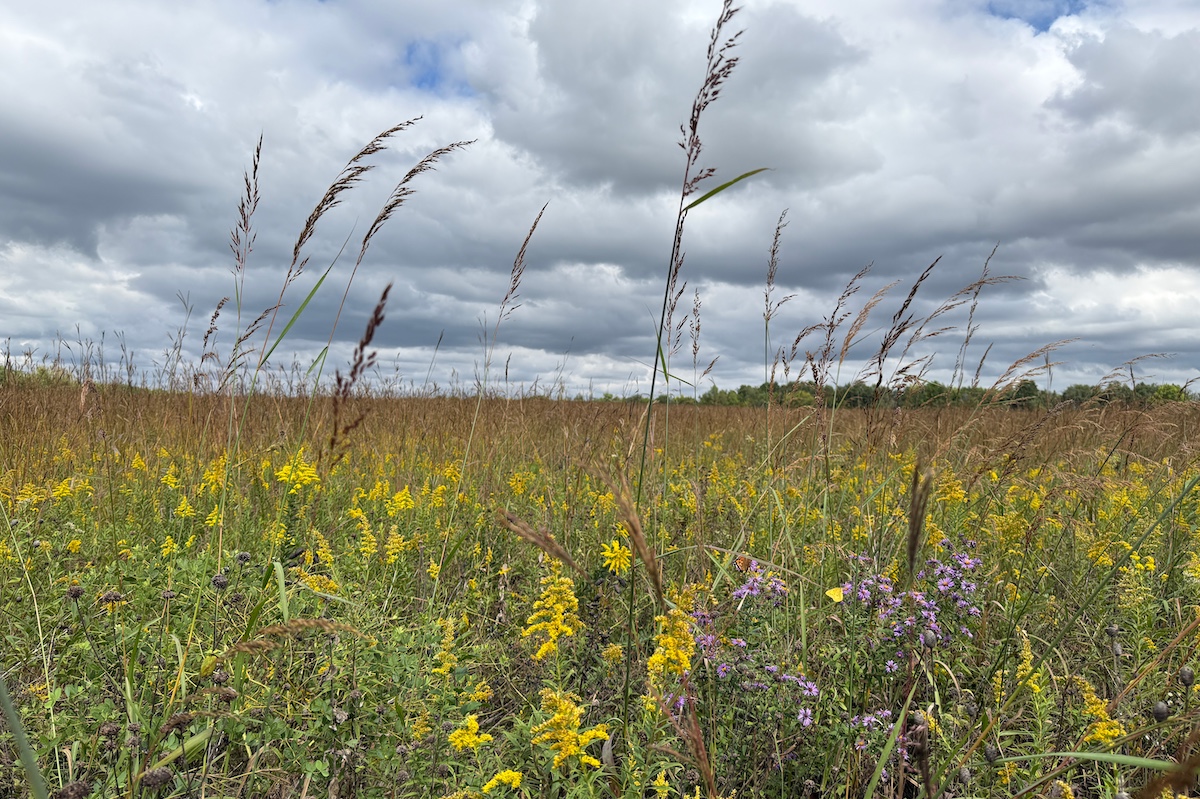
Photo by Sarah Marjanovic.
Illinois has some substantial obstacles to natural resource conservation. Of the state’s 37 million acres, 95 percent is privately owned, and 27 million acres of the private land is farmland. With some of the most fertile soils in the nation, 22 million acres of farmland are devoted to rowcrops. Illinois ranks 46th in the United States in public land that has the potential for habitat conservation and recreational use by its citizens.
From the middle of the 19th century, Illinois residents voiced concerns over the unregulated use of the state’s forest, fish and wildlife resources. From this beginning, volunteer groups demanded that federal, state and local governments develop legislation for protection of Illinois’ natural resources, including establishment of agencies to conduct research, restore habitat and enforce regulations designed to protect those resources.
One of the first natural resource-based volunteer organizations was initiated in 1915 by Dr. Victor Shelford, a pioneer ecology professor at the University of Illinois. Over the years, the organization evolved and became international in scope. In 1950, it adopted the name, The Nature Conservancy. In 1922, a group of Illinois citizens formed the Izaak Walton League, another internationally known conservation organization. The group of agencies currently housed within the Illinois Department of Natural Resources (formerly the Department of Conservation) was established in 1925 (Kammin, 2025).
In the 1930s, catastrophic soil erosion on agricultural land led to the formation of the Soil Conservation Service within the U. S. Department of Agriculture. In 1940, the U. S. Fish and Wildlife Service was created under the Department of the Interior to improve management of migratory bird populations and to conserve and restore the nation’s wetlands.
An important, early volunteer organization came into being in 1938. Ducks Unlimited (DU) became a model for future private conservation organizations. Through a variety of fundraising efforts, DU was able to purchase, lease and construct vital wetland habitats throughout the United States. In addition, DU has been able to influence federal and state governments to pass legislation designed for the preservation and enhancement of wetland habitats and optimize migratory bird hunting regulations.
In 1985 the U. S. Department of Agriculture established the Conservation Reserve Program (CRP) to reduce severe erosion on fragile cropland and stabilize commodity prices. CRP required participating farmers to plant conservation cover, primarily grasses, legumes, forbs or trees, on idled fields in return for annual rental payments. Contracts between the government and landowners were for a 10- to 15-year period.
Citizens with an interest in grassland wildlife quickly recognized the potential of this program. Following the Ducks Unlimited example, Pheasants Forever was established in 1985, and Quail Forever began operation in 2006. Local chapters were organized. Fundraising events were held and proceeds from fundraising were used to plant grasses, forbs and legumes on idle cropland.
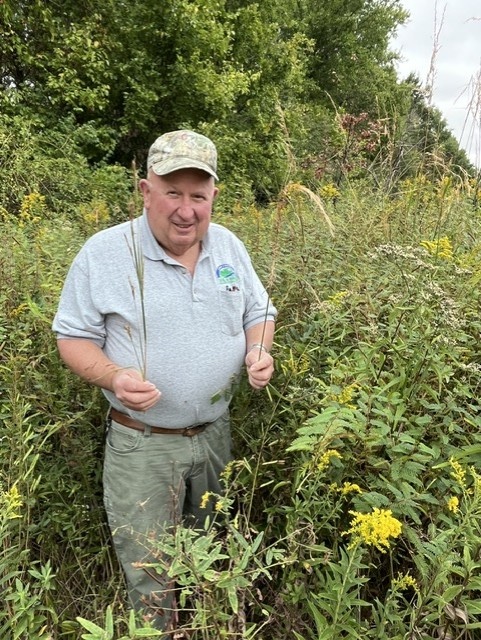
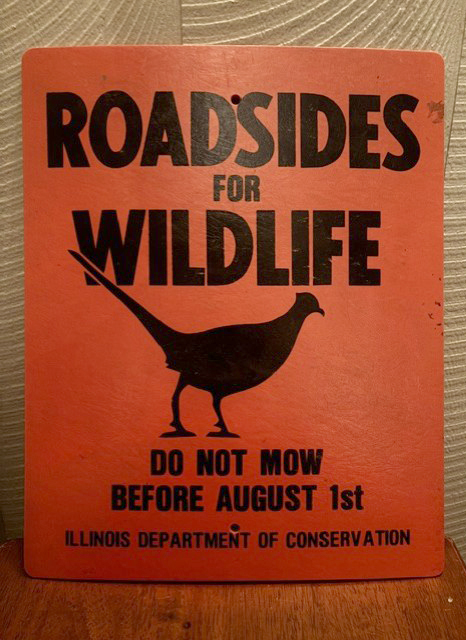
To illustrate the numerous contributions made by volunteer conservationists, I would like to provide a brief account of the accomplishments of my colleague and friend, Dennis (Denny) Kirkham. Kirkham is a graduate of Eastern Illinois University (EIU) with a degree in zoology, specializing in wildlife science. Following graduation, he was employed by the Illinois Department of Conservation (IDOC, now Illinois Department of Natural Resources or IDNR) to launch the Roadsides For Wildlife Program, a program to establish grass/legume nest cover on rural roadsides in the prime range of the ring-necked pheasant in east-central Illinois.
But Kirkham’s interest in conservation began long before it became his vocation.
“Riding in the truck with my father and one of his friends we encountered a gentleman whose truck had gone off the road,” Kirkham explained. “We pulled his truck out of the ditch and began running into him throughout southern Illinois during deer season” That gentleman was John “Jack” Calhoun, who headed the IDOC’s forest wildlife program for more than 30 years. Calhoun is credited for his role in guiding the recovery of white-tailed deer and wild turkeys in Illinois.
Unable to find a job in wildlife management after graduating college, Kirkham accepted a job with the Mulberry Grove school district, teaching junior and senior high school science classes for 2.5 years. There he initiated classes in conservation and vertebrate zoology, and organized a science club that raised funds for field trips through recycling. It was through the science club that his students received some real-world experience in wildlife management.
“We were able to work with students of my EIU mentor Dr. Richard Andrews to band ducks and geese at Horseshoe Lake State Fish and Wildlife Area in Alexander County,” he said. The science club members also ran deer check stations in Bond and Fayette counties and after school field trips were taken to the upper Carlyle Lake Wildlife Management Area. “There’s nothing better than hands-on, practical experiences for sparking an interest in conservation.”
After three years with the IDOC, Kirkham returned to his hometown of Greenville to work as a grain merchandizer for a local elevator. Later he was hired as a material distribution manager by Carlisle Syntec. But his interest in wildlife ecology and management did not waiver. In 2006 he co-founded the Little Bluestem Chapter of Quail Forever, the second chapter initiated in Illinois. As an active member and treasurer, he assisted with organizing fundraising banquets and implementing habitat improvement projects in Bond County and in neighboring counties in southwestern Illinois.
A deep immersion into development of wildlife habitats began in 1985 when the Kirkham family purchased an old dairy farm north of Greenville. The 176-acre farm was nearly equally divided among upland cropland, forest and pasture habitats along the East Fork of Shoal Creek.
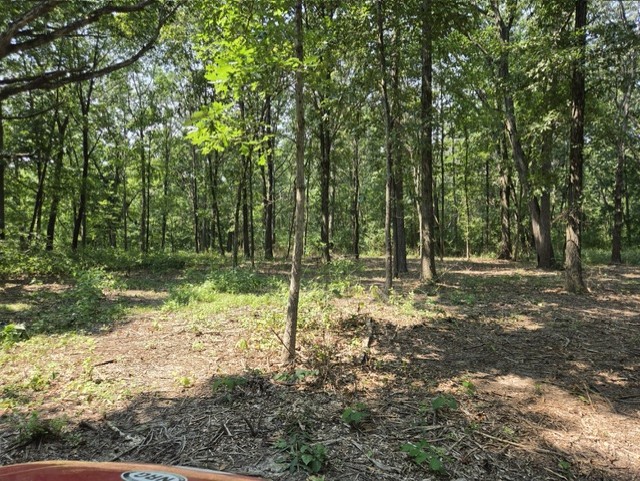
Kirkham quickly developed a habitat improvement strategy for the farm with an emphasis on restoring native plant communities. The old pasture and forested areas were heavily invaded with honey locust and invasive exotics, including multiflora rose, autumn olive and bush honeysuckle. Kirkham’s retired father—who was one of the fortunate few to harvest a white-tailed deer in Illinois’ inaugural 1957 hunting season—did the hard work of clearing out the unwanted species.
Through the Conservation Reserve Program, and with the assistance of family and friends who hunted on the farm, 8,000 trees were planted in the formerly row-cropped bottom ground. With an emphasis on hardwoods beneficial to wildlife, the species planted included pin oak, pecan, swamp white oak and green ash. Seedling survival was good and erosion in the field has been significantly reduced.
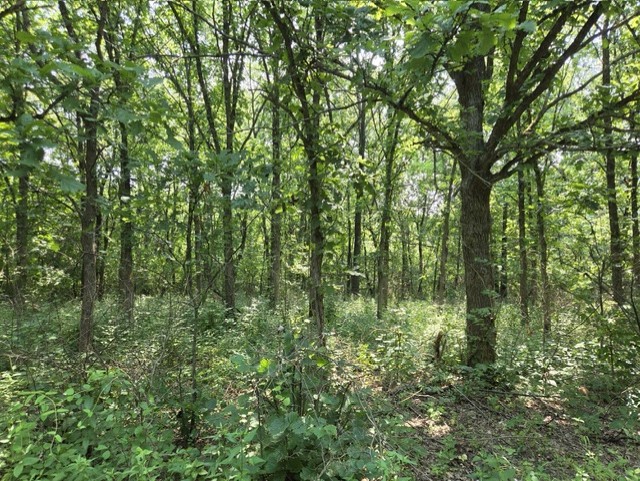
The existing upland forest areas were well stocked with sapling to sawtimber sized white oak, shagbark hickory and black oak, with some walnut; however, the understory was heavily invaded with autumn olive and bush honeysuckle, a situation now typical of unmanaged Illinois forests. With the aid of friends, Kirkham began conducting prescribed burns in the winter months. This practice has been highly effective in reducing invasion of exotic shrubs (see photo). Portions of the upland forest with heavy exotic invasion were cleared mechanically and treated with herbicide (see photo).
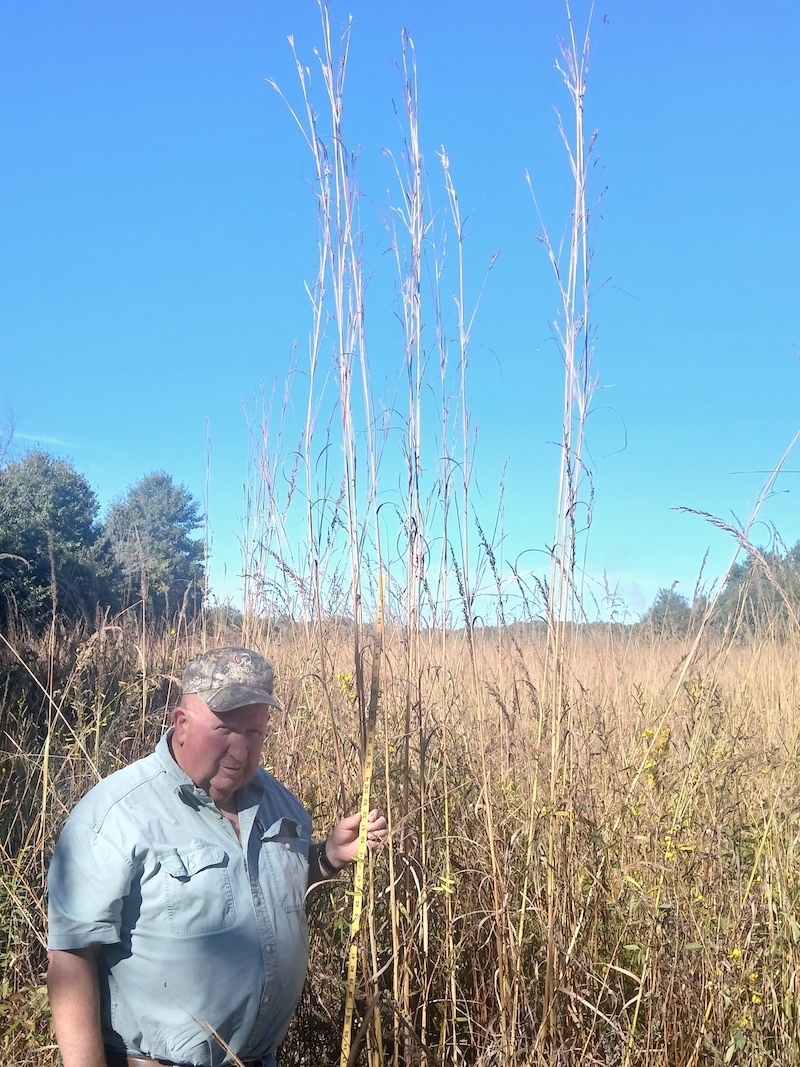
In 1993, four former crop fields totaling 24 acres were planted to native warm season grasses and forbs through the Conservation Reserve Program. These fields are now well established and managed by prescribed burning on a rotating plan (see photos). The planting of natives has halted erosion in several areas. The deep root system of native grasses enables them to survive in dry conditions, such as experienced this year in August and September. Big bluestem, Indian grass and partridge pea flourished this year.
Kirkham’s project benefitted from his considerable education and training as a wildlife biologist, but he stressed that an initial lack of knowledge should not discourage those with an interest in developing habitat areas.
“There is a wealth of information available online from county, state and federal natural resource organizations,” he noted. “And I encourage folks to get involved with conservation organizations in their area, such as Pheasants Forever and Quail Forever, as those groups can provide valuable information and services.”
The farm has become an outdoor classroom for Kirkham’s three children—their careers all have a foundation in a love for the outdoors, with one an aquatic ecologist with The Nature Conservancy, another a geophysicist and the third a manager of a grain elevator—and those of friends and children from the area. The youngsters have learned the importance of habitat and have experienced hunting for deer, turkey, squirrels, rabbits and quail. A volunteer instructor for IDNR’s Wingshooting Program, Kirkham’s contributions to Quail Forever earned him the 2018 Quail Forever’s National Volunteer of the year, and in 2019 he was inducted into the Illinois Quail Forever Hall of Fame.
Kirkham has assisted with many habitat restoration projects in Bond and surrounding counties as a member of Quail Forever. He also became involved in the Heartlands Conservancy, an organization to conserve and restore habitat in 36 southern Illinois counties and has served on the Board of Directors for several years as well as participating in field work and providing financial support. He also served on the Bond County Soil and Water Conservation District board for more than a decade.
He also advocates planting natives in small gardens and landscapes to benefit pollinating insects, and for farmers to plant field borders in native grass on poor production sites, such as next to fencerows or timber ground.
Denny Kirkham is just one of thousands of volunteer conservationists who have made significant contributions to natural resource preservation and enhancement in Illinois.
Kammin, L. 2025. 100 Years of Conservation 1925–2025. How Multiple Agencies Became the DNR. OutdoorIllinois Journal. May 1, 2025.
John Cole grew up in Bradley (Kankakee County). He graduated from SIU Carbondale with BA in 1968 then served two years in the U.S. Army as medical technologist at Tripler Army Medical Center in Honolulu. After graduating from SIU Carbondale with an MS in 1973 he began to work for the then Illinois Department of Conservation as District Wildlife Biologist, headquartered in Gibson City in east-central Illinois. In 1993, Cole became the Illinois Department of Natural Resources Ag and Grassland program manager in Springfield, working there until his retirement in 2008.


Submit a question for the author