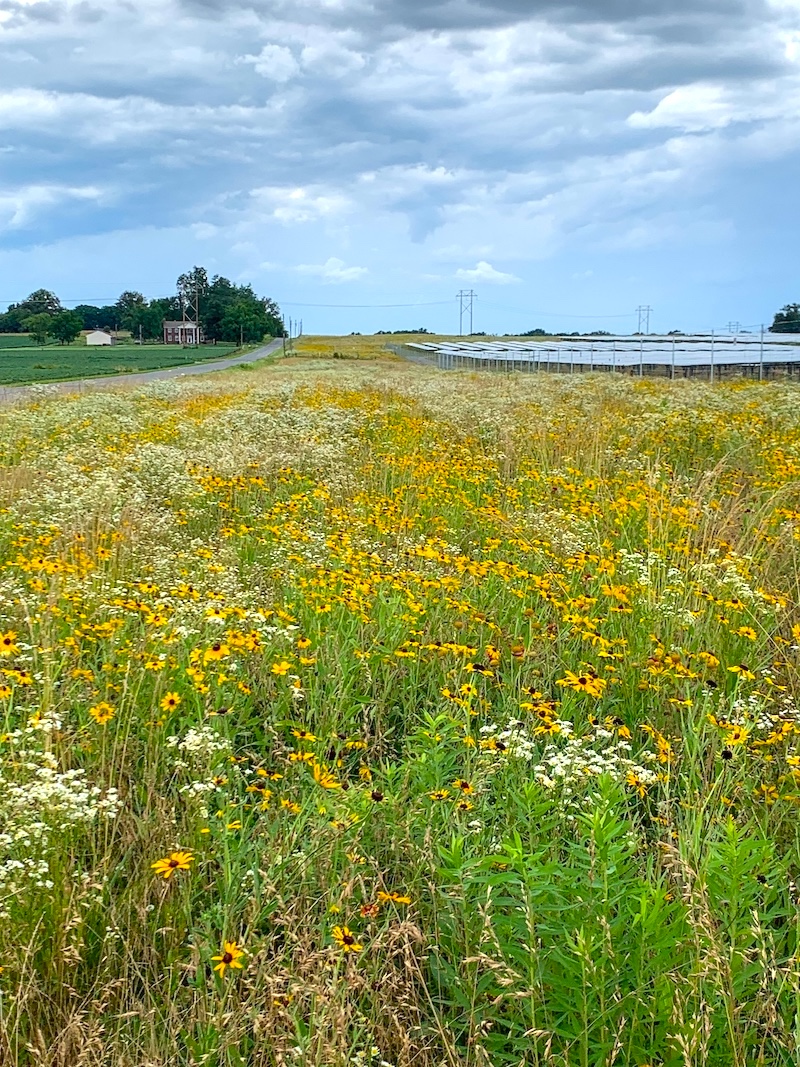
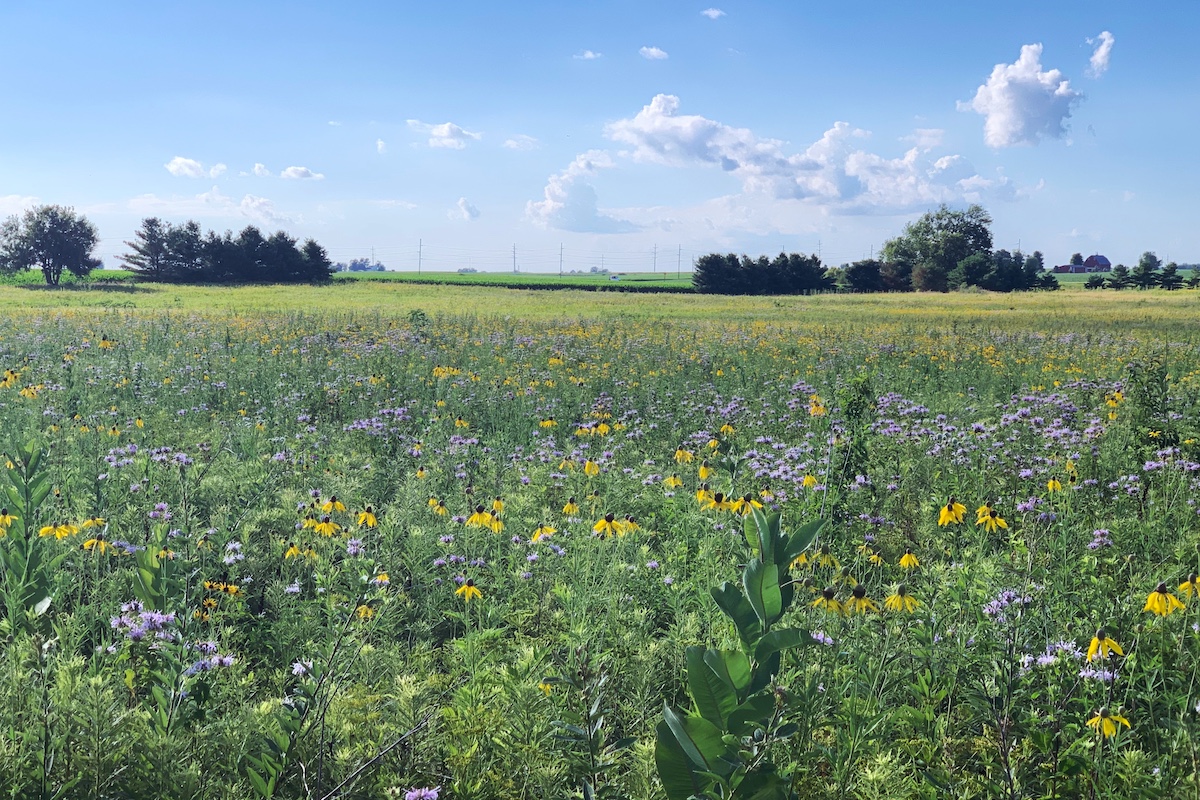
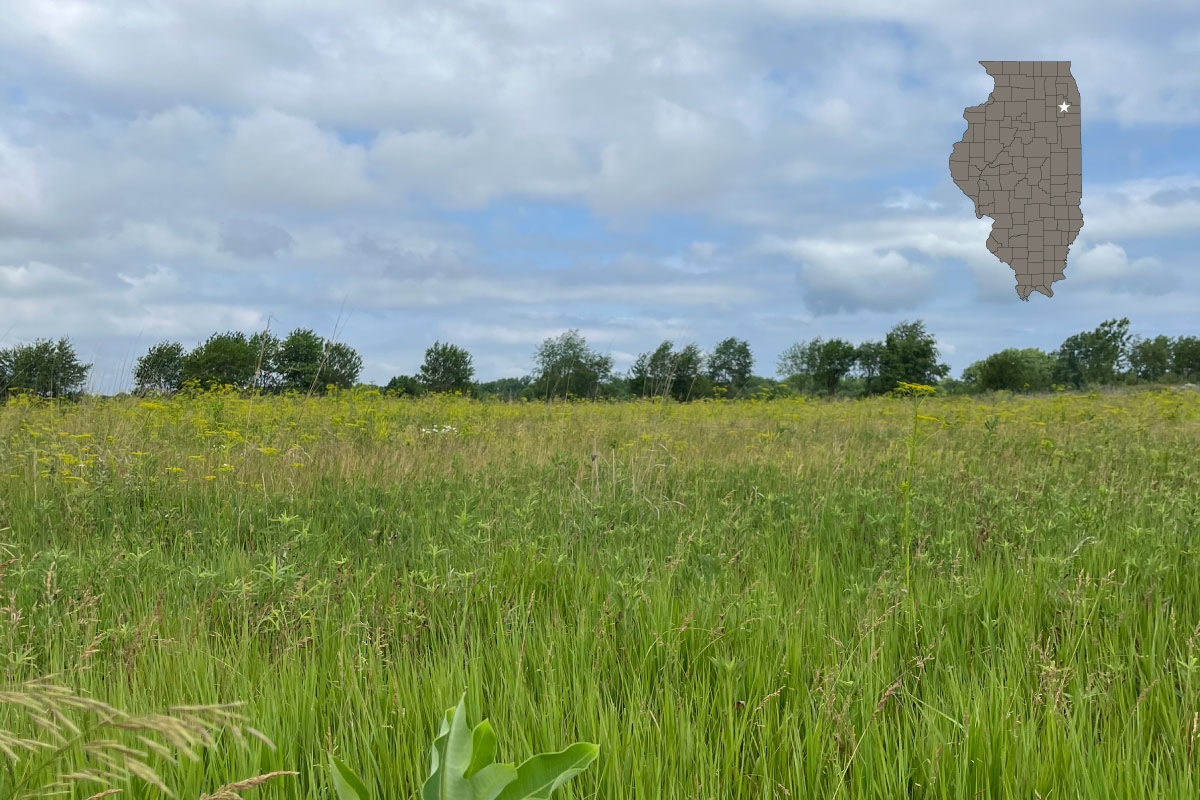
Flowering plants and grasses beneath and around solar arrays help create habitat while keeping vegetation compatible with solar operations. Photo courtesy of Resource Environmental Solutions (RES).

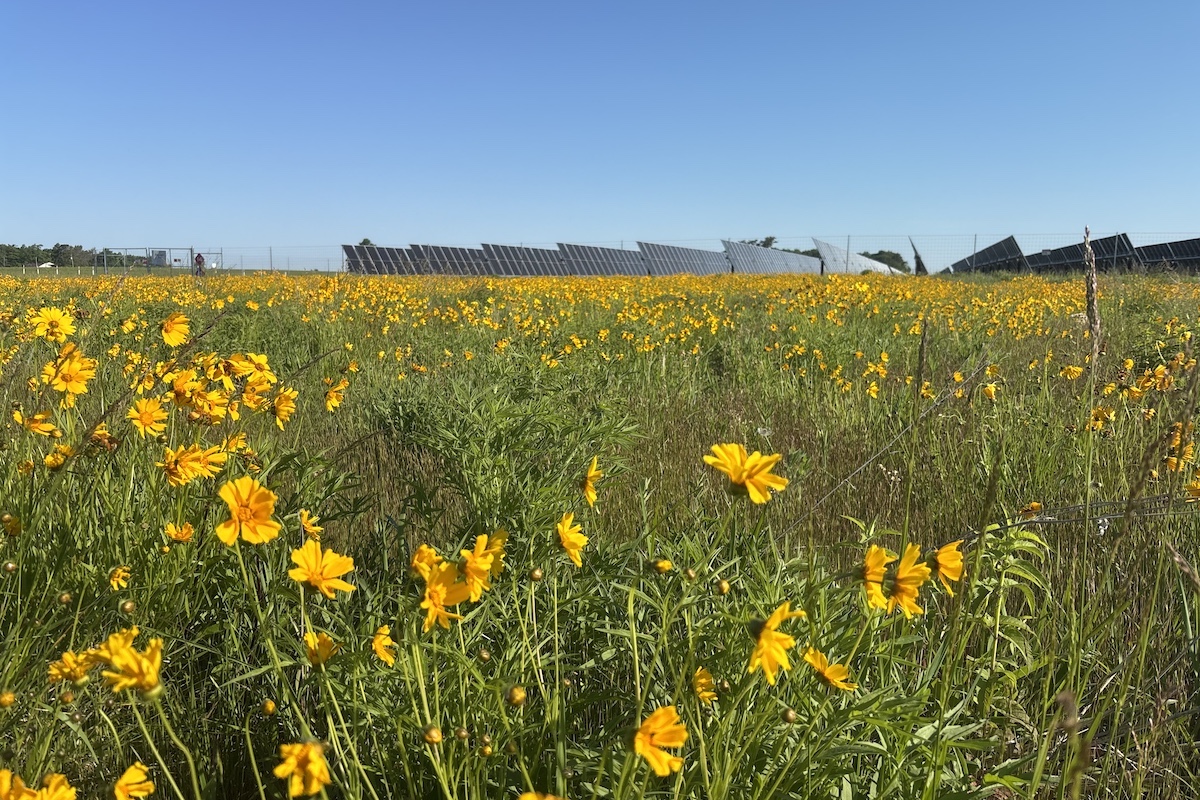
Flowering plants and grasses beneath and around solar arrays help create habitat while keeping vegetation compatible with solar operations. Photo courtesy of Resource Environmental Solutions (RES).
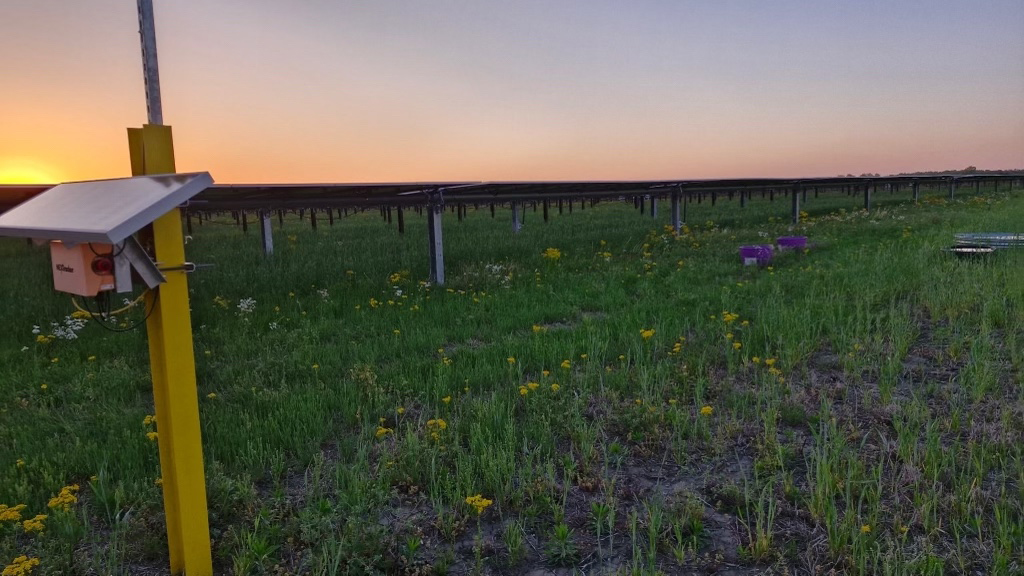
Beneath the array of solar panels grow side-oats grama, Short’s sedge, broom sedge, fox sedge, purple prairie clover, Virginia wildrye, Dudley’s rush, perennial rye, little bluestem, white clover and crimson clover. Adjacent to the panels in a buffer exist a broader mix of native and pollinator-supporting flowers such as yarrow, yellow giant hyssop, common milkweed, butterfly milkweed, partridge pea, lanceleaf tickseed/coreopsis, pale purple coneflower, prairie alum root, prairie blazingstar, wild bergamot, foxglove beardtongue, gray-headed coneflower, black-eyed Susan, showy goldenrod, smooth blue aster, hoary vervain and golden alexanders.
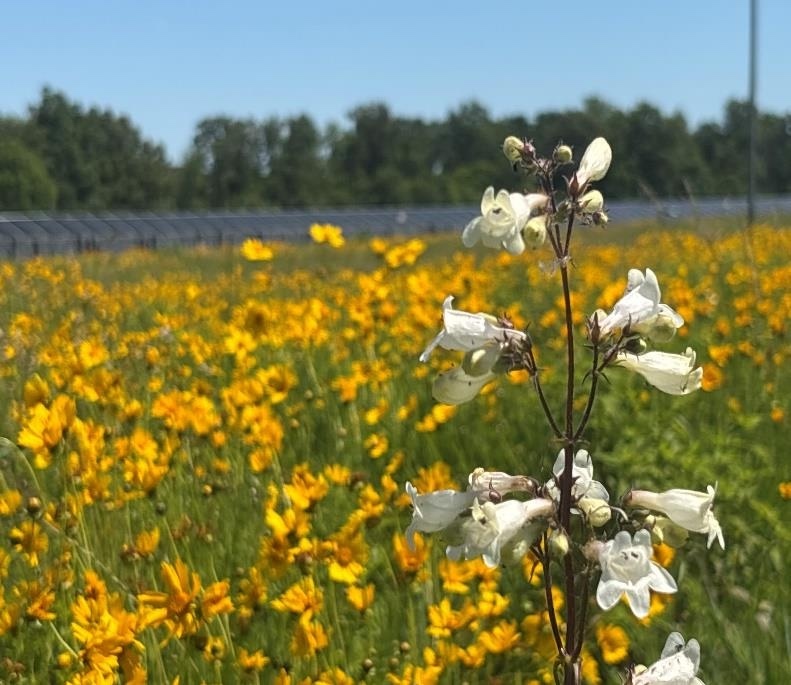
It is proof that clean energy projects can be created and managed to support healthy populations of bees, butterflies and other insects that are critical to the pollination of agricultural crops. And that native plants – which are a food source for a variety of animals – serve a valuable purpose when integrated with solar projects.
Solar projects are popping up across the Illinois landscape. According to Bradley Hayes, Impact Assessment Division Manager for the Illinois Department of Natural Resources (IDNR), from 2022 through May 6, 2026, staff reviewed nearly 3,300 natural resource reviews requested by state agencies, units of local government and the public prior to work related to solar installations.
“Through EcoCAT, or the Ecological Compliance Assessment Tool, proposed projects are reviewed for potential adverse effects to endangered or threatened species and determine if the site is in the vicinity of an Illinois Nature preserve or Land and Water Reserve,” Hayes explained. “EcoCAT uses databases, Geographic Information System mapping and a set of programmed decision rules to determine if a proposed action may be in the vicinity of protected natural resources.”
In 2022, solar projects accounted for 473 of the natural resource reviews conducted and there has been a steady annual increase, with 735 requests in 2023, 802 in 2024 and 986 in 2025. More than 300 requests had been submitted during the first four months of 2026.
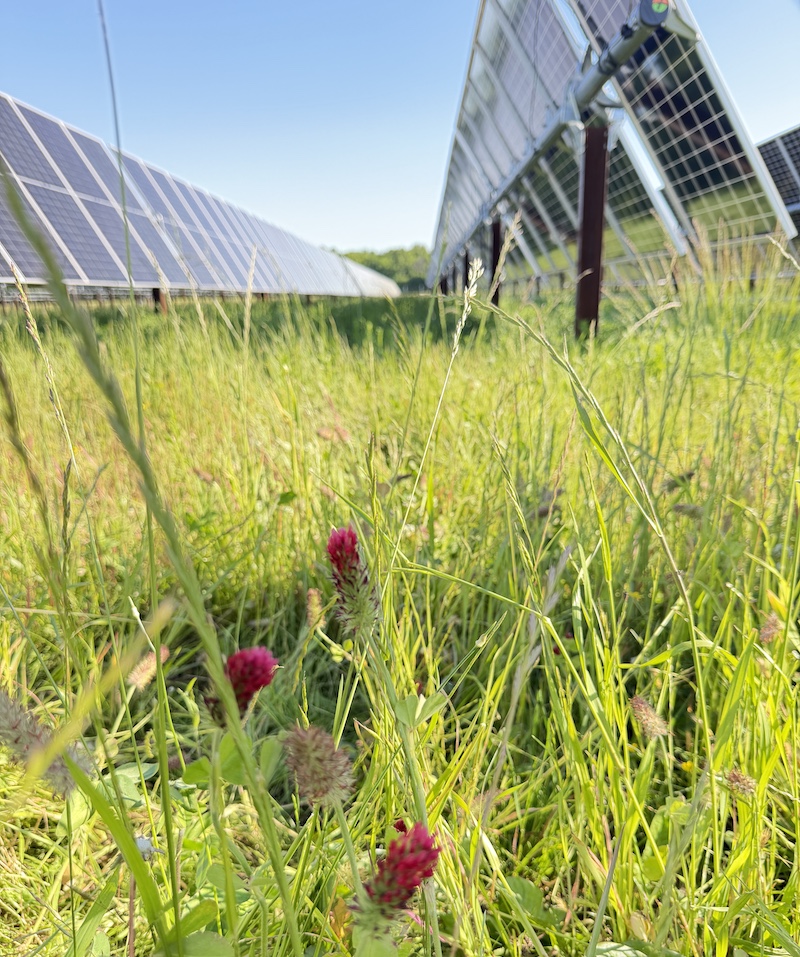
“Pollinator-friendly solar is about designing projects that respond to and support the land around them,” noted Juliana Isaac, Director of Sustainability and Ecosystem Impact for Sol Systems, a leading national clean energy developer and independent power producer (IPP) with more than 550MW of solar projects in Illinois. “In practice, that means choosing seed mixes and management approaches that support safe, reliable solar operations while also improving soil health, creating habitat for pollinators, and supporting the ecosystems that local communities and agriculture depend on. It’s a site-specific approach that, when managed well, can deliver long-term ecological benefits alongside clean energy generation.”
“Pollinator-friendly solar reflects Sol Systems’ approach to Infrastructure + Impact®. With the right seed mix and long-term management, clean energy projects can strengthen the grid, support local communities, and help revitalize the land by creating habitat for native plants, pollinators and other beneficial species.”
In 2018, with support from solar energy businesses and conservation groups, the Illinois General Assembly passed the Illinois Pollinator-Friendly Solar Site Act (525 ILCS 55/). To be recognized as a “pollinator friendly solar site,” the owner or manager of the site must complete the appropriate solar site scorecard with a passing score.
Two versions of the online scorecard forms exist, one for projects with established habitat and a second option for projects where the habitat is in the planned stage. Criteria include:
After completing the Pollinator Scorecard form, a score of 85 or higher earns the landowner recognition as a Pollinator-Friendly Solar Site.
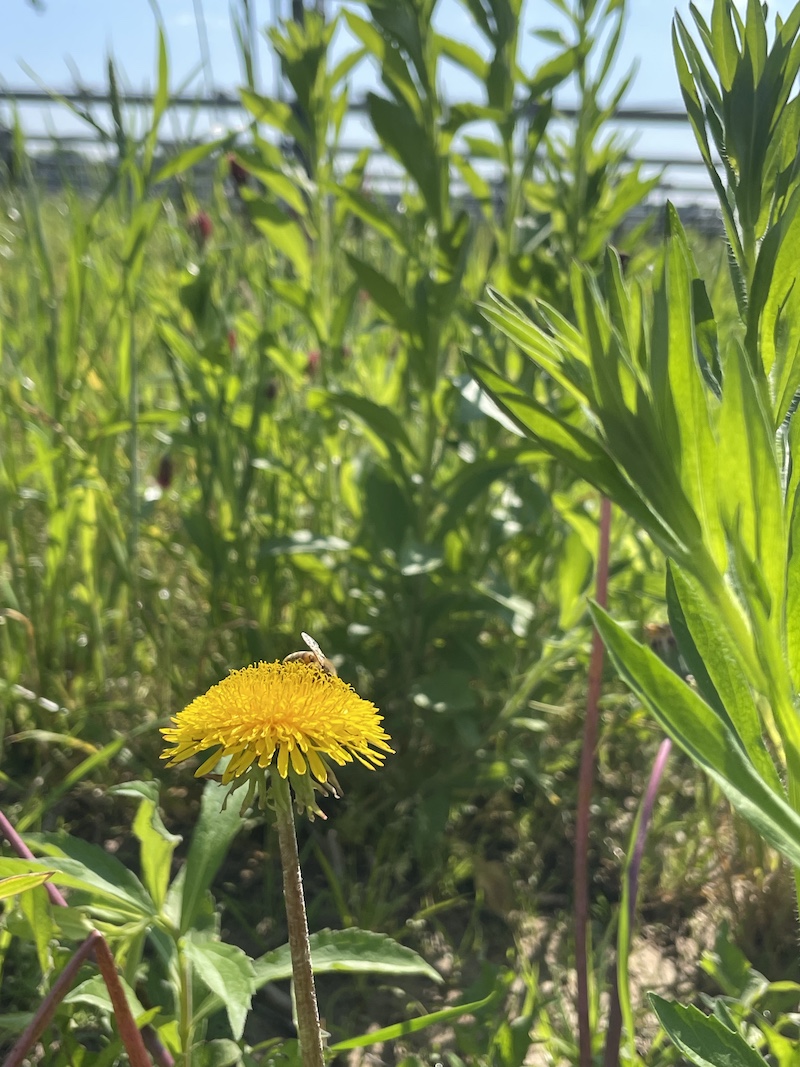
It takes time for quality habitat plantings to mature and only four growing seasons have passed since the scorecard program was implemented in 2022.
“It can take up to three years, or longer, for a planting to become established. At that point in time, most species are mature enough to start flowering so we’re just at the evaluation phase of many of the projects installed that initial year,” Hayes noted. “But we are confident that a solar installation, when properly planned and actively managed with pollinator-friendly plantings and reduced use of insecticides, will enhance the ecological value of the area for pollinators, provide additional habitat for songbirds and reduce erosion.”
Sol Systems views pollinator-friendly solar not as a one-time investment, but as an intentional design choice that requires active establishment and management for success over the decades of a solar project’s life. Their objective is to manage vegetation in a way that supports reliable solar production while advancing the long-term health and resilience of the habitat. Adaptive management includes:
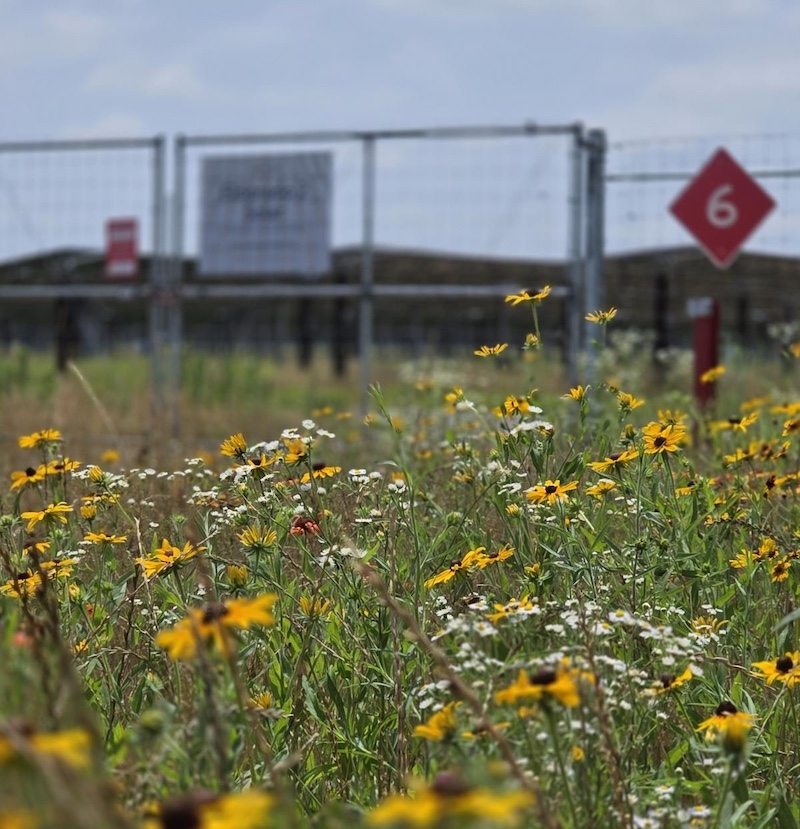
Isaac explained that research and field experience both point to the same conclusion: pollinator-friendly solar projects can provide meaningful habitat when they are thoughtfully planted and actively managed. Studies (see Resources below) have documented increased use by pollinator species of the pollinator-friendly habitats at solar projects, including increases in insect abundance and native bees compared to solar projects planted with conventional turf grass.
“On Sol’s projects, we see the practical signs of that habitat value as well—healthy vegetation, birdsong and bees and other insects using the flowering plants,” Isaac concluded.
CICADA (Conservation Inclusive Construction and Development Archive) Solar Power
Can Solar Energy Fuel Pollinator Conservation?
Pollinator Habitat in Solar Facilities Has Potential to Support High Diversity of Bee Species
Kathy Andrews Wright retired from the Illinois Department of Natural Resources where she was editor of OutdoorIllinois magazine. She is currently the editor of OutdoorIllinois Journal.




Submit a question for the author
Question: Hello, after the pollinator is implemented on the solar ground who is responsible for managing the habitat after that? As a land manager I know pollinators require some regular maintenance and was curious in these cases, who manages it. Thanks!