
Rosinweed, Silphium integrifolium. All photos by Steven D. Bailey.

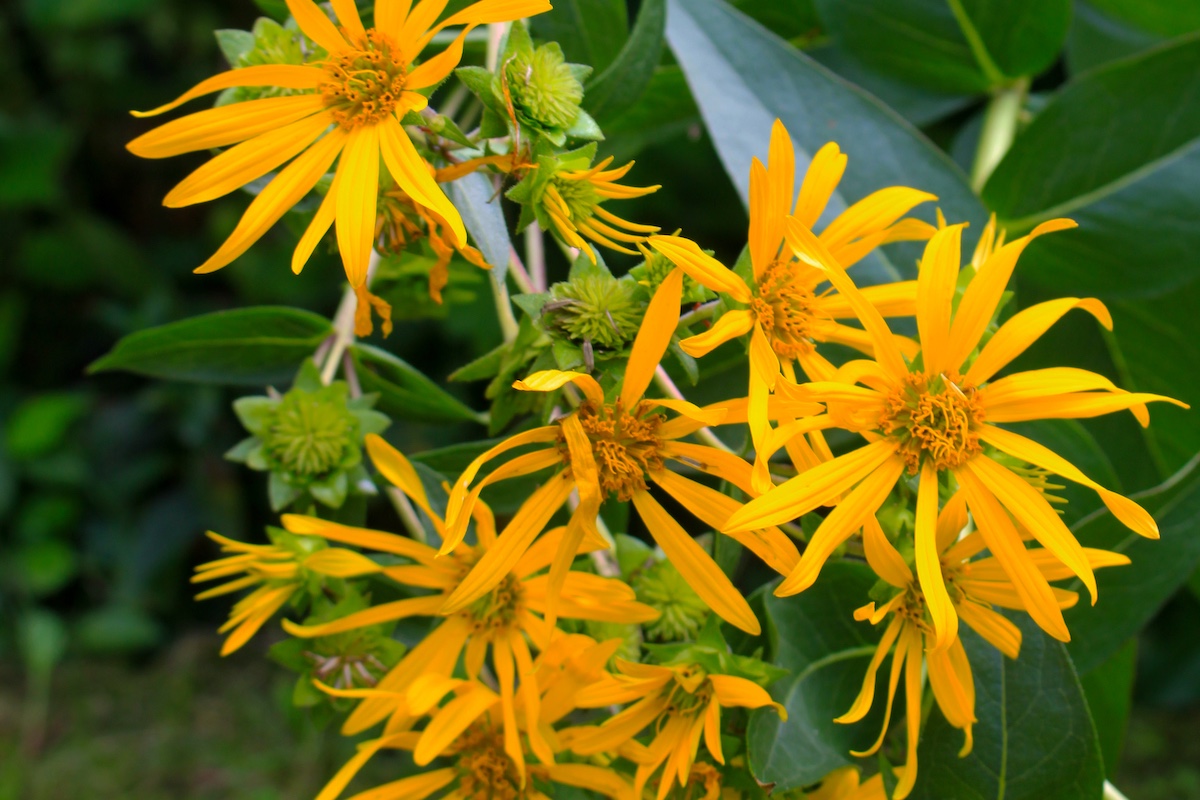
Rosinweed, Silphium integrifolium. All photos by Steven D. Bailey.
When Chris Enroth traverses Illinois in summer, he notices grassland plants that stand taller among the rest. These are the Silphiums, what he calls characteristic prairie plants.
“No tallgrass prairie should be without them,” said Enroth, a horticulture educator with the University of Illinois Extension.
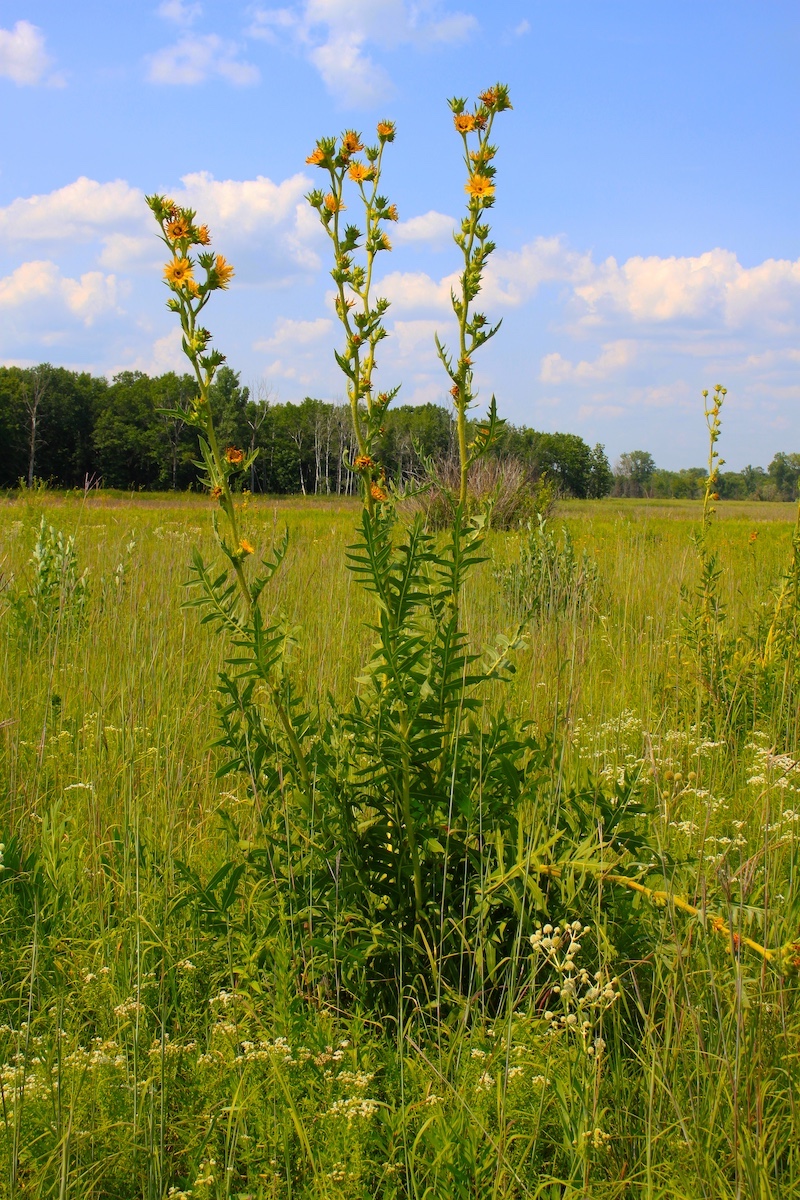
“If I had a prairie, it would have Silphiums,” he added. “Their coarse nature and size give them a prehistoric look as they stand out against the prairie grasses.”
They’re also easy to identify, and if you’ve got the right habitat in your yard, including space and sunlight, you can grow them.
Silphium is the Latin genus name for four species found in Illinois: Rosinweed (Silphium integrifolium), cup plant (Silphium perfoliatum), compass plant (Silphium laciniatum) and, the last to bloom in summer, prairie dock (Silphium terebinthinaceum.) All four are found in nearly every Illinois county.
Silphium species are related to sunflowers, but they have unique characteristics that set them apart. Little hairs on the leaves create a rough, sandpaper-like texture that deters herbivores such as rabbits and deer.
Those hairs also create a tiny microclimate around the leaf that is slightly cooler than the surrounding area, helping the plant withstand drought.
With their multiple, large yellow flowers Silphiums create what Enroth calls pollinator hotels. The pollen and nectar attract bumble bees and other native bee species as well as sulfur butterflies and painted lady butterflies. Silphium plants also serve as hosts to several specialized wasp species which are native to prairies. The wasps inject eggs and a certain chemical into plant tissue, which develops into a small protrusion called a gall. Larvae live and feed inside the gall until they are ready to leave as adults. A type of Silphium gall wasp is a species of greatest conservation need in Illinois, according to the Illinois Department of Natural Resources.
Silphiums grow 8 to 15 feet tall depending on the species. Rosinweed and cup plant have many side stalks along the stem, upon which flowers bloom. Prairie dock and compass plant each have a dedicated flower stalk rising to the sky, with blooms branching out at the top. These two Silphium species also have deep tap roots, making them difficult to dig up and replant.
Sometimes all four of these species are referred to as rosinweeds, because of the resin that forms and hardens on the stems, flower stalks and leaves. Native Americans were said to chew the resin like gum or use it to clean their teeth.
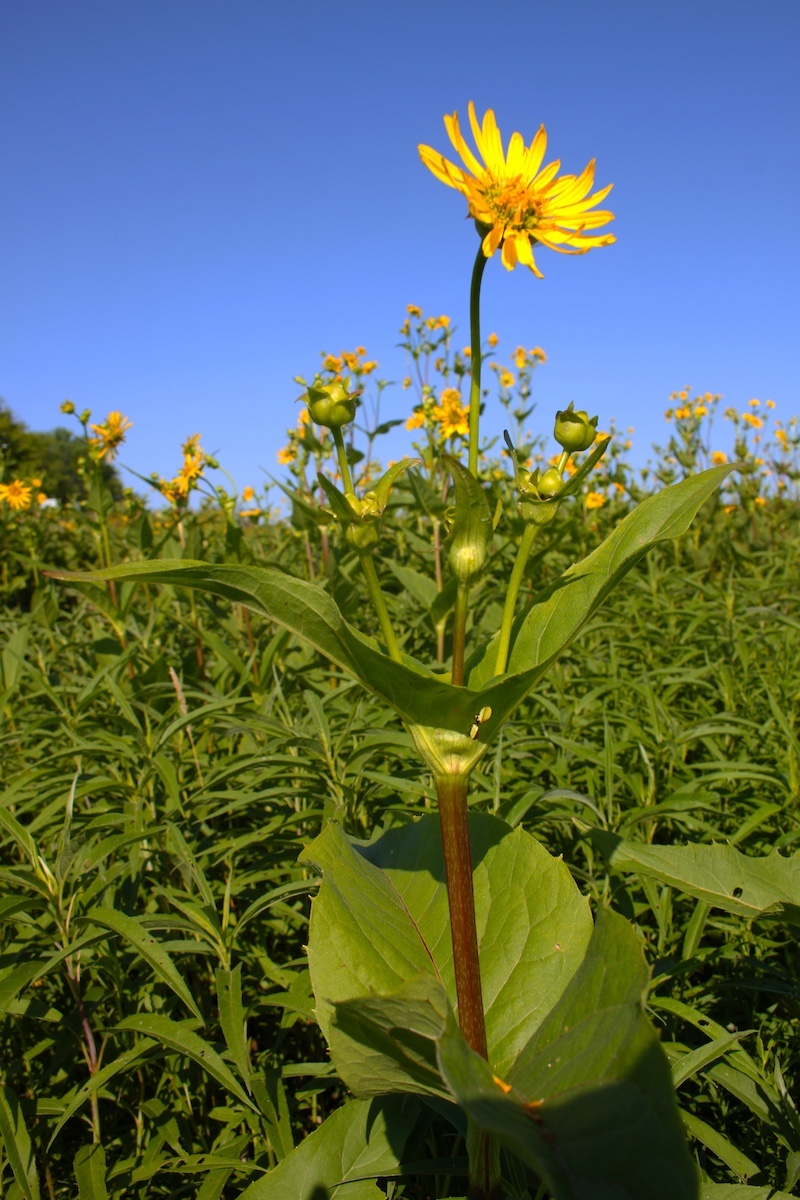
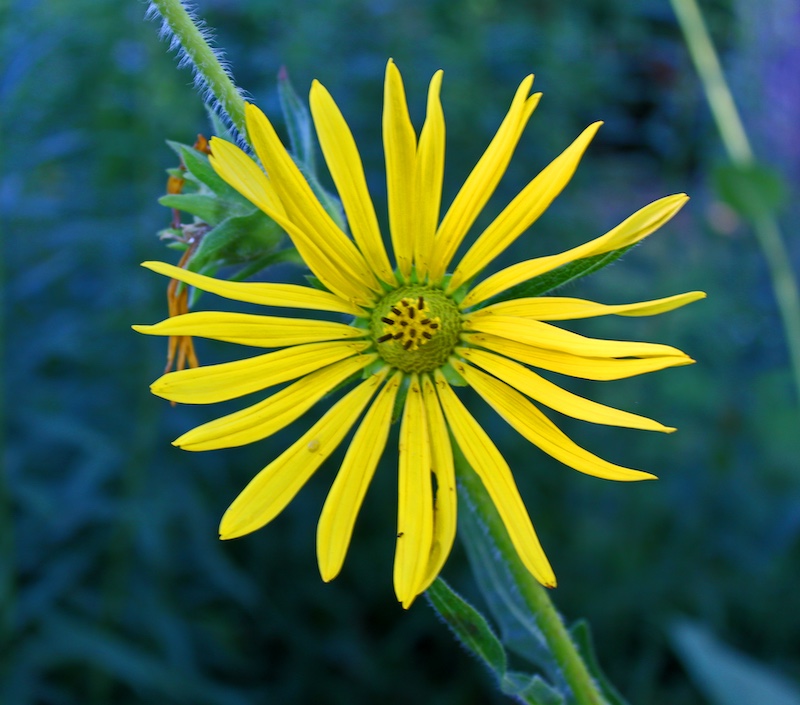
Cup plants and rosinweed begin to bloom in central Illinois about mid-June. Cup plant leaves are 6 inches wide and 12 inches long in an oval or triangular shape. The plants grow 4 to 8 feet tall. The upper leaves surround the flowering stem, creating what appears to be one large, cup-like leaf.
“These little cups are like mini ecosystems that collect water,” Enroth said. “Multiple times, I’ve seen tree frogs in the cup when there’s water. It’s always fun to look inside a cup plant. As water evaporates, it cools that spot, so perhaps there’s some cooling strategy there.”
“When it comes to home landscapes, I dissuade people from going with cup plants,” he added. “It can be a pretty aggressive plant. It can spread.”
Rosinweed also can be aggressive in yards, but not nearly as much as cup plant. Also known as wholeleaf rosinweed, the plant has lance-shaped leaves that are 2 inches wide and 6 inches long. It grows up to 8 feet tall.
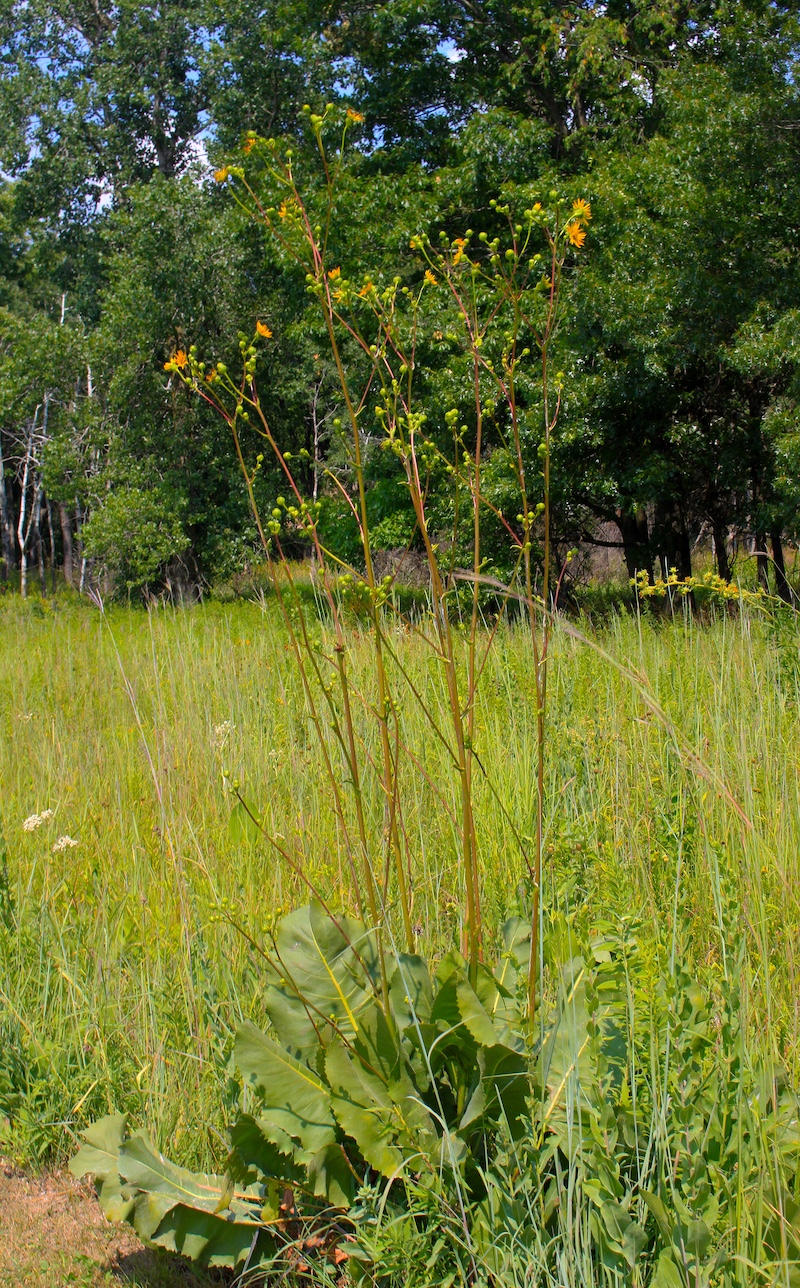
Compass plant and prairie dock, known as the Silphium Sisters, begin blooming in mid-July to August, but you can recognize them a lot earlier by their unique leaves. Prairie dock has large, 8-inch-wide and 24-inch-long heart or oval shaped leaves that develop only at the plant’s base. It grows 10 feet tall or higher.
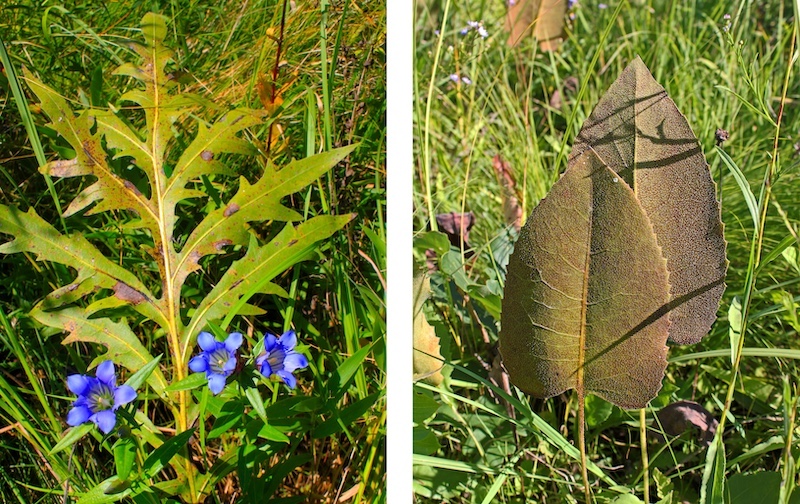
“Its roots can go several meters beneath the soil,” Enroth said. “They have thick tap roots that store a lot of energy.”
Compass plant leaves are quite different from those of prairie dock.
The compass plant leaves are deeply lobed and look like large, green multi-fingered hands, about 12 to 24 inches long and 6 to 12 inches wide.
Pioneers believed the leaves of the compass plant point in a north-south direction, but that’s not quite accurate, according to Enroth.
“Compass plant may shift its leaves so it’s more shaded from the sun, perhaps when going through a drought,” he explained. “And it can change its leaf orientation to face the sun to speed the process of photosynthesis.”
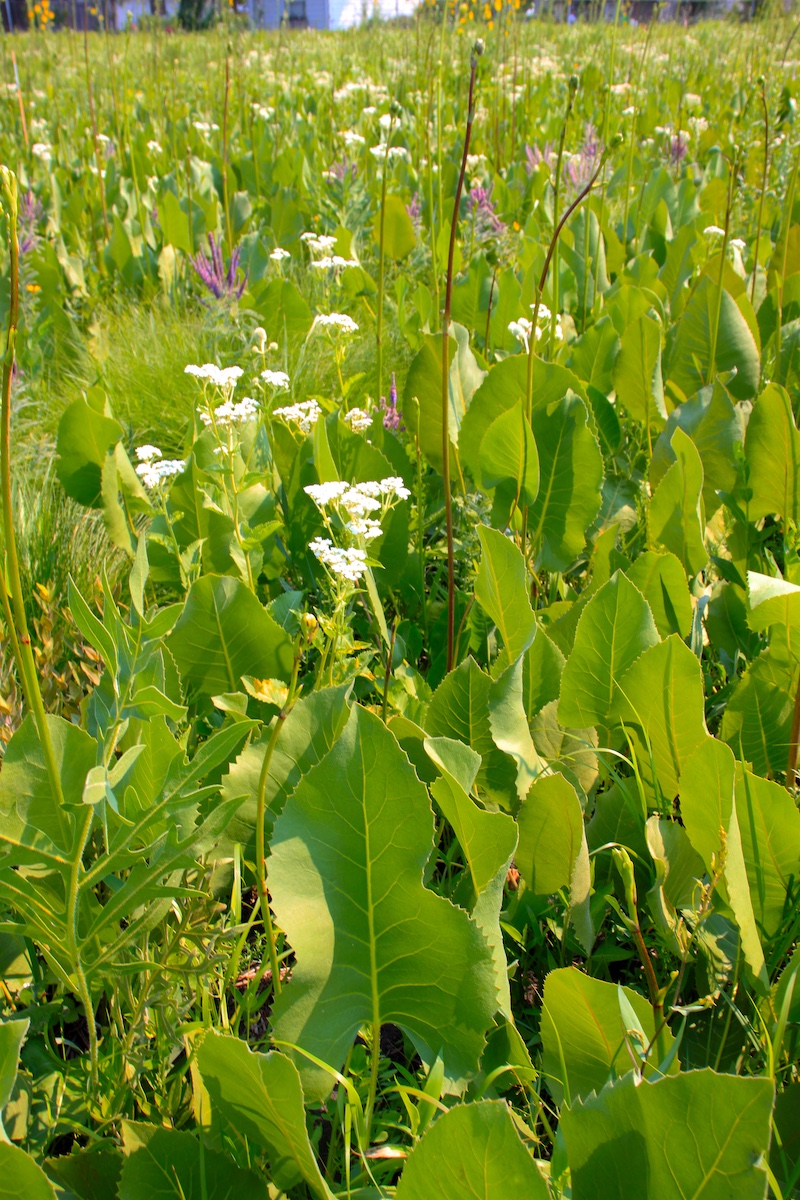
Like prairie dock, compass plant also has deep tap roots. These deep roots help them access water during drought, but Enroth said, some interesting new research is showing these deep prairie roots are not actually accessing the water down there.
“Research over the last decade or so has built a strong case against the idea that those plants use their deep roots to find moisture during times of scarcity,” wrote Chris Helzer, The Nature Conservancy’s Director of Science and Stewardship in Nebraska.
In his online The Prairie Ecologist blog, Helzer wrote that more studies need to be done on “what the heck are those deep roots for if they aren’t obtaining water?”
Enroth grows compass plant and prairie dock in his home landscape. “It’s best to create a nice space for them where they don’t have competition and get plenty of sun. They need as much sunlight as we can give them, especially in northern Illinois, with a slightly cooler climate.”
“You definitely want to limit competition for the first few years while the plant gets established, but can interplant once it’s established,” Enroth added. “In wild prairies, these often grow competitively with other native plants.
As summer fades into fall, Silphium plants begin forming seeds, which are prime meal sources for birds. “Goldfinches especially love prairie dock,” said Arlene Doran, a member of the Gardeners of Central Lake County in Illinois, who grows the plant in her large yard.
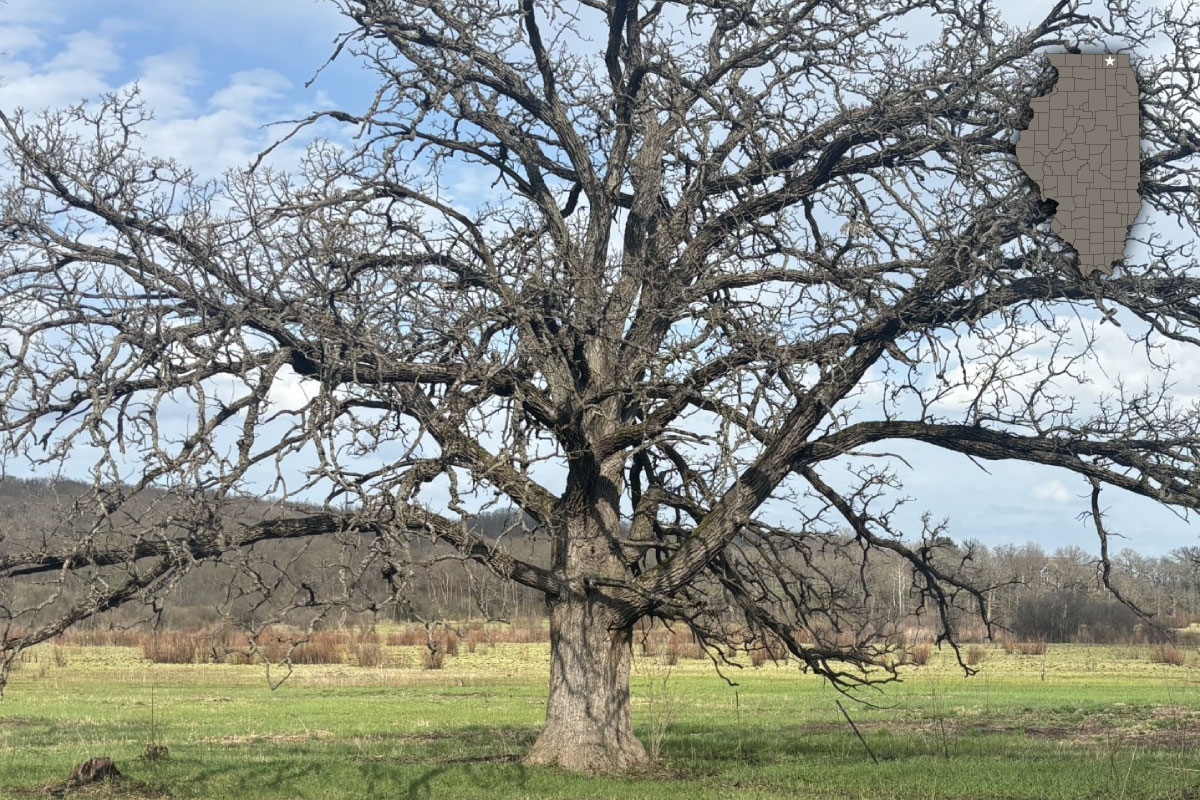
The following are a few places to view the Silphium species in middle to late summer.
I can attest to the fact that compass plant and prairie dock need lots of space and lots of sun in a garden. We tried planting them, but as shade overtook the yard and more plants crowded them out, they disappeared. Rosinweed continues to grow in a few clumps, while cup plant has become aggressive. Still, I enjoy the lovely bouquets of mid-summer yellow flowers.
Sheryl DeVore writes environment and nature pieces for regional and national publications and has had several books published, including “Birds of Illinois” co-authored with her husband, Steven D. Bailey.







Submit a question for the author