
All photos courtesy of the author.

All photos courtesy of the author.
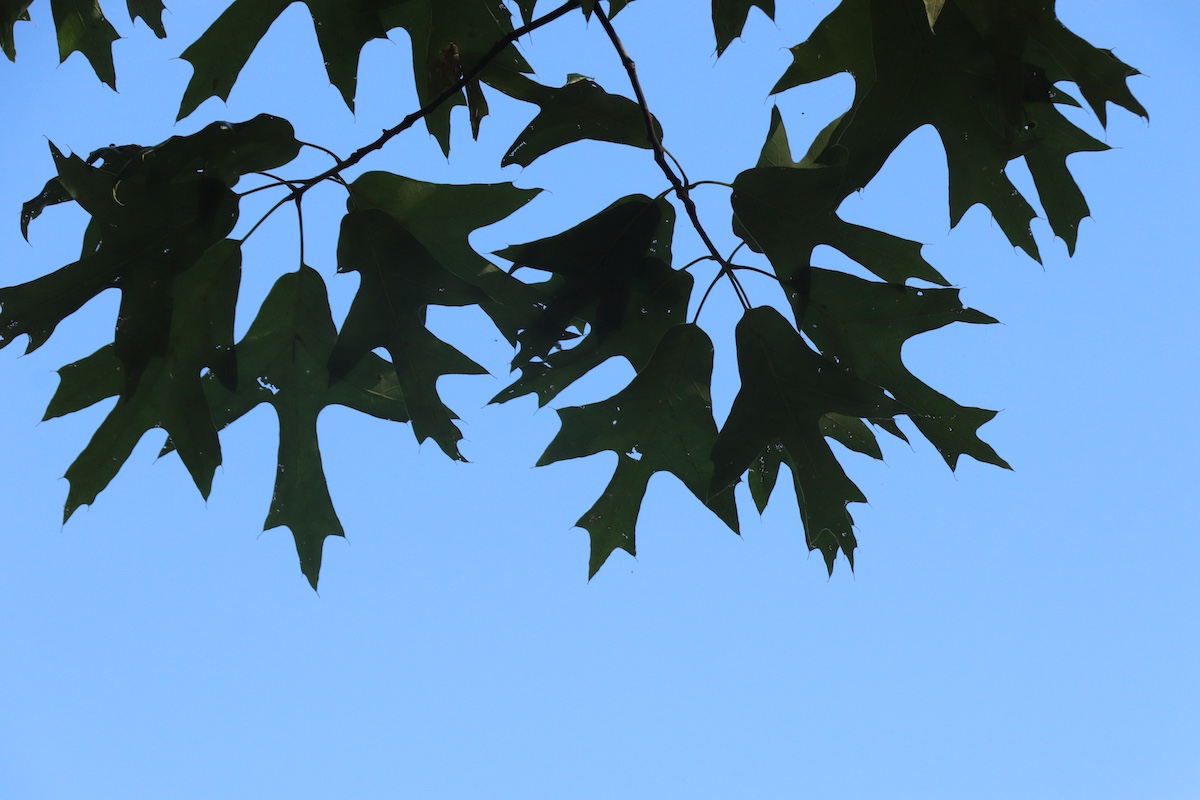
Go into almost any forest in Illinois and look up, and you will most likely see oak trees branching above you. Three out of the top four most abundant trees in Illinois are oak species. More than two-thirds of the wooded lands in Illinois are classified as oak/hickory forest. Oaks are abundant across the state, but if you want to see a lot of different types of oaks, head for southern Illinois.
Oaks are vitally important to the wildlife of Illinois. More than 300 species of moths and butterflies utilize oaks, and their caterpillars are an essential food source for many songbirds. The acorns from pin oaks (Quercus palustris) and other oak species that grow in floodplains feed waterfowl as they migrate south in the winter. Deer, turkey and squirrels all rely on acorn production to fatten up in the fall to prepare for winter.
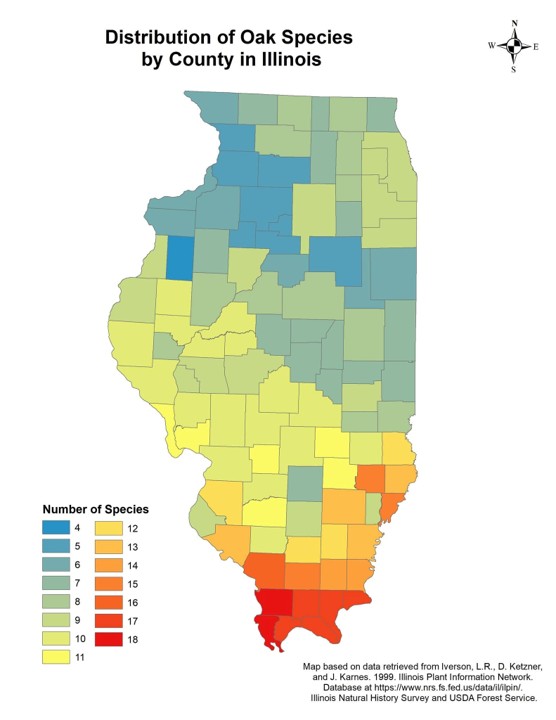
The most common oak is our state tree, the white oak (Quercus alba). Northern red oak (Q. rubra) and black oak (Q. velutina) are also common in Illinois, growing in every county. We have other common oaks, and some rare ones. In fact, we have a total of 21 different species of oak native to Illinois. These species are separated into two groups, the red oaks (12 species) and the white oaks (9 species).
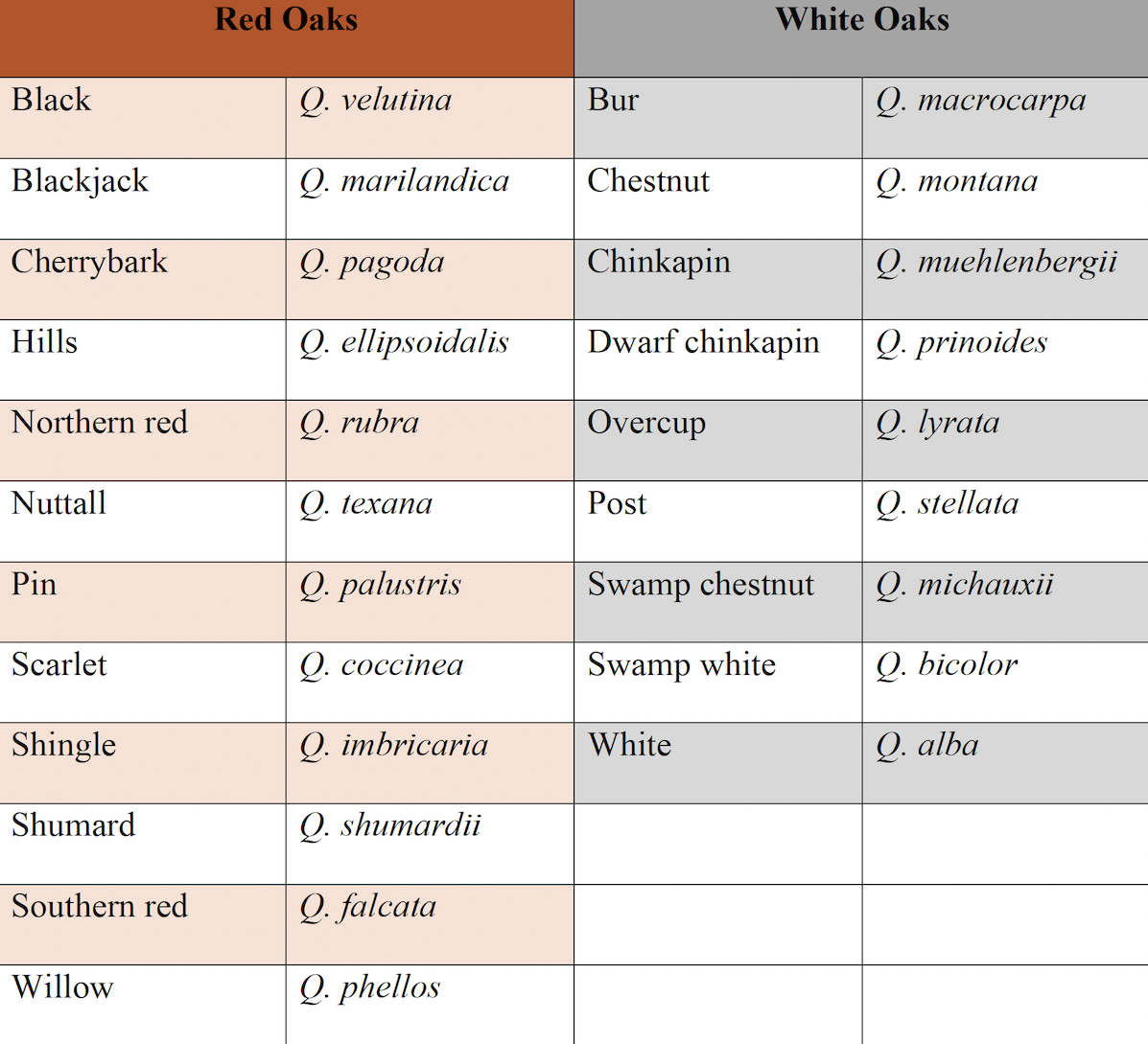
You may be wondering what the differences between red and white oaks are and why it matters. Red oaks and white oaks do look distinctly different. They also have very different biology, which means they play different roles in our forests and affects how we use them. Fortunately, it is relatively easy to tell red and white oaks apart by looking at their leaves, bark and acorns.
Leaves, of course, are the most obvious way to identify trees during the growing season. Red and white oaks have many shapes of leaves, but there are differences between the groups that are pretty easy to see. The leaves on most red oak species are lobed and look sharp and pointed at the end of the lobes with small bristles at the tip. Only two of our native red oaks (shingle oak, Q. imbricaria and willow oak, Q. phellos) have leaves that are not lobed at all, but will still show a tiny bristle at the tip of the leaf. These two species are sometimes mistaken for other trees, since their leaves do not look like typical oak leaves.
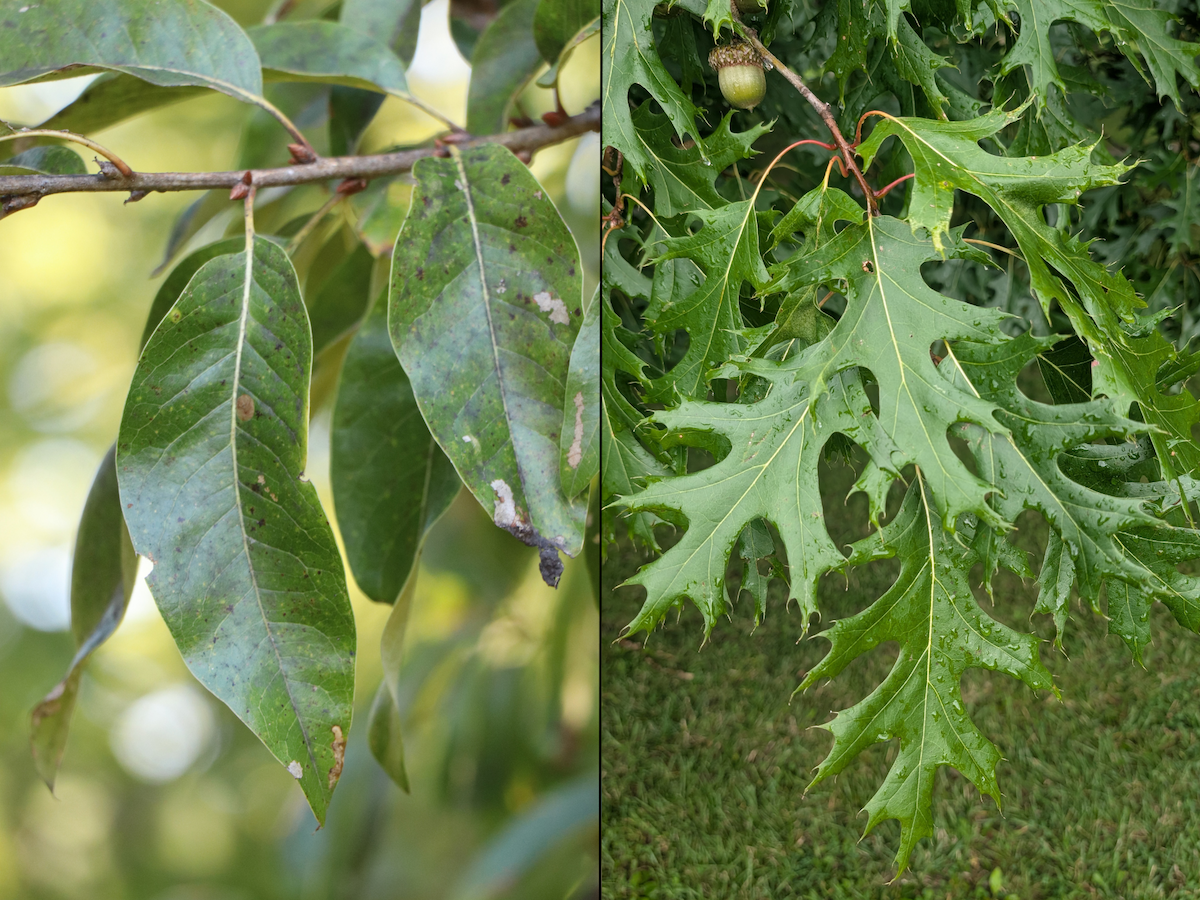
The leaves of white oak species either have rounded lobes like those of post oak (Q. stellata) or blunt teeth, like those of chinkapin oak (Q. muehlenbergii).
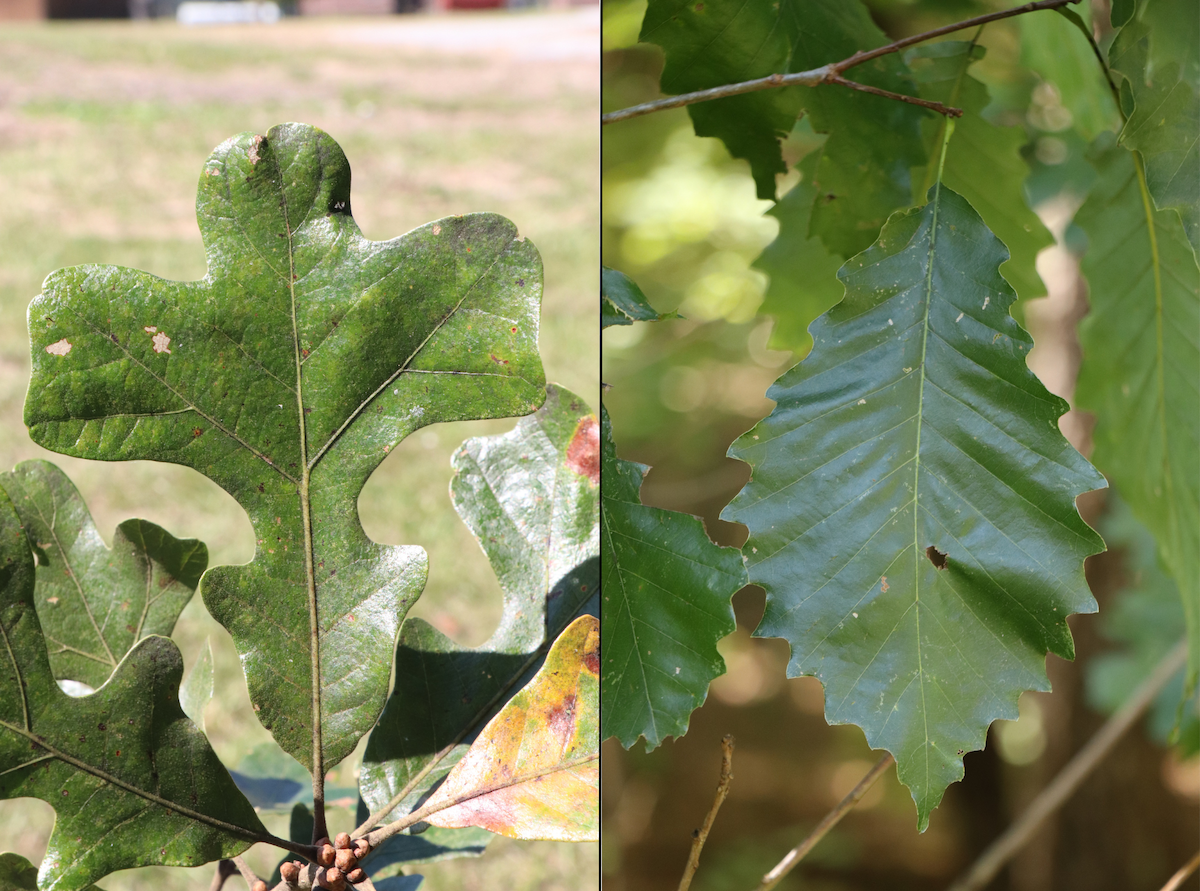
All oaks tend to hold on to their leaves a little later in the fall compared to other tree species. You can often find a few brown, dried leaves still hanging on oaks well into winter, which helps with identification.
Trees can often be identified by the color and texture of their bark, and this is true for oaks as well. The bark on red oak species tends to be dark gray to almost black in color. Some, like black oaks, have bark that is thick and very rough in texture. Others, like pin oak, have relatively thin and smooth bark. Some of the red oak species also show shiny “ski trails” on their bark, which are long, flat ridges that are lighter gray in color and appear shiny. Northern red oak is a great example of a tree with ski trails.
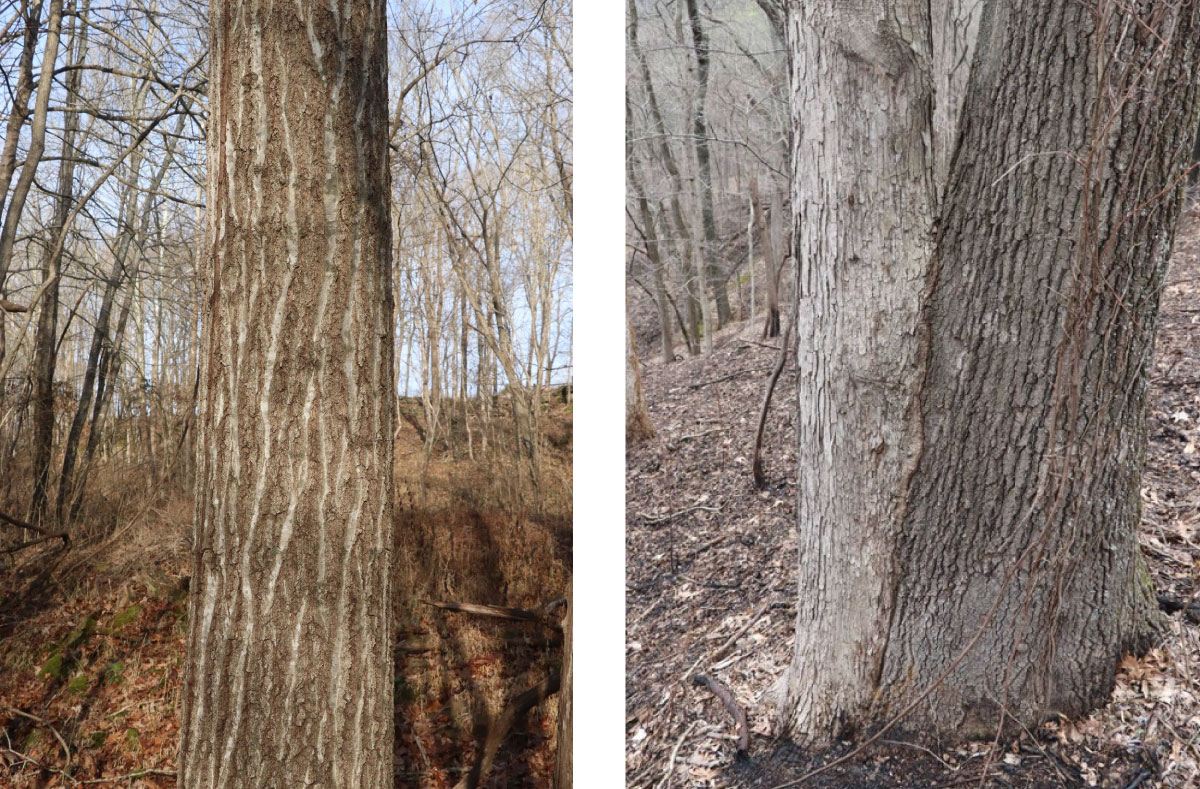
White oak species have bark that is generally much lighter in color, often looking very light gray or almost silver/white. Bark texture varies considerably. Some white oaks, such as swamp white oak (Q. bicolor), have bark that is almost flaky or peeling on the smaller branches. Post oak has bark that is thick with straight, rectangular ridges. Sometimes white oak bark is so shaggy and flaking it can be mistaken for a shagbark hickory. Bur oak (Q. macrocarpa) and chestnut oak (Q. montana) both have thick bark that is darker in color than most of the other white oak species and are easier to mistake for a red oak.
Acorns are more complicated when it comes to identifying oaks, since acorn shape and size vary a lot in both the red and white oak groups. The biggest acorns belong to the white oak group, with some bur oak acorns being nearly the size of a tennis ball! Other white oaks, such as post oak or chinkapin oak, have fairly small acorns.
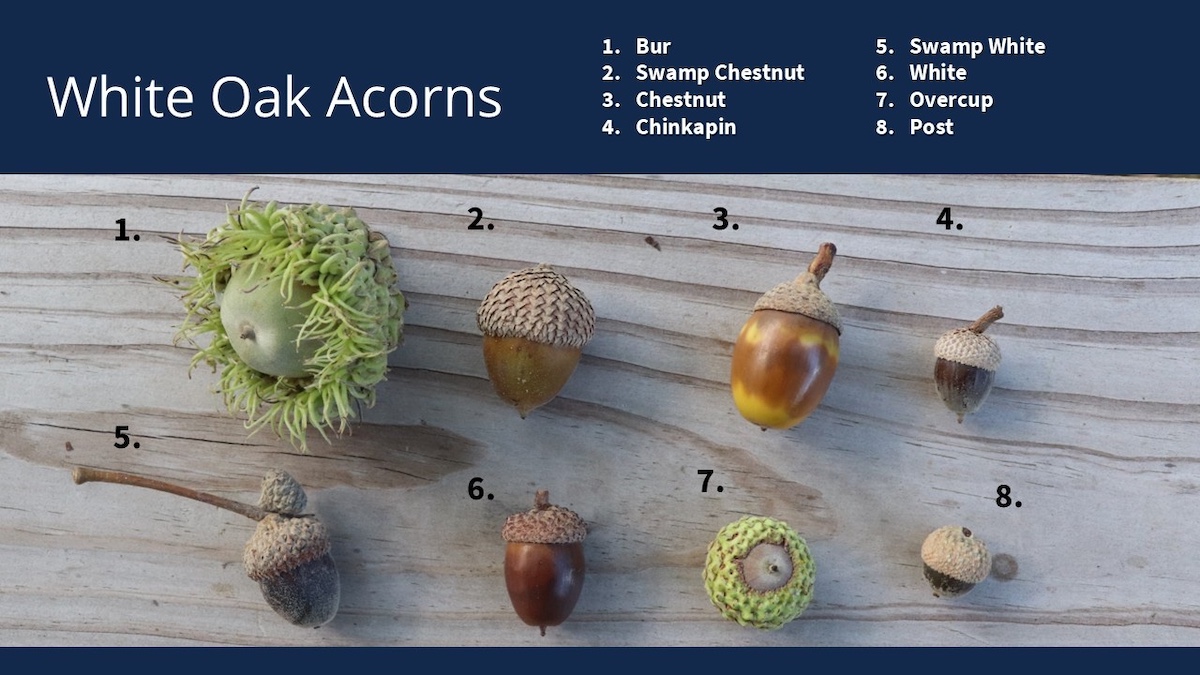
In general, the red oaks also tend to have small acorns, but northern red oak, Shumard oak (Q. shumardii) and scarlet oak (Q. coccinea) have acorns larger than the other red oaks. The best characteristic that works to tell red oaks from white oaks solely by their acorns is to pull the cap off and look at the inside. If the inside of the cap is hairless or nearly so, it is a white oak. If the inside is covered in tiny, velvet-like hairs, it is a red oak.
In addition to looking different, red and white oaks have some big differences in their biology. The biggest difference is how they produce acorns. Red oak acorns take around 24 months between producing a flower and having their ripe acorn germinate into a new oak seedling. This process only takes between 6 and 12 months for white oaks.
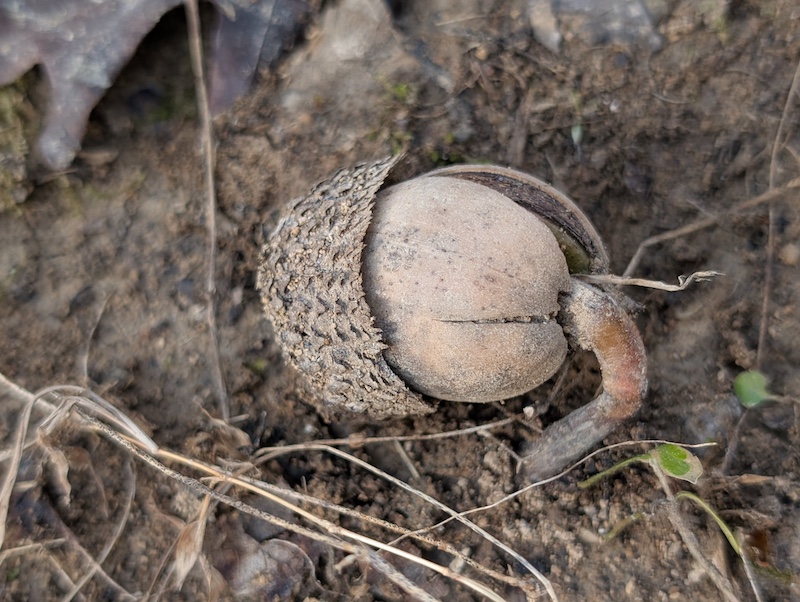
Both groups flower in the spring on new wood (twigs grown just that year). A white oak will produce an acorn that matures and falls from the tree all in one growing season, and those acorns can even germinate and start growing that same fall after they drop from the tree.
Red oaks, after flowering in the spring, will form small immature acorns that stay on the tree until the following year. The acorns will mature that second season (now on the 2-year-old portion of the stems) and fall off the tree in the fall of year 2. Those acorns will sit over winter until they germinate and start growing the next spring, or roughly 24 months after flowering. Take a look at a branch of one of the red oak species in the late summer or early fall. You should be able to see the small, immature acorns on the first-year wood and the larger, mature acorns on the 2-year-old wood.
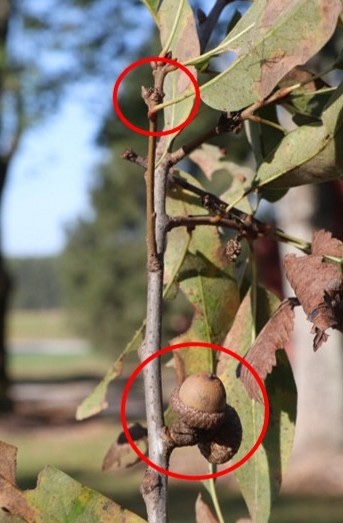
Because of the longer time it takes to produce an acorn, red oak acorns have much higher tannin contents. This makes them less desirable for wildlife as they have a more bitter taste and are harder to digest. While wildlife will eat red oak acorns, they are not preferred and generally left until much later, after some of the tannins have leached out. Acorns from white oak species are generally highly preferred and readily eaten as soon as they are available.
Another major difference in biology is that white oak species have special structures in their wood called tyloses, which are absent from almost all of the red oak species. Tyloses are like little valves in the wood that can be used to shut off transport through the tree. This can be extremely useful in drought conditions or to isolate a disease that is infecting the tree. For example, oak wilt, an aggressive fungal disease, will spread rapidly through a red oak, often killing the tree in a matter of a few weeks or months. White oaks are able to withstand oak wilt for sometimes years by using the tyloses to slow down or shut off the spread of the disease through the tree.
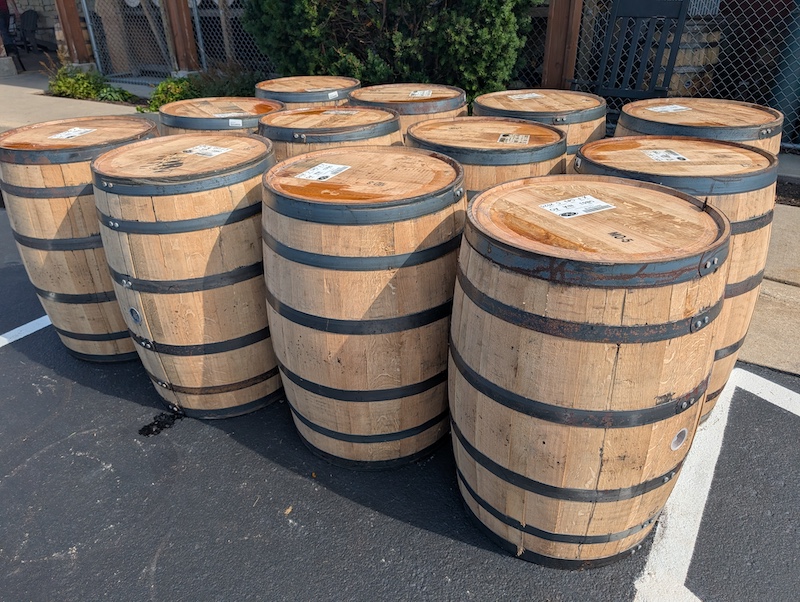
Tyloses are also why white oak wood is used for making barrels for wine and bourbon, since they make the wood able to hold water.
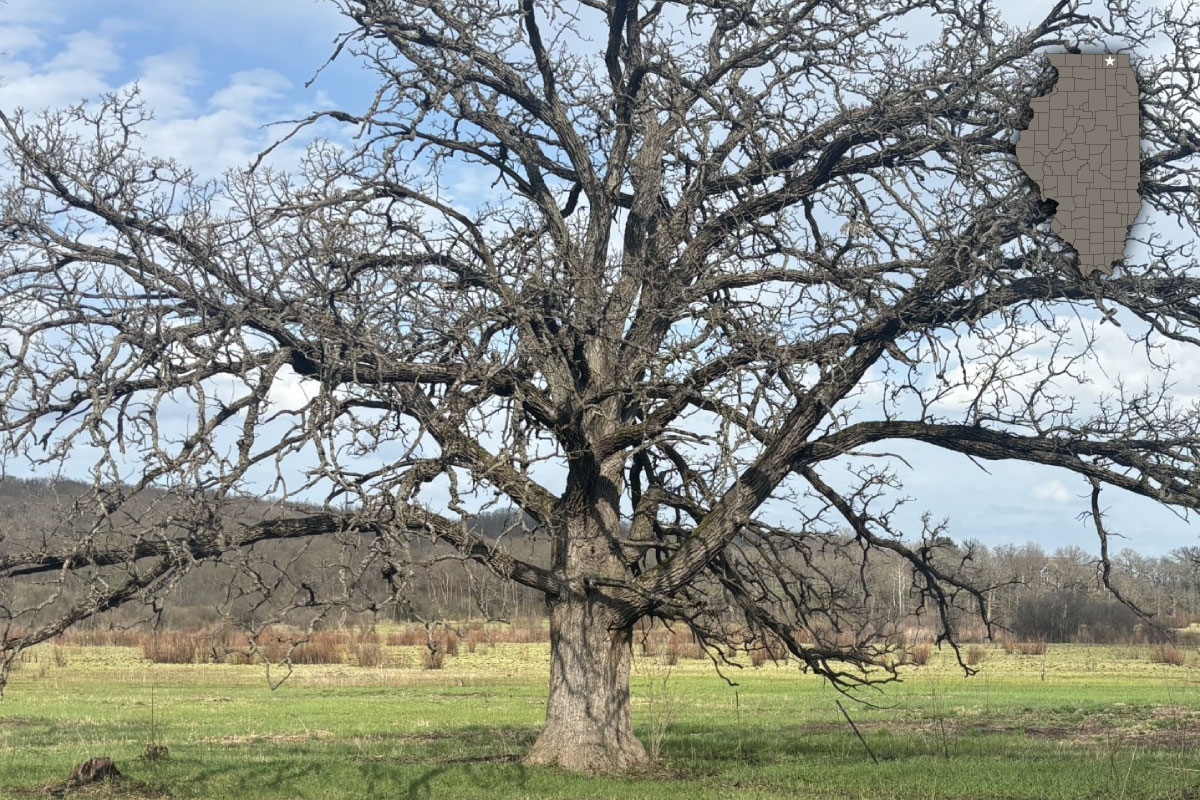
Overall, white oak species tend to be much longer-lived. Some species, like white oak, can live easily more than 300 years and there have been some that survived to nearly 600 years old. In contrast, many of the red oak species have lifespans in the 150 to 200 year range or less. Since a lot of the hardwood forests here in Illinois are getting into that 100 to 125 year old range, we are actually seeing a lot of the big black oaks and some of the northern red oaks start to die from age-related decline.
Next time you are out in the woods, take a moment to stop and look at the trees. Pay attention to the oaks and I bet you are going to find both red and white oak species.
Chris Evans is an Extension Forestry and Research Specialist with the University of Illinois. A focus of his research and extension activities is invasive species management and forest health. Evans is currently a board member for the Midwest Invasive Plant Network, president of the southern chapter of the Illinois Native Society and a former board member of the North American Invasive Species Management Association and the National Association of Exotic Pest Plant Councils.






Submit a question for the author