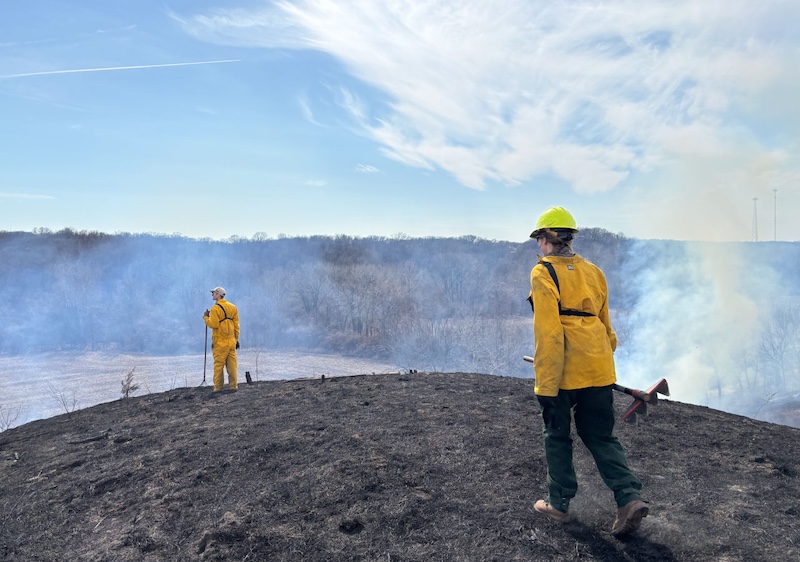
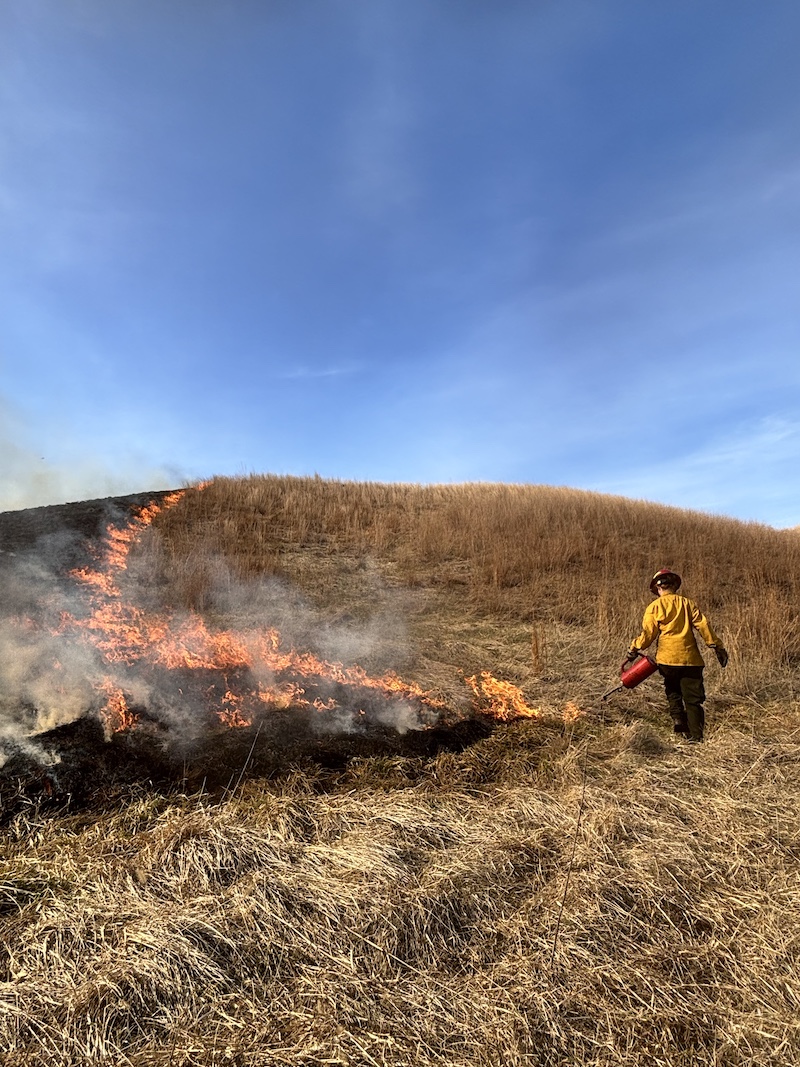
Participant on a prescribed fire training burn. Photo by Emily Hodapp, USFWS.

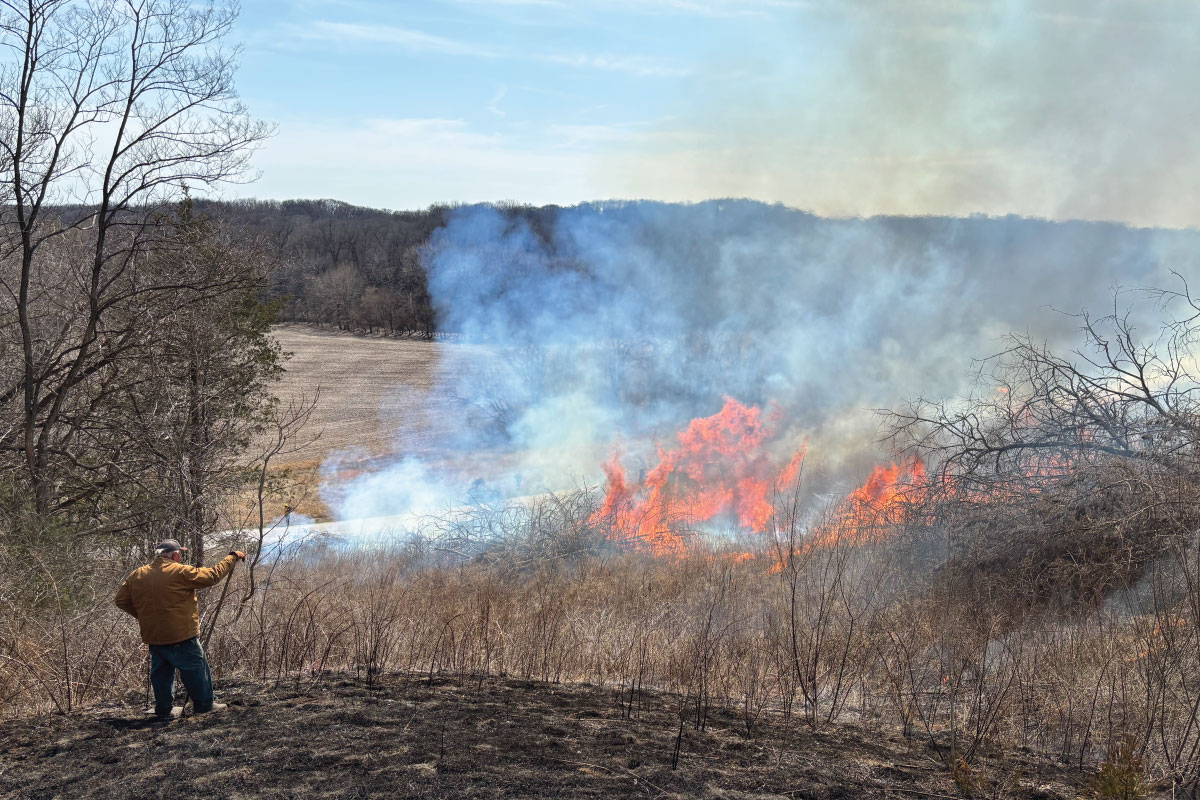

Participant on a prescribed fire training burn. Photo by Emily Hodapp, USFWS.
Illinois Pheasants Forever and Quail Forever (PFQF) recently implemented a grant through the Illinois Forestry Development Council to support local landowners and conservation partners in forming local prescribed burn associations (PBAs). These PBAs are reducing barriers to implementing prescribed fire on private lands while improving upland habitat in central Illinois.
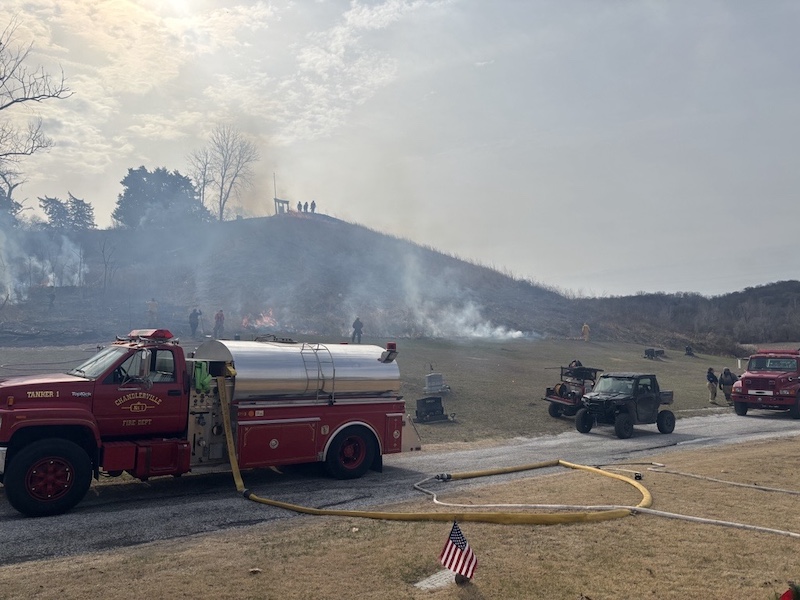
The grant supported in-person and online burn workshops, landowner visits, burn plan writing and landowner-led live fire training. This past burn season, Quail Forever partnered with the Chandlerville Volunteer Fire Department to host a burn day at the Chandlerville Cemetery Hill Prairie Land and Water Reserve Area, where participants had the opportunity to get hands on experience with fire safety, learned how to use burn equipment and more.
This burn site is only a mile from the Jim Edgar Panther Creek State Fish and Wildlife Area (JEPC), which has a 5,452-acre quail unit open to public hunting. Several private landowners within this one-mile stretch have been partnering with Quail Forever and the U.S. Fish and Wildlife Service (USFWS) Partners for Fish and Wildlife Program to voluntarily restore upland habitat, creating a corridor of quail habitat.
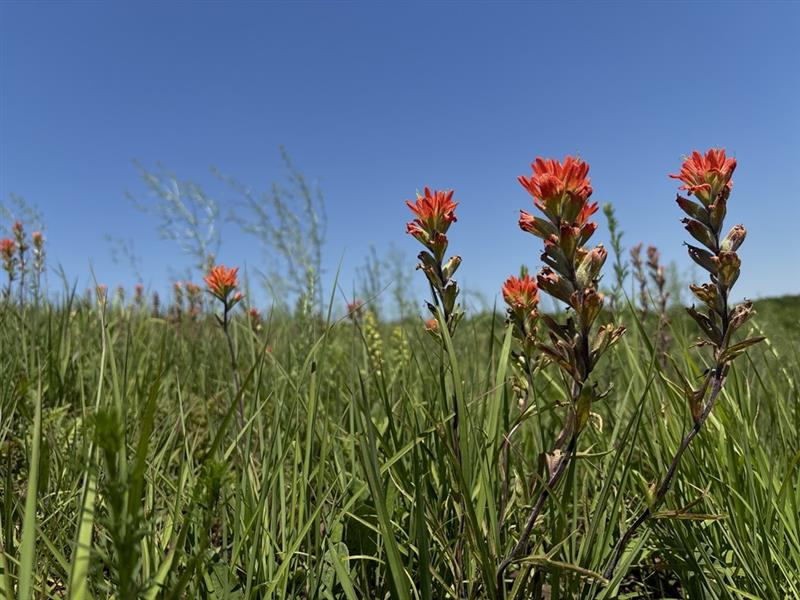
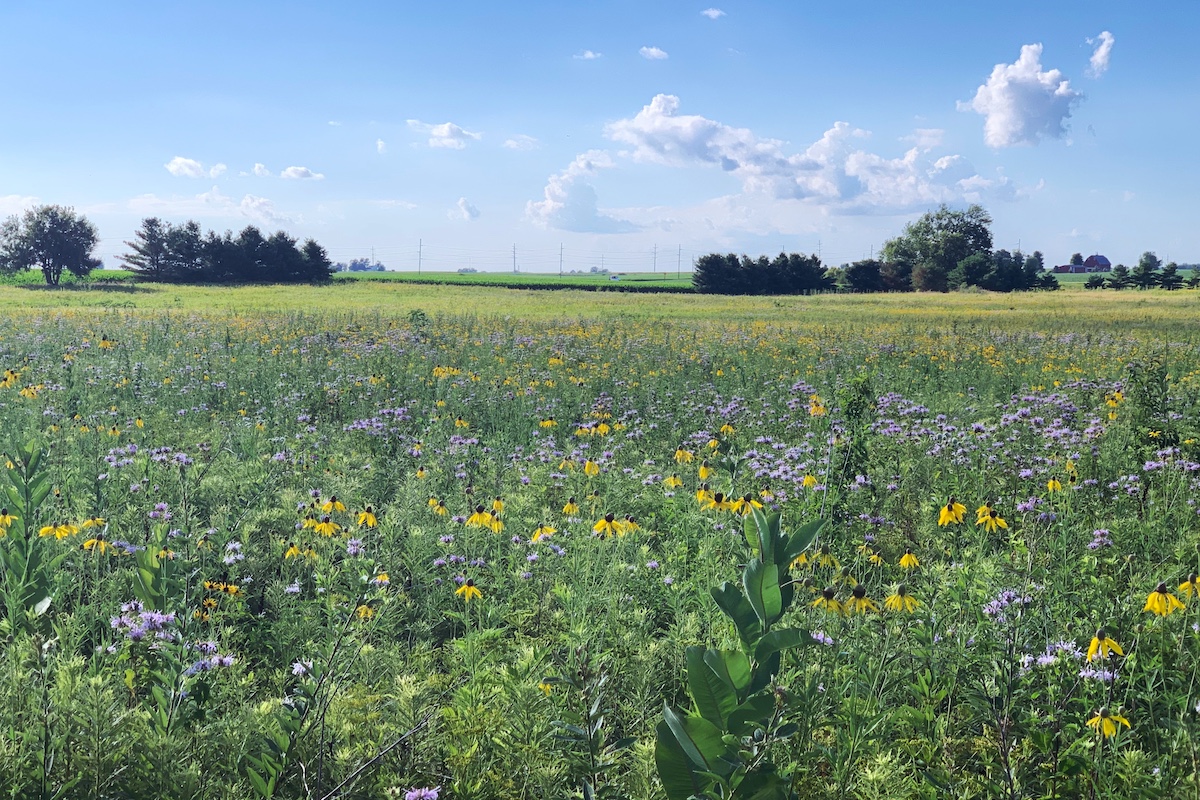
This part of Illinois is home to a unique upland habitat known as hill prairies. With loess soil, and often on south facing slopes, these steep hills contain grasses like such as bluestem and sideoats gramma, as well as interesting forbs like Indian paintbrush, leadplant and hill thistle. Hill prairies support a wide range of wildlife, including deer, monarch butterflies, quail and state threatened ornate box turtles. Healthy hill prairie habitat provides nutrient rich and diverse food sources as well as refuge. Fire is essential to maintain these ecosystems. Prescribed fire is often used to mimic natural fire cycles. It removes accumulated dead litter, maintains fire adapted grass and forbs, combats woody encroachment, can kill invasive species and promotes diversity of native hill prairie species.
“The wildlife response we are seeing in restored grasslands, savannas and hill prairies is tied directly to prescribed fire,” said Emily Hodapp, a private lands biologist for the U.S. Fish and Wildlife Service working in the area. “Returning good fire to the land is a critical component of restoring these fire‑adapted landscapes.”
Woody encroachment and invasive species continue to be one of the most pressing challenges upland habitat faces nationwide. Less than one percent of Illinois’ original prairies is intact, so maintaining these hill prairies corridors is an important step in making sure upland birds such as bobwhite quail continue to have a future on the landscape.
“Pheasants Forever and Quail Forever have been key partners in restoring hill prairie in west central Illinois,” said Hodapp. Much of this work is done through the Illinois Hill Prairie Partnership. “At last count, we have restored or enhanced more than 650 upland acres across private and public lands.”
Work being done through the Illinois Forestry Development Council grant also connects to broader private lands conservation work being done by the USFWS Partners Program and Illinois Department of Natural Resources. With 97 percent of land in Illinois being privately owned, the future of bobwhite and upland habitat in the state depends on the passion and hard work of private landowners. Connecting them with the resources, gear and training they need to implement their own burn strategies means that they not only can keep fire on their own land, but they can also help their neighbors do the same.
“We’re eager to get more fire on the ground in Illinois,” said Shel Wilks, Quail Forever southern Illinois prescribed fire coordinator. “In addition to building knowledge of prescribed fire implementation and the benefits of prescribed fire, and funding our workshops and burn days, this grant has helped our conservation minded landowners get the resources they need to form their own local fire communities and prescribed burn associations.”
While working with individual landowners makes a meaningful impact, helping them organize local prescribed burn associations where landowners can cooperatively implement burning has proven to be an effective, long-term strategy for creating a culture of fire in a community. When neighbors are helping neighbors, they make prescribed fire safer, easier and more economical.
The prescribed burn association concept of neighbors helping neighbors has proven successful in states including Missouri and Nebraska. Pheasants Forever and Quail Forever prescribed fire coordinators (PFC) have often played a large part in facilitating the movement and support for landowners. Here in Illinois, PFQF has two prescribed fire coordinators, Caleb Worley – Northern Illinois PFC, based out of Lasalle County, and Shel Wilks – Southern Illinois PFC, based out of Saint Louis, Missouri, who are actively working with large groups and partners throughout the state to coordinate PBA formation efforts, as well as provide technical assistance through prescribed fire workshops, writing burn plans and coordinating work with PFQF Farm Bill Biologists.
To learn more about prescribed fire in Illinois or to get connected with resources, contact Shel Wilks at swilks@quailforever.org.
Gilbert Randolph writes for Quail Forever, covering bobwhite quail conservation and private land conservation work through the Working Lands for Wildlife Initiative.
Shel Wilks is a Prescribed Fire and Coordinating Wildlife Biologist for Pheasants Forever and Quail Forever in Illinois. She joined the Illinois PFQF team in April 2025 and has been working in conservation and prescribed fire over the last 6 years. Originally from Michigan, she started her career with The Nature Conservancy’s Markham Shkode Prairies, with the opportunity to work with the U.S. Forest Service in Wisconsin and Idaho before coming back to the state where it all began. Since the start of her career, she’s had the opportunity to burn in most of the Midwest states and has goals to burn in all 50 by the end of her career.



Submit a question for the author
Question: Hi, I’d like to have a controlled burn on my 16ac property. Is there someone I could contact? I live in Wayne County close to Flora, IL. Is it performed by the property owner or by trained individuals in the community?