
All photos by Patty Gillespie.

All photos by Patty Gillespie.
“Just wash your face; stop that primping and preening; it’s time to go,” my mother would say. Apparently, she did not think the last 50 strokes of the brush through the hair on my teenage head was necessary. She was probably right. However, in the lives of wildlife, grooming and preening are necessary and time-consumptive.
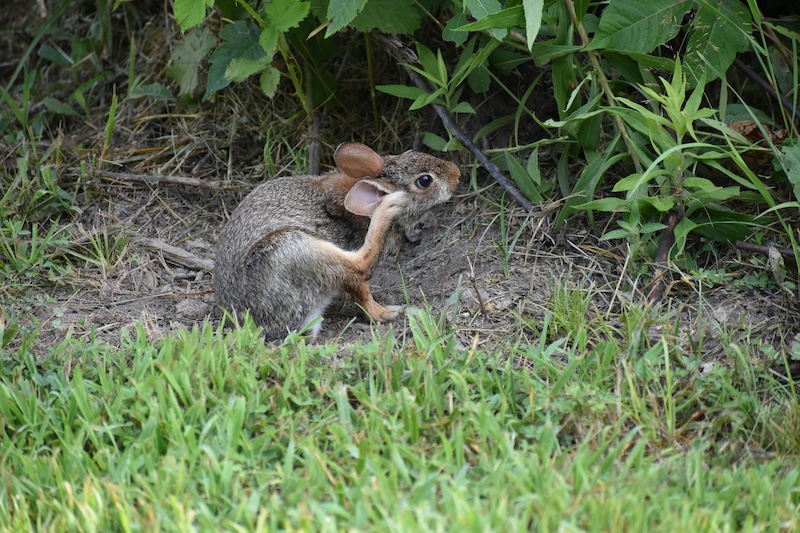
Alleviating oneself of ectoparasites is a significant undertaking. The young rabbit sat on its haunches, raked the claws of its hind paw through its fur, scratching itself like a domestic dog. Tucked within the rabbit’s pelt, irritating its skin, may have been a tick, louse, flea, or fly larvae. The bunny wanted whatever it was gone! Mange, caused by mites, is frequently troublesome in wild fur-bearing animals. Come winter, a groomed thick pelt and cared-for healthy skin increase the likelihood of a mammal’s survival.
A beaver’s two inner toes on its hind feet possess specialized claws that are used to groom its fur, remove lice and distribute oil. The innermost toe’s long double-edged claw clamps down over a long soft lobe forming a coarse comb. The second toe’s claw with a horny growth and sharp upper edge creates a fine comb.
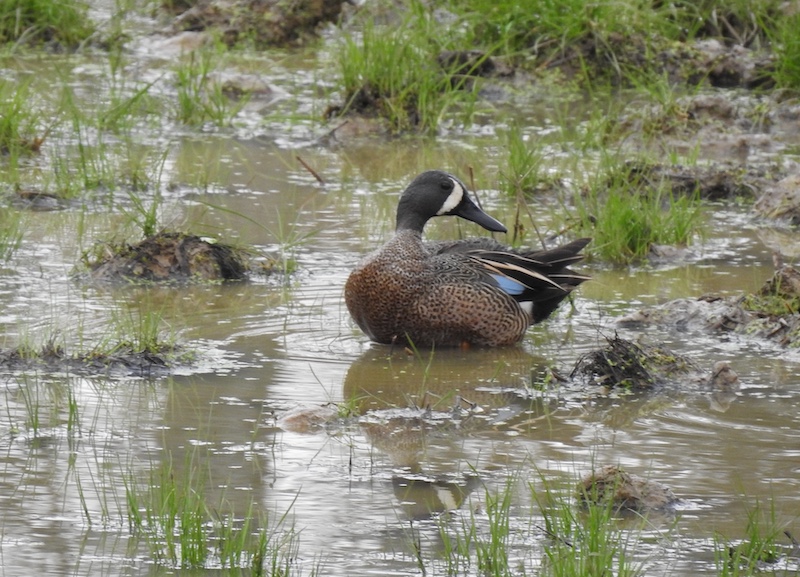
The phrase “like water off a duck’s back” might suggest an ineffectual or futile remark, but if a duck’s attempt to keep water off its back, or any of its feathered parts, is ineffectual, the consequence is death by drowning. Due to its aquatic lifestyle, a duck’s preening serves an important purpose. Near the base of a waterfowl’s tail is the uropygial gland, often called the preen gland, which secretes an oily, waxy substance. A waterfowl will turn its head back, reach toward the gland, and gather this substance on its bill. Like combing pomade into a thick head of hair, the bird combs with its bill and spreads the oily, waxy substance across its outer contour feathers. The resulting water-repellent barrier keeps underlying downy feathers and skin dry and helps the bird remain buoyant.
A person might spot a songbird fluttering at a water feature in a landscaped backyard or splashing within a rainfall-filled puddle or dipping in the shallow water at pond’s edge. Naturally, grooming includes bathing in water. Who doesn’t enjoy the Saturday night bath? Yet, animals can also bathe differently. At the edge of the pasture near our woodland, I spotted a whirlwind or so I thought. What I saw, through binoculars, were eastern wild turkeys positioned on their sides, kicking their legs and flapping their wings and raising a cloud of dust. Dust is abrasive to the protective waxy exoskeletons on mites and lice. A gallinaceous bird employs a preen gland, like waterfowl’s gland; but if a buildup of oil occurs, a dust bath helps. Soil particles bind with the lipids, making little clumps that drop away from the bird’s feathers. After a successful dust bath, body feathers are fluffy and well-separated, which improves insulation in cold weather and airflow in hot weather.
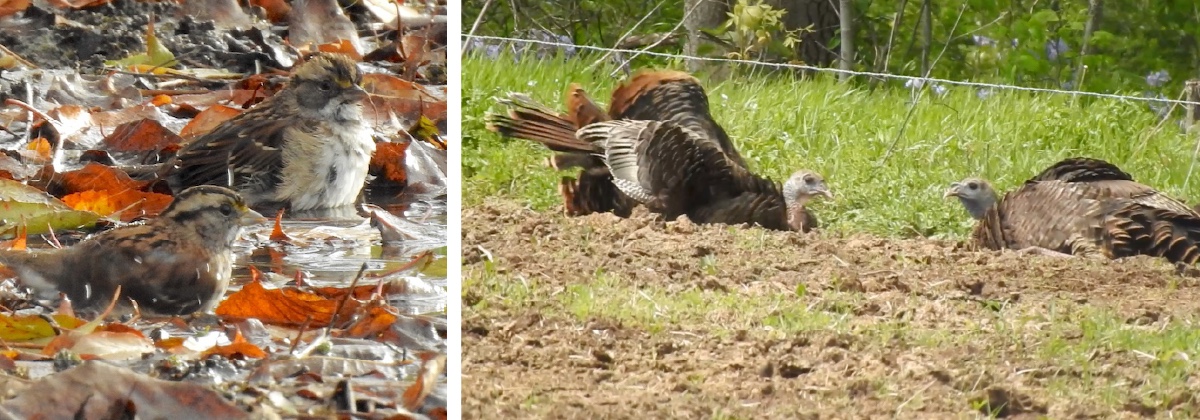
After their dust bath, the turkeys disappeared amongst the undergrowth of our woodland, and I walked across the pasture to investigate. I found basins in the ground which appeared to have been dug by the turkeys. They had scratched the soil with their clawed feet and sturdy beaks. “Micro buffalo wallows,” I thought. I remembered reading in one chapter of Laura Ingall Wilder’s Little House series that the toddler Grace was feared lost but found well and happy within a buffalo wallow. Wallows were depressions caused by generations of buffalo herds repeatedly pawing up the ground and rolling in the loose soil, taking a dust bath. Those wallows, mostly unrecognizable in Illinois now, once colored our prairie landscape.
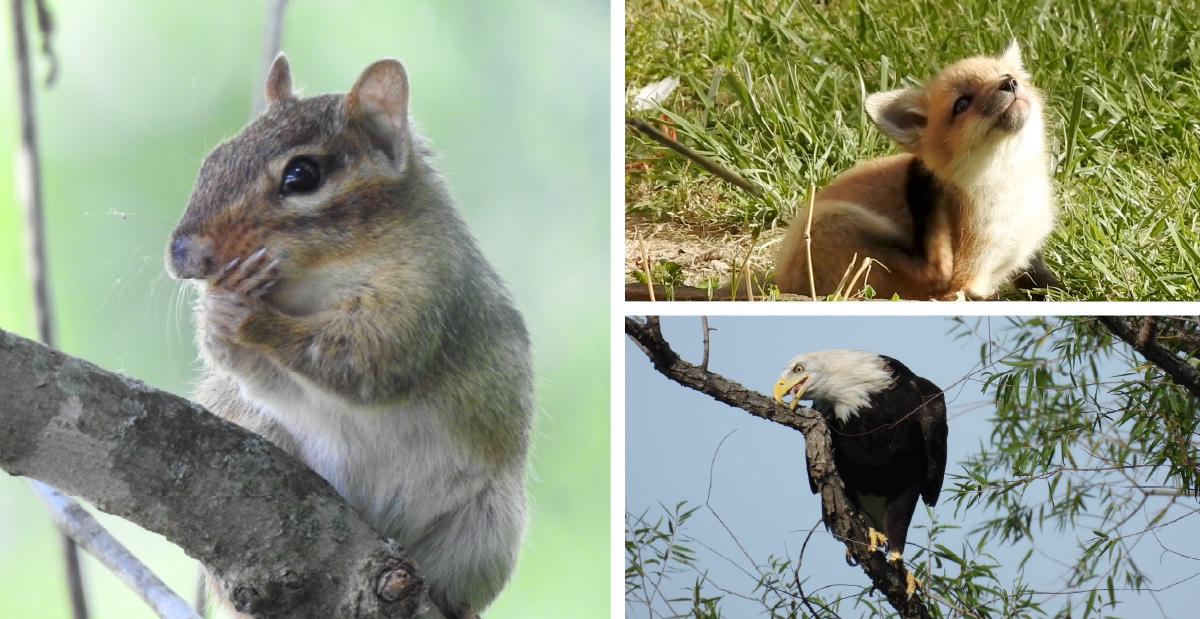
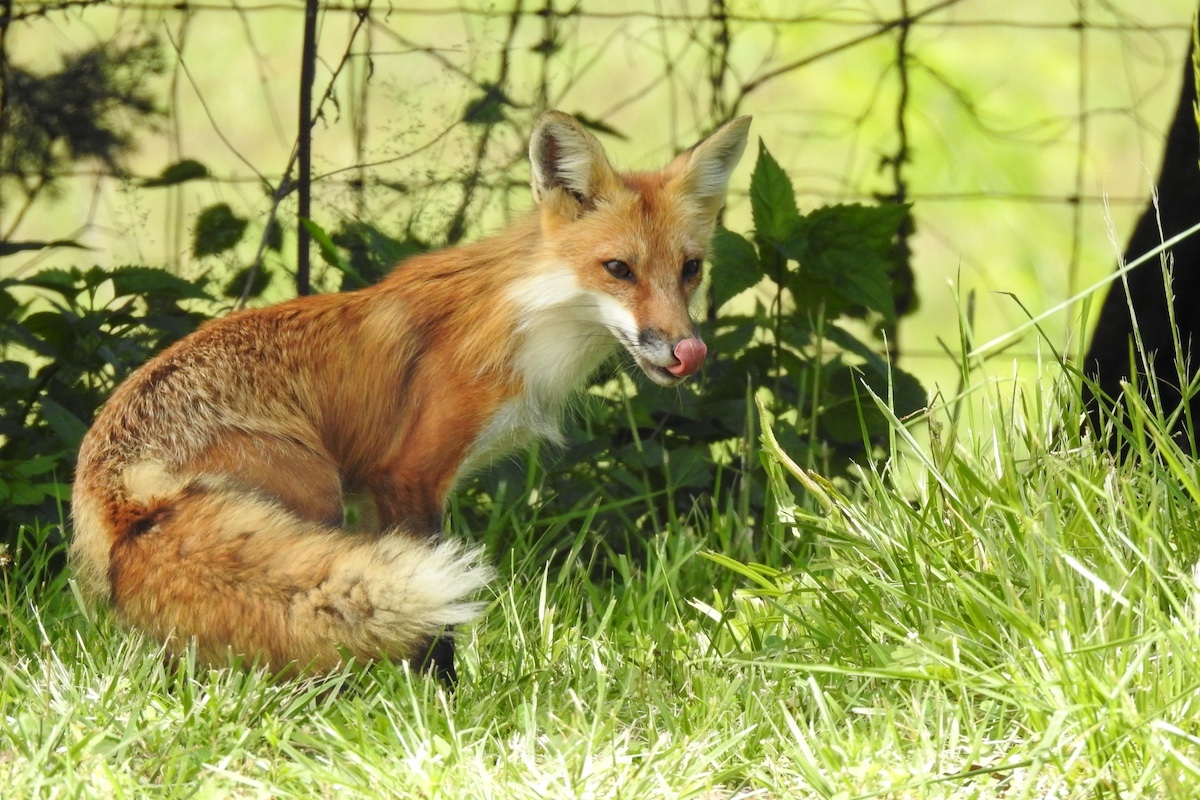
A young red fox emerged from its earthy den beneath the old barn’s floor and shook and scratched its body as if it were trying to dislodge dirt from its fur or to shake off an annoying insect. The watchful mama fox lingered. Not far away, a chipmunk took a spit bath. Yes, literally speaking! It washed itself with its own saliva by licking the pads of its paws and rubbing its wet paws against its nose and face repeatedly. The chipmunk may have been trying to dislodge dirt from off its face, or it may have been washing away a lingering odor from its meal of acorns from the barnyard’s white oak tree. Maybe the mama fox’s licking her nose was an effort to enhance its sense of smell, better to detect the chipmunk by. In a tree at the farm pond, an eagle landed and immediately raked its beak against the limb. Dislodge dirt? Maybe. Improve its olfactory functioning? Not likely. Perhaps that abrasion of the beak removed food particles as brushing one’s teeth does. Maybe the friction between beak and limb files away extra keratin from the rhamphotheca (the hard outer sheath) and serves to maintain the beak’s most beneficial shape.
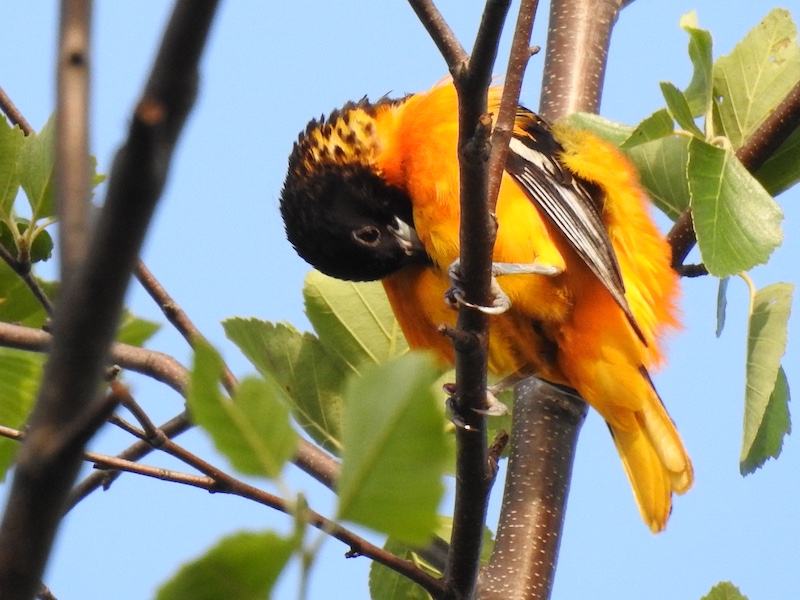
Keeping feather structure sound is important. If an observer catches the sight of a songbird perched on a limb for an extending moment, he or she is likely to witness preening. A bird grasps the feather and tugs gently with its beak, stroking the feather from base to tip. Feathers are complex branched structures composed of a central shaft with interlocking barbs and barbules. Preening seems to restore the feather’s integrity, thereby ensuring a protective coat, an effective flight mechanism and good looks.
Yes, preening or grooming is a time-consuming undertaking in an animal’s life. I might even venture to say that the action of those last 50 strokes of the hairbrush – speaking metaphorically here – contributes significantly to an animal’s well-being.
For years, Patty Gillespie shared her enthusiasm for language and nature and got paid for it at a public school and at a nature center. Now she plays outdoors as often as she can and writes for the sheer joy of it.





Submit a question for the author