
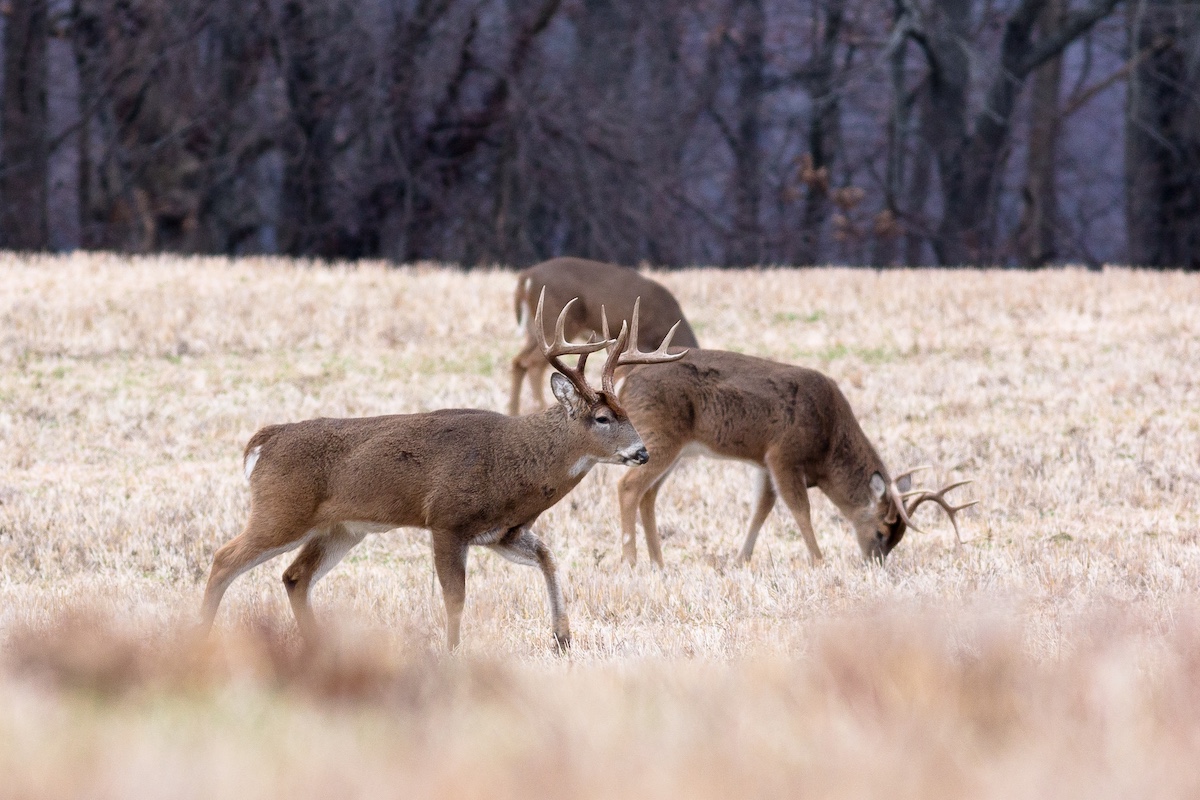
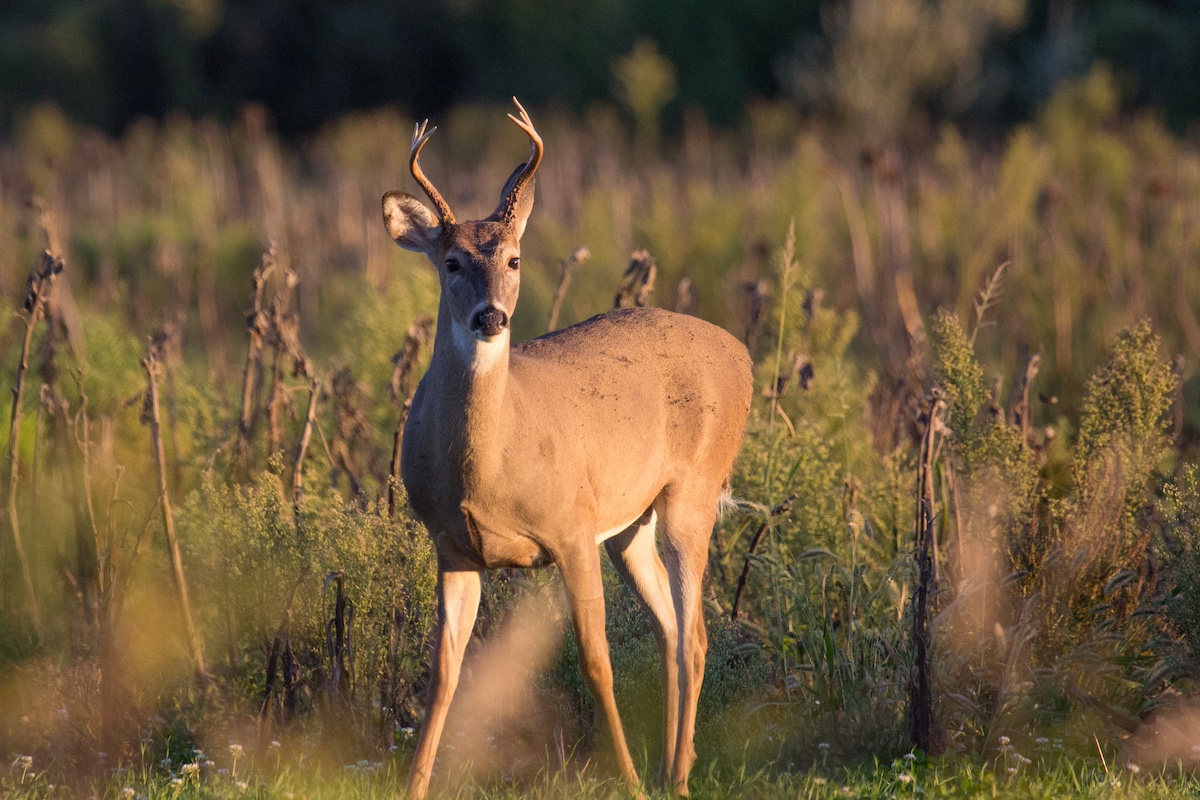
Photo by Stan McTaggart.

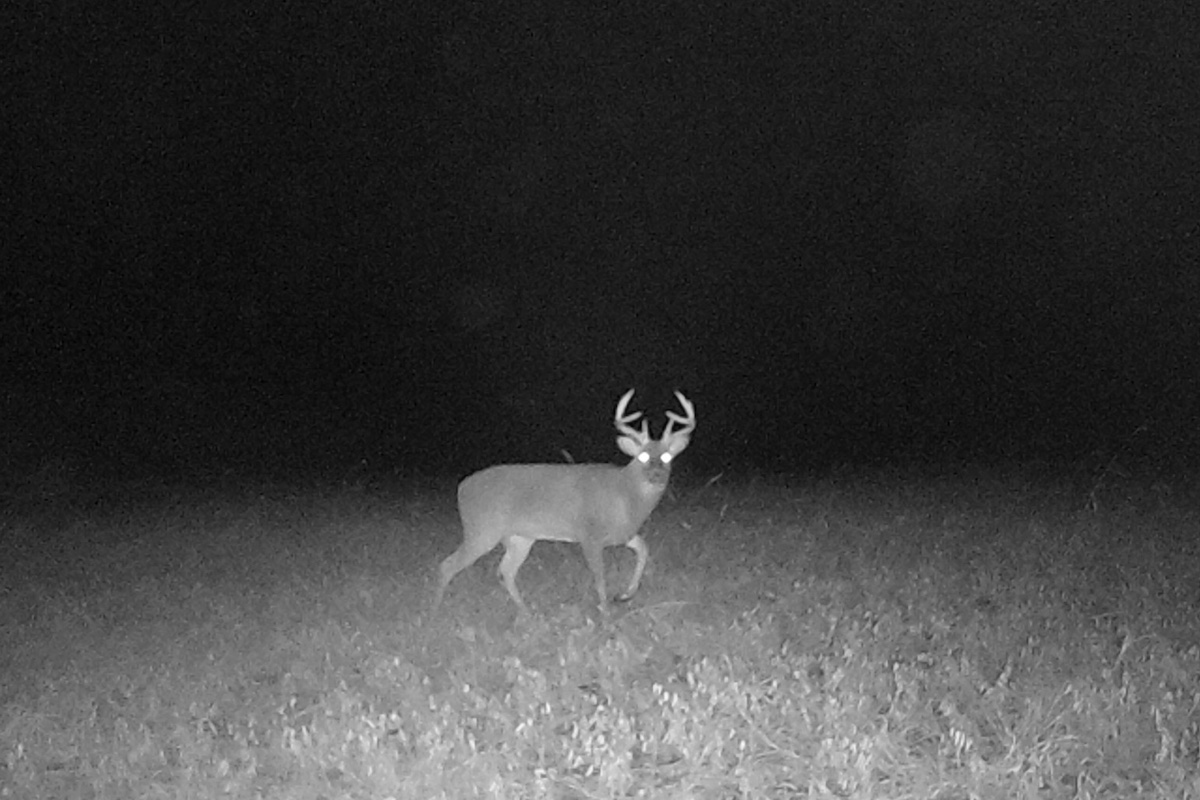
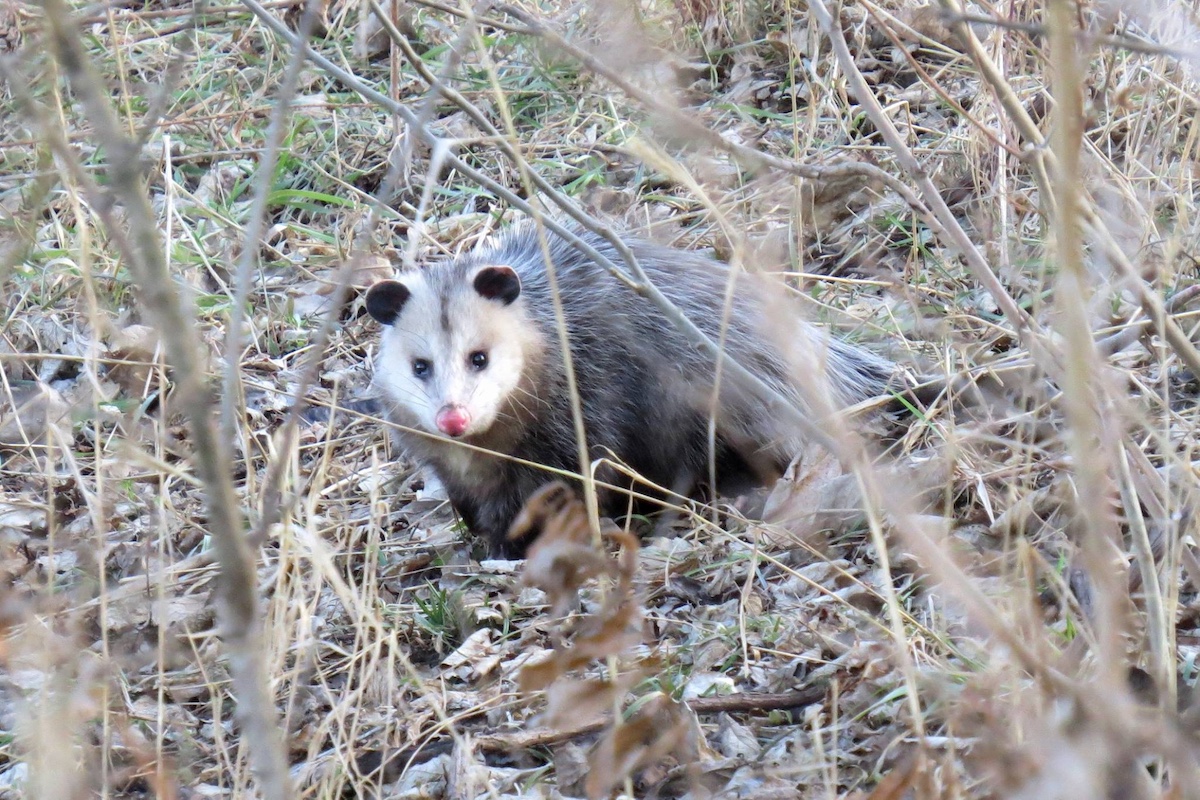
Photo by Stan McTaggart.
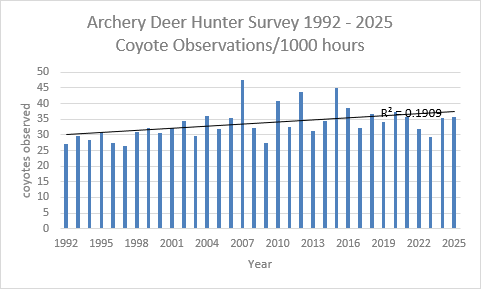
My favorite part about sitting in the woods each fall is the front-row seat it gives me to what is happening in the woods. As daylight starts to creep in, you can feel the woods shift. To the left a rustling of fox squirrels waking up, up ahead a coyote cutting across a field, on the field edge to the right turkeys materializing like they were there all along. It is these quiet moments that keep me coming back. But as a scientist who helps the Illinois Department of Natural Resources (IDNR) understand wildlife populations, I also see those quiet hours for what they are: valuable data.
As an archery deer hunter with two or more permits, know that if you are among the 4,000 hunters selected to participate in the annual observation survey your contributions are valuable and used to aid in decisions on how to best manage Illinois’ wildlife resources.
Archery hunters are found across the state on public and private lands and collectively spend thousands of hours still and alert, watching the wildlife around them. Annually, 4,000 archery deer hunters holding two or more permits are sent an online survey form in advance of the archery deer hunting season. If you share the wildlife you notice through wildlife observation surveys, you can help track everything from turkey broods to bobcats and river otters. That information is used by IDNR to guide habitat work, support research, and improve decisions that affect hunting, conservation funding and the health of the land you love.
Archery hunter surveys from the Illinois Natural History Survey and IDNR are a standardized way to track trends in wildlife. By providing records of what you see (species, number, time, and county) sightings can be compared across the state and years. “Standardized” just means everyone answers roughly the same questions, which is then boiled down to standard metrics of how many of each species is seen on average every 1,000 hours in the woods. That’s what turns a bunch of individual stories into a pattern that have value over time.
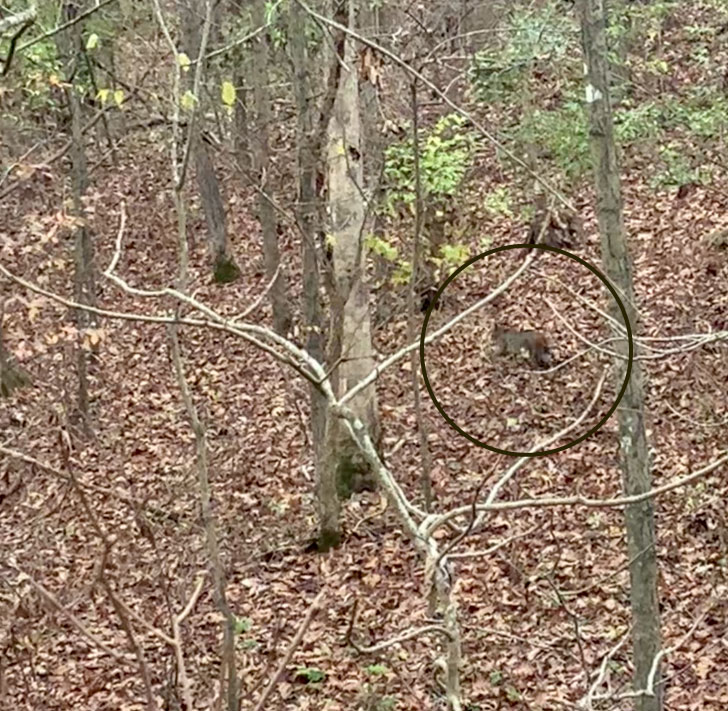
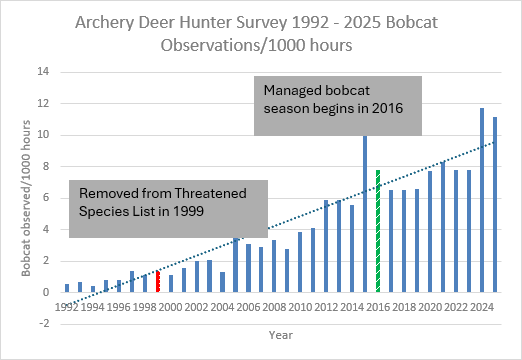
One great example of this how the rates that archery deer hunters have seen bobcats have changed over time. Back in 1992, archery hunters documented an average of 0.5 bobcat observations/1,000 hours across the state. When that is compared to 2023, when archery hunters documented an average of 7.8 bobcat observations/1,000 hours, it is easy to see how bobcats have recolonized the state.
Usually “data collection” reminds people of clipboards and hunter check stations. But in a tree stand, you’ve already done the hard part; you’re out there when most people are sleeping, sitting still long enough for animals to act naturally. A lot of wildlife surveys fail because of the cost of getting staff to spend enough time in enough places. Hunters solve that problem without trying, you’re already out in the private woodlots, public river bottoms, and prairie edges.
The variation that comes from many people collecting data matters in a good way for wildlife because many species are patchy in where they occur. A bobcat can be common in one corner of a county and absent in another, while turkey recruitment might be great where nesting cover is thick and suffer where mowing occurs early. These are data points that can help agencies and researchers understand where species are thriving and where habitat work or campaigns to delay mowing could pay off. A quick observation logged by someone sitting in a tree stand can be the first breadcrumb that a biologist follows up with cameras, field visits, or targeted studies.
When you hear “survey,” you might picture a big complex process, we have all been there. But we try to make these surveys as easy as possible. All that really matters to us is what county you hunted, whether it was morning or evening, how long you were out, and what you saw. That’s it.
These archery hunter surveys help us fill the gaps in the other data we collect, including research projects at universities, spotlight surveys, roadkill surveys, and camera trap monitoring. That’s especially important for turkeys and furbearers—species that shape what the woods and fields feel like year to year. If sightings increase or decrease in a cluster of counties or across multiple types of surveys, that can reflect real population changes. You can also help with giving early-warnings rather than something not getting attention until it’s too late like invasive species. When feral hog sightings occur, it is important to know about them as early as possible to limit their impacts on crops and native habitats.
The most common worry about participating is: “I don’t want people to know where my spot is.” The good news is that we only collect data at the county level, not the specific location of your property or tree stand. We would like to develop an app someday with more accurate locations to link observations more directly to habitat (quantity and quality), but if that ever happened we would use the same privacy measures we use to protect your identity and the patch of woods you hunt wouldn’t be shared publicly. Our goal is to see trends in space and time to help manage our wildlife.
Another major concern is that “my one report won’t matter.” On its own, it won’t; but that’s not how this works. The power of archery hunter surveys is in accumulation. One stand on one morning with one note about a gray fox doesn’t add much to our knowledge. But add that to thousands of other sits across the state, and suddenly we can see what’s changing and where.
Standardized questions create comparable answers, and repeated effort over time is worth more than gold in managing wildlife. In order to remember what you saw for these surveys, it is good to create a routine. After the sit, log how long you were out and what you saw. And don’t underestimate the value of zero. A sit with no sightings is still data because it’s tied to effort. Without these “boring” entries, the exciting ones are harder to interpret. Observations from people who sit for long stretches of time outside are one of the ways to keep a finger on the pulse of wildlife trends.
This is particularly important in Illinois, where the state’s wildlife story is often one of comeback and adaptation. River otters have expanded since being reintroduced to the state, while bald eagles and ospreys have recovered and become more common along waterways. When hunters contribute clean, consistent observation data, you’re not just helping scientists but making your observations part of the evidence that shapes decisions and helping people value hunters more. The extra data point you provide does make a difference in managing wildlife resources, determining what research is warranted and what additional surveys are necessary.
The next time you settle into your stand, pay attention to how much is happening beyond the deer trail. While you’re at it, keep private notes on which stands you hunt, rut activity you observe, and weather patterns such as temperature, barometric pressure, wind direction and speed, moon phase and precipitation. Over time, you will learn more about the areas you hunt and way wildlife use them and react to the season and weather. It will make you a better and more observant hunter, and participating in these surveys is a simple way to turn something you love into something that protects the land and the wildlife that live there.
Max Allen is a carnivore ecologist with the Illinois Natural History Survey, whose research focuses on carnivore ecology, behavior, and conservation.


Submit a question for the author