Photo courtesy of the Christopher Evans.

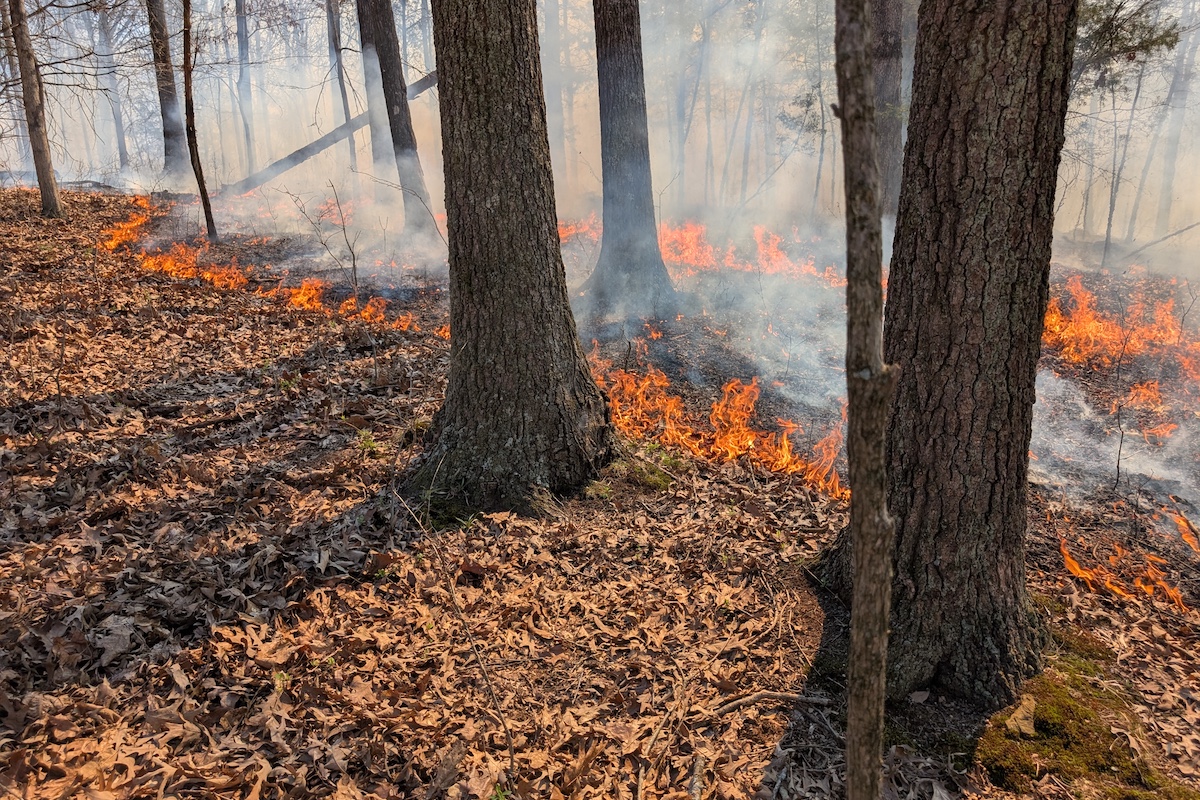
Photo courtesy of the Christopher Evans.
Fire has been a part of the Illinois landscape for thousands of years. Cultural burning and occasional wildfires maintained a mosaic of prairies, savannas, woodlands and forests. Frequent burning favors certain tree species, such as oaks, that have thick, fire-resistant bark and can sprout again after fire. Fires created open, parklike forests and woodlands in Illinois that were dominated by oaks, had widely spaced trees, and had a rich understory of plants.
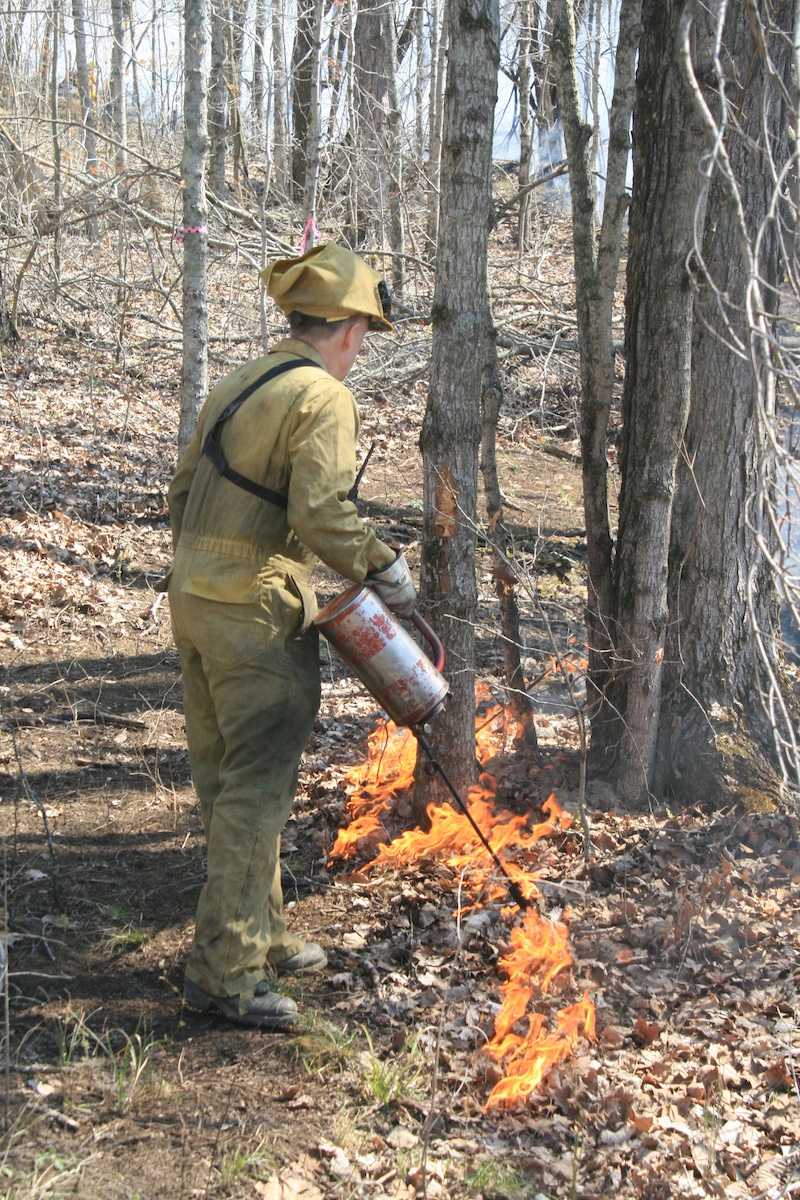
Starting in the early 20th century, fire all but disappeared from the landscape in Illinois. Few fires were being intentionally set, wildfires were aggressively suppressed, and the fragmented landscape limited spread of any fire. This led to big changes for our woodlands that we still see today. Trees began to grow in higher densities, creating a more closed canopy. Fire sensitive trees, such as sugar maple, basswood, or beech, previously limited to areas sheltered from frequent fire, were able to proliferate. The closed canopy forest limited the growth of many grasses and forbs in the heavy shade. Often, the ground of a closed forest is covered in a deep layer of leaves, poison ivy and seedlings from shade tolerant trees. Oaks, while still abundant in the canopy of many forests in Illinois, do not have enough light to successfully establish seedings in many forests.
We are seeing this trend throughout Illinois. According to data collected by the Forest Service’s Forest Inventory and Analysis Program, white oak, black oak, and red oak are all declining in Illinois as losses of these species through death and harvest are far exceeding new growth, but growth of species, like sugar maple and hackberry, is nearly double their losses.
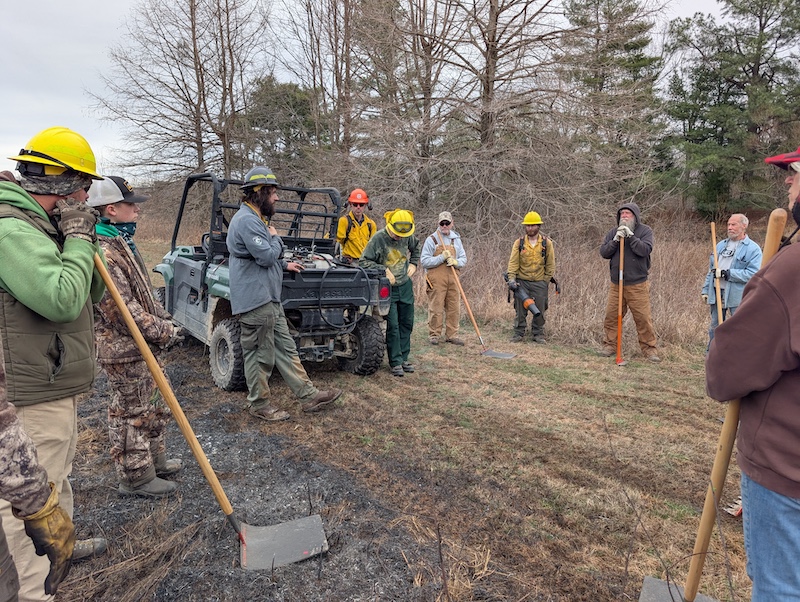
Foresters, biologists and landowners are now using prescribed burning as a tool to reverse these trends. Prescribed burning is the intentional application of fire in a planned, managed manner used to achieve certain objectives. In a forest or woodland setting, objectives for using fire usually include reducing tree density, promoting native plants, reducing the prevalence of invasive species, improving wildlife habitat and enhancing oak regeneration. Prescribed burn managers use a detailed burn plan, have a trained crew to implement the burn, and install fire breaks to confine the burn to the intended burn unit. Prescribed fire is typically conducted in the fall or spring, when the weather conditions are usually better for burning.
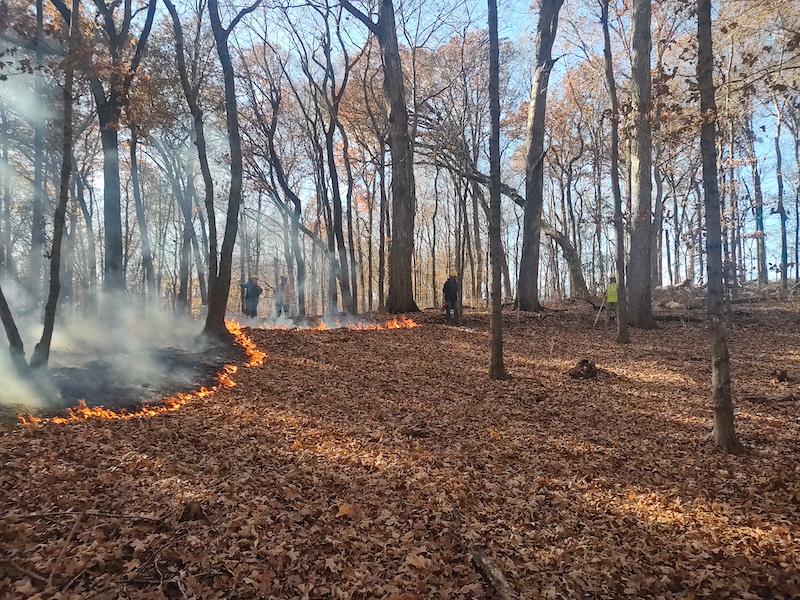
Prescribed fire in forests and woodlands is very different than grassland burns or western wildfires. Flames are typically short (usually less than 1 foot tall) and the fire moves slowly. Escapes are rare and, when they do occur, are often small in size and easily contained. Most often fire breaks are either pre-existing structures, such as roads, trails or streams, or lines of bare ground created by using a leaf blower.
While some landowners can be alarmed at how their forest looks immediately following a fire, the forest is not destroyed, it is actually rejuvenated. Fire will reduce the depth of the leaf litter, which improves conditions for seeds to germinate. It often takes multiple burns to start seeing significant structural changes in woodlands.
Small seedlings, even oaks, are often top-killed by fire. While most tree seedlings will sprout after one burn, we start seeing a separation between fire tolerant species, like oak, and fire sensitive species, like maple, when a site is burned three to four times. Oak seedlings have a high probability of survival even after repeated fires, but maples and other fire sensitive species do not. As the density of trees are reduced through repeated fires, it allows more light to reach the forest floor, allowing oak seedlings, grasses and wildflowers to survive.
These structural changes can benefit wildlife as well. Deer, turkey, squirrel and hosts of other animals utilize acorns as a major food source. The increased grasses and forbs in the forest understory that results from burning provides nesting cover for turkey and increases seeds and attracts insects for foraging.
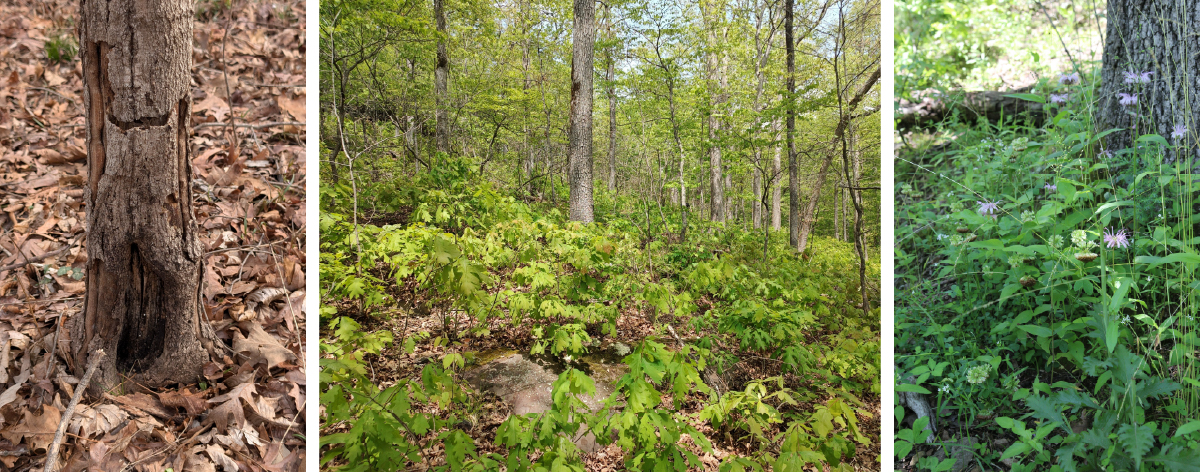
Fire is also being used to manage high-quality natural forests and woodlands and rare species. Fire is an approved and commonly applied management tool in Illinois Nature Preserves and Land and Water Reserves.
Prescribed fire is applied differently, depending on the forest type and the condition it is in. Oftentimes, more fire is needed initially to facilitate those structural changes. After that, less frequent fire may be needed to maintain an ecosystem. Drier sites, like open woodlands, may need to be burned more than wetter sites, like a floodplain forest. Fire on the landscape was a gradient historically and the use of prescribed fire should imitate that gradient.
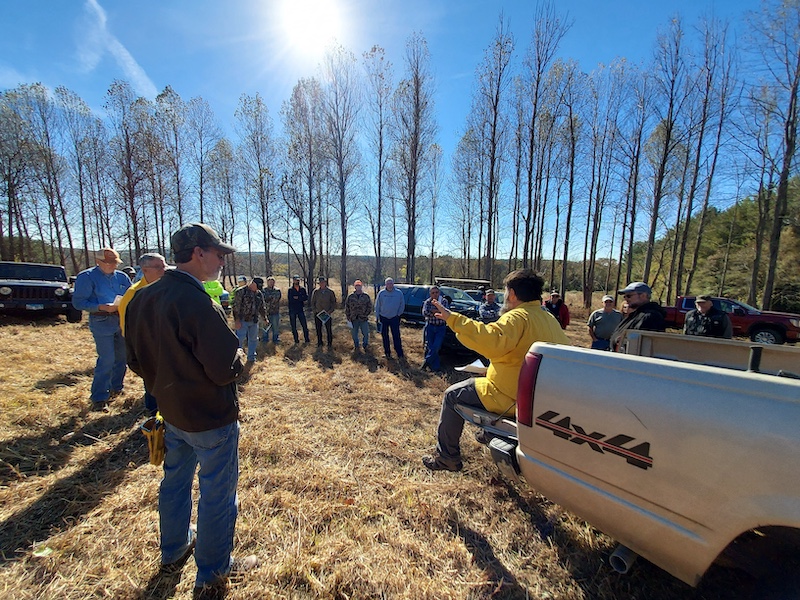
Numerous programs and structures are in place in Illinois to support the use of prescribed fire. The Illinois Prescribed Burning Act (525 ILCS 37/1) establishes prescribed burning as a land management tool and authorizes and promotes its continued use. Illinois has a prescribed fire council that promotes the safe and continued use of fire as a management tool and tracks the use of prescribed fire in Illinois. The Illinois Department of Natural Resources Division of Forestry Administers the Illinois Certified Prescribed Burn Manager Program. The University of Illinois Extension Forestry Program regularly hosts prescribed fire training events. Several prescribed burn associations (PBAs) are in place to facilitate burning on private lands. Fire is regularly included as a recommended practice in Forest Stewardship Plans.
In forests and woodlands that use fire as a management tool we are seeing healthier habitats, better structure and more native species. Fire will continue to grow as a management tool on both public and private lands.
Chris Evans is an Extension Forestry and Research Specialist with the University of Illinois. A focus of his research and extension activities is invasive species management and forest health. Evans is currently a board member for the Midwest Invasive Plant Network, president of the southern chapter of the Illinois Native Society and a former board member of the North American Invasive Species Management Association and the National Association of Exotic Pest Plant Councils.





Submit a question for the author