



Photo by National Archives and Records Administration, Public domain, via Wikimedia Commons.

Photo by National Archives and Records Administration, Public domain, via Wikimedia Commons.
Spend enough time around the big rivers of Illinois and eventually you begin to understand that they have always been working rivers. We sometimes look at them now primarily through the lens of recreation—a place to launch a boat, set out decoys, chase catfish or simply sit along the bank and watch the water roll past—but for generations, Illinois rivers were also places where people went to work. Among those workers were commercial fishermen, men and women who understood that beneath all that muddy water was something considerably more practical than scenery. There was food down there, and if you knew the river well enough and were willing to work hard enough, there was a living to be made bringing that food ashore.
That living has become considerably harder to find.
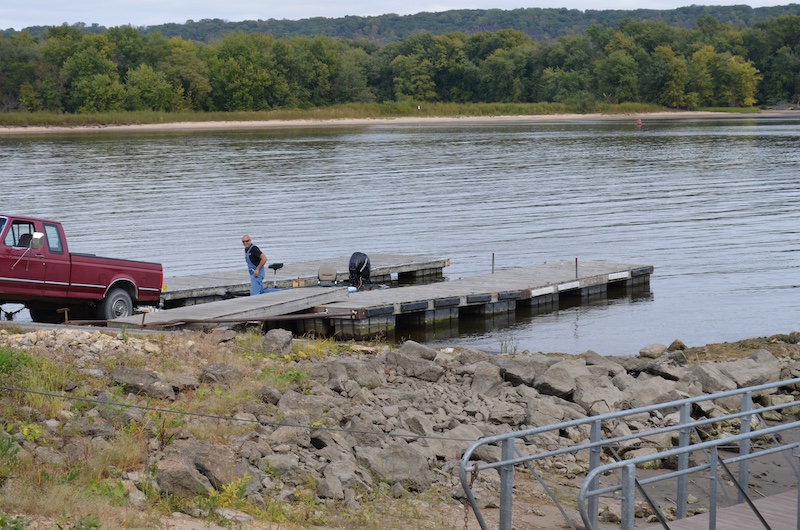
Illinois Department of Natural Resources (IDNR) records show just how dramatically the profession has changed. The number of commercial fishing licenses sold in Illinois declined by more than 50 percent during the four decades leading into the early 2020s. In 1950, Illinois had 229 full-time commercial fishermen. By 1985, only 70 remained, and by 2020 the number had dropped to approximately 30. Interestingly, that decline in fishermen did not produce a corresponding decline in pounds of fish harvested. Bigger boats, larger motors, mechanical net pullers and the ability to cover considerably more water have allowed fewer fishermen to harvest substantial quantities of fish. The arrival of invasive carp in Illinois waters, and the development of commercial harvest as one tool for controlling them, also changed the equation.
In other words, we haven’t necessarily run out of fish. We have been running out of fishermen.
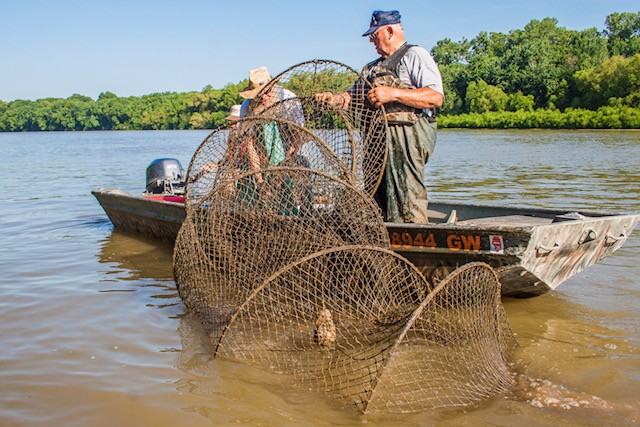
That distinction matters. Commercial fishing was once woven into the culture of river communities in much the same way small farming was woven into rural communities away from the river. Skills, equipment and fishing grounds often passed from one generation to the next. A fisherman knew not simply how to set a hoop net or seine, but how water level, current, season and temperature affected where fish would be. That sort of knowledge does not arrive in a box with a new boat motor. It is learned through years on the water, often standing beside someone who learned it from the generation before.
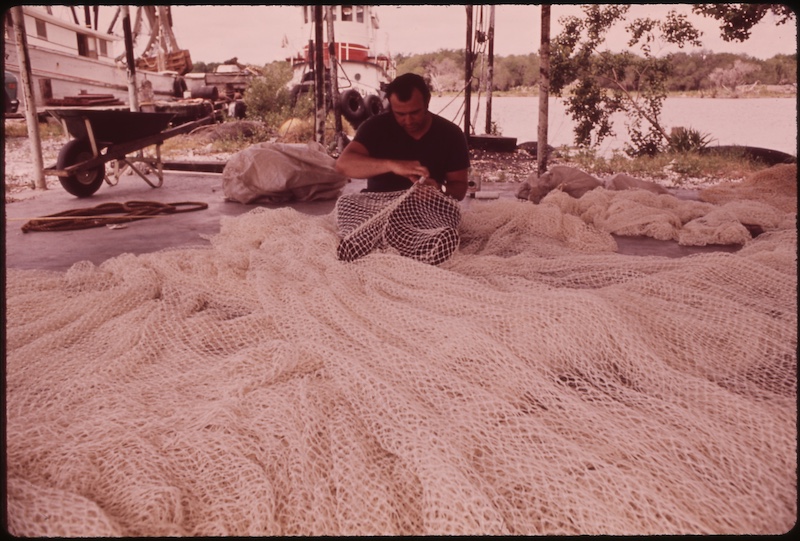
The scale of the business has changed as well. Historically, a commercial fisherman might work from a relatively small boat with a small motor, several nets and perhaps 10 miles of river. Today’s successful operations may use substantially larger boats, more powerful motors and enough gear to work an entire river pool or roughly 40 miles of water. It is the aquatic equivalent of what happened to agriculture: fewer operators, larger operations and more expensive equipment required to produce enough volume to remain economically viable.
That last part may be the biggest clue to why the number of fishermen keeps shrinking. IDNR has noted that equipment, fuel and harvesting costs have risen while the average wholesale price paid for fish has remained relatively stable since about 1980. There is only so much romance to be found in working a river before somebody has to pay the fuel bill.
That makes recruiting the next generation difficult. A young person contemplating commercial fishing isn’t simply deciding whether he or she loves the river. That person is deciding whether a boat, motor, nets, fuel, ice, transportation, licenses, processing arrangements and long days in every imaginable kind of weather can eventually produce a reasonable living. For many, the arithmetic simply hasn’t been persuasive.
A look backward gives some perspective. An OutdoorIllinois article published in 2005 reported that more than 7 million pounds of commercial fish were being harvested annually in Illinois at the time, with an estimated value of $1.6 million. Buffalo accounted for nearly half the catch, with common carp, invasive carp and freshwater drum making up much of the remainder. Buffalo in particular illustrates something easily forgotten in discussions about commercial fishing: without commercial fishermen, many traditional river fish simply do not have a practical route from the water to the dinner table.
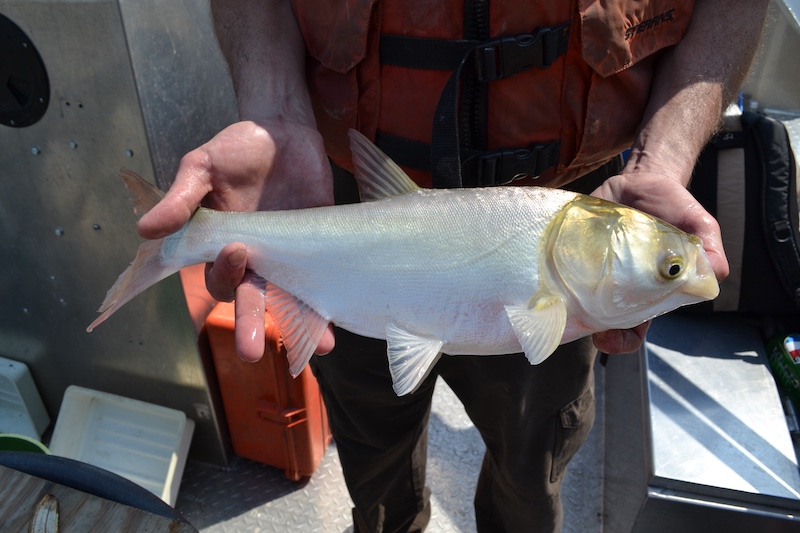
The fishery has continued to evolve. Buffalo and channel catfish remain important native commercial species, while the carp portion of the harvest has shifted dramatically. By 2007, invasive carp had become the most harvested fish from Illinois rivers. What began as an ecological problem also created a commercial opportunity, and removal by commercial fishermen became an important component of efforts to reduce invasive carp abundance.
Illinois even tried something decidedly modern with a decidedly old occupation: marketing.
The introduction of the name Copi for invasive carp intended for human consumption was an effort to change the way consumers viewed an abundant, nutritious fish that suffered from one considerable marketing problem—the word “carp.” Whatever one thinks of the name, the effort raises a much larger question worth asking.
What if the future of Illinois commercial fishing depends not simply on catching more fish, but on finding better ways to sell the fish already being caught?
Something interesting has happened in American food culture while the number of commercial fishermen has been declining. Consumers have become increasingly interested in local food. Farmers markets have expanded, restaurants advertise the farms supplying their vegetables and meats, community-supported agriculture programs have connected customers directly with producers, and phrases such as “locally grown” and “farm-to-table” have become selling points rather than curiosities.
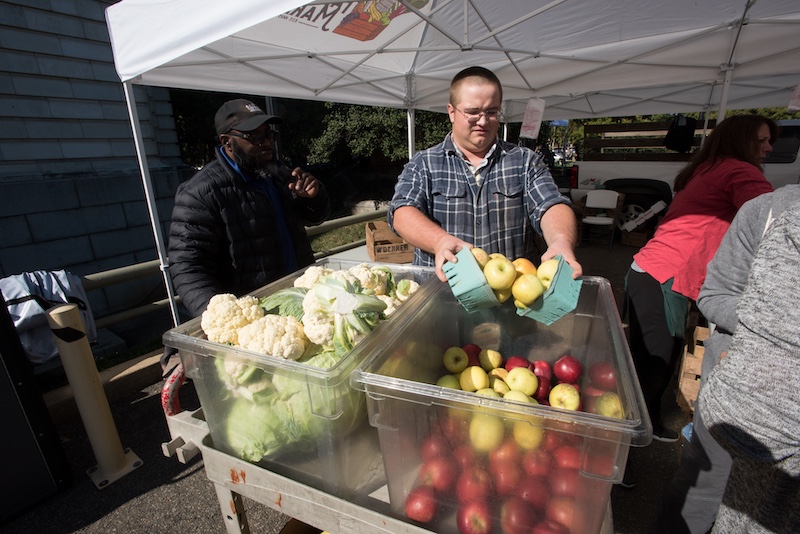
Illinois numbers demonstrate that the interest is more than fashionable language. According to USDA’s 2022 Census of Agriculture, 2,674 Illinois farms sold food directly to consumers, generating $53 million in sales—an increase of nearly 20 percent from 2017.
We have become accustomed to asking where the tomatoes were grown, who raised the beef and whether the eggs came from a nearby farm. Yet here in a state bordered and crossed by some of the nation’s great rivers, we rarely extend that same curiosity to fish.
Perhaps we should.
There is something wonderfully straightforward about the idea of Illinois river fish becoming part of the Illinois local-food movement. A restaurant advertising locally raised beef can also tell customers that tonight’s fish came from an Illinois river. A food cooperative selling locally produced eggs, cheese and vegetables could potentially include properly processed wild-caught fish. Regional food hubs that already connect producers with restaurants, retailers and institutions offer another model worth examining.
It isn’t as simple as putting a tub of buffalo next to the sweet corn at Saturday’s farmers market. Fish handling, processing, refrigeration, transportation, licensing and food-safety requirements are real, and they should be. Building a local market would require processors, regulators, commercial fishermen, chefs and buyers to work together to create a reliable chain from river to plate.
But Illinois is already having remarkably similar conversations about other locally produced foods. University of Illinois Extension’s Illinois Food Systems Hub, for example, focuses specifically on strengthening the middle of the supply chain—the infrastructure and relationships connecting producers with markets. It identifies opportunities involving farmers markets, food aggregators, institutional purchasers and other regional buyers. The framework already exists. The interesting question is whether wild-caught Illinois fish could occupy a larger place within it.
There is another obstacle, and this one may be sitting between our ears rather than beneath the water.
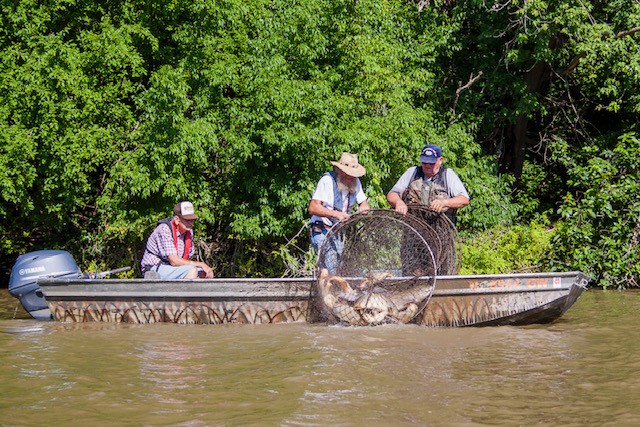
Many consumers simply don’t know what to do with buffalo, freshwater drum or invasive carp. Some have never tasted them. Others inherited the notion that certain river fish are somehow inferior simply because they aren’t walleye, crappie or another familiar game species. Yet food fashions are funny things. We now happily pay premium prices for foods our grandparents gathered from fence rows and creek bottoms for free.
Anyone who has watched morel season in southern Illinois knows perfectly well what good marketing can do for something that grows wild in the woods.
Maybe river fish deserve the same reconsideration.
That could mean chef demonstrations, recipes, tasting events, better consumer education and partnerships among commercial fishermen, processors and restaurants. Instead of selling only pounds of fish, we could be selling the story behind those fish: wild-caught in Illinois, harvested by Illinois fishermen, supporting river communities and, in the case of invasive carp, helping remove an unwanted species from the ecosystem.
Suddenly “rough fish” doesn’t sound quite so rough.
There is another reason to care whether the number of commercial fishermen continues to decline. Since 1950, commercial fishermen have consistently submitted harvest information to IDNR. Those reports provide biologists with long-term data used to understand Illinois river fisheries and help manage them for commercial and recreational users alike. Commercial fishermen are not simply extracting fish from the system; they have also served as eyes, ears and data collectors on waters most of us experience only occasionally.
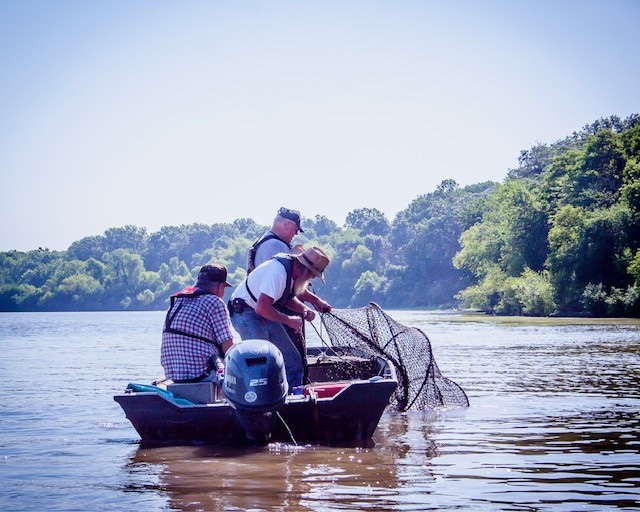
Losing commercial fishermen therefore means potentially losing something harder to measure than license sales. We lose accumulated knowledge about rivers, fish movement and changing conditions. We lose another set of experienced observers on the water, and once a generation fails to pass that knowledge along, rebuilding it becomes considerably harder.
I don’t expect Illinois to return to 229 full-time commercial fishermen, nor am I convinced that should be the goal. Rivers, markets, equipment and consumer habits have changed too much. The better question may be whether commercial fishing can evolve again, this time by becoming more closely connected to the growing market for food that is local, identifiable and tied to a particular place.
Here in southern Illinois, we spend a great deal of time talking about reconnecting people with the land. Perhaps we should remember the water, too. The Mississippi, Illinois, Ohio, Wabash and Kaskaskia rivers and their tributaries aren’t merely lines on a map or places where we go fishing on Saturday morning. They are living systems that have fed Illinois communities for generations.
Somewhere between the fisherman pulling a net before daylight and the family wondering what to put on the supper table is a market we have largely forgotten how to use.
Maybe rebuilding commercial fishing doesn’t begin with another net.
Maybe it begins with dinner.
Illinois Department of Natural Resources. Tripp, Sara. “Illinois Commercial Fishing Trends.” OutdoorIllinois Journal. Reports a greater than 50 percent decline in Illinois commercial fishing licenses over approximately 40 years; 229 full-time commercial fishermen in 1950, 70 in 1985 and 30 in 2020; changes in equipment, fishing range, harvest and invasive carp; and the role of commercial harvest reports in fisheries management.
Illinois Department of Natural Resources. “Roughing It (Commercial Fishing).” OutdoorIllinois, March 2005. Historical discussion of the Illinois commercial fishery, including annual harvest exceeding 7 million pounds at that time, estimated value of $1.6 million and the importance of buffalo in the commercial catch.
U.S. Department of Agriculture, National Agricultural Statistics Service. 2022 Census of Agriculture: Illinois State and County Data and Illinois Census of Agriculture news release, 2024. Reports 2,674 Illinois farms making direct-to-consumer sales totaling $53 million in 2022, with the value of those sales increasing 19.6 percent from 2017.
University of Illinois Extension. “Illinois Food Systems Hub: From Field to Market—Strengthening Illinois Food Systems.” Current Illinois Extension resources concerning development of local and regional food supply chains, market access, infrastructure, institutional purchasing, food hubs and producer-to-market connections.
Illinois Department of Natural Resources. OutdoorIllinois Journal. “Illinois Department of Conservation Perspective, 1950–1981: Part 2.” Historical perspective on Illinois commercial fisheries, including the commercial Lake Michigan fishery and changes in the number of licensed commercial fishermen and commercial vessels.
Illinois Department of Natural Resources. OutdoorIllinois Journal. “A Century of Fishing in Illinois.” Historical overview of Illinois fishing, licensing and fisheries management.
Gretchen Steele hails from Coulterville. Steele is a freelance outdoor communicator. Her award-winning work appears as a regular columnist and contributing feature writer for Illinois Outdoor News and several Illinois newspapers. She enjoys spending her time afield as a volunteer for the Illinois Department of Natural Resources, Delta Waterfowl Foundation, Retrievers Unlimited, and various other conservation organizations. Steele is a member of the Illinois Conservation Federation Outdoor Hall of Fame. She is the Past President of Missouri Outdoor Communicators and remains an active member. Steele is a current and active member and formerly served on the Board of Directors with Association of Great Lakes Outdoor Writers.





Submit a question for the author