
All photos by Dan Stephens.

All photos by Dan Stephens.
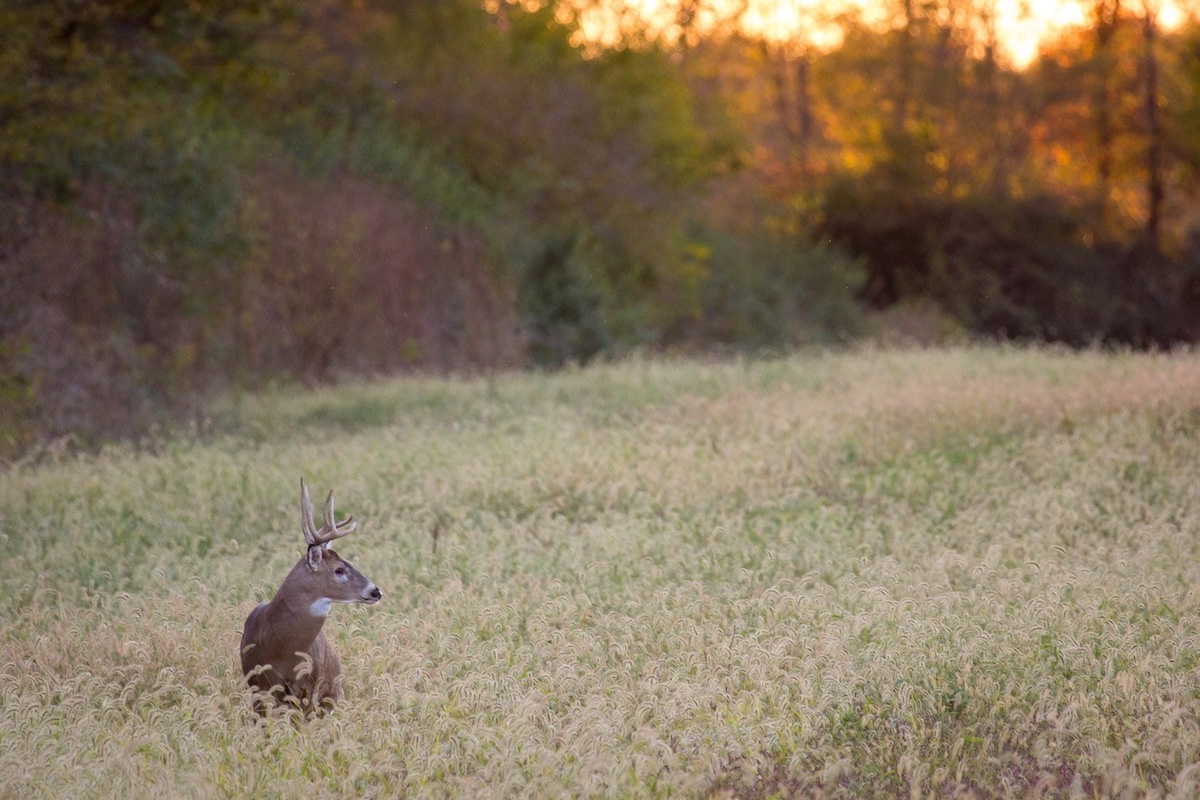
By November, an Illinois bowhunter’s world is changing fast. Combines have harvested and opened fields that hid deer a week earlier. Leaves are falling quickly, sight lines are lengthening and the buck that visited your camera may suddenly vanish.
One stand rarely covers that whole stretch. Success comes from following the changes in breeding activity, food, deer behavior and hunting pressure.
Early November is the time to trade a buck’s old feeding pattern for the places he might find a doe. As breeding approaches, bucks expand their movements, checking doe groups and traveling between pockets of cover. That creates opportunities along creek crossings, narrow timber strips, brushy fence lines and saddles that funnel movement within bow range.
Start with doe bedding areas and work outward. A trail connecting two bedding pockets can be more valuable than the biggest scrape on the property. Scrapes advertise activity, but much of that activity can occur well after dark.
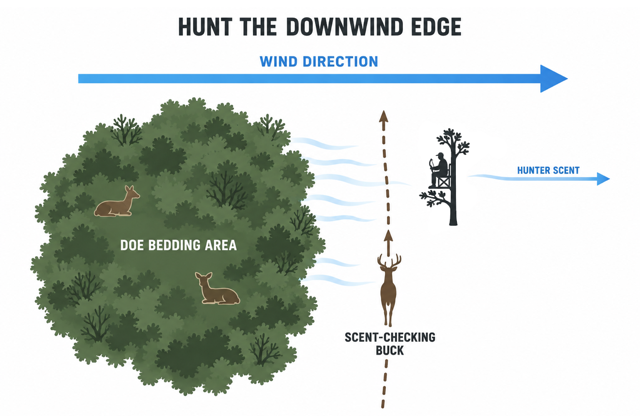
You don’t always have to find connecting trails between doe bedding areas. Personally, I prefer to position myself along a trail/corridor that is downwind of an often-used doe bedding area. Biologically, it makes sense. As bucks begin to scent-check does for breeding readiness (estrous), they will skirt the down-wind side of the bedding area completely out of sight from the does. This allows the buck to scent-check every doe in that area without ever disturbing them or even letting them know that he is there. If no does are in estrous, he will move onto the next bedding area and continue his search.
Morning hunts become more attractive when you can reach an interior travel route without crossing feeding deer. Don’t shy away from that midday hunt. Remember, bucks want to scent-check these bedding areas when does are present. When is that? Often later in the morning through the middle of the day.
Illinois breeding generally peaks around mid-November. Shortening day length drives the reproductive cycle. Warm weather may change what you see from the stand, but it does not postpone the rut until the next cold front.
Seeking and chasing can make bucks active, yet peak breeding sometimes produces quiet woods. A buck attending a receptive doe may remain close to her, for up to 24 to 36 hours, rather than cruise past several stands. That familiar “lockdown” is uneven across the landscape, not a statewide shutdown.
Stay near occupied doe cover and the routes connecting it. A funnel can still produce activity when one buck is tied up with a doe and another buck is searching. Give promising locations time, including midday, provided your wind and entry remain sound.
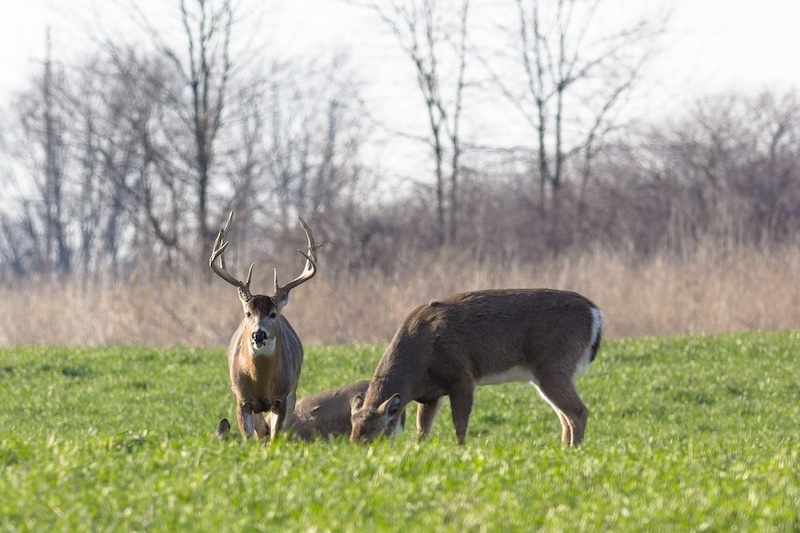
Calling and rattling are options, not guarantees. Try restrained calling sequences when visibility allows you to watch an approaching deer. Expect a buck to investigate from downwind, and position yourself so his checking route offers a shot before he reaches your scent. Calling into the void and hoping a deer hears you can be effective but can also be detrimental to your hunt. Think of it this way. When a deer hears a call that he has interest in, he wants to circle downwind of that sound to attempt to scent-check that sound. That can often lead to a deer approaching from the downwind side of your position, smelling you and leaving the area without you even knowing he did so.
As the main breeding rush tapers, bucks do not all flip the same switch. Some continue searching for receptive does; others devote more time to feeding. Meanwhile, firearm seasons add disturbance and interrupt archery hunting in most Illinois counties. Check county and site rules before planning an archery sit.
When bowhunting resumes, assess what changed. A hunted field edge may have lost daylight traffic while a sheltered drainage or overlooked thicket still holds deer. Hunt the cover they are using now, rather than assuming every survivor abandoned the property. One strategy I try and implement on Illinois public land post-rut is to find those areas that other hunters don’t hunt for one reason or another. Maybe it’s distance from the parking lot, across a creek/stream, up a steep slope; anything that makes me think this area gets less pressured. Usually, those areas hold deer.
Look for fresh feeding sign near secure bedding. Bucks recovering from breeding effort may revisit dependable food sources, but security helps determine whether they arrive during shooting hours. Set up on a covered approach instead of pushing into bedding cover. One careless scouting trip can cost more than an empty evening.
The late season rewards a different kind of patience. Breeding activity dwindles, winter forage becomes less available, and deer concentrate where food and shelter lie close together. Standing corn, soybean pods, remaining mast and accessible green plots can draw deer. Woody twigs and buds remain important foods, particularly where grain and acorns are scarce.
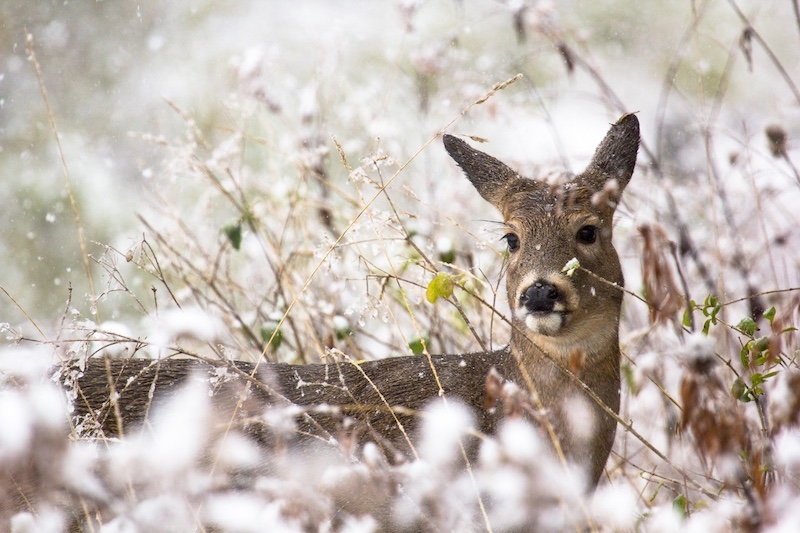
Do not assume every harvested field offers equal food. Walk accessible edges, glass from a distance and look for feeding activity. Snow can expose heavily used trails and feeding sites but tracks alone do not establish daylight movement.
Some unbred does cycle again, and sufficiently developed doe fawns may breed later. A hot doe can briefly change everything in one patch of cover. Treat that as a local opportunity, not a promise of another November activity explosion.
Favor afternoon setups between sheltered bedding and food when observations support them. Watch the wind and evening thermals, arrive without disturbing bedded deer, and plan an exit that keeps feeding groups undisturbed.
Practice in your winter layers before hunting. Bulky sleeves and a shortened, uncomfortable anchor point can undo months of preparation. Then wait for a close opportunity. By January, the food sources may be obvious. Getting there without warning the deer is still the hard part.
Dan Stephens is a Hunter Recruitment Specialist with the Illinois Natural History Survey. The Illinois Learn to Hunt program is a statewide program designed to teach adults (18+) why, where and how to hunt a variety of species in Illinois. Visit Illinois Learn to Hunt for more information or to sign-up for an event near you.




Submit a question for the author