
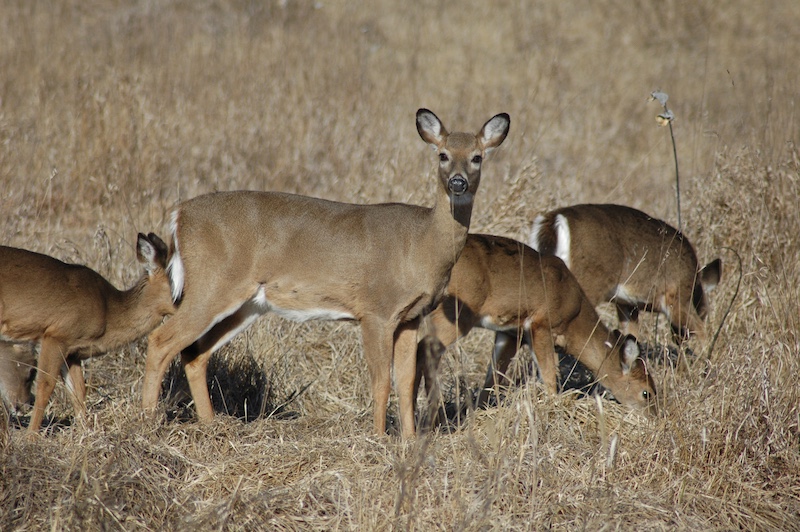
Photo by Jim Hudgins, USFWS.

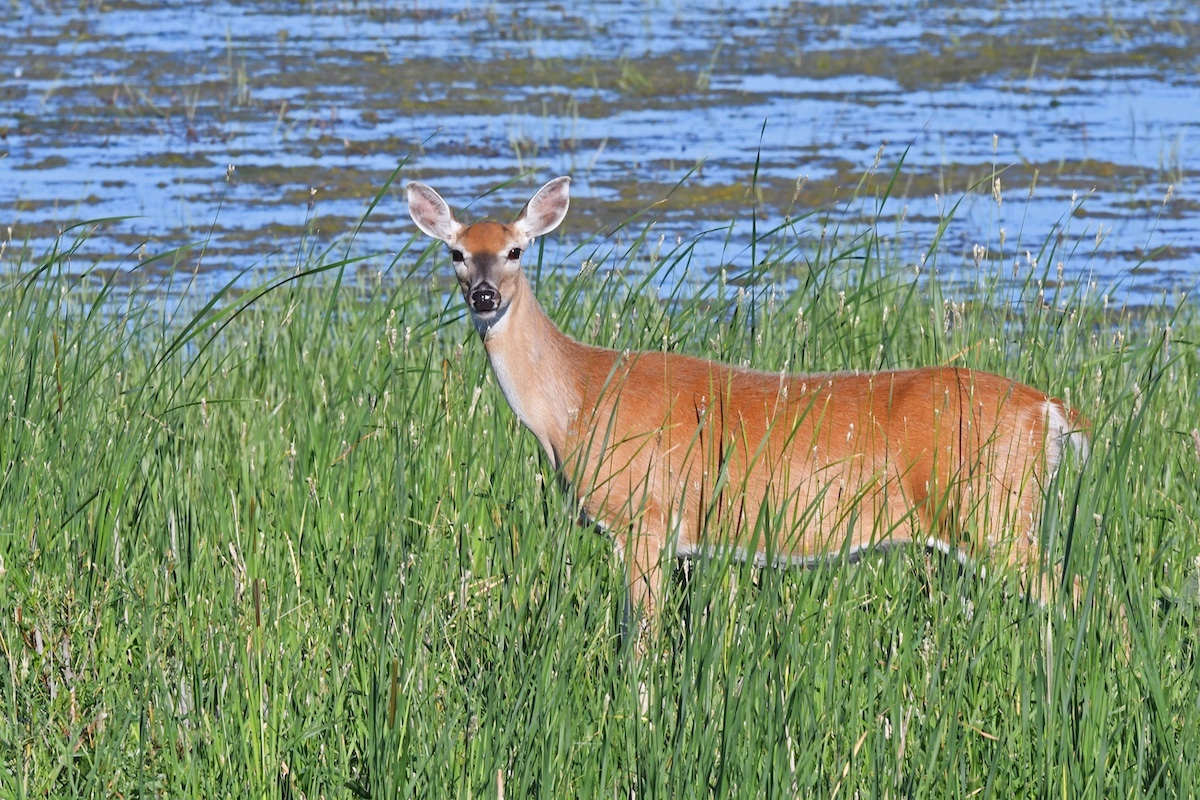
Photo by Jim Hudgins, USFWS.
Each year between late summer and fall, landowners, deer hunters and wildlife enthusiasts are encouraged to watch for signs of Epizootic Hemorrhagic Disease (EHD) in Illinois’ white-tailed deer populations. The disease typically occurs between August and October, but the number of reported cases and the areas affected can vary considerably from year to year. Reports from the public help the Illinois Department of Natural Resources (IDNR) monitor outbreaks and track changes in the distribution of the disease.
Epizootic hemorrhagic disease (EHD) is a viral disease that affects white-tailed deer and other wild ruminants. It spreads through the bite of an infected Culicoides midge, a tiny flying insect often called a biting gnat or no-see-um. The virus does not spread directly from deer to deer, and EHD is not considered a health risk to people or pets.
Weather plays an important role in when and where outbreaks occur. During dry periods, falling water levels can expose muddy shorelines where midges breed. As water becomes harder to find, deer may gather around the remaining ponds, lakes and streams, increasing their chances of encountering infected insects. These conditions can lead to clusters of cases in certain areas rather than widespread outbreaks across the entire state. A hard frost typically kills the midges and brings the annual transmission season to an end.
Illinois experienced a mix of weather conditions during the summer of 2026. The statewide average temperature from June through August was 74.8 degrees Fahrenheit, 1 degree above the 1991–2020 average. June was cooler than normal and exceptionally wet in central and north-central Illinois. July brought warmer-than-average temperatures and below-normal precipitation, while August was notably wet, with 5.69 inches of statewide precipitation — the fifth-wettest August on record.
These shifts affected weather and water conditions throughout the state. However, statewide averages do not tell the whole story when it comes to EHD. Local water levels, habitat and midge activity all influence the risk of transmission. That is why observations from hunters, landowners and other people spending time outdoors are so valuable.
EHD can progress quickly, so recognizing the signs can help people identify a possible outbreak. Infected deer may develop symptoms several days after being bitten. Signs can include sluggishness, difficulty breathing, loss of appetite, excessive salivation and swelling of the head, neck, tongue or eyelids. Some deer may also appear disoriented or unafraid of people.
As the disease progresses, deer may develop a fever and internal hemorrhaging. Sick deer are sometimes found in or near water, possibly seeking relief from fever and thirst. Some recover from the infection, while others die rapidly after symptoms appear.
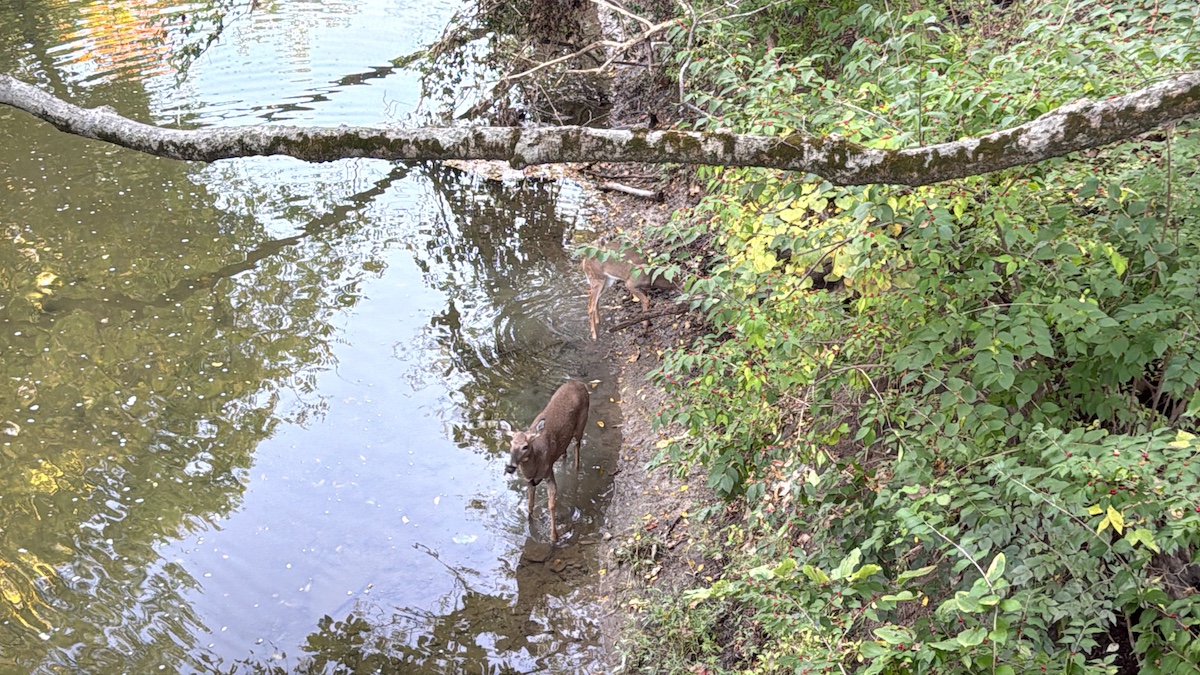
A sick or dead deer near water does not necessarily have EHD. Other conditions can cause similar signs, and a carcass alone cannot confirm the disease. Deer carcasses also decompose quickly, which can make it difficult to determine an animal’s age or sex or collect suitable tissue samples for testing. For these reasons, many cases reported to IDNR are considered suspected rather than confirmed EHD infections.
If you come across a sick or dead deer, avoid assuming the cause based on appearance alone. Instead, note what you observed and its proximity to the nearest water source. Be sure to report the sightings to wildlife officials, who in turn collectively use area sightings to assess potential disease impacts on the dynamics of local deer populations.
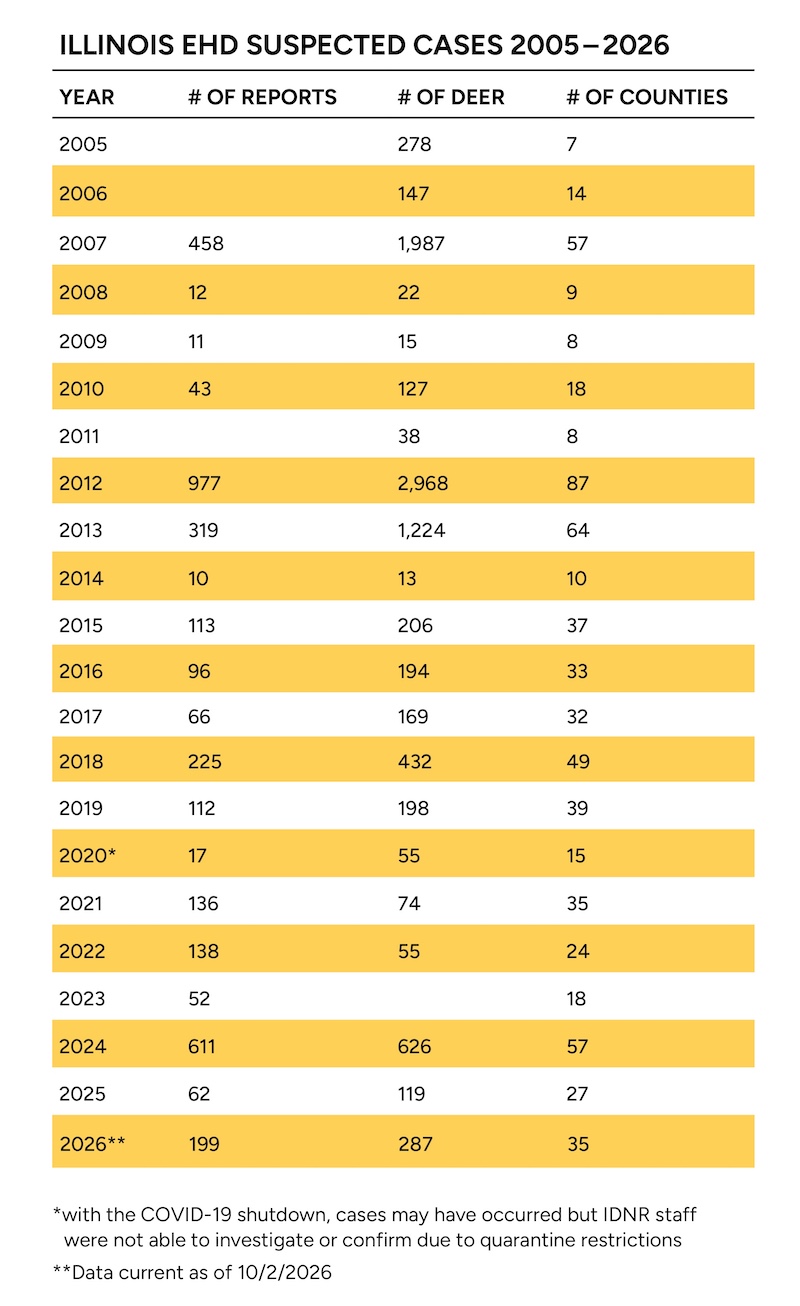
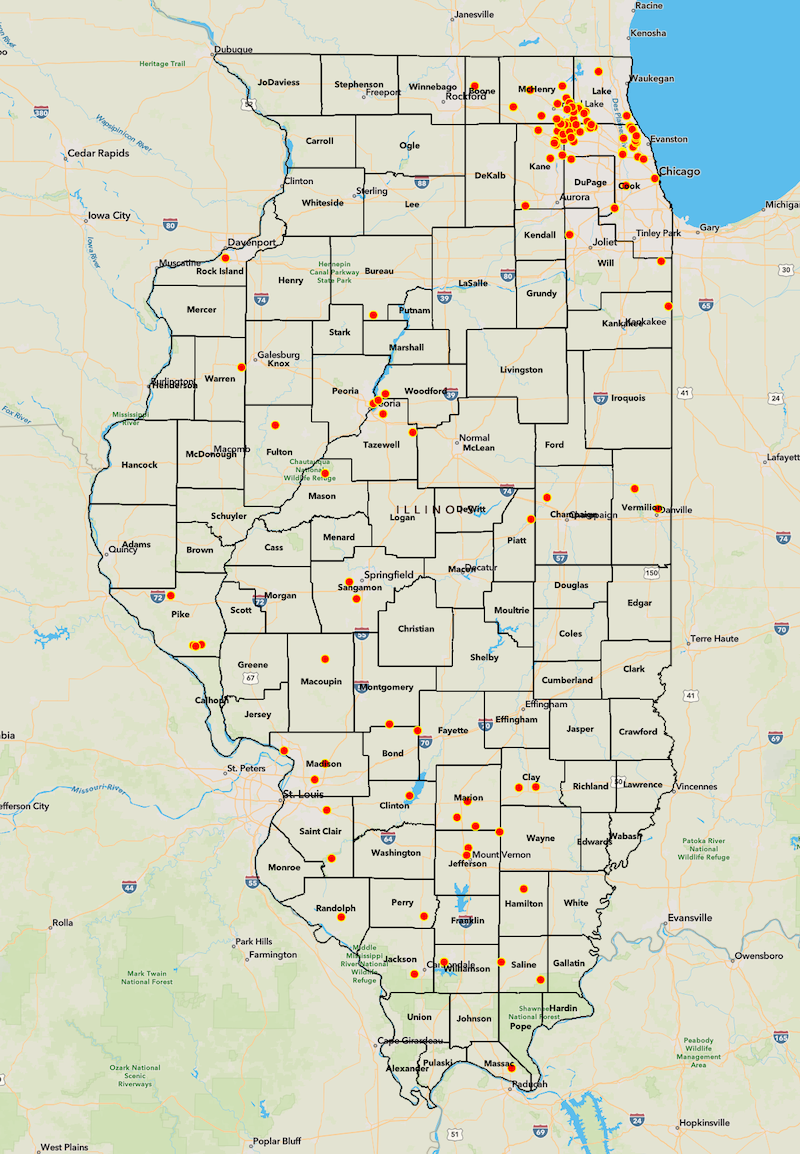
Through 2 October 2026, IDNR received 199 reports involving 287 suspected EHD-related deer deaths across 35 counties. In contrast, 62 reports involving 119 suspected EHD deaths across 27 counties occurred during 2025. Compared to 2025, the number of submitted reports increased threefold and the number of suspected deer deaths more than doubled in 2026.
The difference between reports and deer deaths is important. One report may involve more than one deer, so fewer reports do not necessarily mean fewer deer were affected. Nevertheless, an increase in submitted reports and suspected deer deaths, particularly across northeastern Illinois, reflects the localized and relatively minimal impact of EHD on statewide deer populations.
Of the reported deer deaths, 36.29 percent were female, 33.87 percent were male and 29.84 percent were of unknown sex. The sex of nearly one-third of the deer could not be determined, potentially because the information was not included in the original report or because of the rapid decomposition associated with the disease.
The geographic extent of EHD also increased 22 percent from 27 counties in 2025 to 35 (thus far) in 2026. By comparison, the worst three outbreaks observed during the last 20 years were 2007, 2012, and 2013, during which time dead deer were reported from 54, 87, and 64 counties, respectively. Likewise, the number of suspected deer deaths in recent years has remained relatively low (287 in 2026, 119 in 2025) compared to 2026 (626 deaths) and historical numbers of dead deer in 2012 (n=2,968).
While these figures offer a snapshot of EHD activity, they do not constitute a complete census (i.e., count) of EHD-infected deer. Not every sick or dead deer is found, and not every sighting is reported. The number of reported deaths also does not necessarily indicate how severely a particular county or local deer population was affected. Nevertheless, geographic variability in EHD reported deaths reflects, in part, regional variability in environmental conditions across the state. However, as in past years, deer harvest in 2026 remained stable and thus indicates that population-level impacts of EHD on deer herd dynamics remain minimal.
You can explore historical reports and the distribution of suspected cases using the IDNR annual EHD reporting dashboard.
You do not need to be a wildlife biologist to help monitor EHD. Hunters, landowners and anyone who spends time outdoors can contribute by keeping an eye out for sick or dead deer, particularly near ponds, lakes, rivers and other water sources during late summer and fall.
When reporting a suspected case, provide the county and specific location, the number of deer observed and, when possible, their age and sex. Note whether the deer were near water, and include photographs if available. These details can help wildlife officials evaluate reports and identify patterns across the state. Visit the Hunt Illinois Deer page for current wildlife reporting instructions.
To learn more about EHD and its effects on white-tailed deer, visit the Wildlife Illinois white-tailed deer page or explore previous coverage in the OutdoorIllinois Journal Library.
EHD is a recurring challenge for Illinois’ deer, but its effects vary by location and year. By recognizing potential signs and reporting observations, Illinois residents can help IDNR track the disease and better understand its impact on the state’s white-tailed deer populations.
Kaleigh Gabriel is a Wildlife Outreach Specialist with Lewis and Clark Community College, working out of the Illinois Department of Natural Resources building to assist the Division of Wildlife Resources. Growing up just between Sangamon and Christian counties, she spent a lot of her time hunting and fishing in Illinois. She received her bachelor’s degree in writing/journalism from Manchester University, Indiana.




Submit a question for the author