
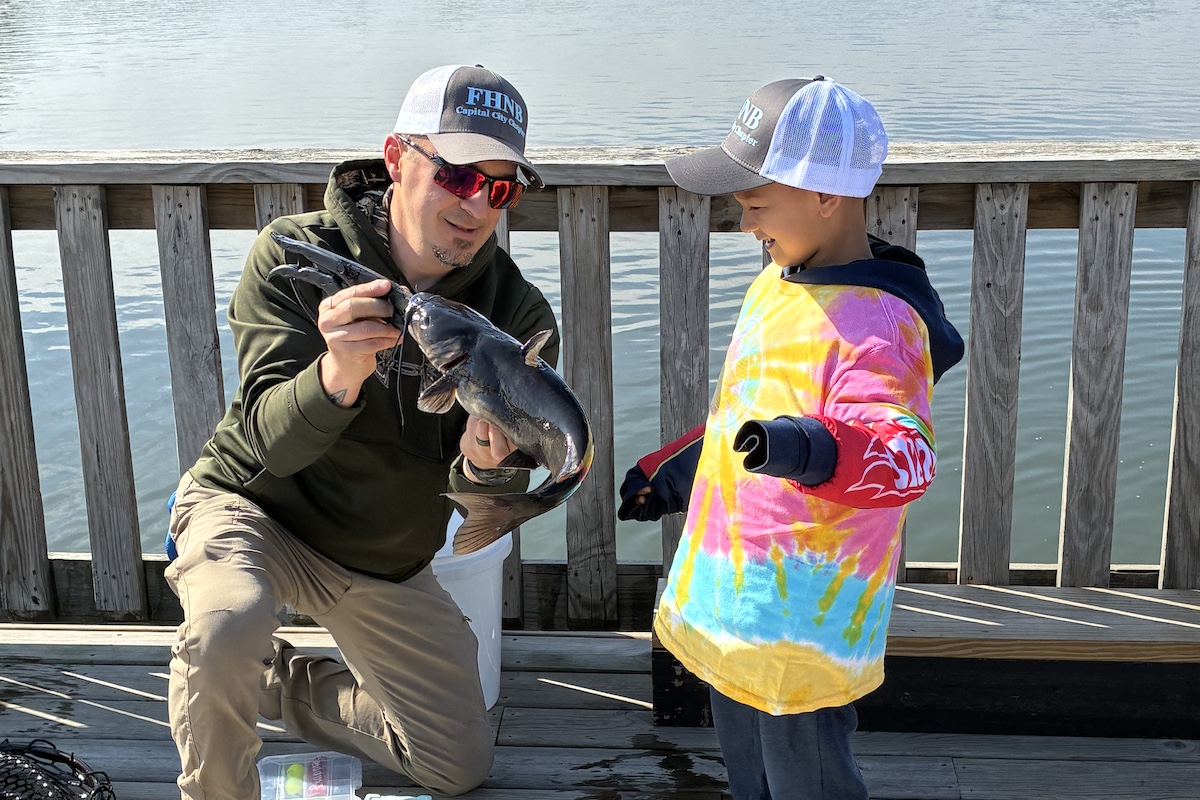
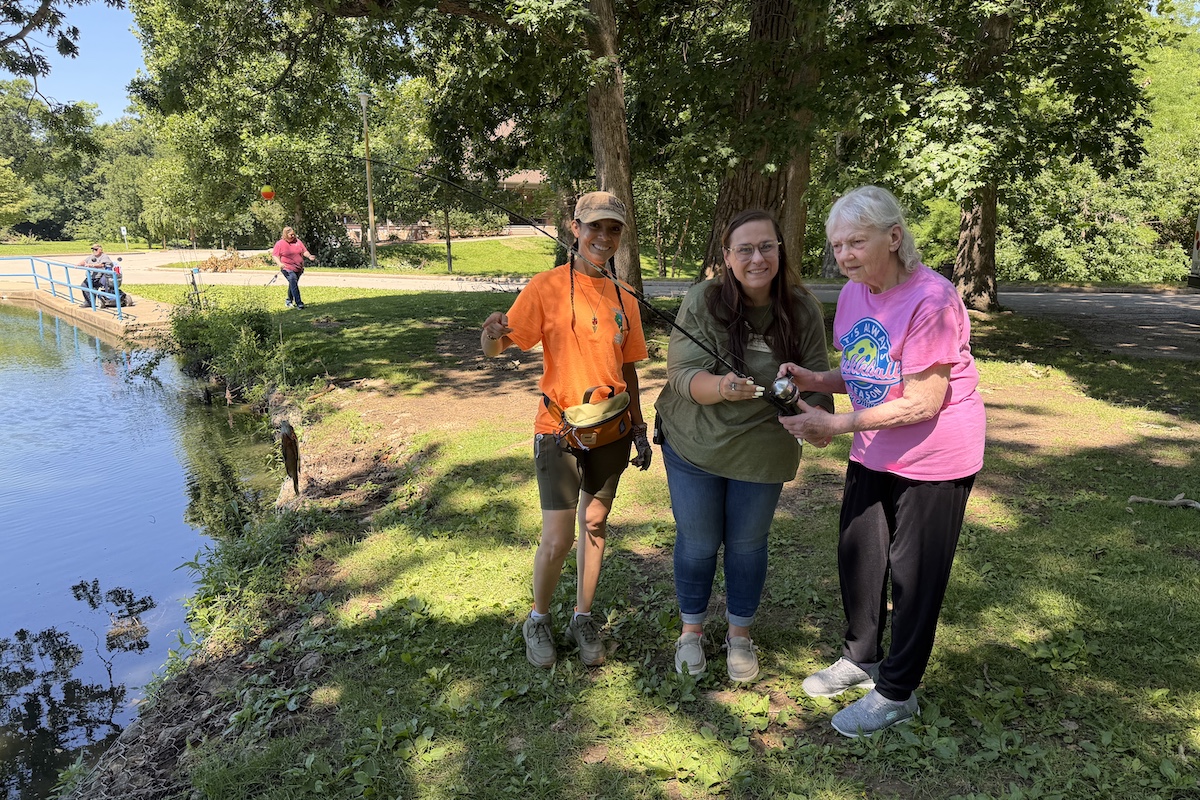
IDNR Division of Fisheries staff offer free fishing programs each day during the Illinois State Fair. These clinics offer fairgoing families a chance to catch a variety of species while visiting Conservation World. Photo by Kathy Andrews Wright.

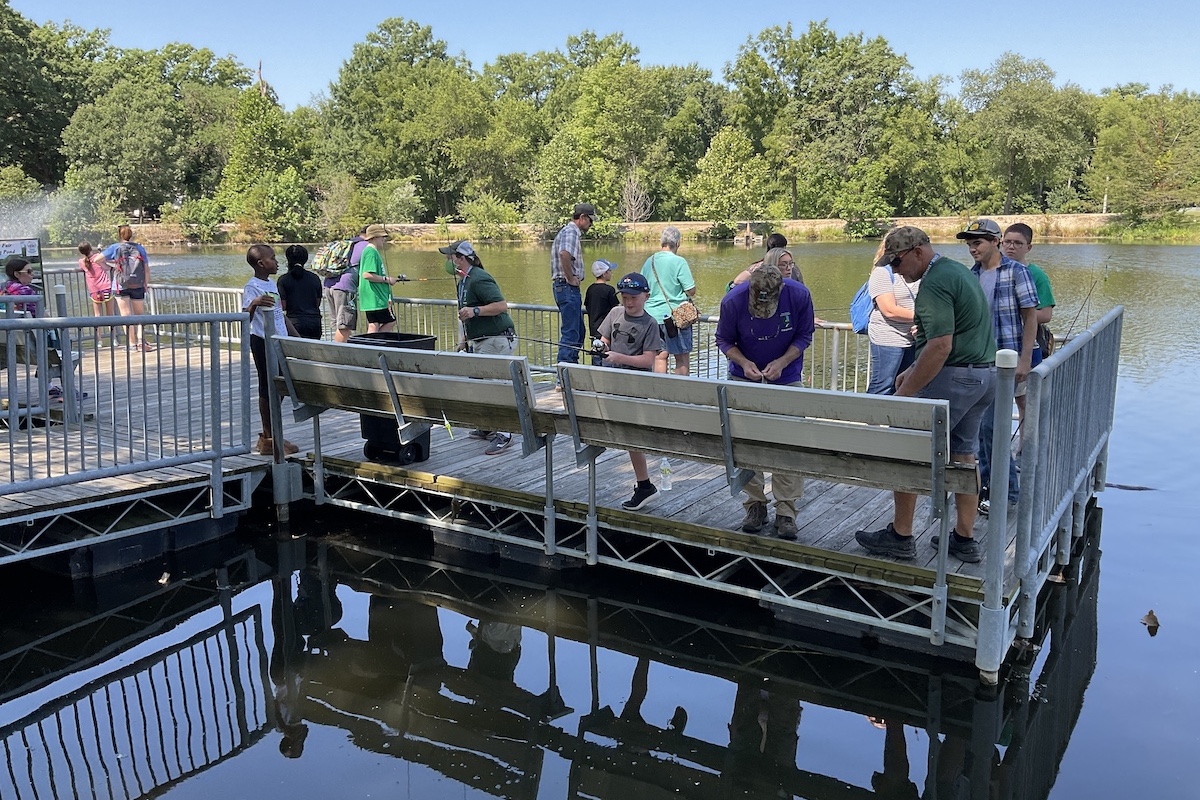

IDNR Division of Fisheries staff offer free fishing programs each day during the Illinois State Fair. These clinics offer fairgoing families a chance to catch a variety of species while visiting Conservation World. Photo by Kathy Andrews Wright.
Whether you are a new angler or a seasoned river rat, you’ve likely experienced frustrating days on the water. Maybe the lure you purchased isn’t producing, that new rod isn’t as effective as you thought or everyone around you is catching fish, while you wet a line and weep salty tears because you caught nothing, also known as the skunk. We’ve all been there!
For me, these moments often came while sitting in the back of my dad’s boat, watching him land panfish and walleye, while I impatiently waited for my first bite. Years of muscle memory and mastering basic presentations had given him a sixth sense on when to set the hook, adjust lure depth and tell the difference between a bite and a snag. Being that I was 10 years old and just a few years into my angling career, I never stood a chance against the master.
While I tied on every color of crankbait and tested out shiny, plastic worms, he methodically worked a jig and minnow. He lifted and dropped the bait with a consistent cadence, using the same motion, again, again (and again). His retrieve was slow and steady, enticing plenty of bites and leading to some memorable stringers of fish. All I could catch was a cold while he was loading the cooler with dinner. Was I a bad angler? Could the fish smell doubt? Or was I impatient? Whatever it was, I was always frustrated when I didn’t catch fish.
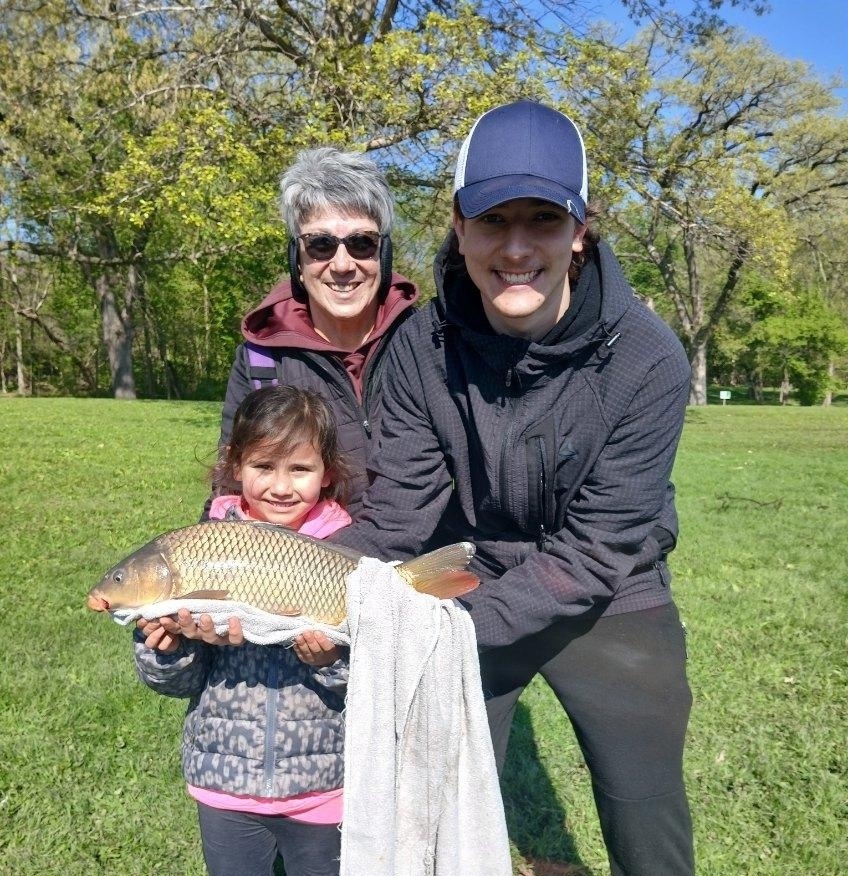
As one of the coordinators of the Illinois Department of Natural Resource’s Urban and Community Fishing Program, I see the same frustration in students and anglers of all ages. Whether families are trying to understand unfamiliar tackle, bass anglers are testing 101 lures, or youth can’t buy a bite from a bluegill, the struggle of catching the skunk is very real. Often, these situations raise serious questions about a person’s fishing skills, leading them to give up if fish aren’t caught.
What many anglers fail to realize is that fishing is a mental game. Erasing doubt, building understanding and growing your confidence. Confidence in yourself, confidence in your angling skills and confidence in the bait on the end of your rod. Seeing an angler’s eyes light up when a lure catches its first fish or a slight correction leads to a bite; it’s truly a magical sight.
In my 30+ years of angling, I’ve shared the following tips with thousands of Illinois anglers, reminding them that you don’t have to be a pro angler, have a fancy boat or have years of fishing experience to catch fish. All you need is a better understanding of your tackle, repetition of basic angling skills and a little confidence to catch more fish.
If I had a dime every time an angler showed up to a fishing clinic with a fancy, large or expensive lure tied on, I’d have enough money to buy the entire menu at a fast-food restaurant. All the lures and expensive equipment in the world means very little if you never caught fish on them. That’s why I often recommend anglers start simple and master basic rigs first.
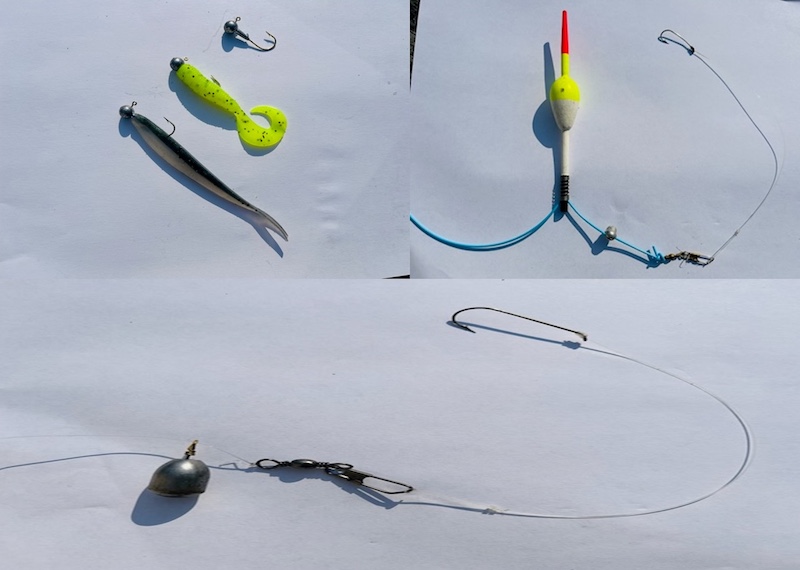
For anglers looking for a quick confidence boost and an easy way to get familiar with terminal (basic) tackle, try one of three “master rigs.” These rigs include a basic bobber rig, a slip sinker (bottom) rig and a jig and plastic. All the components for these rigs are readily available, are easy to learn and will catch fish anywhere in Illinois.
At its most basic, a bobber rig consists of a bobber (float), split shot sinker and hook, plus live bait. Great baits include a small piece of earthworm, waxworm and live, fathead minnows. For most applications, a round, pencil or cigar bobber in the 1 ½” to 2” size will do the job. As for hooks, Aberdeen or baitholder style hooks, sizes #4-#8 work wonderfully. Set your bobber at a depth of 18 to 24 inches to start, adjusting for water depth and structure. Add enough split shot weights, avoiding other styles of sinker (like bell and egg sinkers) to cast, but not enough to sink your bobber. If this happens, remove enough sinker weight to let the bobber float on the surface.
If it’s carp, catfish or walleye you’re after, try a bottom or “slip sinker” rig. This simple rig consists of three components. A bell or egg sinker, a swivel and a hook. Usually, a bell sinker in the ¼- to 1-ounce range, with a #2-#4 baitholder hook is a great, multispecies set up. Like the bobber rig, bait your hook with live or dead baits, including worms, fish or shrimp. Cast your rig out, let it sink to the bottom, reel in the slack and secure your pole in the holder. Set out your favorite lawn chair, take a seat and wait for the big bite!
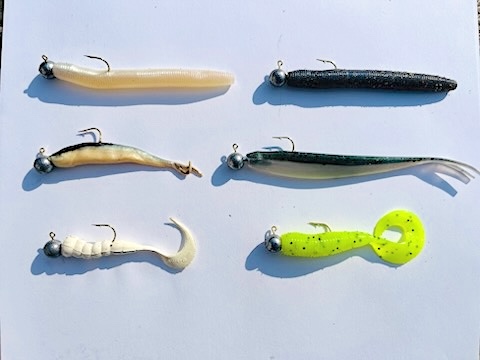
If live bait isn’t your thing, try a jig and plastic. Whereas bobber and bottom rigs are meant to be cast and sit out, jig and plastics are meant to be cast and retrieved. Try a 1/16- or 1/8-ounce, unpainted (metal) jig head with a 2 to 3 inch twister tail grub or plastic minnow, in pearl, chartreuse, black or green. Thread the plastic onto the jig, making sure it’s straight and not kinked, cast the lure out, and reel back with a slow, steady retrieve.
While these three rigs may seem simple, they catch tons of fish and are easy to learn. They also give anglers practice with casting, determining water depth, hooking baits and finding structure. If you’ve snagged on a sunken log or rock before, you know how helpful bobber and bottom rigs can be to find areas to avoid and areas where fish can be found.
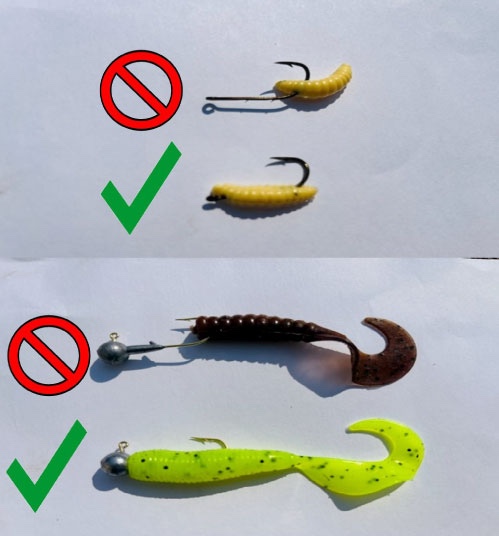
As I always tell my students, we fish to catch fish, not feed them! The next time you are fishing with live worms, cut your worm in half. Then cut it in half again. Ensure the piece of worm you are using fits on the shank, or straight part, of your hook. If the “butt” end of the worm is dangling down, bluegill and other fish can easily rip the bait off. Now you are feeding fish, not catching them! The same goes for other baits, making sure that most of your bait is on the hook itself, not dangling off the back. This way, the fish has to eat the hook to get the bait.
When fishing, don’t be afraid to use smaller lures, smaller diameter line and smaller hooks. Lures in the 1/16- to ¼-ounce range are ideal for many lakes and ponds, while 8- to 12-pound monofilament line is strong enough to land bluegill, bass and catfish. Remember that big hooks can catch big fish, but little hooks can catch everything. Hooks in the #2 to #8 range will catch most anything, minus mega predators such as flathead catfish, muskie and gar.
It is extremely frustrating to feel and see bites but never land a fish. Large gear may look appropriate, but small baits catch tons of fish. When in doubt, go small. You won’t regret it.
One of the most eye-opening moments in my fishing career came while shore fishing an old rock quarry near Chicago. I was fishing for bass and struggling to get bites, as I cast my lure straight out into deep water. As I was ready to call it quits, an older angler came floating down the shore in an inner tube. He threw his lure parallel to the shore, fishing only 20 feet from the bank. Immediately, he hooked into a giant largemouth bass, followed by another. And another. I was dumbfounded.
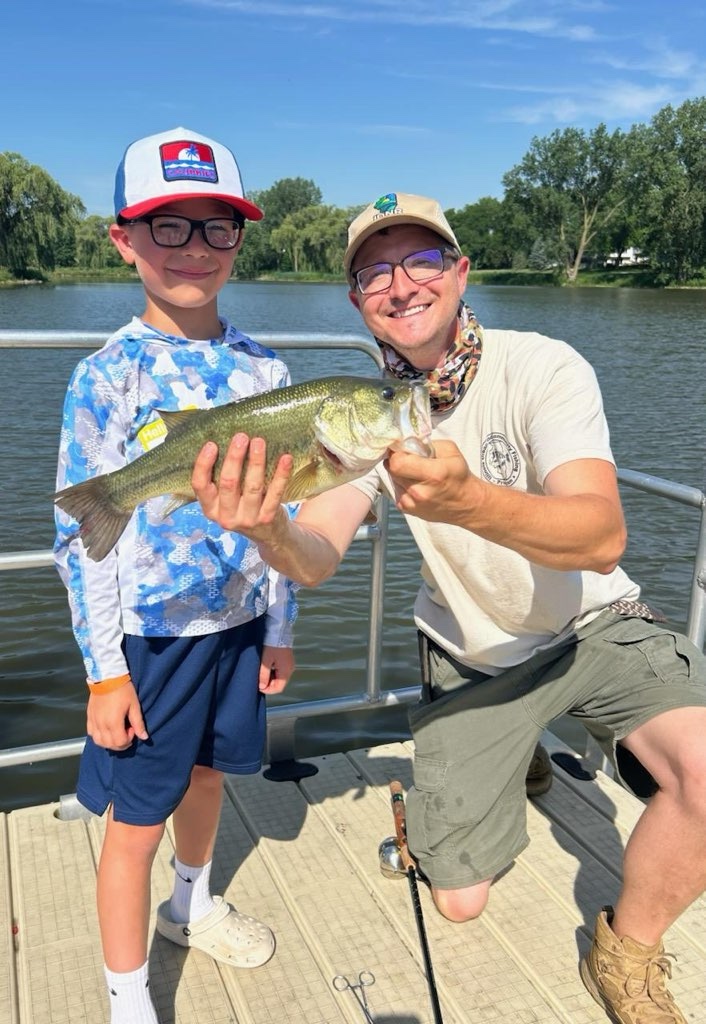
He was casting along the edge of a drop off, his lure remaining in the strike zone for the entire cast. I was casting my lure well over the fish and into deep water. His lure was in their faces the whole time. I fired off a cast parallel to the shore and landed a largemouth of my own.
Instead of bombing out your bait or casting to the horizon, try casts that are angled parallel or towards the bank, to the left or right. This is known as fan casting, as you are casting lures at different angles, working different depths and areas of the shoreline. Illinois does allow anglers to use two rods (and lines) each. Setting one line close to shore and one farther out can also lead to better catch rates. Some of the biggest catches come close to shore, so don’t be afraid to cast parallel and ignore the middle of the lake and/or deeper water. The longer you are in the strike zone, the more bites you will get.
One of the reasons my dad constantly out fished me wasn’t because he fished weekly, or because he had fancy gear. It was because he rarely used more than one or two lures. He had fished with those lures, including a jig and twister tail grub, for decades. He caught fish on them and knew they worked. He had become so comfortable with them that it was almost second nature.
Instead of trying 10 different lures on a fishing trip, pack light and only bring a handful of lures. Start with a master rig set up (Tip 1) or a bait that mimics a small fish. Jig and plastics are always a good start, as are small, inline spinners or minnow style jerk baits in natural colors. Live bait is always a solid option as well.
Instead of giving a lure 10 minutes (or 10 casts) and retying, fish with the same lure for an hour or more. Pay attention to what the bait is doing. Is it scraping bottom? Is it getting snagged? Is it not showing action in the water? Or is it just not catching fish? Keep casting! Just because a lure isn’t producing fish in a few casts doesn’t mean it doesn’t work! The more you fish with a lure or bait, the more of a feel you will get for using it.
Are you still casting that same lure? Good! Alter your retrieve speeds, add a pause. Twitch the rod tip. Let it sink. Let it float. Do the hokey pokey. Get the picture?
When you hook a fish, try to remember what you did and replicate it. Was it a slow retrieve? Medium speed? Or were you just letting it sit. For years I avoided using topwater lures for bass, because I just couldn’t seem to get the rhythm right. In the past, I would constantly pop the bait, never letting it rest. One trip I experimented with the number of pops and pauses. I started giving the bait three twitches, then letting it sit. I followed that pause with one small twitch. BOOM! A bass clobbered it. In my head, I started counting the number of twitches I gave the lure. 1, 2, 3…pause. One twitch. BOOM! Another bass. I still use that cadence to this day.
Do not underestimate the speed of your retrieve and any action you add or subtract to the bait or lure. It can make all the difference between a fishless day and a lifetime memory.
Much like professional wrestlers, anglers often have a finishing move for their favorite baits and lures. It could be cutting a worm to a particular size, using a lucky bobber or adding extra action to a lure, like an extra twitch or pause. When I’m bass fishing, I usually add an extra two seconds to my pauses. No more, no less. Superstitious? Maybe. Productive? Absolutely.
My go-to finisher is a move I learned from another angling author. Using a spinning reel, tie on your favorite jig and plastic, like a twister tail, straight tail worm or minnow. Cast out the bait and let it sink to the desired depth. Curl your fingers around the rod, near the top of the grip. Straighten your index finger and begin reeling, adjusting it so your finger barely ticks the line as you reel. Every revolution of the reel will cause your bait to jump, flick and dart like an injured fish. This extra action often entices fish into biting when a regular retrieve may produce nothing.
Ultimately, the best way to build confidence in angling, in this anglers’ opinion, is to catch fish. Any size, species or number. In this modern world, patience is at a premium and our attention spans are short. If the fish aren’t biting or anglers perceive themselves to be ineffective, they often throw in the towel. Catching a fish prevents that, with patience and time being critical.
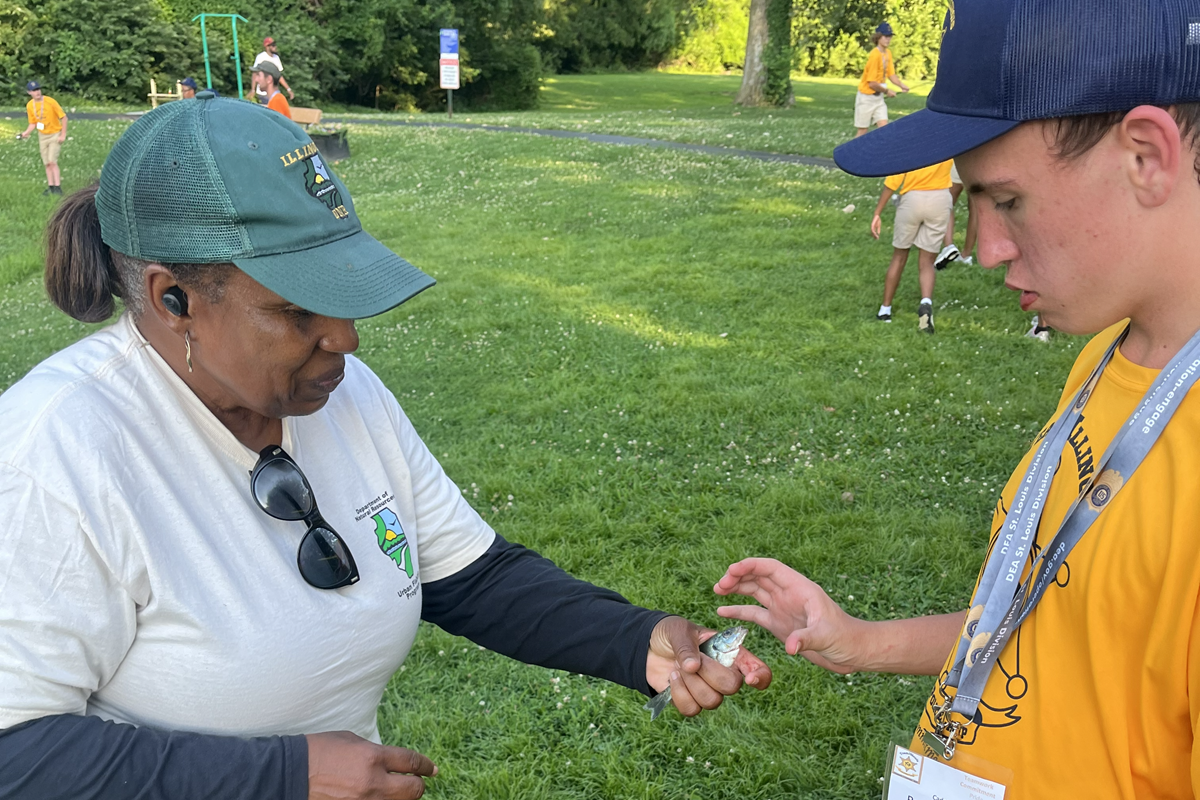
As an angling educator, one of the greatest moments of understanding that I see in anglers of all ages is when a lure or bait catches a fish. It shows them that anyone; any age, race and skill level can go fishing and catch fish. Angling education programs, such as the Urban and Community Fishing Program, welcome people of all ages and skill levels to fish. Many come in skeptical, others come in curious. One thing is certain; most want to know how to catch fish.
When I hold up a bobber and worm at a fishing clinic, many are skeptical. “Isn’t that basic,” they ask. “We’ve tried that before,” they say. “Why can’t we use lures,” the young bass anglers whine. I tell them to look at the tackle. The worm is half the size they’re used to using. The hook is much smaller. The reel, a different style than what they normally use. Suddenly, a student lands a fish. Then another. A light bulb moment occurs. “It actually works!” What follows?
Many more casts, big smiles and hours of fun fishing! Through mastering basic presentations, using smaller tackle and performing repetition with a handful of lures, anglers can achieve new levels of understanding and hone their skills, becoming confident, effective anglers. When that first fish is landed, doubt is washed away, confidence grows, skills are honed and lifelong anglers are created.
Frank Sladek is the Urban and Community Fishing Program Coordinator for Northern Illinois. His program offers free fishing clinics, aquatic resource education classes, school programs and IDNR displays at nature and children’s events for residents north of I-80, outside of Chicago.





Submit a question for the author