
All photos courtesy of Steve Beltran.

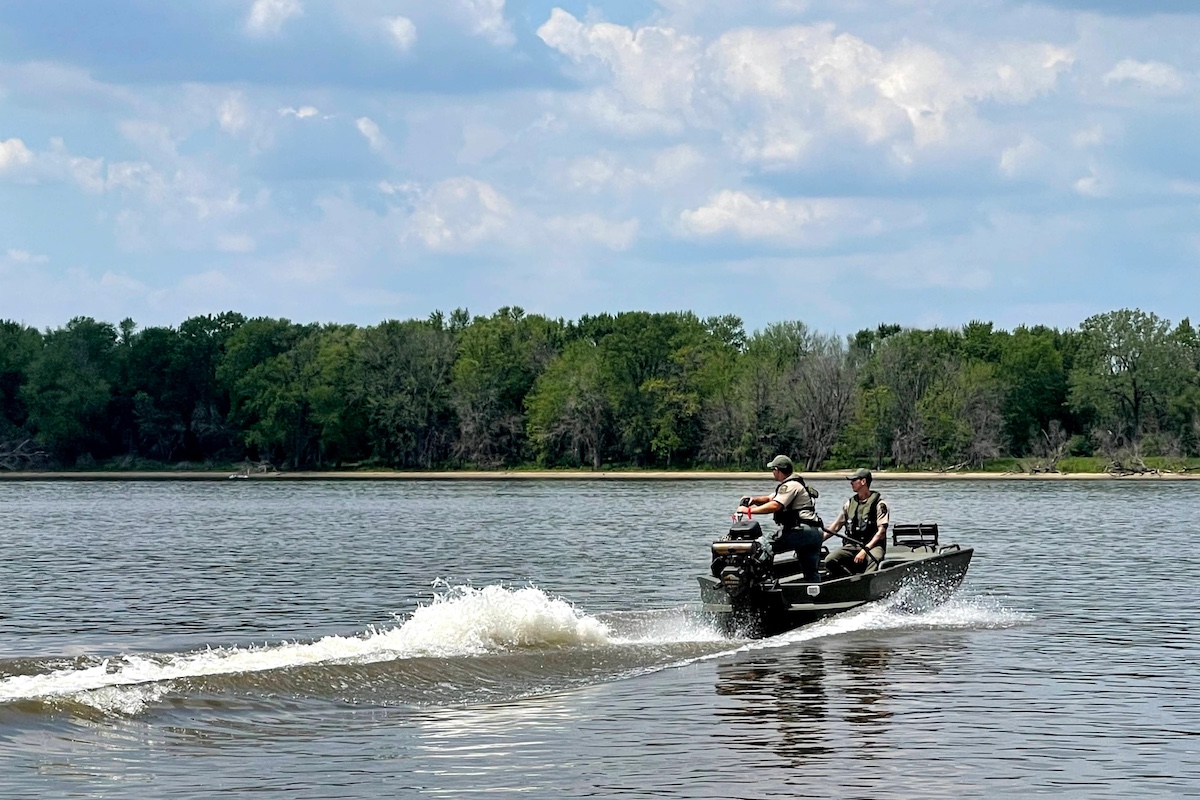
All photos courtesy of Steve Beltran.
The phone rang at three in the morning on New Year’s Eve. It was nine degrees outside, and the sheriff’s deputy on the other end had a pickup truck buried to the axles in a cornfield. There were two dead deer with it. The people who had been riding in the vehicle were gone. At least two of them had run off into the dark carrying guns.
Poaching is the illegal taking or possession of game and non-game animals, fish, or other resources, and it has more victims than most people realize. Every animal taken illegally is one that a hunter, angler, a family, or a youngster on a first hunt or fishing trip never gets the chance to see. Those who take wildlife unlawfully steal from every Illinois resident.
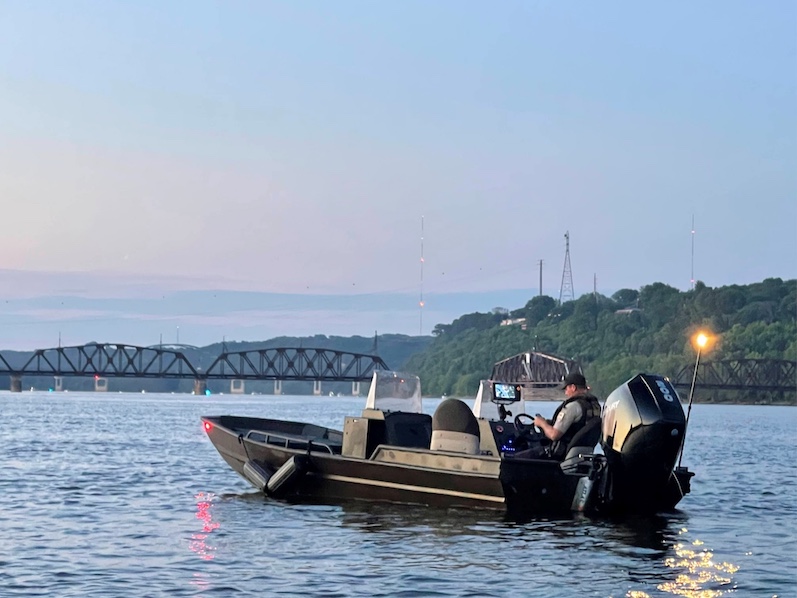
Over a long career, most cases blur together. The license checks, the untagged deer, the short fish. They matter, but they fade. The ones that stay with you are different. Usually, it is one image you can’t shake: a truck in a frozen field, a photo on a phone that tells the whole story, a boat turned upside down where it never should have been. Some of these cases made me angry. One of them still makes me sad. All of them taught me something about what we owe the resource and each other.
When I got to the field, two men were already in custody for trespass. The truck had been driven off the road and into standing corn, where it sank and stuck. Two deer lay dead near it. Deer season was closed, it was the middle of the night, and nobody in that truck had a permit to shoot anything.
One of the men was crying. He told us the two people who had run into the night cold were children. That changed the whole night. Finding them came before anything else, and thankfully we did. I have thought many times about what nine degrees does to a young person in a dark field, and how close that night came to being a very different kind of report.
I came back the next day when there was light. The snow told the rest of the story. In undisturbed snow I found three more deer, one of them a quarter mile from the road. They had been shot from the road or from the truck, and left where they fell or wandered.
Over the next several weeks the case kept growing. Once the suspects were sober, I took their statements again. I followed the meat to a processing plant, where I found two more December deer with no tags. I found a buyer who had paid $170 for more than 50 packages of venison and had later gotten a text asking if she wanted more. I found another hunter who had put his own tag on one of the illegally killed deer. Text messages showed plans to avoid prosecution, but instead they helped make the case.
This was not someone putting meat on the table. It was a business built on shooting deer at night, out of season, from the road. In the end, one of the men pleaded guilty to a felony for the unlawful commercial use of game, along with a misdemeanor for shining and harassing animals with a vehicle. He received probation, paid more than $2,800 in fines and fees, and forfeited his truck to the state.
What stays with me is not the dead deer. It is the youth in that field. Hunting traditions get passed down from one generation to the next. Good traditions as well as bad ones. Those two young people were learning something that night, just not anything a hunter education class would teach. If you take a young person into the field, remember that they will copy everything you do, including whatever you think nobody is watching.
This one started, like so many do, with a call to the TIP hotline. On a November evening, someone reported a pickup with yellow lights along the top of the cab working a spotlight across the fields. The caller got the license plate, and that made all the difference.
The plate came back to a man I recognized. I had met him that summer on a boat rescue call. When I knocked on his door, he told me his son owned and drove the truck. I found the truck parked in the son’s driveway.
The son was nervous. He first said he hadn’t done anything wrong. Then he agreed to let me search the truck where I found a live round. He admitted he had been shining for raccoons. He knew it was illegal, he said, but he figured that if he didn’t have a gun in his hand while he was shining, it wasn’t as bad. He had been shooting raccoons with a .22 and selling the pelts to a fur buyer.
Then he let me look through the photos on his phone. There was a deer, killed the week before, with a crossbow lying in the bed of the truck. He had checked that deer in as a compound bow kill. He admitted the crossbow wasn’t legal for him to use at the time and that he didn’t have the permit for it. A second deer photo came from October. The phone had recorded the time and GPS location of each picture, which put both deer exactly where they had been killed.
He seemed genuinely surprised that a photograph could hold so much evidence. He led me to his freezer, where the processed meat from that deer was waiting. It was seized. A tip about a spotlight on a gravel road turned into seven charges across two counties: shining, unlawful take of deer, illegal crossbow use, falsifying harvest records and failing to report a harvest.
Here is the lesson: the rules about how, when, and with what you can take a deer are not paperwork. Checking a deer in honestly is part of how biologists manage the herd you hunt every fall. And in today’s world, your phone is keeping a better record of your hunt than you are. Make sure it’s a record you’re proud of.
Not every deer standing at the edge of a road at night is a deer. Conservation police agencies across the country use robotic decoys: a life-size form, often covered with a real mounted hide, that can turn its head and flick its tail. Set near a roadway after dark, it looks like exactly what a spotlighter is hunting for.
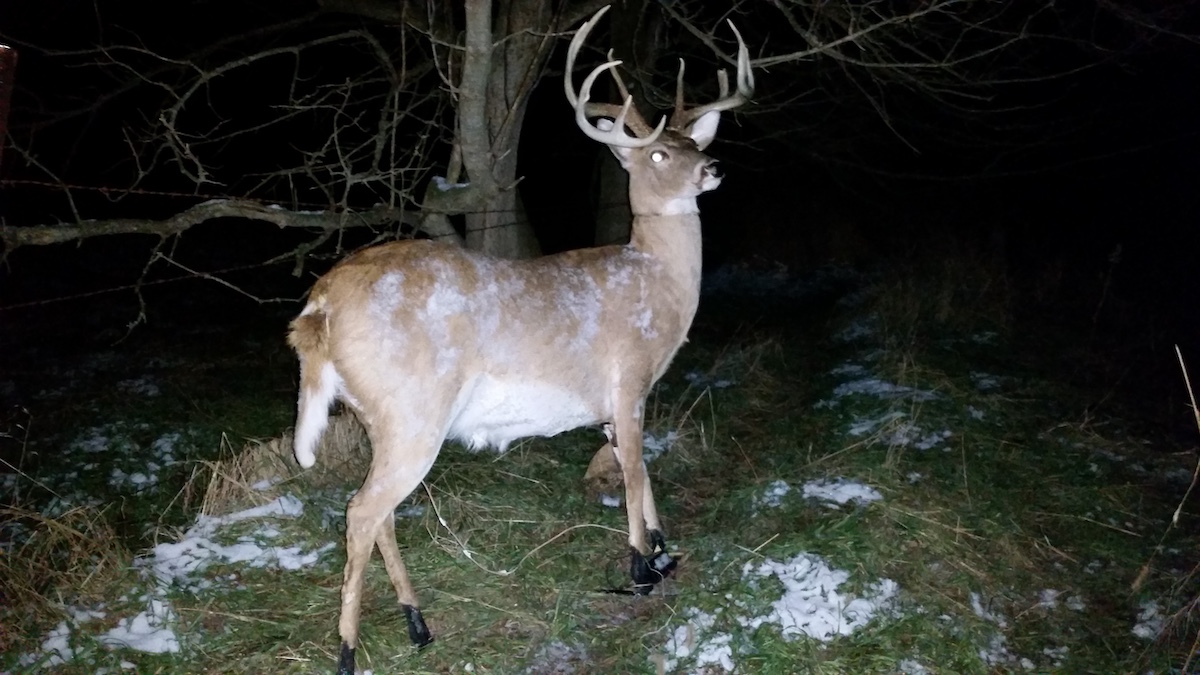
A decoy does two jobs. The first is practical. It is hard to have an officer, a poacher, and a live animal in the same place on the same night, and a decoy takes the animal out of the equation. When someone shines a light on it and pulls the trigger, the violation happens in front of a witness, and the charges are the kind you have read about in these cases: shining, shooting from a road or vehicle and carrying a loaded gun in a vehicle.
The second job matters more. A decoy puts a question in every night hunter’s head: is that one real? The person who would have taken the shot has to wonder whether anyone is watching, and whether the headlights behind them belong to a neighbor or an officer. That doubt is the point. The goal is not more tickets. It is fewer dead deer, fewer bullets sent toward houses and barns in the dark, and fewer nights like the one in the New Year’s Eve cornfield.
Here is the lesson: the only way to be sure the deer in your spotlight is not a decoy is to never shine one at all.
Not every case that stays with you involves a violator. Some of the hardest calls a conservation officer answers have no villain at all.
On a November morning, I was called to a low-head dam on one of our rivers. A small fishing boat with two men aboard had gone over, or been pulled into, the dam and capsized. The sheriff’s office ran the rescue and recovery. My job was the accident investigation: figuring out what happened so we can tell the next boater how not to let it happen to them.
The boat was wedged in the dam upside down, bow pointed downstream, motor on top. When it was finally pulled out, I went over it inch by inch. The motor was in neutral. The navigation light switch was on. The kill-switch lanyard was not attached to anyone, and the switch was set to run. One anchor line was frayed and the anchor was gone. The life jackets were in the boat, stowed in the front hatch, where they did no one any good.
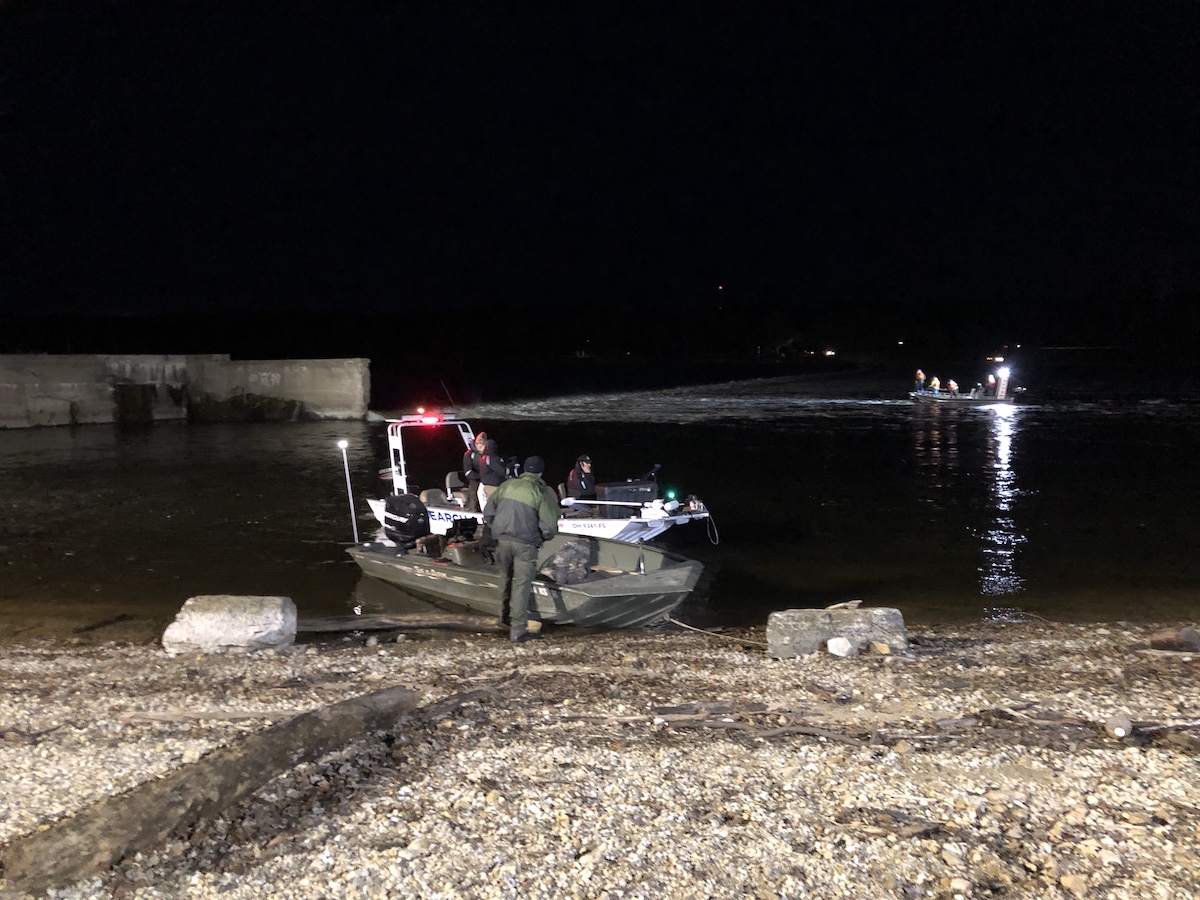
At 6:30 the next morning, I walked the shoreline below the dam and found the throwable cushion, a cooler, and a boat fender washed up on the bank. The search went on for weeks. In January, one of the men was found far downstream near another dam. When I filed my report, the second man still had not been found. Two families spent that holiday season waiting by a river.
I still think about that frayed anchor line. I will never know for sure how that boat ended up where it did. What I do know is that low-head dams are called drowning machines for a reason. The water rolling back at the base of the dam traps anything that goes in and does not let go, and from upstream the danger is almost invisible. Cold November water takes away a person’s strength in minutes.
Please wear your life jacket, don’t just carry it. A life jacket stuffed in a hatch is just more weight in the boat. Clip on your kill-switch lanyard. Give dams a wide berth, both above and below.
Conservation officers do more than check licenses and creels. On the water, we also stop boats to look at safety equipment. The point is not to write tickets. It is to see what is aboard, and where it is stored, before something goes wrong instead of after.
Here is what an officer is looking for on a typical check:
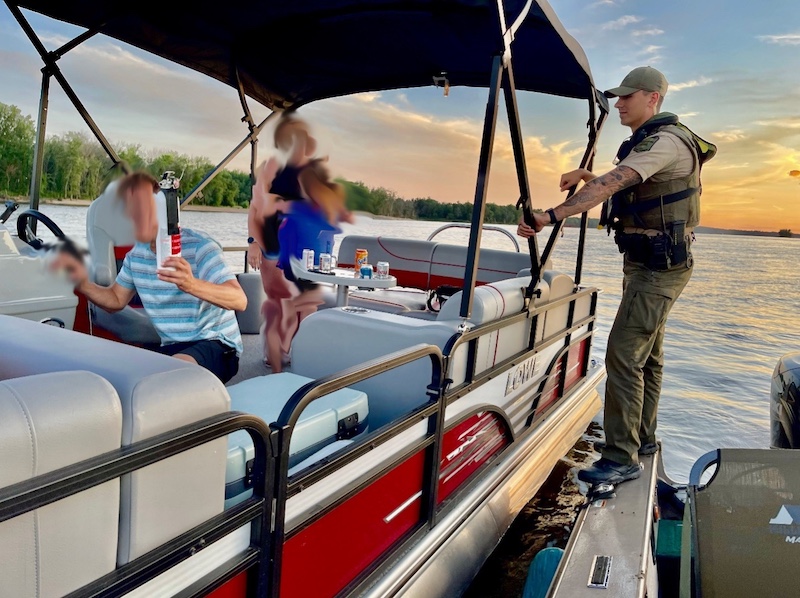
Go back to that boat wedged upside down in the dam. The life jackets were aboard. They were stowed in the front hatch, and they did no one any good. Carrying the equipment meets the minimum. Being able to reach it in the few seconds you have, and wearing it, is what saves a life.
If you want to know whether your boat would pass, ask for a free Vessel Safety Check from a Coast Guard Auxiliary or U.S. Power Squadrons volunteer examiner. It is a courtesy, not a citation, and you leave with a list of anything to fix. Here is the lesson: check the boat before you leave the ramp, and keep the life jackets where you can grab them, not where they fit best.
Looking back, a few things stand out. Two of these three cases started with someone picking up a phone: a citizen who called the TIP line with a plate number, and a deputy who called for help at three in the morning. Officers cannot be everywhere, and some of the best cases I ever made began with someone who cared enough to call.
The second thing that surprises people is how often the evidence comes from the violators themselves. Text messages, photos, GPS tags, and honest statements given once the story stopped working. Sooner or later, the truth usually comes out.
And the last one is the simplest. In every one of these cases, including the one with no violator at all, a few seconds of good judgment would have changed everything. Enjoy the resource responsibly.
Ethical hunters start with education. In Illinois, anyone born on or after January 1, 1980 may not be issued a hunting license unless they present a valid Hunter Education Certificate of Competency issued by the Illinois Department of Natural Resources (IDNR) or another state. Safe, ethical, legal hunting is learned, and it is passed down at the kitchen table and in the field.
One of the first rules taught in every hunter education class is to know your target and what lies beyond it. The men in that New Year’s Eve cornfield were shooting from a road, at night, at eyes in a spotlight. They had no idea what was behind those deer: a farmhouse, a barn, another road. That is not only poaching. It is exactly the kind of gamble with other people’s lives that hunter education exists to prevent, and it is why ethical hunters are the first ones to condemn it.
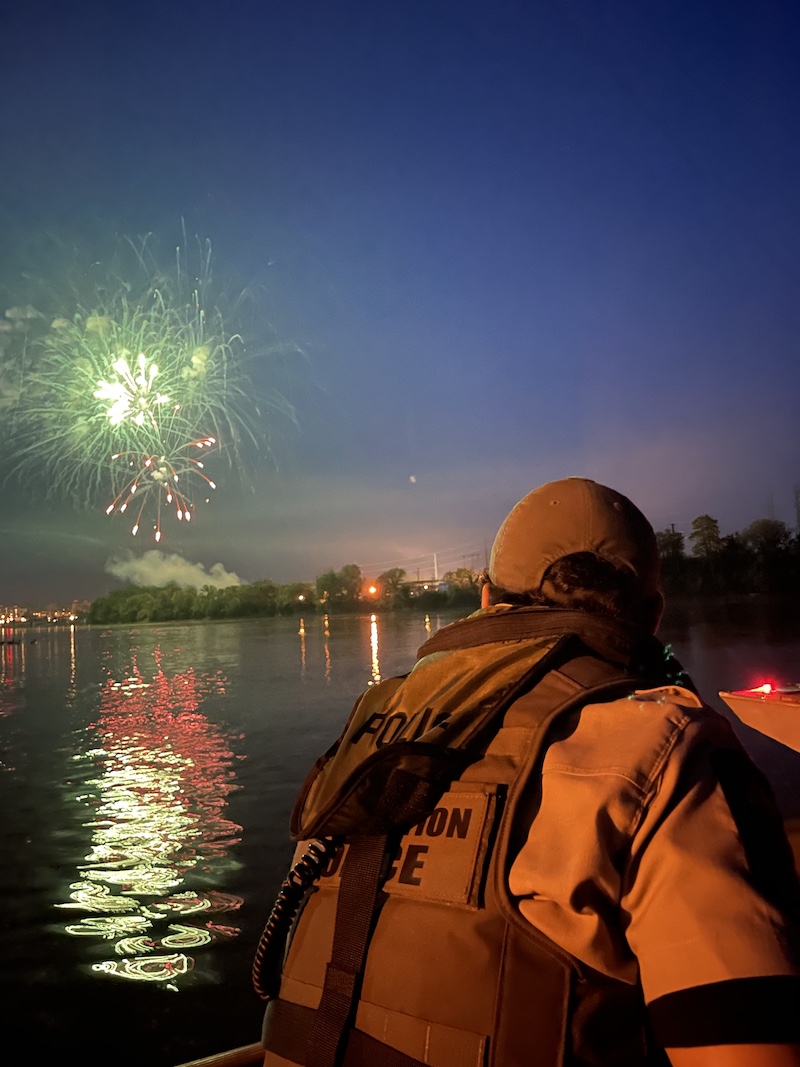
Conservation officers can’t be everywhere, and they depend on you. If you see something that doesn’t look right:
I still think about that cornfield on New Year’s Eve, the tracks in the snow and the youth who ran into the cold. I think about a phone full of photographs and a cooler washed up below a dam. Conservation officers carry these stories for a long time. But protecting the resource was never supposed to be our job alone. It belongs to every person who hunts, fishes, farms, or simply loves the Illinois outdoors, and it is how we make sure there is something left to pass down.
Steven Beltran joined the Illinois Conservation Police in 2000, retiring as a Sergeant in northwest Illinois in 2024.




Submit a question for the author