The NGRREC green roof places native prairie vegetation directly above the Mississippi River, where the landscape becomes part of the building’s stormwater-management system and an outdoor teaching space. Photo courtesy of NGRREC.

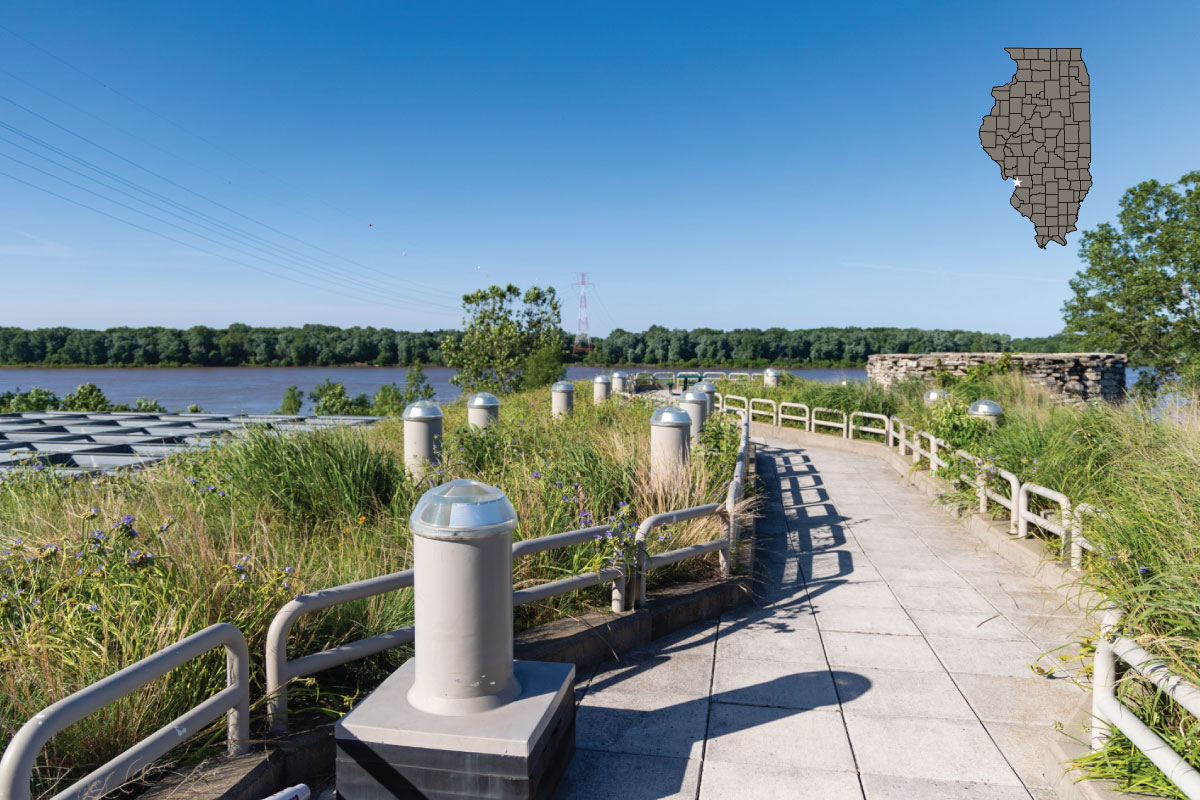
The NGRREC green roof places native prairie vegetation directly above the Mississippi River, where the landscape becomes part of the building’s stormwater-management system and an outdoor teaching space. Photo courtesy of NGRREC.
From the ground, the Jerry F. Costello Confluence Field Station seems to rise naturally from the landscape along the Mississippi River. Its low profile, native plantings and earth-toned architecture were intentionally designed to complement the surrounding river bluffs. But one of the building’s most distinctive landscapes is not beside it. It is growing on top of it.
The green roof at Lewis and Clark Community College’s National Great Rivers Research and Education Center (NGRREC) in East Alton is planted with native vegetation designed to evoke an Illinois hill prairie, a distinctive ecosystem closely associated with the bluffs of the Mississippi and Illinois rivers. More than an architectural feature, the roof functions as stormwater infrastructure, native habitat and an outdoor classroom where visitors can explore connections among plants, water and sustainable design.
NGRREC’s Confluence Field Station opened in 2010 near the confluence of three of the nation’s major rivers: the Mississippi, Missouri and Illinois. The research and education facility was designed to demonstrate that the built environment can enhance, rather than simply replace, the natural environment. Water conservation, renewable energy, recycled materials and native landscaping are integrated throughout the property.
Illinois is known as the Prairie State, but prairie ecosystems are far from uniform. Hill prairies are among the state’s most unusual examples. These communities developed primarily on steep, dry, south- and west-facing slopes above major river valleys. In Illinois they are especially associated with the Mississippi and Illinois rivers, where exposed slopes create hot, dry conditions that favor drought-tolerant prairie vegetation.
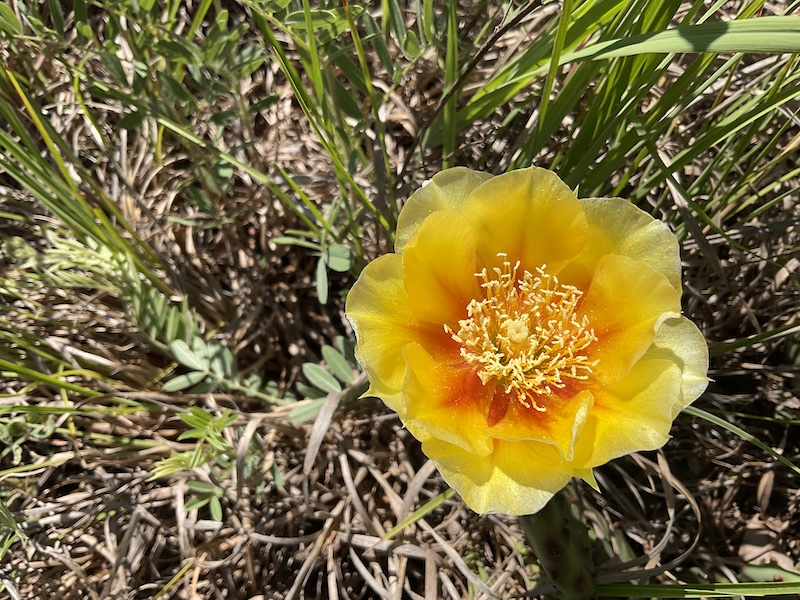
Those conditions produce a plant community noticeably different from the tallgrass prairie that once covered much of Illinois. Grasses such as little bluestem and side-oats grama are characteristic, along with wildflowers adapted to heat and limited moisture. Perhaps the most surprising resident is eastern prickly pear cactus, a plant many people associate with the desert southwest but which is native to Illinois.
That ecological setting provided inspiration for the highest portions of the NGRREC landscape. Across the field station grounds, vegetation transitions from plants suited to wetter lowland conditions toward progressively drier communities. At the top of the building, the green roof was designed to mimic the hotter and drier character of a hill prairie. Native plants are used throughout the landscaping, and prickly pear cactus can be found growing on the rooftop itself.
The connection is especially appropriate given the field station’s location. Hill prairies are concentrated along the same great river corridors that NGRREC studies. Natural hill prairie remnants are often small and isolated, making them an important part of Illinois’ remaining native landscape. The roof is not intended to replace those natural communities. Instead, it gives visitors an accessible way to encounter some of the plants and environmental conditions associated with them while learning why those habitats matter.
Many conventional green roofs use a relatively shallow growing medium and low-growing plants capable of surviving difficult rooftop conditions. NGRREC’s roof was designed differently. It incorporates approximately 12 inches of growing medium supporting native prairie vegetation. Beneath the plants is a multilayered roofing system built above the concrete structure of the field station. Lightweight materials provide contour without adding the mass that an equivalent depth of soil would require.
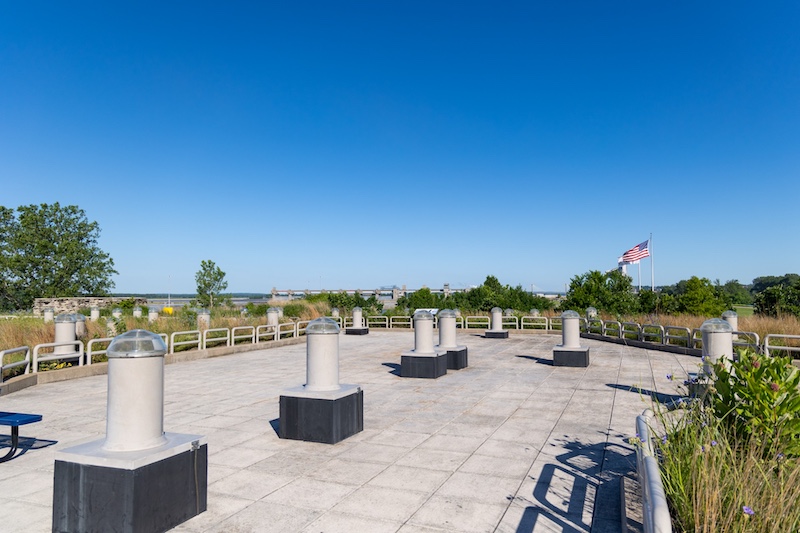
The roof’s most important work, however, happens when it rains. On a conventional building, rainfall striking the roof is quickly routed toward gutters, drains and stormwater infrastructure. A vegetated roof slows that process. Soil and plants temporarily hold water, while some of that moisture returns to the atmosphere through evaporation and plant transpiration.
At NGRREC, rainfall that is not retained or used by the rooftop vegetation is collected and routed to an approximately 10,000-gallon storage tank beneath the parking area. That stored rainwater can then be reused for purposes such as landscape irrigation and washing research equipment. In this way, the green roof becomes part of a larger water-management system rather than an isolated architectural feature.
For an organization focused on rivers, the connection is particularly meaningful. Stormwater runoff can carry sediment, nutrients and other pollutants from developed landscapes into streams and rivers. Green infrastructure helps by slowing, capturing and reusing rainfall before it becomes runoff. Visitors standing among prairie plants on the roof can therefore see a small-scale example of a much larger watershed principle: what happens to rainfall on the landscape eventually affects our waterways.
For NGRREC’s education team, the roof is also a teaching tool. Students and visitors can walk through a functioning example of green infrastructure rather than simply seeing one illustrated in a textbook. A discussion about stormwater can begin by asking what happens to a raindrop when it lands on a conventional roof, and then following the very different pathway that water takes through vegetation, growing media and the field station’s rainwater collection system.
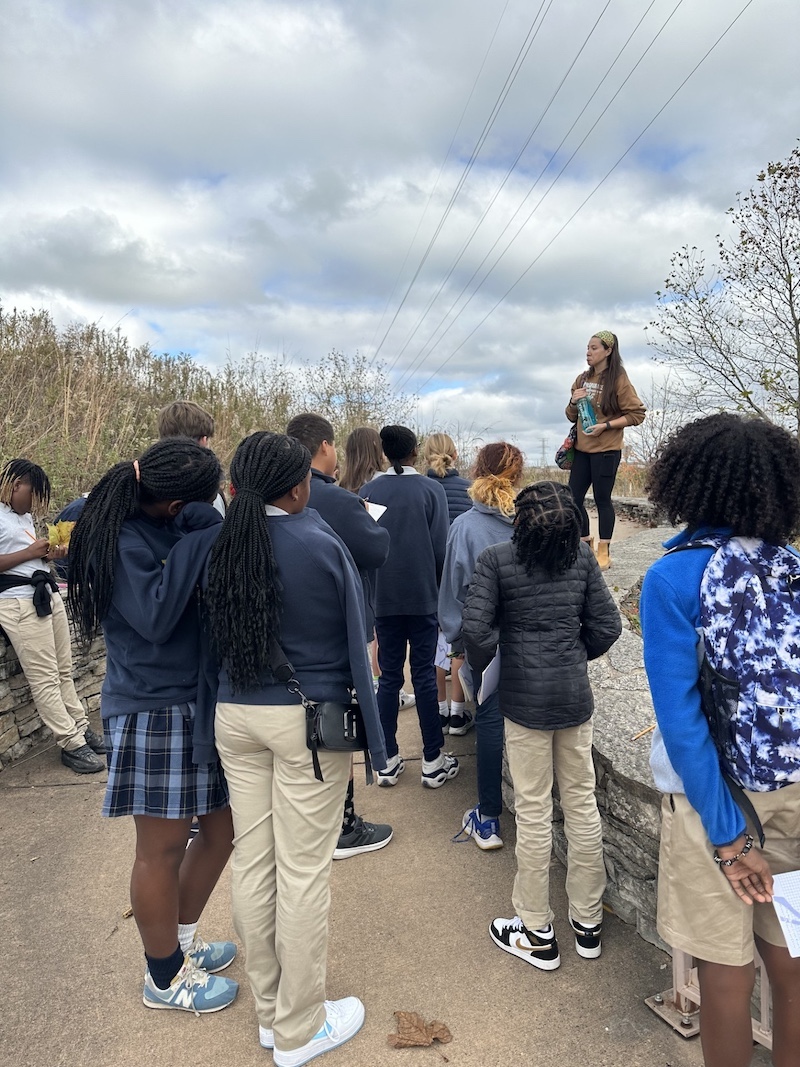
The same space can become a lesson in Illinois ecology. Native plants growing on the rooftop allow educators to practice plant identification with students, discuss the adaptations that help species survive heat and limited moisture, and introduce the concept of distinct prairie communities. A prickly pear cactus growing above the Mississippi River becomes an especially effective conversation starter about what “native to Illinois” actually means.
The roof also encourages broader questions. Why do certain plants occur on exposed bluffs but not in a nearby floodplain? How does soil depth influence vegetation? Where does rainwater go after a storm? How can buildings be designed differently to reduce their effect on the watershed? Those questions allow the rooftop to function as a living laboratory, connecting botany, ecology, hydrology and engineering in the same physical space.
That educational purpose reflects the broader design of the field station. The building contains teaching laboratories and public spaces alongside scientific research facilities, and its sustainable features were meant to be visible rather than hidden from visitors. NGRREC’s education programs use those features to show how decisions about buildings and landscapes connect to the health of rivers and watersheds.
A green roof cannot solve a watershed’s stormwater problems by itself, and a rooftop planting cannot replace the complex ecological history of a natural hill prairie. What it can do is make both concepts tangible.
Standing on NGRREC’s roof, visitors can look across native grasses and wildflowers while only a short distance from one of the largest river systems in the world. Beneath their feet, soil and vegetation are intercepting rainfall. Below that, infrastructure is collecting water for reuse. Around them are plants whose wild counterparts have occupied the sun-baked river bluffs of Illinois for generations.
The result is a place where the boundary between a building and an ecosystem becomes a little less obvious. For NGRREC, that is precisely the point. A center devoted to understanding and sustaining great rivers has turned its own roof into part of the lesson.
Jolena Pang is the Program Manager for Waterschool USA at the National Great Rivers Research and Education Center (NGRREC) and the Illinois State Coordinator for Project WET. Her work focuses on developing and delivering environmental education programs that connect students, educators and communities with water resources, watershed science and the ecology of the Mississippi River region.





Submit a question for the author