Bags of seeds collected by the volunteers from Greenbelt Forest Preserve. All photos by S.D. Shah.

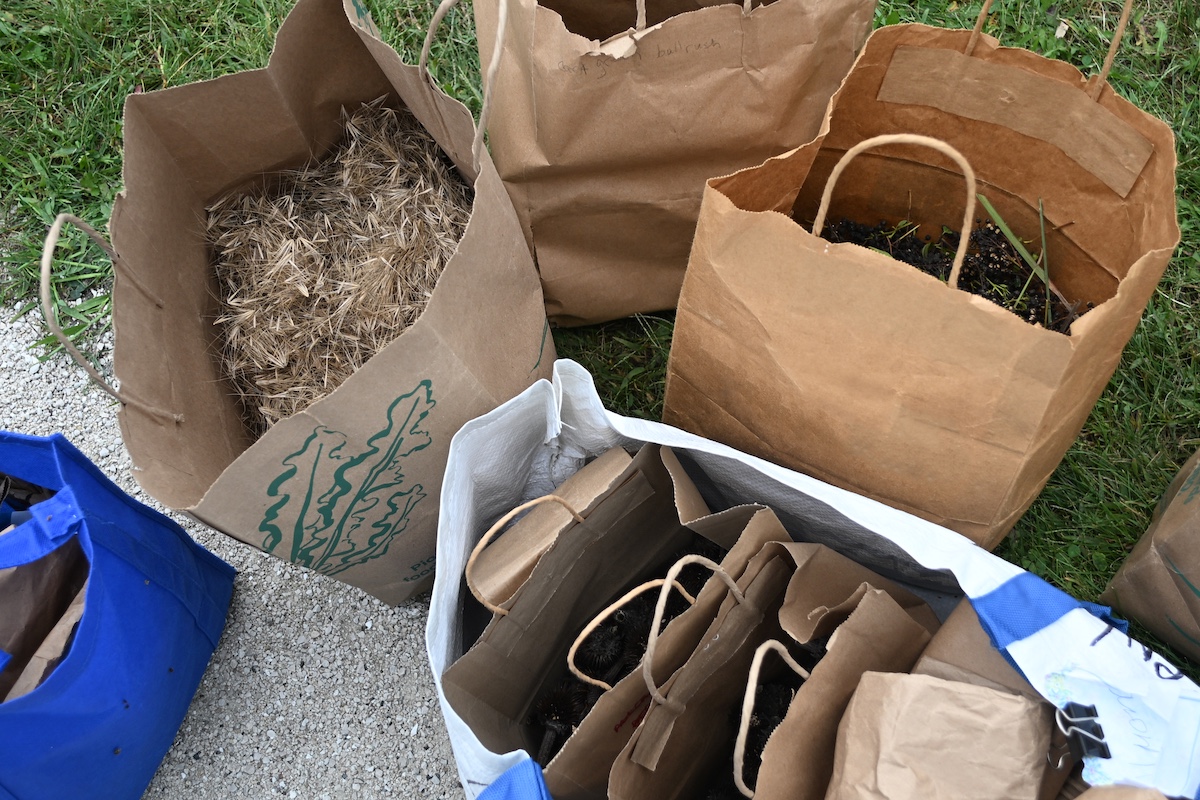
Bags of seeds collected by the volunteers from Greenbelt Forest Preserve. All photos by S.D. Shah.
The blazing golden of autumn has swept across Chicago, replacing the bright pinks and purples of summer. Across the Chicagoland area, many of our native flowers and grasses are seeding. I am trying to remember when I first noticed native seeds. It must have been through a volunteer workday with the Lake County Forest Preserve. The gentle work of collecting seeds happens in late summer and early fall, as the days start to cool and shorten, a welcome change from the pulling of invasive white sweet clovers or cutting down stubborn buckthorns in the midsummer heat.
In recent years, I’ve participated in seed collection efforts at several locations around Lake County district. At Illinois Beach State Park, my favorite seeds to collect are the marram and little blue stem grasses that grow in the sandy dunes and will be used to help restore damaged lakeshores in other parts of the county. As I pick them, I hear the iconic call of the sandhill cranes in the near distance.
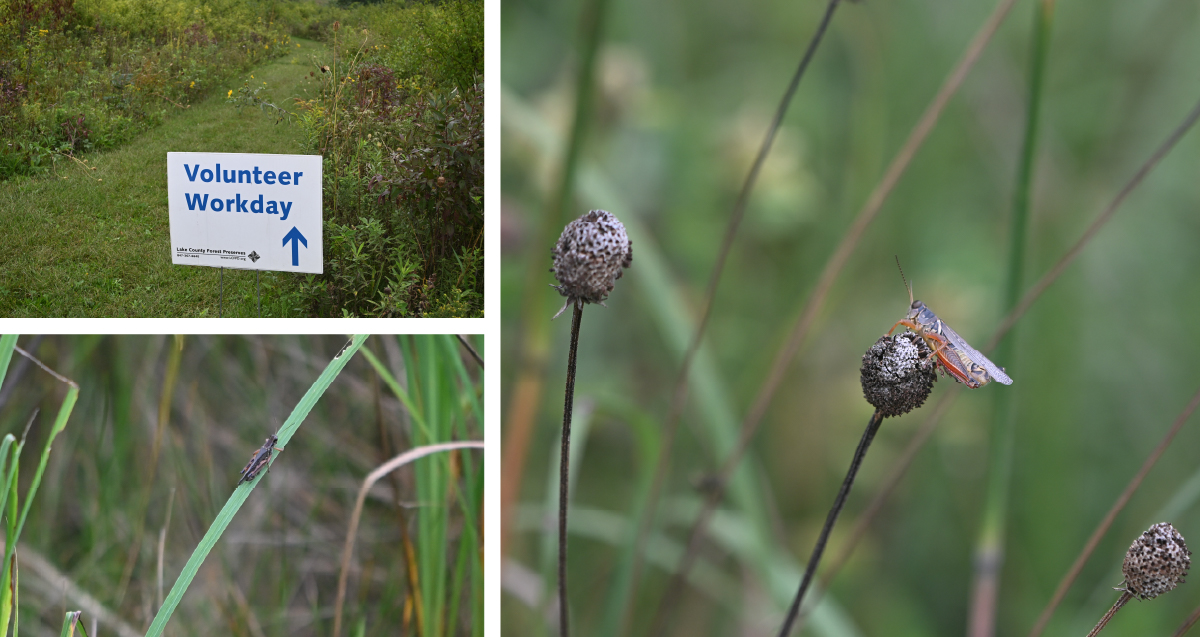
At Pine Dunes Forest Preserve, my favorite is the gray-headed coneflower (Ratibida pinnata) which grows near the trails. At the time of harvest, the flowers have mostly lost their pale-yellow petals, but I find an occasional petal curled up, desperately clinging on. The coneheads have turned grayish white. The seeds easily crumble in my hands and have a distinct anise-like scent. There is a tactile, meditative quality in the repetitive movement and time goes by quickly.
This year, I joined a workday at Greenbelt Forest Preserve to collect seeds in the marsh. I was expecting a similar relaxing and easygoing experience. In fact, it was more like a scene from an action motive, minus the weapon-wielding players, and, I highly (highly!) recommend it!
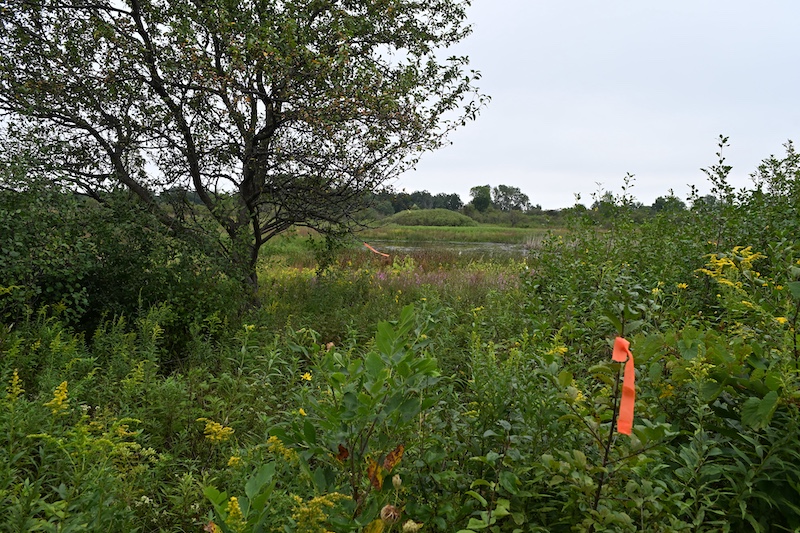
To enter the marsh, we walked along the Preserve’s main path until we came upon an orange flag. There, we veered onto a makeshift path that led to the wetland. Ahead, in the near distance, I saw another orange flag tied around the branch of a tree. This would act as our entrance and our exit, helping us to keep our bearings when inside the habitat. It became apparent how deceivingly small the marsh looked from a distance. Up close, it was much bigger and with no marked trails. Once inside, I understood the importance of the flags as everything looked the same. Without the markers it would be challenging to find the way out.
As we moved deeper into the marsh, the ground got muddier and soggier. We pushed through the dense undergrowth of the aggressive invasive purple loosestrife (Lythrum salicaria). A constant, low hum of crickets engulfed me, with each step followed by grasshoppers scattering in all directions. Blue damsels and dragonflies rested quietly against nearby foliage. Every so often there I sighted bees or butterflies in search of nectar. A hummingbird moth rapidly beat its wings, seemingly standing still in the air. It seemed the orange flag also indicated that I had entered insect territory. I was surrounded by them.
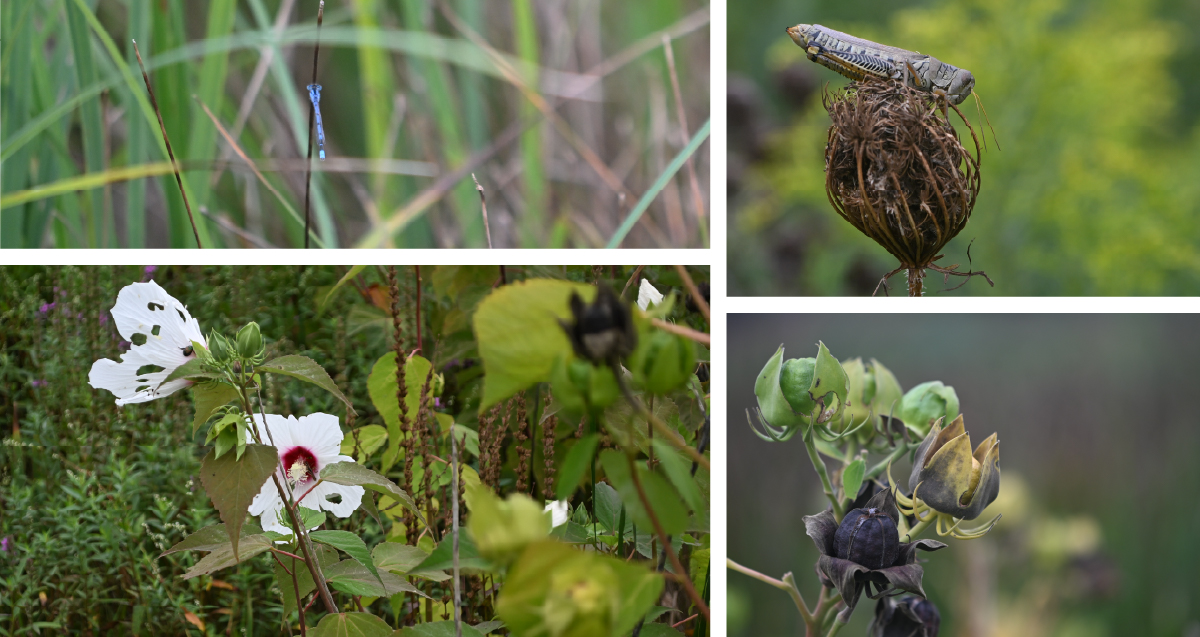
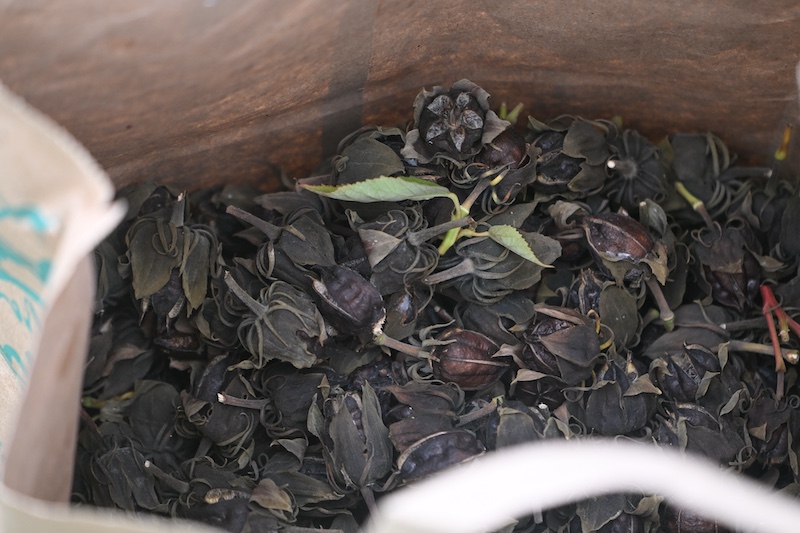
Here I collected several types of seeds. Marsh mallows (Hibiscus sp.) are tall native hibiscus that grow in swampy habitats. Some of the plants were still flowering but the seed pods of some plants were ready to cut. These pods had turned from a chartreuse green to mahogany brown and split open into five slices, with each slice lined with tiny round seeds. Rather than collecting individual seeds, we used clippers to cut and collect the pods.
Next, I collected water plantain (Alisma sp.) seeds. The seedheads are tightly woven, small, disk-like structures that unwind and turn brown when ready to harvest. It took a moment for my eyes to adjust, because, unlike marsh mallow plants, which are easy to spot on the outskirts of the marsh, water plantain is found deeper in the marsh. Spread amongst other plants, the plantain is camouflaged into its surroundings. While gathering water plantain seeds, I also collected ditch stonecrop seed pods. A low growing plant, when ready to harvest ditch stonecrop (Penthorum sedoides) has striking, red-horned seed pods.
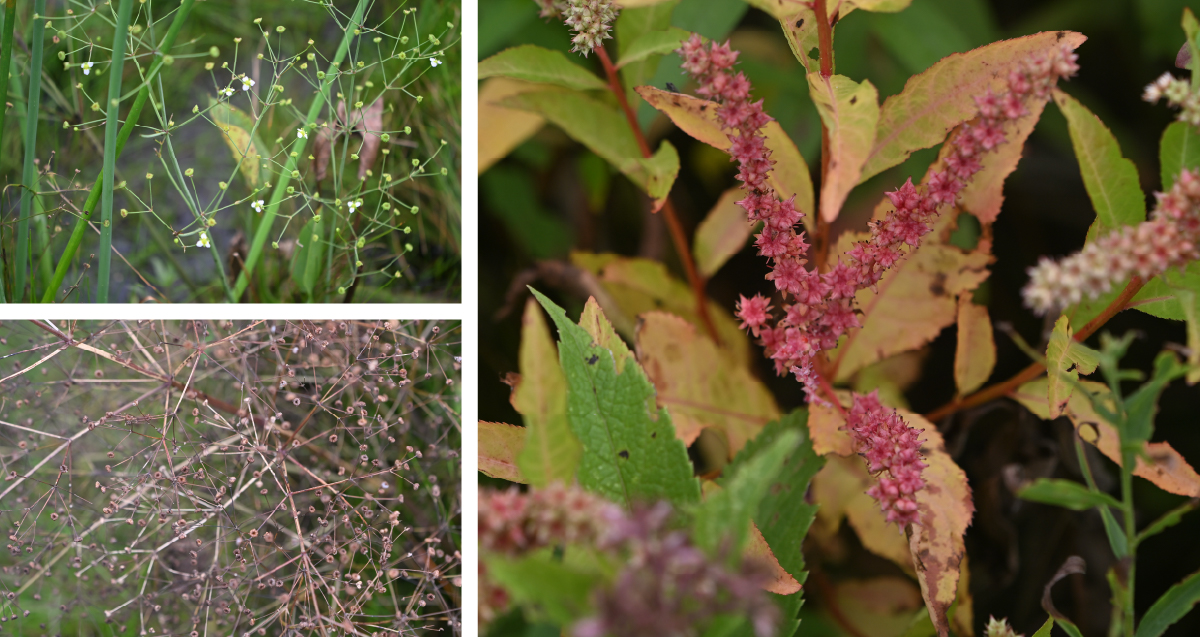
At the end of that workday, 17 volunteers had collected seeds from 17 species, including several that are specific to the marsh: blue flag iris, dark green bulrush, big bur-reed, ditch stonecrop, marsh mallow hibiscus, water plantain, wool grass, sweet flag and soft-stemmed bulrush.
Last summer, I started to wonder what happened to these seeds after we picked them. In the instance of the seeds I helped collect, the next step takes place at the Rollins Savanna Native Seed Nursery located in Grayslake. A huge undertaking maintained by a small group of people, the Seed Program has one permanent staff member, one 6-month seasonal staff member, and a troop of dedicated volunteers. The stewards from the 66 forest preserves (which make up more than 31,000 acres of land) across Lake County send collected seeds to this site for processing.
I had the opportunity to visit the site and speak to the Lake County Forest Preserve Nursery Program Manager, Kelly Burdick.
The nursery center itself is made of three distinct sections: a greenhouse for plant propagation, an outdoor nursery for growing native plants and a warehouse building for seed processing. At first glance, it all looks unremarkable. There is nothing that distinguishes it as a place that grows or processes native seeds. Yet, entering the building, with its high ceilings and open space design, it was impressive and had a charming quality, one reminiscent of a mad scientist’s lab. As I looked around, I saw different machines, instruments, tools and gadgets. Several workstations were set up around the room, along with rows of standalone shelves stacked with dried plants and seeds in various stages of processing.
The county’s native seed collection program involves intense planning and coordination and is spearheaded by the Nursery Program Manager. To give a sense of the scale of the production, last year, 500 pounds of seeds from 320 species were collected. This is the total weight after the seeds have been processed. In other words, in the case of the marsh mallow, the actual seeds would be part of the final weight, but the pods would not. A truly volunteer-based operation, those seeds were collected by 250 registered volunteers with an additional 1,000 people who signed up to participate in workdays.
The official seed list is generated in November of the prior year and is curated by four Lake County ecologists, each specializing in a habitat such as woodland, prairie or wetland. The ecologists work off a standard list of more than 320 seed species, with adjustments to the list made each year based on need.
From the final list, Burdick buys as many of the seeds as possible through a bid process. But not all seeds can be purchased. Some are too expensive to buy commercially, or there may not be enough volume to fill the order. In other cases, the target plant is rare, and their seeds may not be found on the market. Finally, for some species, the local genotype is preferred. This is why native seed collecting is essential, and the need arises for seeds to be hand-picked through the steward volunteer program.
The seeds that will be collected across the county are tracked by volume and site. As such, the same seed species collected at two different preserves are processed and documented separately. Rare seed species and seeds collected from remnant land receive top attention and are always kept separate. All this data is entered on a spreadsheet and a GIS map that the team has built out and maintains. The data will be used to identify locations for the seeds to be collected the following year. Using this information, Nursery Manager Burdick works with stewards for specific seed requests.
The stewards work diligently to plan, prepare and manage volunteer workdays to collect the seeds. Leading up to the workday at Greenbelt Forest Preserve, for example, the head steward identified the locations of all of the requested plants with seeds ready to harvest, scoured the place to find the best entrance into the marsh, marked it with orange flags, sent email communications, and made sure she had enough supplies—and snacks—so that the workday went smoothly.
By the end of that workday, 17 volunteers had collected seeds of 17 plant species. The details are a little bit messier. Typically, each volunteer collects seeds of multiple species. Correct labeling is essential. I collected five different types of seeds, for example, including one rare species. Each species has its own labeled bag. At the end of the workday, the head steward will track the seeds collected, combine seeds of the same type together, and label them appropriately, including where the seeds were collected. The bags are then dropped off at the nursery.
At the nursery, seed production was like a never-ending assembly line where seeds were “queued up” based on when they came in, unless they were marked as rare or remnant seed. Processing seeds entails separating, drying, weighing, tracking, storing and labeling.
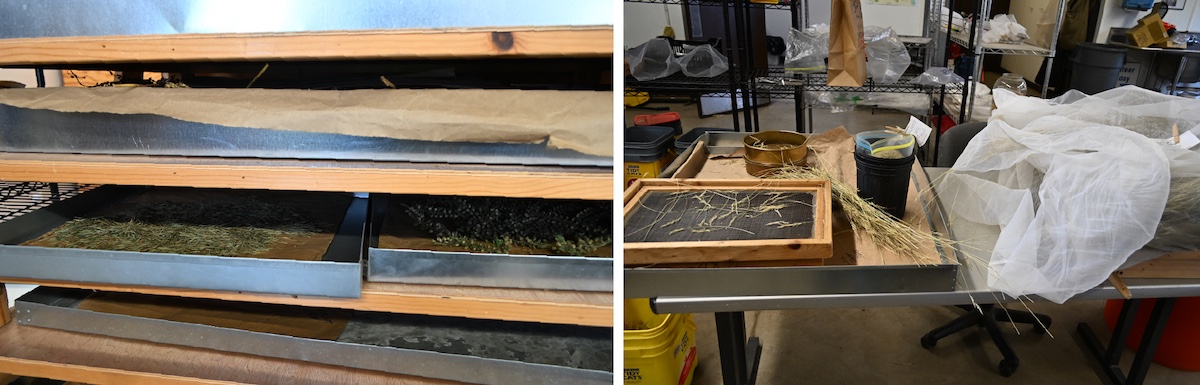
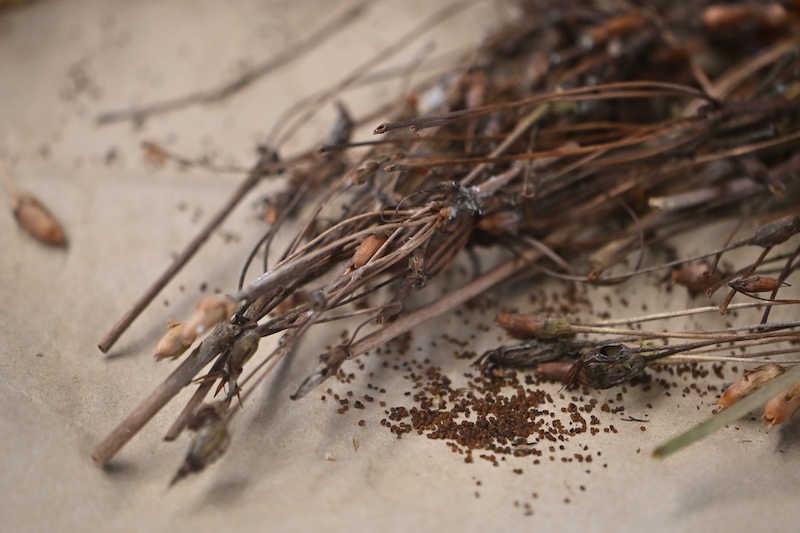
Upon arrival, the bags are emptied onto a tray and assessed for condition, including checking for any moisture. The seeds are stored on the trays or in bags until it is time for processing.
To get to the viable form of the seed usually means separating it from its protective parts, such as the pod or a shell, or by removing the floss or silky fiber. There are several methods for processing seeds. Some seeds are separated using a brush machine that acts as a sieve as the seeds tumble inside. Other seeds are processed by hand, with volunteers using screens that function as sieves and/or rolling pins that separate the seeds from their covering. For delicate seeds, the nursery uses a high-powered, tubular air blower to circulate seeds up a column, separating the parts by weight with the lighter parts carried higher in the column.
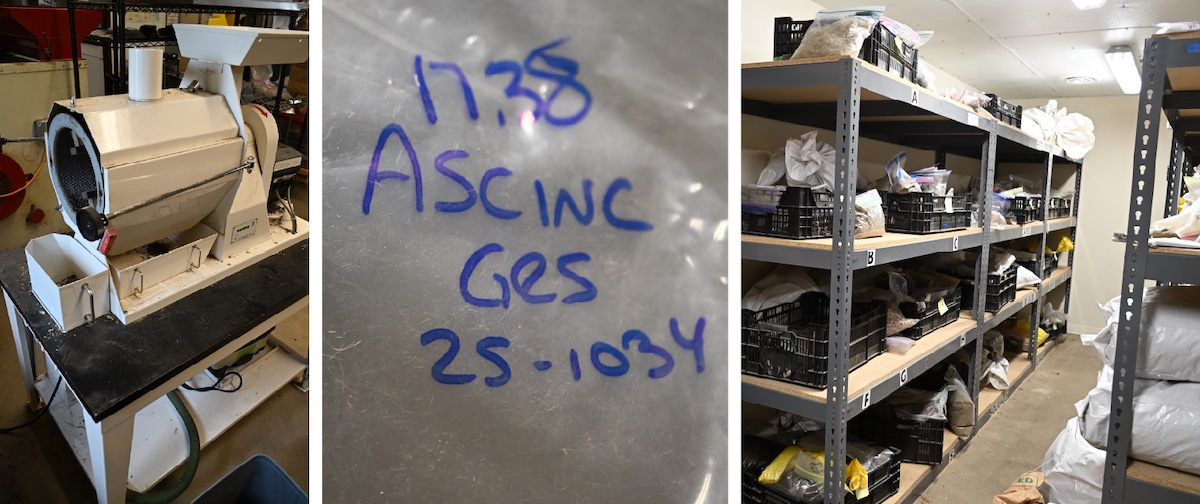
After the seeds are separated, they are weighed, transferred to a resealable bag and stored in a climate controlled (by temperature and humidity) storage area until it is time to move them to the next site. The resealable bags are labeled using an acronym system using the first three letters of the plant genus and first three letters of the species. Every bag is divided by project or site and tracked on a spreadsheet.
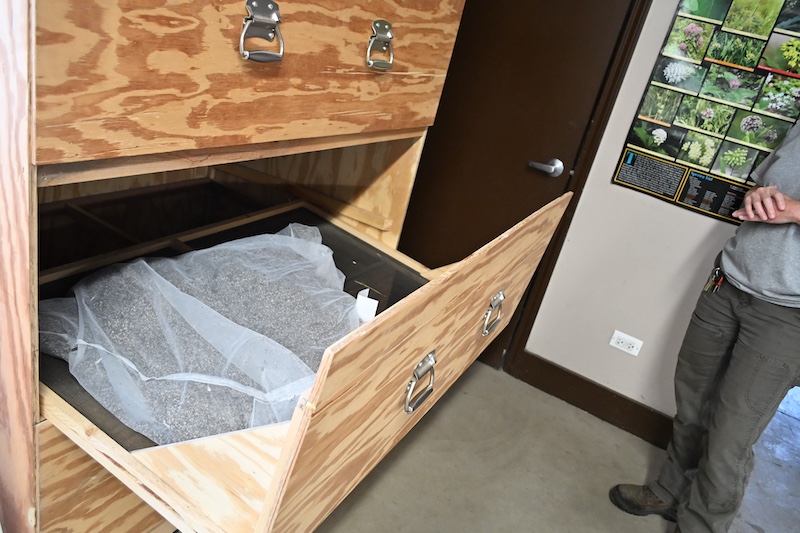
For some species, Nursery Manager Burdick makes seed mixes that can be used for recovery of habitats after a site is cleared of buckthorn trees or other invasive plants. Each mix may have 20 to 40 different species and are specific to the habitat, such as wetland mix or prairie mix.
Seeds are distributed during the winter months. While some seed species will be traded with other counties to help increase genetic diversity, most seeds will remain within the county for propagation and use in restoration projects. Burdick’s goal is to distribute the seeds within a year of receiving them.
The marsh at Greenbelt Forest Preserve is an example of how the seeds are collected and used to restore habitats. In 2019, Lake County volunteers worked to clear invasive species with plans for marsh restoration. Like the rest of the world, everything came to halt in 2020 until new protocols were in place that allowed the volunteers to restart the project. It was an intense undertaking, working in high temperatures and muddy conditions to set in the ground more 10,000 plants. These plants were ordered or grown in the nursery, including blue flag iris, dark green bulrush, ditch stonecrop and soft-stemmed bulrush plants from which, on my workday in 2026, volunteers harvested seeds.
It never occurred to me how important our roles as volunteers can be when it comes to seed collecting. One person does make a difference. Together, the collective whole can restore a marsh. These efforts have resulted in more diverse native ecosystems across the county.
This does not happen by chance but rather through strategic planning, collaboration and teamwork. This mighty operation is successful because everyone who participates has a similar vision of the end goal—preserving and maintaining our natural habitats.
K. Schultz. Tour the Native Seed Nursery -Rollins Savanna Short Video. Lake County Forest Preserve Department. Oct 27, 2010. Accessed 8.12.2026.
K. Schultz. Harvesting Native Seed Plant Seeds Video. Sag Moraine Native Plant Community. Sep 28, 2021. Accessed 8.17.2026
S.D. Shah is an illustrator, printmaker and nature journalist. She resides in Chicago. In 2020, Shah received her certificate in Traditional Botanical Art from the Chicago Botanic Garden. She is a novice but avid birdwatcher, hiker and native plant enthusiast. You can learn more about Sima and her work on her website.


Submit a question for the author