
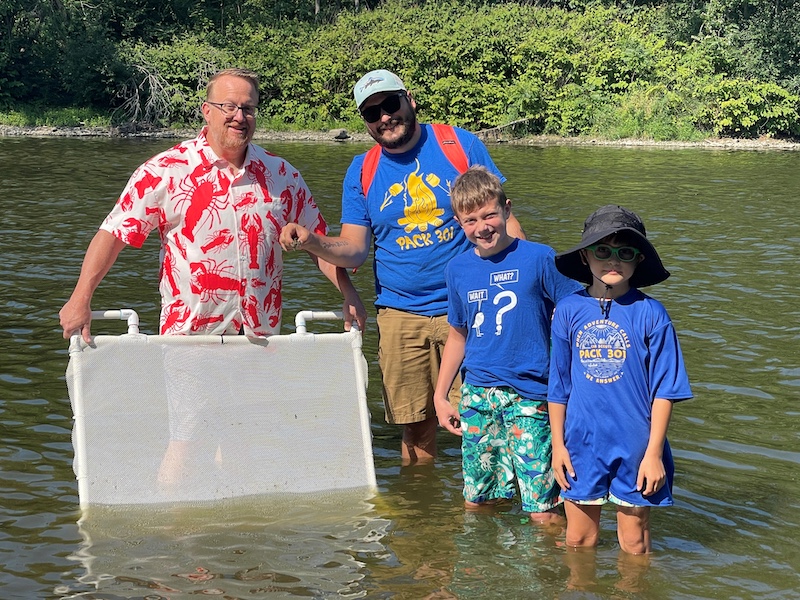
Rusty Rodeo participants and volunteers count and weigh rusty crayfish caught from the Fox River. In 2025, the event removed 80 pounds of rusty crayfish. Photo courtesy of Christy Graser.

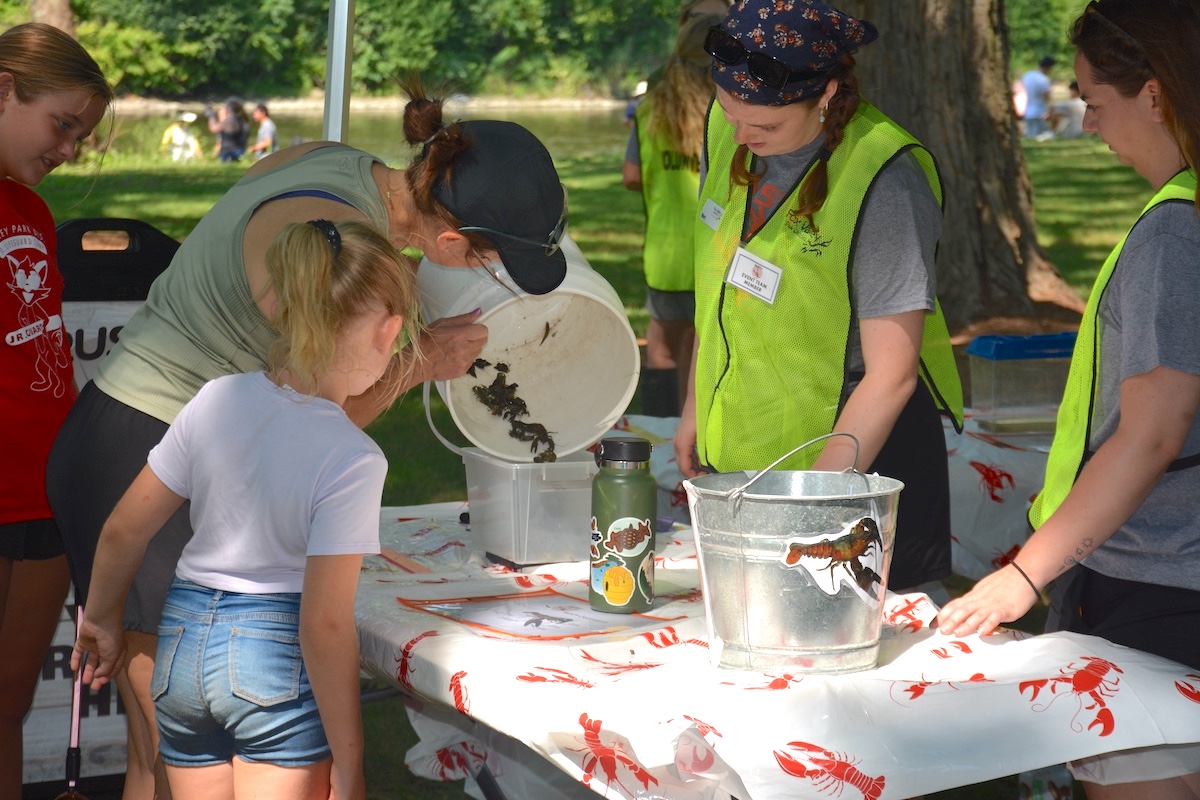
Rusty Rodeo participants and volunteers count and weigh rusty crayfish caught from the Fox River. In 2025, the event removed 80 pounds of rusty crayfish. Photo courtesy of Christy Graser.
A common childhood memory shared by many wildlife enthusiasts involves flipping rocks at a local creek and discovering the critters hiding beneath—snails inching along, worms wriggling through the muck, insects scurrying for cover, and, if you were lucky, a crayfish tail-flipping into the shadows. Crayfish (or crawdads, if you prefer) are fascinating freshwater crustaceans that come in a variety of colors, shapes and sizes. Healthy waterways support diverse crayfish communities, including native crayfish species that play an important role in aquatic ecosystems.
But what happens when the crayfish you find isn’t supposed to be there? While Illinois is home to a diverse community of native crayfish, non-native species have also found their way into the state’s waterways. When introduced outside of their native range, these crayfish can spread quickly and outcompete native species for food and habitat.
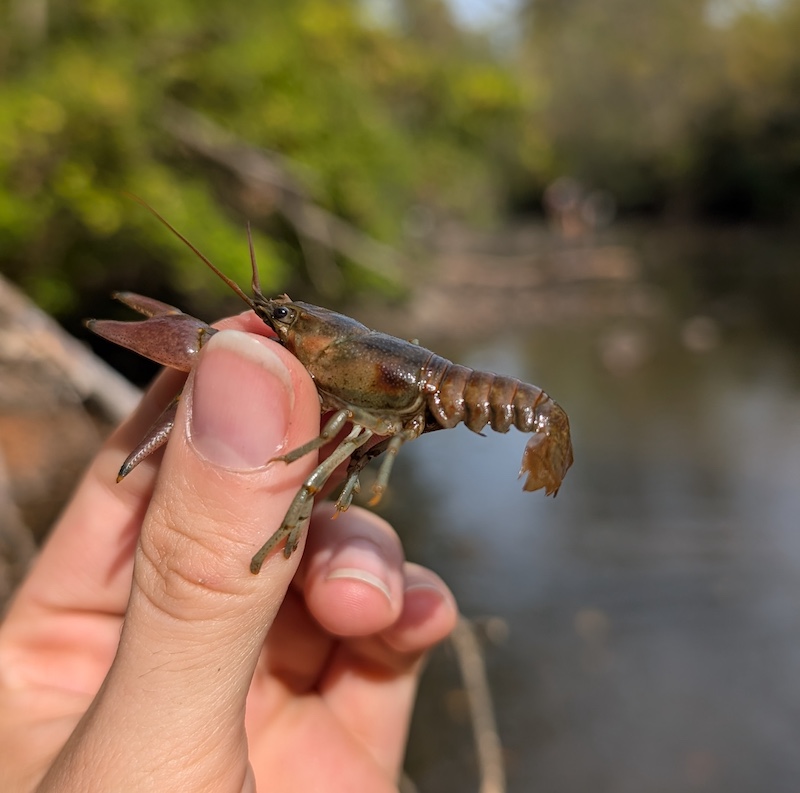
The most widespread invasive crayfish in Illinois is the rusty crayfish (Faxonius rusticus). The rusty crayfish gets its common name from the distinctive rust-colored spots on either side of its body. The tips of its claws are typically orange with black bands. It is native to the Ohio River basin in parts of Ohio, Indiana, Kentucky and Tennessee, but has been introduced to Illinois and more than 15 other states. One of the main ways that rusty crayfish have been introduced to new places is through the dumping of live bait, although the species has also been used in school programs and sold by biological supply houses.
Rusty crayfish cause problems where they are introduced because they are larger and more aggressive than native crayfish species, as well as better at avoiding predators. They can reduce native sport fish populations by eating their eggs and competing with juveniles for food. Rusty crayfish also damage aquatic vegetation, which reduces important habitat for fish and invertebrates and can also contribute to increased erosion.
One way of controlling the spread of rusty crayfish is through education and outreach, something that the Forest Preserve District of Kane County’s annual Rusty Rodeo combines with a family-friendly day on the water. The Rusty Rodeo is a free, hands-on event that allows the public to catch and remove rusty crayfish from the Fox River, where the species was first recorded in the late 1990s and early 2000s.
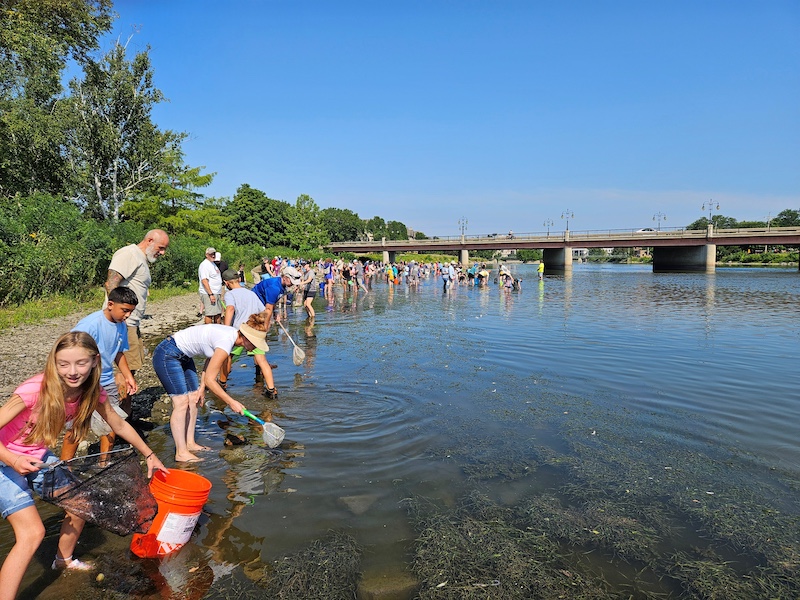
The idea for the Rusty Rodeo originated with a simple question during a summer camp activity. Christy Graser, Red Oak Nature Center Facility Manager with the Fox Valley Park District recalled that, “A camper scooped up a crayfish and asked what kind it was and we didn’t know! We took the time to identify it and learned that it was a rusty crayfish and that they were invasive.” The camp staff decided to check for more crayfish the following summer. That curiosity grew into an annual event where campers and families could catch and identify crayfish together.
Since its start in 2019, the Rusty Rodeo has grown from about 50 participants to 600. Now, the event has two sites along the Fox River – one in North Aurora and one in St. Charles.
“We outgrew our [original] site and were finding less and less rusty crayfish there,” Graser described. “We hope to bring on additional partners that will help us expand our reach to the northern part of the Fox River in the future.”
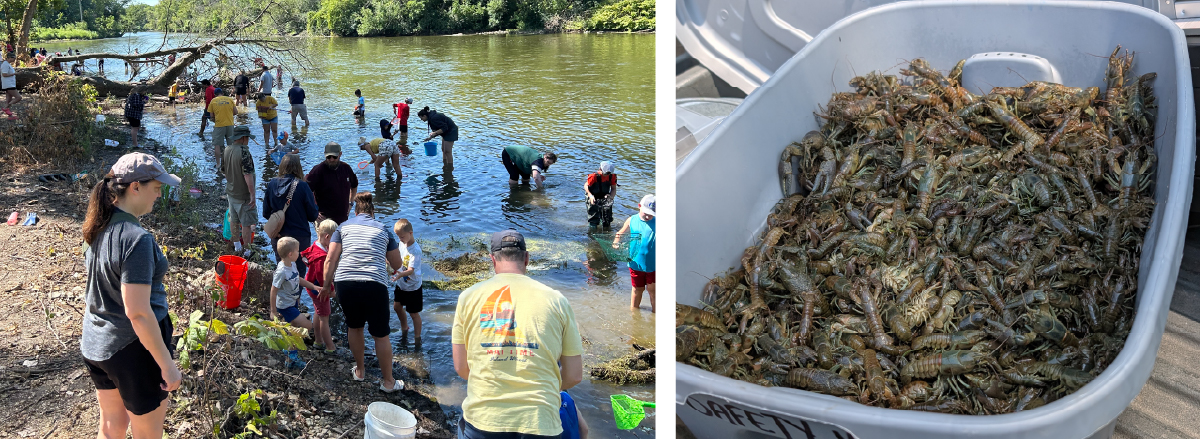
This event includes educational displays where attendees can learn about crayfish while competing for prizes for catching the most, largest and smallest crayfish. In 2025, the event saw more than 600 participants remove 80 pounds of rusty crayfish across two sites over two hours. The largest rusty crayfish collected was 5.25 in long and the smallest was 0.75 in long. The most crayfish caught by a single family was 457 crayfish!
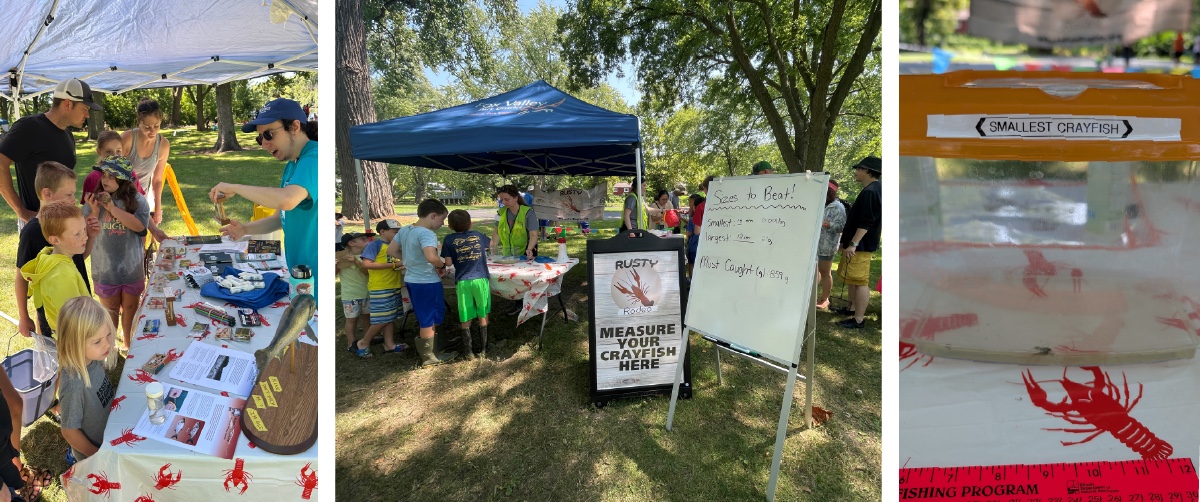
The Rusty Rodeo invokes that same sense of wonder that has drawn generations of families to explore their local waterbodies.
“We hear comments from grandparents tell[ing] us that they used to go into the river and search for critters when they were young, and now they have their grandkids standing next to them,” Graser said. The event gives families a chance to share the experience of discovering what lives beneath the surface all while taking part in invasive crayfish removal efforts that help protect the river.
Although 2026 would have marked the eighth annual Rusty Rodeo, the event was canceled due to high water levels creating unsafe conditions. But you don’t have to wait until next year’s Rusty Rodeo to get involved in invasive crayfish curriculum. If you are an educator, Illinois-Indiana Sea Grant developed a crayfish curriculum that provides state science standards-aligned lessons for students in grades 2-12. The curriculum also includes a community science project that classes can participate in by sampling for and reporting invasive crayfish to iNaturalist. Illinois’ Be a Hero campaign provides tips on cleaning boats and fishing equipment before moving between water bodies (“Transport Zero”) and not releasing unwanted pets and aquarium plants into the wild (“Release Zero”). Additionally, if you are an angler, you should avoid dumping live bait in a water body; rather, you should dispose of any remaining bait in the trash.
By preventing and removing invasive species like rusty crayfish, we can ensure the next generation will have the chance to experience the childhood wonder of exploring healthy rivers and streams.
Information about future Rusty Rodeos can be found at https://www.foxvalleyparkdistrict.org/. The event is co-sponsored by the Forest Preserve District of Kane County, St. Charles Park District, Fox Valley Park District and Friends of the Fox River. Partners like the Illinois Department of Natural Resources and Illinois-Indiana Sea Grant also provide educational booths and exhibits at the event. You can learn more about invasive species and how to reduce their spread and impacts at invasivecrayfish.org and transportzero.org.
Natalia Szklaruk is an Aquatic Invasive Species Educator with Illinois-Indiana Sea Grant and the Illinois Natural History Survey. Her work focuses on understanding the human behaviors within aquatic invasive species introduction pathways, including the aquarium trade and bait trade. She facilitates the Invasive Crayfish Collaborative, a regional initiative with the goal of improving the collective management of invasive crayfish in the Great Lakes region. She holds a M.S. in Environmental Science and Sustainability from Loyola University Chicago.
Katie O’Reilly has served as the Aquatic Invasive Species Specialist for Illinois-Indiana Sea Grant and the Illinois Natural History Survey since 2022. Her work combines research and outreach to develop tools for aquatic invasive species prevention, focusing on the ways aquatic invasive plants and animals are introduced. She holds a PhD in Aquatic Ecology from the University of Notre Dame.




Submit a question for the author