
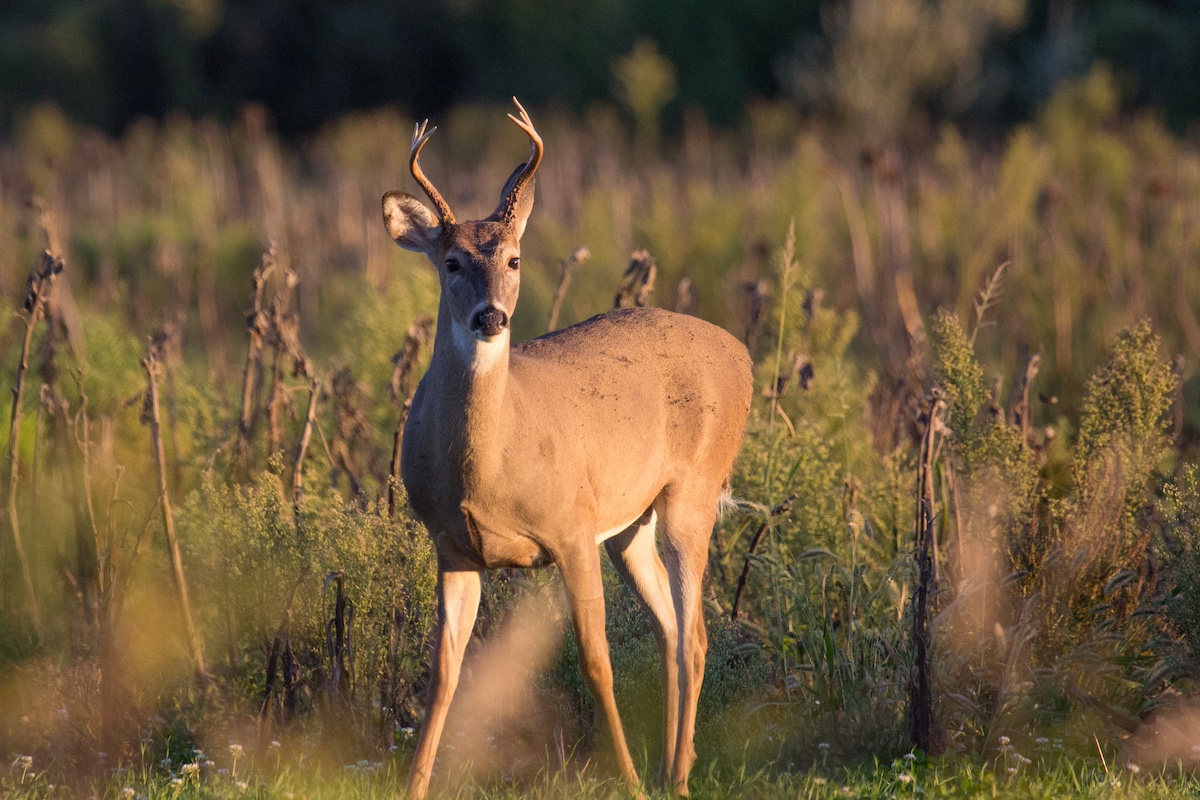
Photo courtesy of Dan Stephens, Illinois Learn to Hunt.

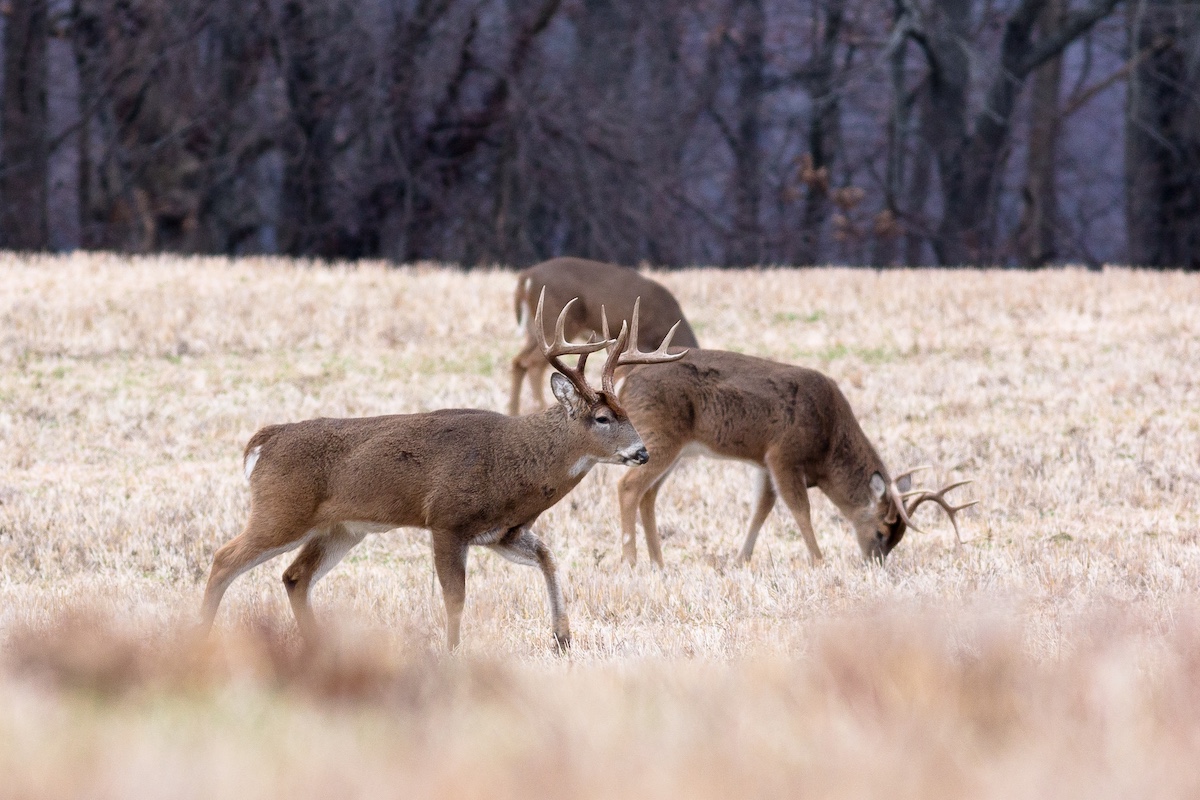
Photo courtesy of Dan Stephens, Illinois Learn to Hunt.
Proteins are found in every cell of the body, and animals’ DNA contains the instructions to build the different proteins. Proteins are essential for multiple biological functions, including growth and tissue maintenance (such as building muscle and bone), immune defense (helping fight viruses and bacteria when you get sick), and transportation and storage (as hemoglobin proteins transport oxygen in your blood and ferritin proteins store minerals such as iron in your liver). However, there are multiple disorders associated with protein misfolding—when a protein loses its correct 3-dimensional shape and therefore becomes non-functional and unstable. Some examples include Alzheimer’s disease, Parkinson’s disease, and prion diseases.
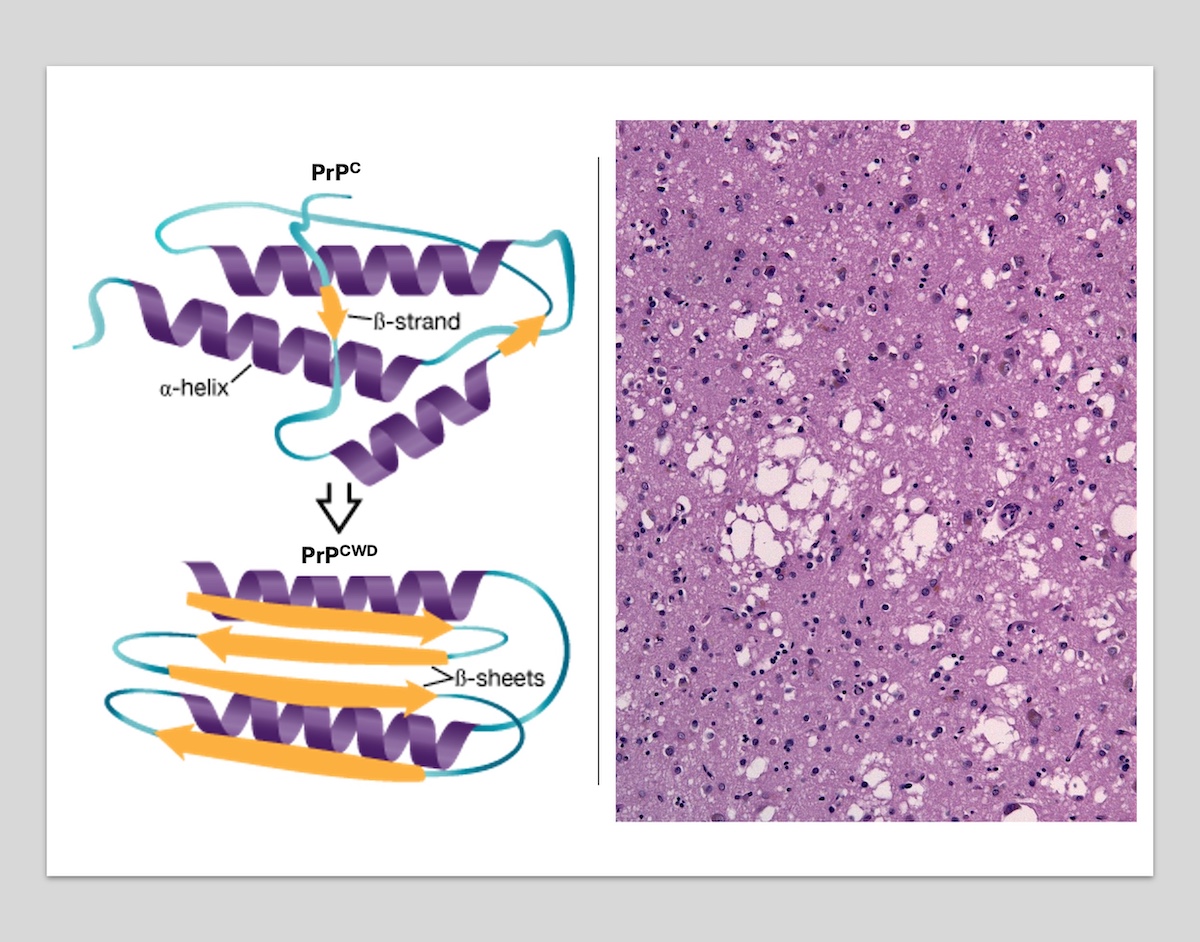
Chronic wasting disease (CWD) is a transmissible prion disease, 100% fatal, and affects wild and captive cervid populations. CWD develops when the normal prion protein (PrPC ) misfolds, losing its correct 3-dimensional shape and therefore stopping it from working correctly (Figure 1). When this happens, the misfolded prion protein is called PrPCWD, which is considered the pathogenic version of the prion protein, as PrPCWD can initiate a chain reaction that causes more normal prion proteins to misfold. This pathogenic misfolded protein cannot be degraded and accumulates throughout the body, especially in the brain, causing nerve cells to die.
Illinois reported the first case of CWD in white-tailed deer in 2002 (Mateus-Pinilla et al. 2013, Varga et al., 2021), and by 2026 CWD had been detected in 28 counties. However, after 20 years of research, a light of hope appears in the story of CWD: the genetic variation in the prion protein gene (PRNP).
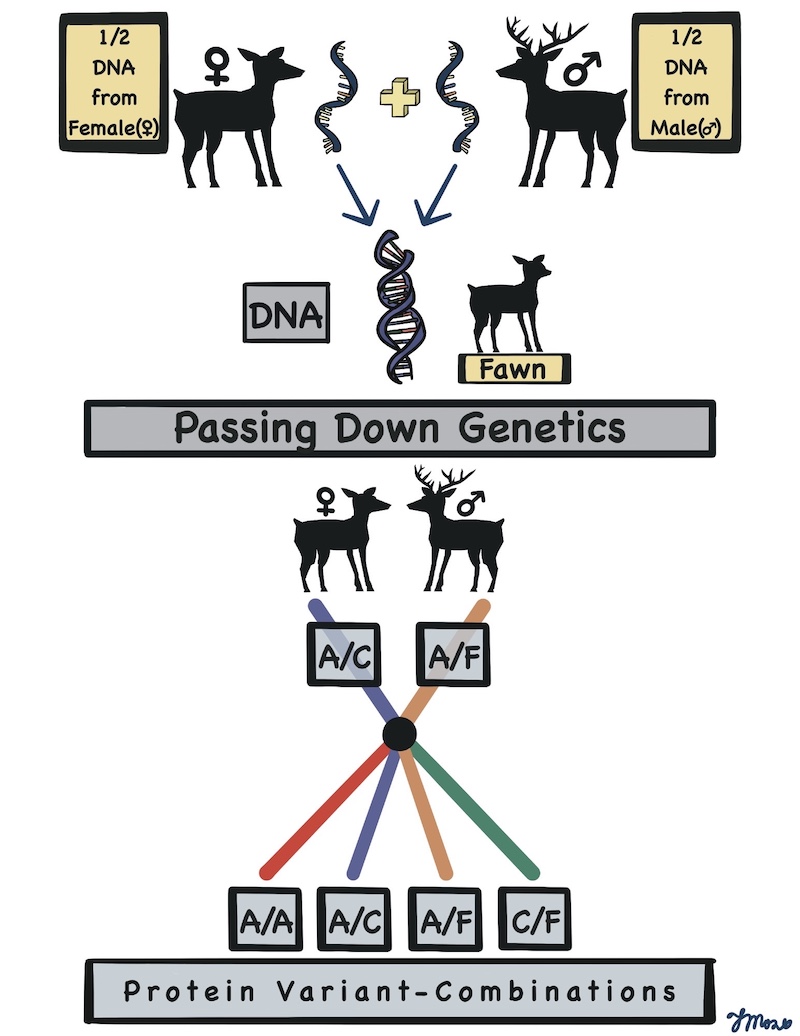
All animals inherit half of their DNA from each parent, and this combination produces a unique mix of both parents. An analogy in humans is inheriting DNA information from parents for blood-type, where the combination of A and B blood protiens in the parents impacts the blood type of the child. Similarly in deer, the fawn is born with two copies of the same protein, in the case of the prion protein, a prion protein variant A, C or F. Therefore, a deer can inherit information for protein variant combinations such as A/A, A/C and A/F (Figure 2).
The prion protein gene provides the instructions to form normal prion proteins. Because genes consist of two copies inherited from each parent, the combination of parents’ DNA results in prion protein variant combinations (Figure 2). Depending on the inherited “combinations” or “variants,” an animal may be more susceptible or resistant to CWD (O’Rourke 2004, Johnson 2006, Brandt 2015, Ishida et al. 2020).
With over 4,000 Illinois deer samples collected between 2002 and 2022, a recent study provided the most detailed resolution of PRNP genetic differences in Illinois by looking into their prion protein variant combinations. The study identified which prion protein variant combinations are more advantageous against CWD and how common each variant is in Illinois white-tailed deer (London et al. 2026).
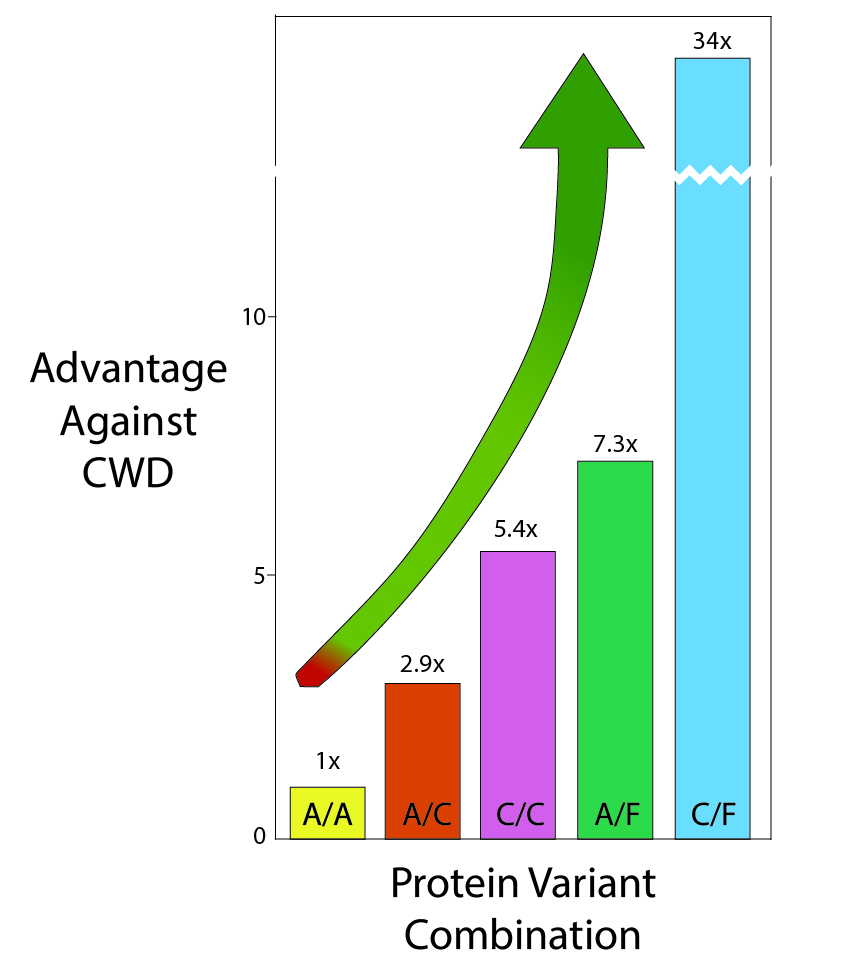
The most common prion protein variants found in Illinois are A, C, and F, with variant A being the most prominent in the state. In terms of susceptibility, variant F is shown to be the least susceptible to CWD, followed by variant C and then variant A. Among the inherited prion protein variant-combinations, the most common combination was (A/A)—deer that inherited one copy of variant A from each parent. This combination was also the most susceptible to CWD compared to other variants and their combinations.
Using the (A/A) variant-combination as a baseline, more statistical analyses were run to figure out which variant-combinations had the lowest susceptibility to CWD. The results showed that deer with a prion protein variant-combination of (C/F) were more advantageous against CWD followed by (A/F), (C/C) and then (A/C) (Figure 3).
The use of genetic tools to investigate differences in the risk to CWD provides another layer of information to advance modeling of CWD spread in the wild white-tailed deer herd. To reduce the risk of CWD spread, the results of London et al. (2026) may guide the allocation of resources to target surveillance, management, and hunting pressure, to areas with greater frequencies of highly susceptible deer. While some variant combinations delay the development of CWD, and do not fully protect deer from acquiring infection; a level of protection is better than no protection at all. Therefore, identifying populations at higher risk of disease or the naturally occurring PRNP genetic traits that may slow the spread and impact of CWD in Illinois white-tailed deer populations, are one more step to identify solutions to controlling CWD.
Evan London has been the lab manager for the Mateus/Novakofski Wildlife Veterinary Epidemiology Laboratory since 2018. His thesis work focused on a chromosome-scale assembly of the white-tailed deer genome. He is currently pursuing his PhD, and his dissertation work focuses on identifying genetic variation associated with advantage against chronic wasting disease and measuring population relatedness.
Trisha Mendoza is a Graduate Research Assistant in the Wildlife Veterinary Epidemiology Laboratory at the Illinois Natural History Survey. Her studies focus on the effects of landscape barriers and connectivity on chronic wasting disease transmission and genetic susceptibility. She earned her B.S. in Natural Resources and Environmental Sciences and is currently working on her M.S. at the University of Illinois Urbana-Champaign.
Dr. Tooba Latif is working as a Visiting Senior Scientific Specialist in Epidemiology at the Wildlife Veterinary Epidemiology Laboratory at INHS-PRI. She is involved in genetic research on chronic wasting disease and studying co-infections in white-tailed deer. She earned her Ph.D. in Wildlife and Ecology from the University of Veterinary and Animal Sciences (UVAS), Lahore, Pakistan.
Dr. Nelda Rivera's research focuses on the ecology and evolution of new and re-emerging infectious diseases and the epidemiology of infectious diseases, disease surveillance, and reservoir hosts’ determination. She is a member of the Wildlife Veterinary Epidemiology Laboratory and the Novakofski & Mateus Chronic Wasting Disease Collaborative Labs. She earned her M.S. at the University of Illinois at Urbana-Champaign and D.V.M at the University of Panamá, Republic of Panamá.




Submit a question for the author