
Photo by Courtney Celley, USFWS.

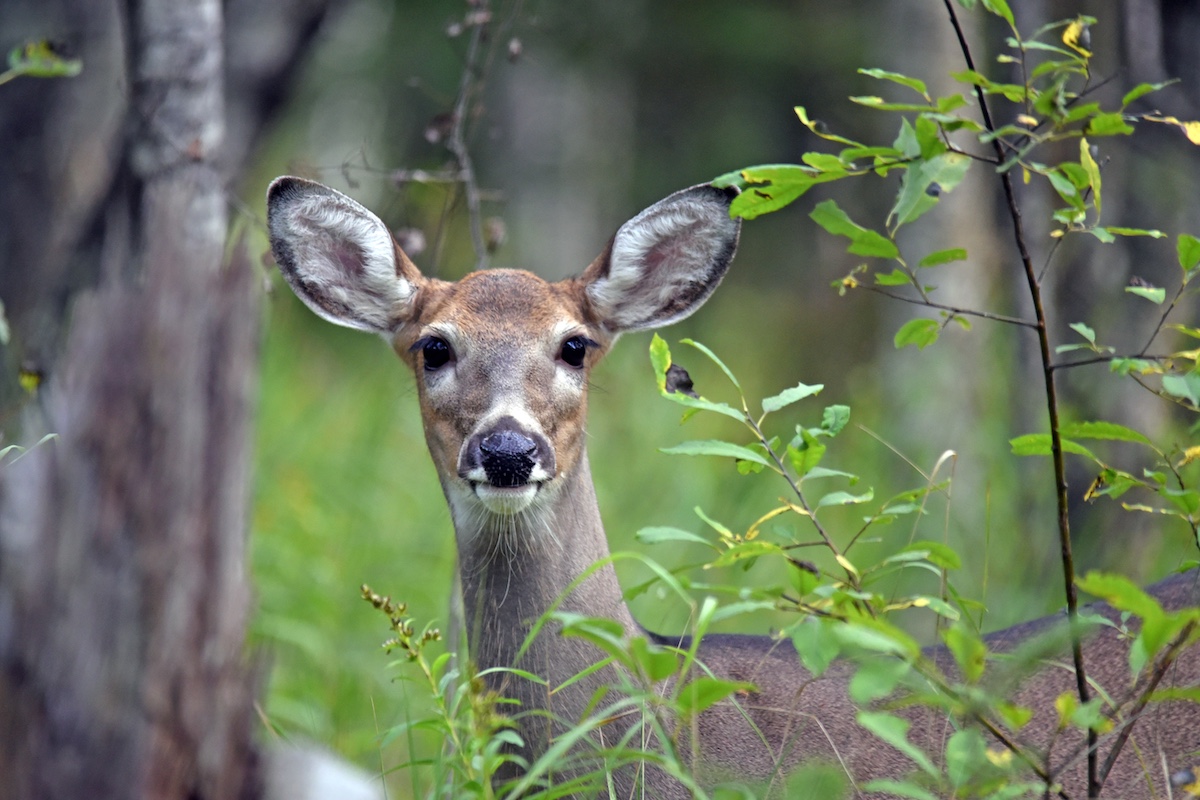
Photo by Courtney Celley, USFWS.
Each year in spring as temperatures warm, wildlife begins to stir. Unfortunately, that also means ticks are out seeking a host. These little arthropods, closely related to spiders and mites, carry a wide variety of viral, bacterial and parasitic pathogens.
Among these are well-known Lyme disease (Borrelia sp.) and spotted fevers (Rickettsia sp.), as well as causing severe allergic reactions such as Alpha-gal syndrome. Ticks are in every part of Illinois. Surveying and collecting tick samples can be labor-intensive, time-consuming, and frustrating, but these data are valuable. Surveillance of ticks helps residents, scientists, veterinarians, and health professionals understand tick abundance and occurrence, habitat selection and disease movement. Just as there are a myriad of native and non-native tick species, the hosts sought by immature and adult ticks can vary, as well as the typical habitat(s) of the tick species.
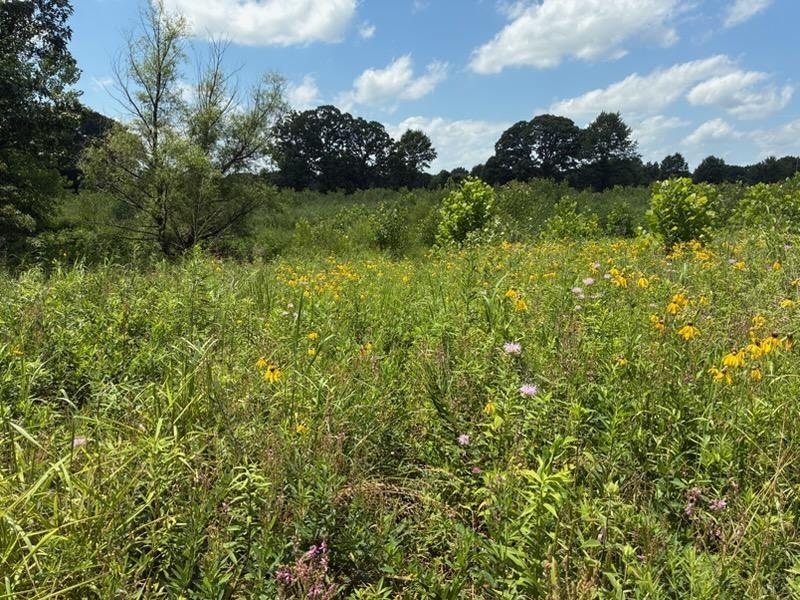
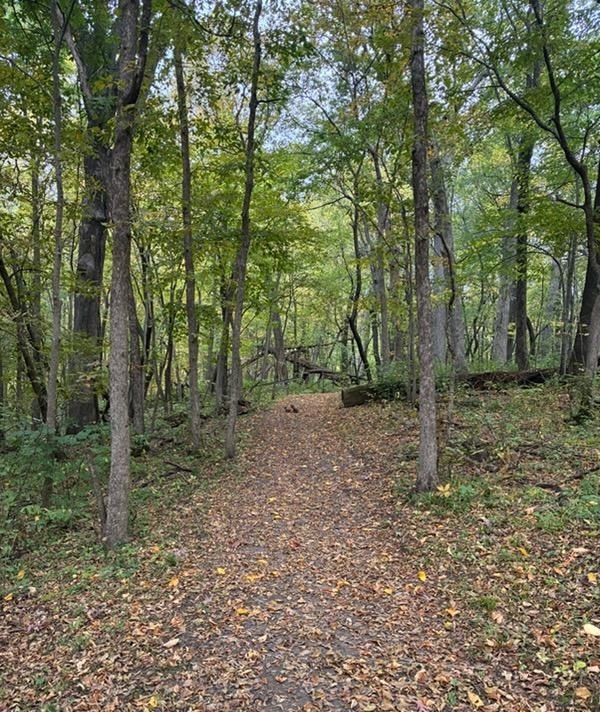
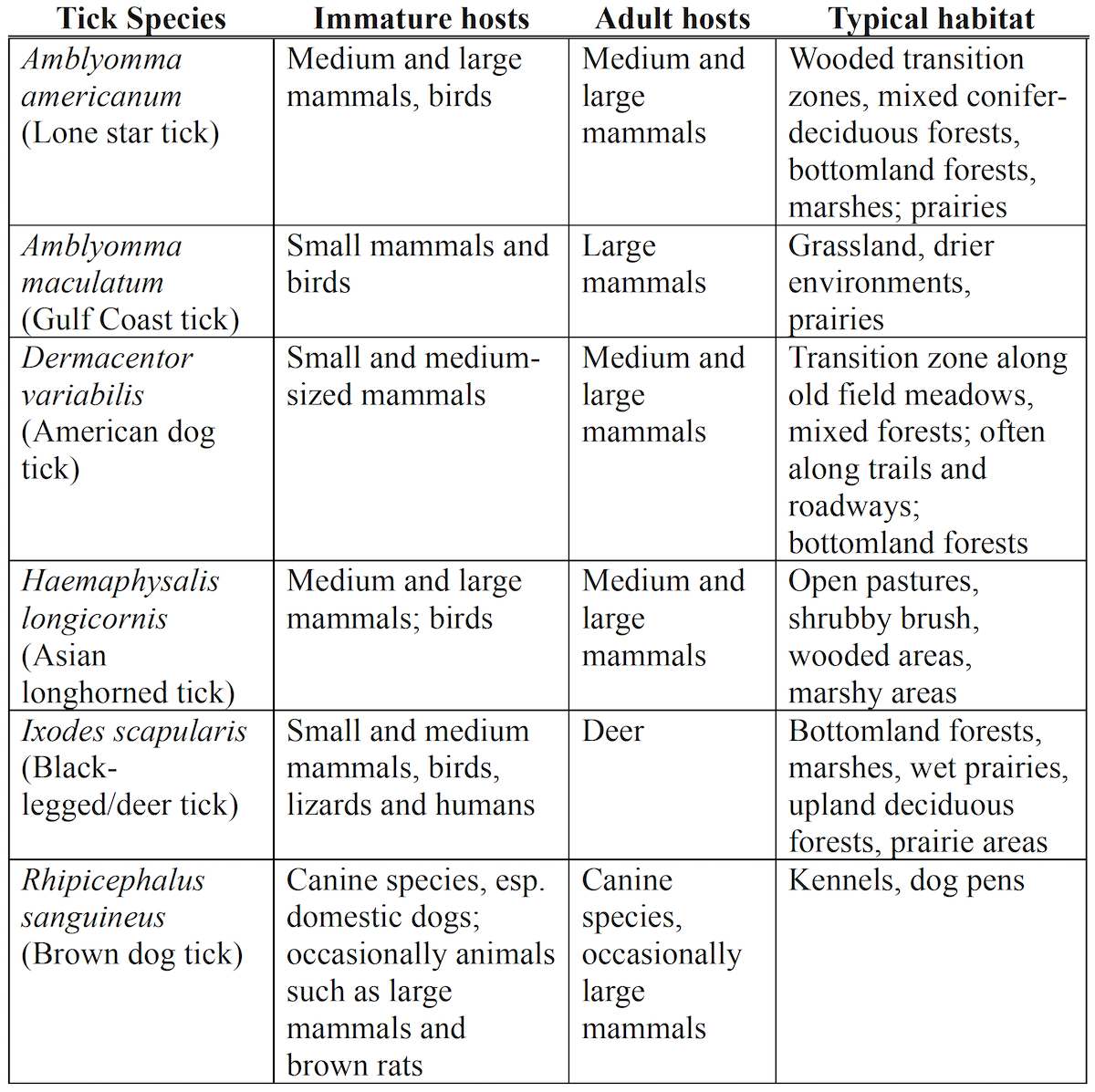
Table 1 lists the major tick species of Illinois, their associated immature and adult hosts, and typical habitats. Many species can overlap in their typical habitat (Figs. 1 and 2) and the movement of wildlife through these areas can help disperse tick larvae and nymphs over large areas. Although typical habitats of ticks are known, conducting surveillance for specific ticks based on a tick’s typical habitat may not yield any results. Effective surveillance for ticks relies on identifying potential tick harborage areas, then collecting, identifying, and testing ticks for pathogens. However, even the most astute planning can still yield little to no ticks.
There are several tick collection methods; however, some are better suited than others depending on the objective(s).
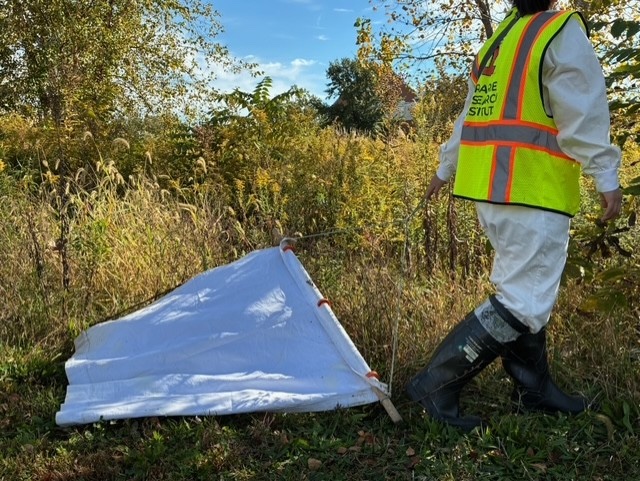
The most common method, and the gold standard, is dragging. This approach uses a cloth attached to a dowel and is pulled along behind a person (Fig. 3). Dragging results are used to classify county status, the presence/prevalence of pathogens in ticks, and yields information about life cycles and how these are influenced by seasonal and interannual variations in climate (phenology).
Other methods include ticks collected from hosts such as
Collections from hosts can be used to classify county status, but none can be used to determine prevalence within a county. However, these methods can be used to direct dragging locations, saving time and research resources.
The Asian longhorned tick was first found in Morgan and Hamilton counties via dragging in 2024; definitely not what we wanted to hear. The presence ALT can be serious for livestock. Tick numbers can become burdensome (there are U.S. cases of cattle with several hundred to thousands of ticks to a ewe with an estimated 12,000 ALTs), leading to death through exsanguination or anaphylaxis to carrying an untreatable protozoal infection that can be deadly. Knowing where ALTs are can give livestock producers a leg up in protecting their livelihood. Subsequently, we began looking for ALTs by conducting cattle inspections on-farm, at a livestock auction barn and cattle buying station and found ALTs on cattle from Clay and Pope counties in 2025. In 2026, through collection at the cattle buying station, we have found ALTs on cattle from Marion, Franklin, and Wayne5 counties. This August a cattleman called his herd veterinarian due to cattle being lethargic and infested with ticks. Those ticks were subsequently identified as ALTs and blood samples revealed that his cattle were suffering from the protozoal infection carried by ALTs.
Basically, except for Morgan and Henry counties, the tick is south of I-70 and east of I-57. However, a wrench has been thrown into that idea—the latest county is Henry, located in northwestern Illinois.
Henry County, like Morgan, does not border any counties with known populations of ALTs. So how did the tick arrive on a closed-herd (no cattle are brought onto the farm from the outside) farm? We have several ideas, but the first that comes to mind are migrating birds. Illinois is on the Mississippi Flyway where more than 300 bird species migrate. This tick is well documented to attach to several species of birds – e.g. great horned owl, northern cardinal, house wren, blue jay, Carolina wren, bald eagle and Canada goose. A bird could have picked up a single tick further south, dropped it on the farm then flew on north. A second possibility is the movement of larger wildlife such as white-tailed deer and bobcats. A third possible scenario is people traveling with their pets. People visiting and/or vacationing in areas where the tick is endemic could bring the tick back on their clothing or pets. Regardless of how the tick arrived, it is definitely there and unfortunately will be there for a very long time.
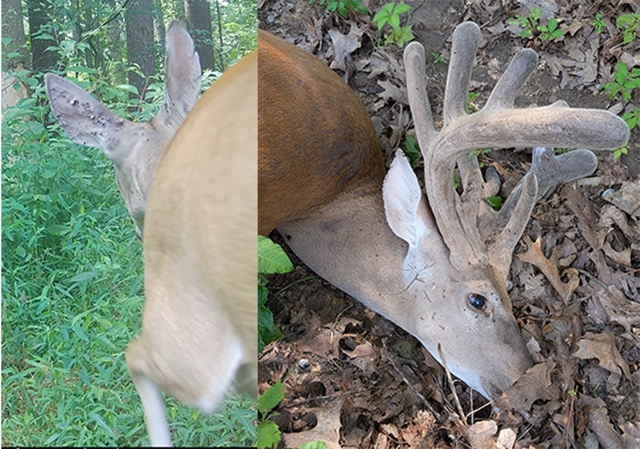
White-tailed deer (hereafter; deer) are important hosts for adult Lone star, Gulf Coast and Asian longhorned ticks. Thus, a cost-effective means of detecting new county-level distributions, especially for ALTs, is using deer as “collectors” of ticks. Figure 4 demonstrates how many ticks can be on deer as they move through their environment. Deer can travel large distances and through areas that would be difficult to utilize dragging methods, thus, the deer hunter-harvested season would be an ideal time to collect attached ticks.
The hunter-harvested deer season spans from early October to mid-January through bow, shotgun and late winter seasons. Generally, as deer season progresses, temperatures drop causing ticks to enter diapause until temperatures rebound again in the spring. Although temperatures will drop, the statewide deer harvest numbers have been robust for several years with 174,006 deer harvested during the 2025-2026 season. This deer season should provide ample opportunities with sufficient sample sizes to help fill in the gaps of tick movement at the county level across Illinois.
By collecting deer skin sections from harvested deer throughout Illinois, we can monitor the movement of native ticks – lone star, black-legged, and Gulf Coast – while also finding more counties that harbor established populations of ATL. This information can be used in the following year to locate areas of interest in those new counties to conduct dragging to confirm ALT presence.
We would like to partner with Illinois deer hunters this season to collect deer skin sections. Ideally, 10 individual deer from random areas of each county would be collected.
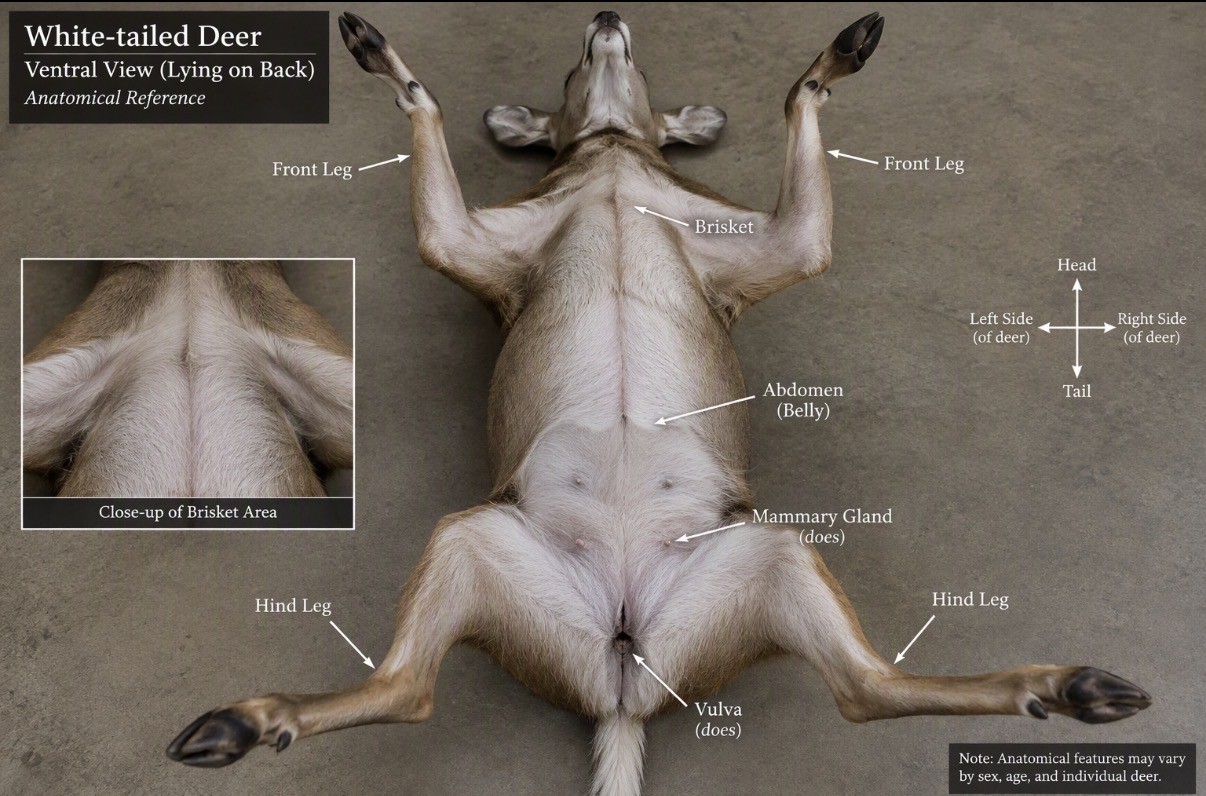
Figure 5 depicts a deer with areas of interest for collection. Once a midline incision has been made to field dress the deer, two – 3-inch-wide sections along each side of that incision, in the area of the deer’s white belly, can be cut away. The third piece of deer skin is the brisket area; the chest area that includes the base of the neck to the chest area, an approximately 16- by 16-inch area.
The skin sections can then be placed in a sealable bag and labelled with the date and county the deer was harvested. All bags should be placed in a freezer until pick up is arranged after the end of deer season.
If you are interested in partnering with us or want more information, call Dr. Steckler at (618) 695-4917 or email tsteckle@illinois.edu.
Teresa L. Steckler, PhD is with the University of Illinois Extension.
Lance E. Jones, MS is with the Medical Entomology Lab at the Illinois Natural History Survey.




Submit a question for the author