
A researcher with the University of Illinois measures a largemouth bass, pinching the lobes of the tail fin together. Photo by Shasta Kamara.

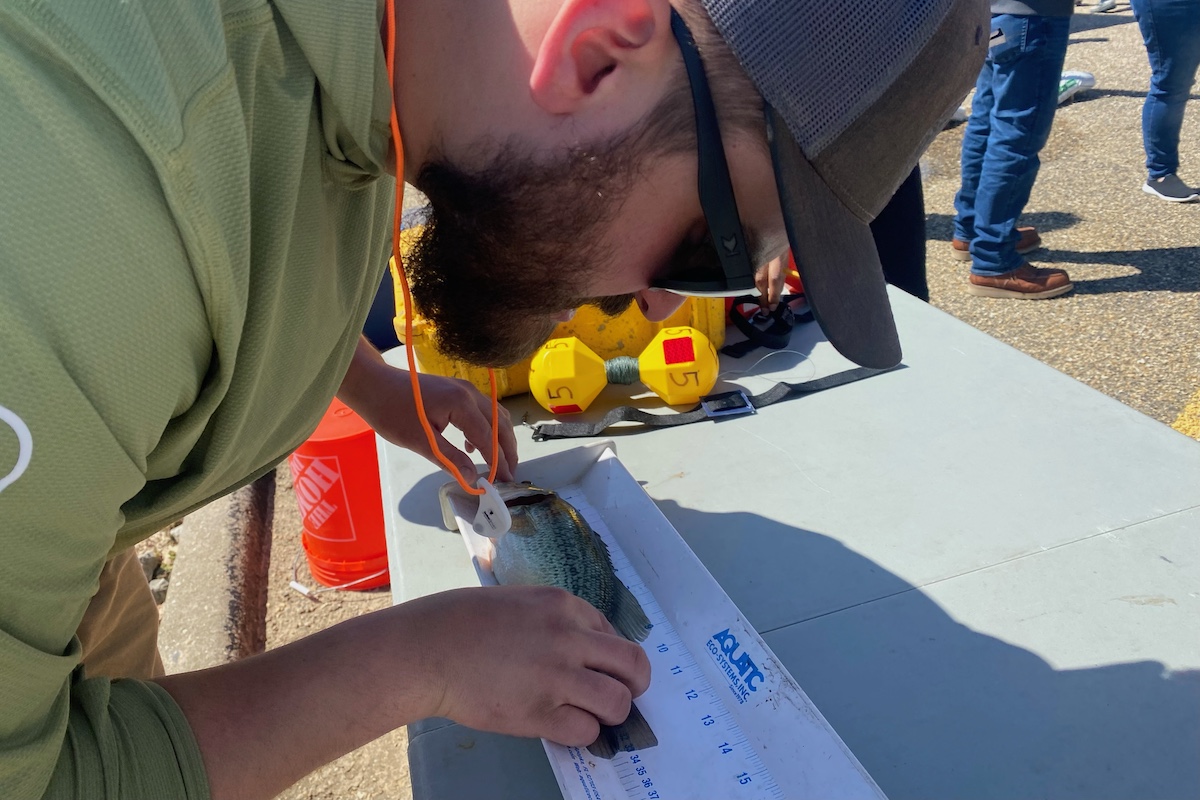
A researcher with the University of Illinois measures a largemouth bass, pinching the lobes of the tail fin together. Photo by Shasta Kamara.
Have you ever told a fish story without holding your hands out to indicate the length of the fish? Everyone in the fishing world can agree that size matters, whether you are sharing impressive stories or following regulations. When it comes to telling a story, the key factor to impress on new anglers is the importance of adding at least a few inches to emphasize whatever story you’re telling. In other contexts, precision matters, and the best (or legally required) way to measure a fish can differ from one species to another.
In Illinois, not all fish have length limits, but for the ones that do, no fish shorter than the specified minimum length limit may be taken from any water body with a length limit. Check out the annual Illinois Fishing Regulation book for details. For most species, fish length will be measured from the tip of the snout to the end of the tail while the fish is laid flat on a ruler, with the mouth closed and the tail lobes pressed or “pinched” together. This type of measurement is called the “total length.”
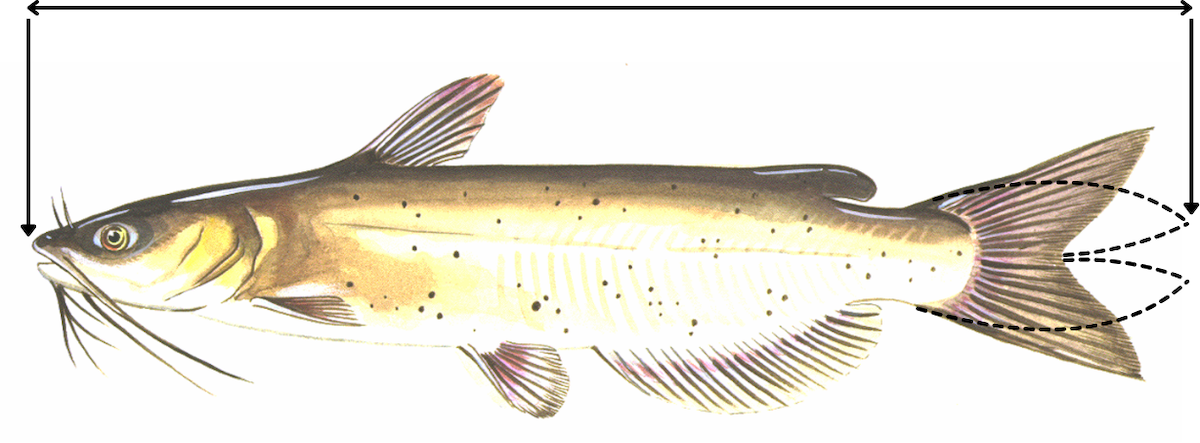
Total length is the most intuitive measure and usually takes less time than other techniques. This speed is better for anglers who need to quickly determine if their fish is long enough to keep or if they need to release it.
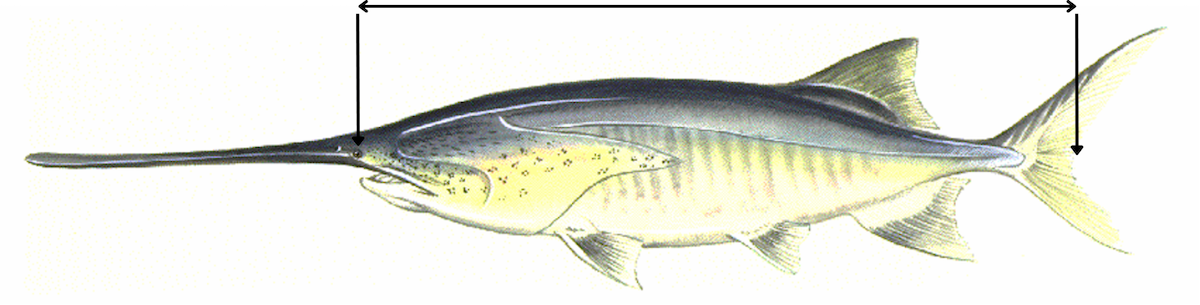
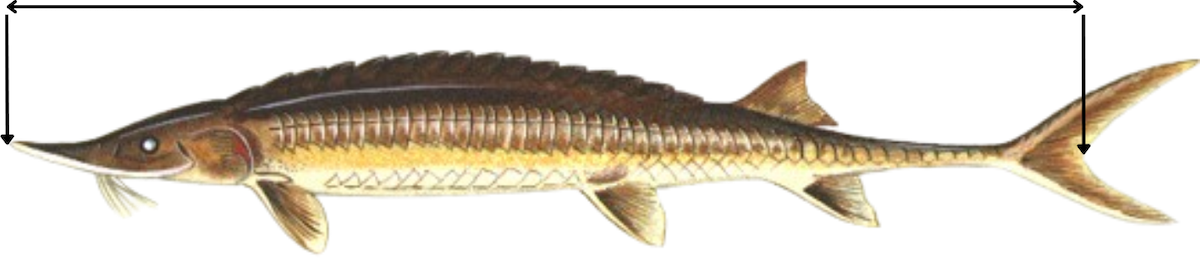
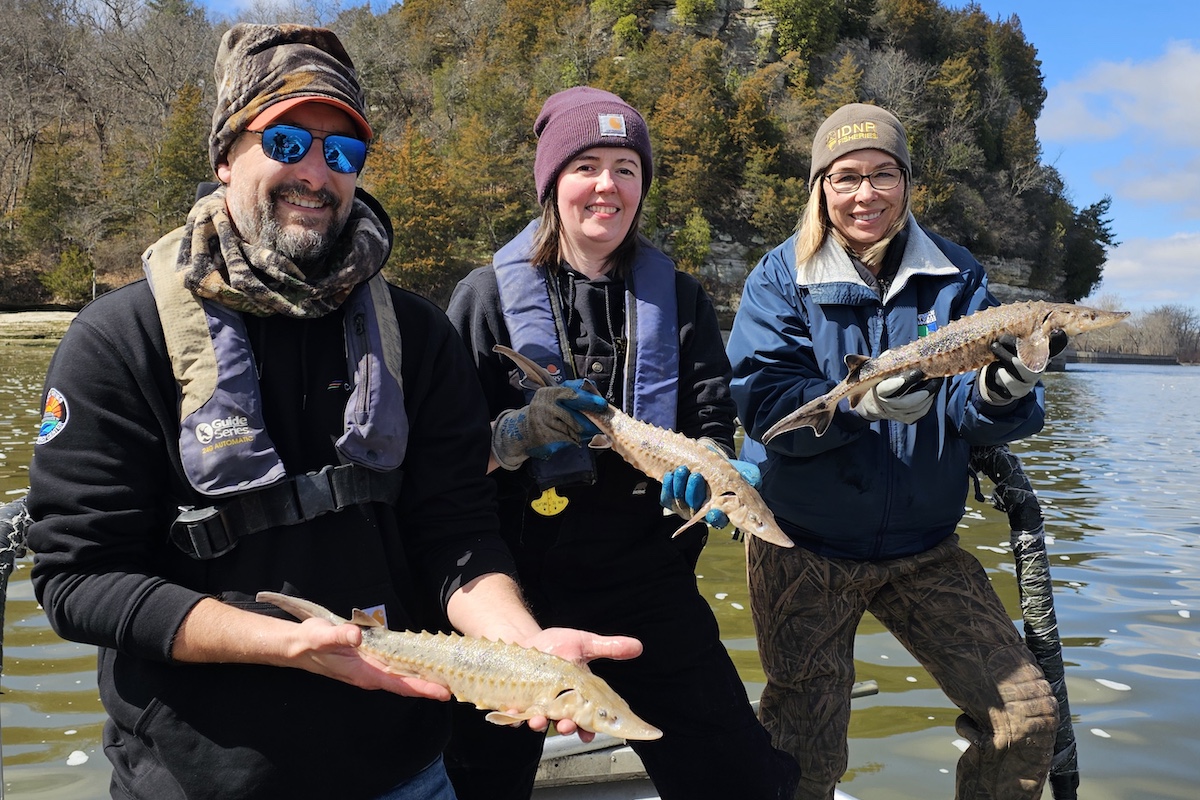
Some fish must be measured differently to follow regulations: paddlefish and sturgeon. These fish all have heterocercal tails. Heterocercal tails have unequally sized lobes, and the vertebrae extend into the upper lobe. For these species, we use a measurement called fork length, which typically goes from the snout of the fish to the fork of the tail. For paddlefish, with their unique snout shape, an additional modification is made: the measurement is from the eye to the fork of the tail.
A third measurement type is called “standard length,” extending from the tip of the snout to the end of the caudal peduncle, right where the tail or caudal fin starts. This measurement is usually only seen in scientific surveys, often when researchers are interested in questions related to body condition (weight/length ratio) of fish.
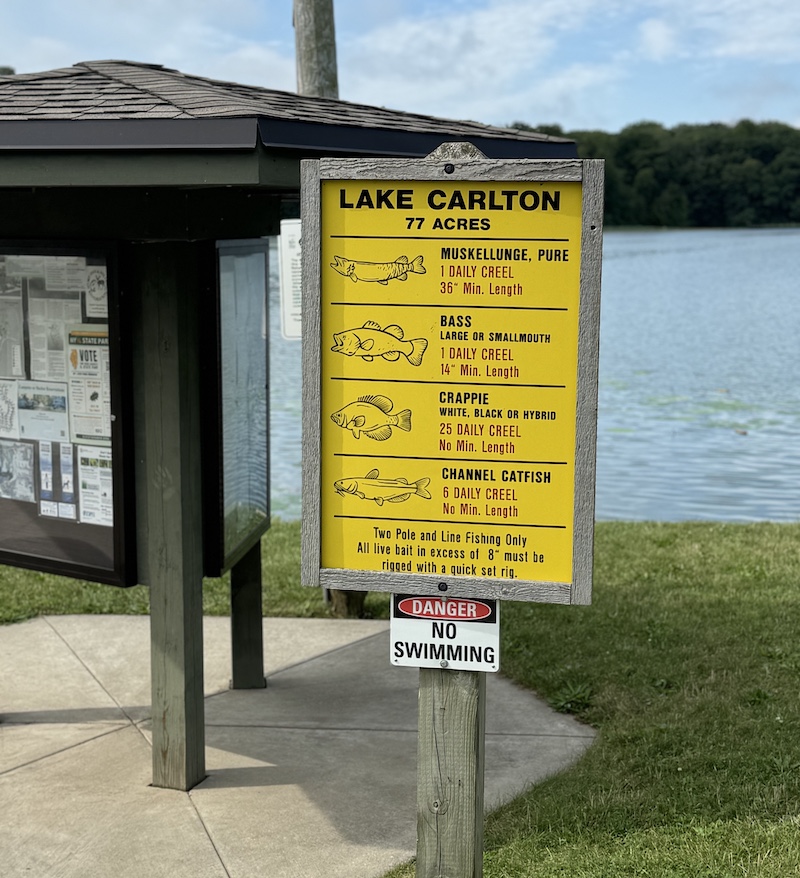
Safety is always the priority—for fish and for humans. Fish should always be handled with wet hands to maintain the integrity of their slime coat, so make sure whatever ruler, tape or measuring board you use can also handle a little water! Reducing handling time is important for long-term fish survival if you want or need to release the fish, so measure efficiently, with a device you are comfortable using.
If you are ever unsure if a fish is long enough to keep, the best practice is to release it. Stay safe, be smart, and happy casting!
Kayleigh Smith is a Natural Resources Coordinator in the Division of Fisheries, working as the site interpreter at Jake Wolf Memorial Fish Hatchery. While she works full-time at a fish hatchery that is focused on raising sportfish such as salmon, bass, and pike, she has a passion for fish of all shapes and sizes, from the biggest and fiercest muskie to the tiniest minnow.










Submit a question for the author