Photo by J. Ketelaars, Pixabay.

Photo by J. Ketelaars, Pixabay.
How do you pass on your love of the natural world to the young people in your life? One way is to share a great book. A truly well-written, well researched and vividly illustrated book will gently invite youth to wonder and explore, leading them to drag you into nature rather than the other way around.
It is important to offer books which realistically portray nature as well as entice children to read and learn. Enter some cool Illinois public and school librarians, STEM and Early Childhood specialists, sustainability managers and nature educators, collectively called the Blueberry Committee. Every year, Evanston Public Library’s Blueberry Committee releases a list, called the Blueberry Awards, of the best nature and climate books for young people from 3 to 10+ years of age. While the list represents many diverse worldwide ecosystems, there are always a good number of books about Midwestern animals, plants and waterways. Let’s see some examples from the newly announced 2025 Blueberry Awards.
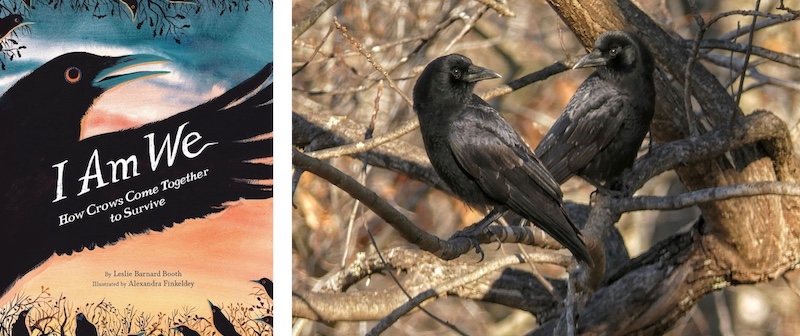
Crows are much more abundant now in Illinois since the population has partially recovered from the West Nile virus. I Am We: How Crows Come Together to Survive by Leslie Barnard Booth, illustrated by Alexandra Finkeldey, (for ages 5-8 years) is gorgeous. The narration is in a crow’s voice, making the point that flocking together means many eyes watching out for predators. Crows are easy for children to identify from afar. making the American crow a great spark bird for youngsters. And adults.
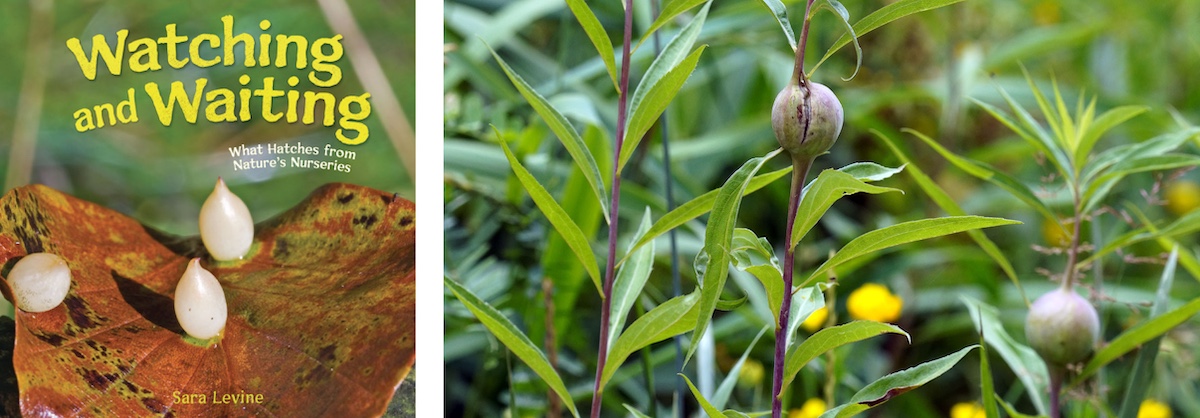
Until 2025, no book existed for young people about galls, those strangely shaped bumps on leaves serving as protection for developing insect larvae. Watching and Waiting: What Hatches from Nature’s Nurseries (for ages 4-9 years) by Sara Levine, a veterinarian and nature educator, gets youth thrilled about discovering eggs, egg cases or galls outdoors. She helps us understand that the best way to study them is to leave them alone and come back to visit, letting the creature growing inside emerge. A lesson for all of us.
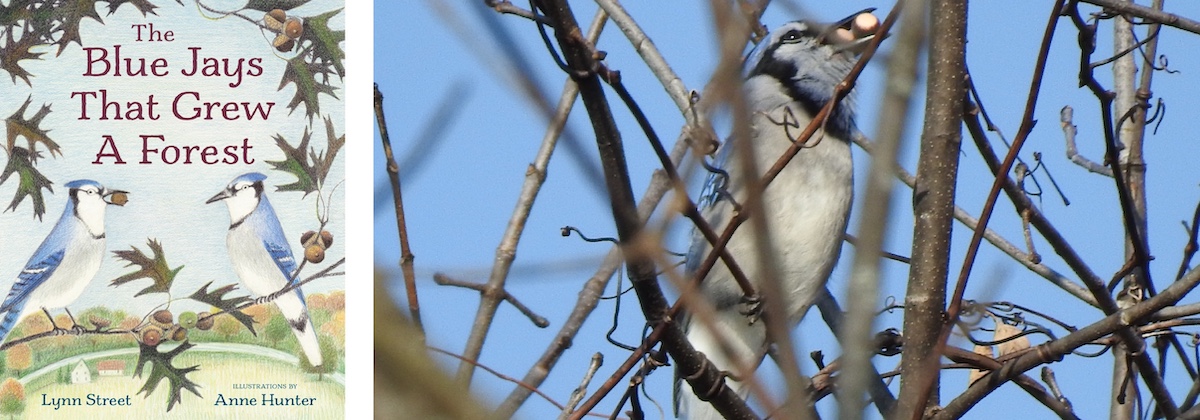
Blue jays plant more acorns than squirrels. Fact! If there are oaks about, it is the blue jays we need to thank. Learn all about it in The Blue Jays That Grew a Forest by poet Lynn Street and illustrated by artist Anne Hunter (for ages 4-8 years). Jays even have special pouches in their throats that allow them to carry more than one acorn at a time. The relationship between blue jays needing acorns as a winter food source and the oak needing planting assistance makes a lovely introduction to the wonders of nature.
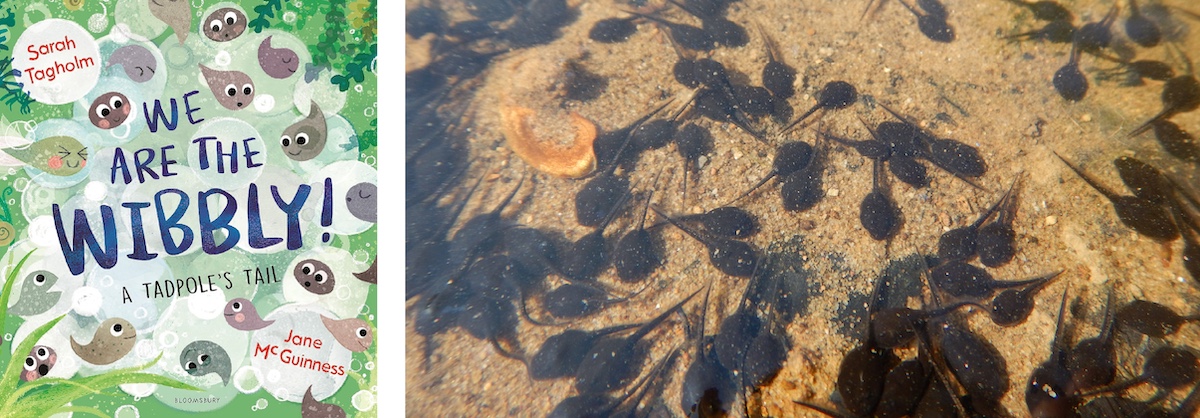
We Are the Wibbly: A Tadpole’s Tail by Sarah Tagholm and illustrated by Jane McGuinness (for ages 3-7 years) is a hilarious introduction to the frog lifecycle told from the point of view of one frogspawn egg among many. It was selected by Illinois students in grades K-2 as the 2025 winner of our children’s choice awards, The Blueberry Votes program.
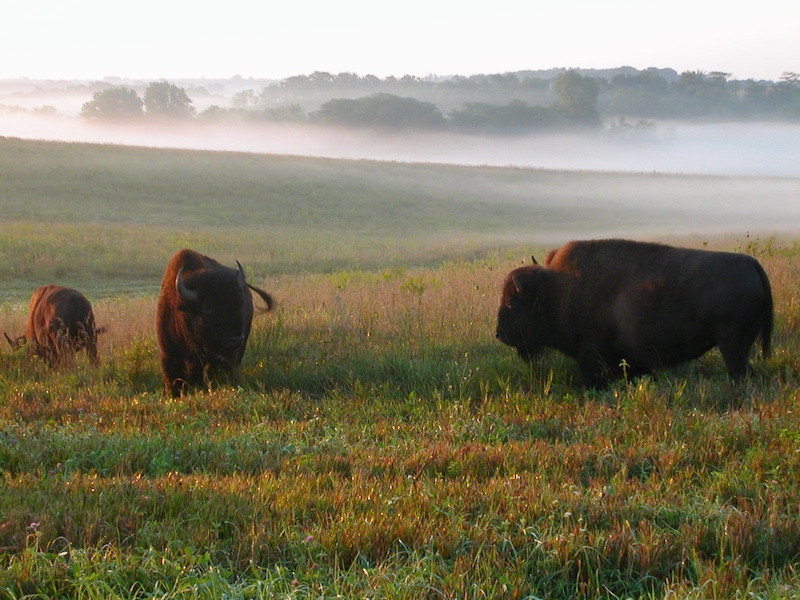
At one time, 60 percent of Illinois was a tall grass prairie. Only 0.01 percent remains; however, there are some terrific restorations in Illinois, such as Midewin National Tallgrass Prairie and Nachusa Grasslands. Amy Hevron’s book, Poo Pile on the Prairie, (for ages 4-8 years) gives youth an inside view of a critical microhabitat on the prairie, bison poo. She introduces us to a year’s worth of beetle and animal behavior in this small microhabitat. Burrowing owls use bison poo to attract beetles to their underground dens, kind of like pizza delivery to your door. Our STEM expert, who cared for burrowing owls at the Peoria Zoo, learned this tasty fact from Amy Hevron’s book.
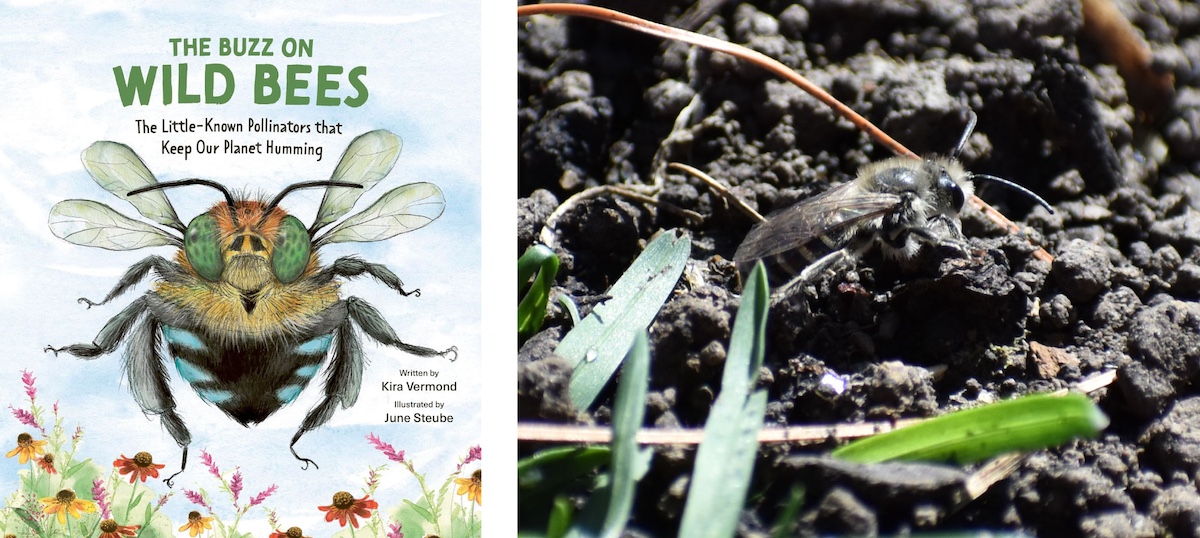
The Blueberry Awards committee was overjoyed at the end of last year to find an excellent book for older youngsters on wild bees, The Buzz on Wild Bees: The Little-known Pollinators that Keep Our Planet Humming by Kira Vermond and illustrated by Jane Steube (for ages 7-10+). Wild bees are indigenous to North America and, of course, to Illinois. Each human being’s actions really can make a difference in whether these critical pollinators can thrive.
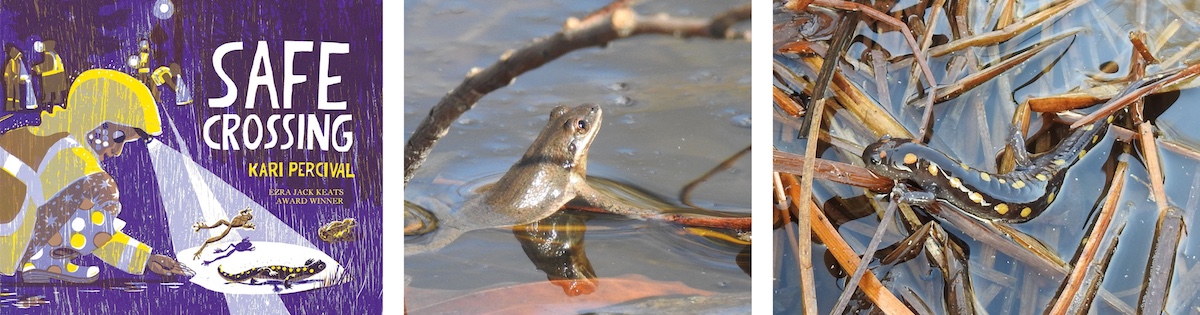
Frogs and salamanders migrate to ephemeral ponds throughout Illinois in the spring to lay their eggs. Sometimes roads cut across this migration path. Safe Crossing by Kari Percival (for ages 5-8 years) is a beautiful introduction to the work of citizen scientists who line the road, protecting these creatures from cars in the spring. One of these citizens, a determined young girl, proposes a better solution to the problem.
The 2021-2025 Blueberry Awards lists include many excellent books. Ethan Johnson, a Blueberry Awards committee member, is a manager at the Evanston Ecology Center and commented “Every time I read a Blueberry Award book, I start thinking of all the nature programs I can plan with that book.”
Also published by the committee are a Best Nature Board Books list (internally called “The Baby Blueberry”), a Blueberry Educator Resources list and a Blueberry Committee Recommended Adult Reads list. Check them all out at www.epl.org/blueberry.
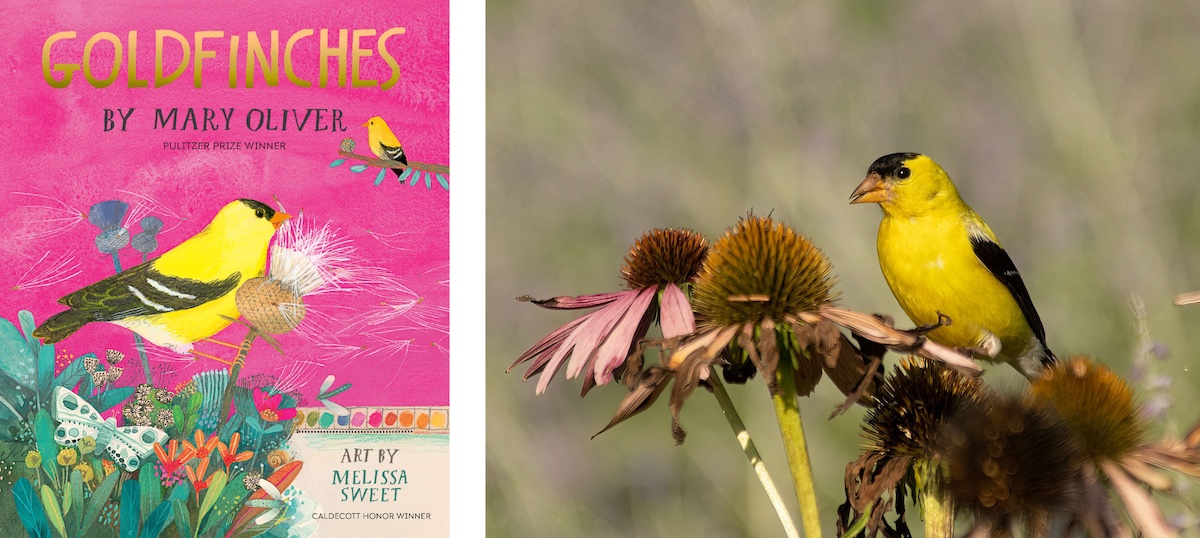
Finally, here’s a sneak peek into one of our favorites from 2026’s new crop of nature books. Goldfinches nest in Illinois; in addition to eating thistle seed, they also use thistle down to line their nests. That’s why goldfinches wait until midsummer to build a nest, coinciding with when the purple thistle flowers turn to fluffy white down. Poet Mary Oliver wrote a beautiful poem about this relationship. One of the finest illustrators of children’s literature, Melissa Sweet, created a gorgeous book called Goldfinches that includes her illustrations and Mary Oliver’s poem (for all ages).
As long as young people are engaged with nature, they will grow up to care for it. A person saves what they love. Helping children learn about Illinois’ terrific natural beauty is an investment in our future. That’s the purpose of the Blueberry Awards—to support nature interactions for young people and their adults.
Martha Meyer msmeyer@cityofevanston.org, a library assistant at Evanston Public Library, founded the Blueberry Awards to celebrate the best work being done in children’s literature about nature. She has a certificate in Nature Contemplation and Creation Care from Deep Green Faith. She invites teachers, librarians and nature educators to participate in the Blueberry Votes (K-2) or Preschool Blueberry Votes programs where youth get to select their favorite nature book of the year.




Submit a question for the author
Question: I’ve just been made aware of your wonderful Blueberry Awards program. It is my understanding, then, that books for the 2026 awards will be accepted from now until the first week of January 2027? Please advise if the is the case. Thank you.