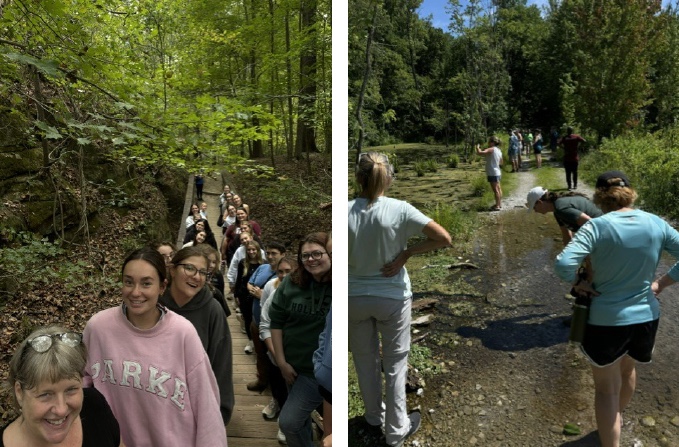
SIU students take a lunch break between service, and learning sessions at Panther Den Wilderness with U.S. Forest Service Volunteer Coordinator Alyssa Macuiba. Peanut Butter and Jelly, geology, flora, fauna, and ancestors were on the menu.

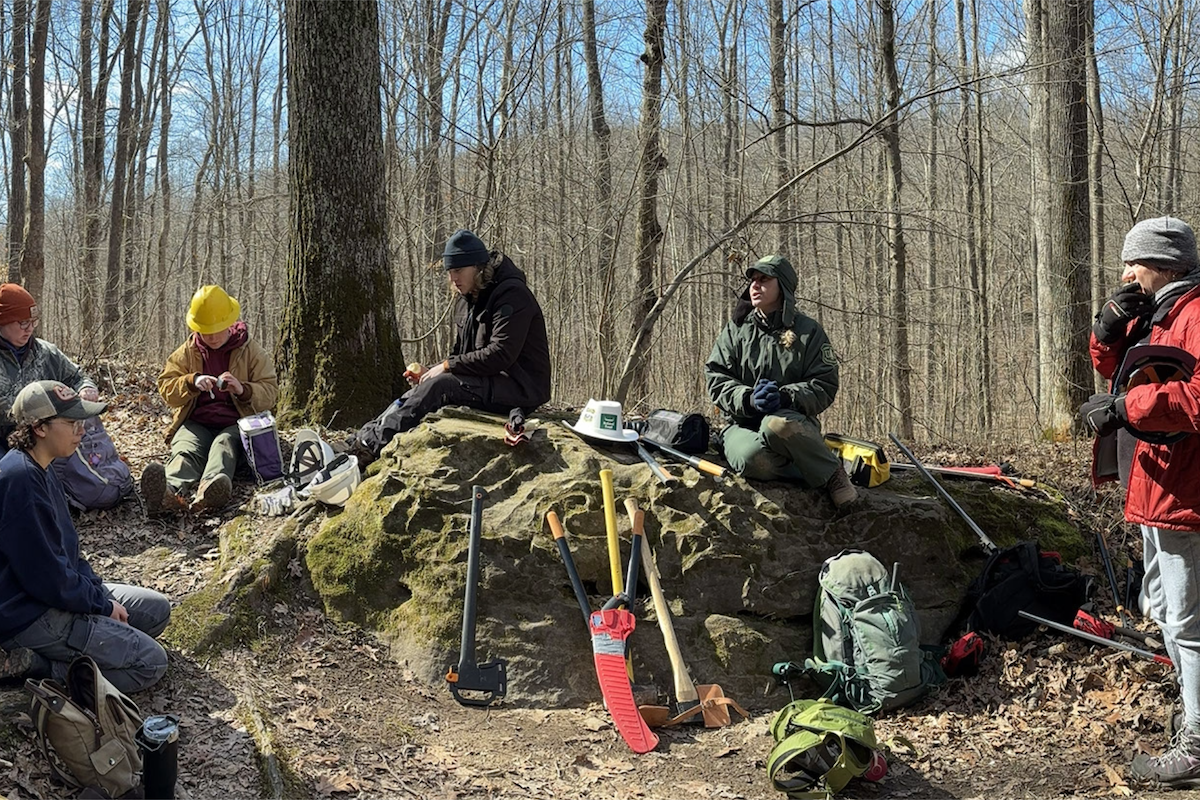
SIU students take a lunch break between service, and learning sessions at Panther Den Wilderness with U.S. Forest Service Volunteer Coordinator Alyssa Macuiba. Peanut Butter and Jelly, geology, flora, fauna, and ancestors were on the menu.
When Cathy and I moved our family to the northwest corner of Jackson County, we moved in with many new members of the (Aldo) “Leopold Community.” On move-in-day, a hawk crashed through the thick canopy into the center of the backyard, grasping a smaller bird, which it proceeded to dismantle and devour. Later that same day, a dog trotted up the back sidewalk, up the stairs, and proceeded through the house room to room, ignoring the handful of folks helping us move in, then without encouragement, headed right back out. We never saw it again. I took these events to be the local domestic and wild ambassadors of the Leopold Community welcoming us…very neighborly.
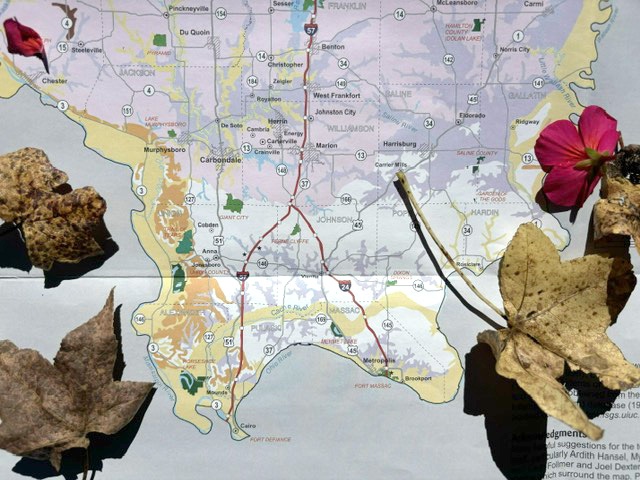
We also “moved in” with Mississippi kites, timber rattlesnakes, cave salamanders and sirens, scorpions, mussels, persimmons and paw paws, ospreys, groundhogs, spoonbills and sturgeon, bryophytes, armadillos, prothonotary warblers, and other migrant and migrating animals and birds, in our new extended neighborhood. This was not unexpected, as I had been teaching outdoors in the far southeast corner of Jackson County for many years and knew about southern Illinois’ wealth of natural areas and their inhabitants, both biotic and abiotic. Particularly in this county of four natural divisions.
Many years of my younger days were spent driving around southern Illinois, day hiking and exploring by myself. I spent much time visiting with, courting, and falling in love with these lands, their similarities and differences, nooks and crannies, heights and views, weather, skies and climates, hills, flatlands, caves and canyons, alluvial and hummocky rolling patches, secret roads, quiet places, creeks, rocks, sands and rivers, delicate and incredible plants and inhabitants. But for the most part, I had never learned in classrooms or otherwise, why these beautiful landscapes existed, how they came to be. I had only been drawn by curiosity, and with time on my hands, into them.
Early in my career as a non-formal educator, I was asked to design and run a Summer Camp for a local Park District. It would be the first time I had a group of learners, with permission to use a vehicle to transport them. On Monday, we were off like monarchs sailing on a late summer wind. We spent a week out in the landscape in as many places as I could get them to, only getting back each day in time for pickup. Parents were often waiting in the parking lot for us to return.
It was a glorious week, and it impressed upon me the power of place in education, having learners as a group, exploring and learning in places. The powerful difference of the experience of learning when the body and brain are both engaged, actively learning together in experience. I have spent the last 25 years in this work on trails and waters, locally and beyond, because of the personal, social, civic and educational outcomes I have seen firsthand. Developing, cultivating and facilitating these experiences, while teaching others to do so. Something I think of as introducing the learner and the landscape to each other. Connecting to the land, to each other, to ourselves, and to things greater and smaller than ourselves.
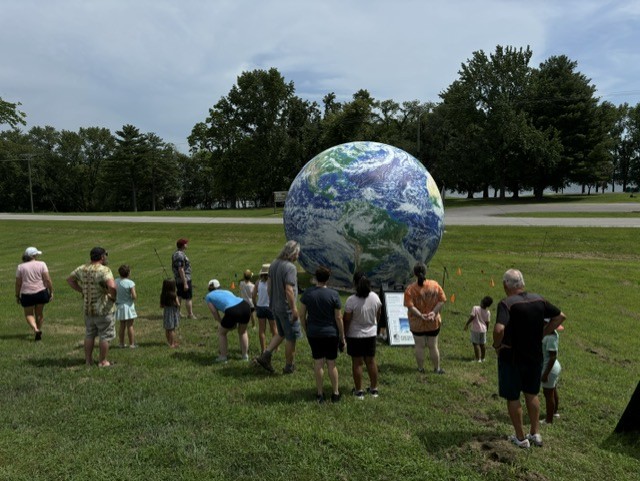
The inventor, futurist and philosopher/educator Buckminster Fuller said, “Start with Universe,” and paired with John Muir’s “The clearest way into the Universe, is through a forest Wilderness,” we have the beginning of an experiential methodology that considers our place in Universe, our place here on spaceship Earth, and everything within.
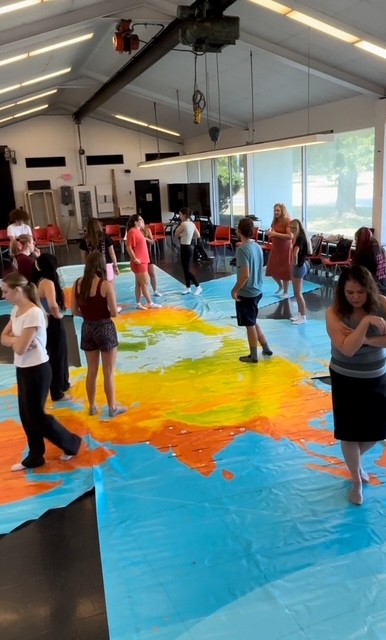
One day during that early summer camp, I piled our enthusiastic group of young learners into the van, and we sailed for the Cache River Wetlands. Like so many Illinoisans who are relatively oblivious to the fact our state has the northernmost cypress-tupelo swamp landscape in North America, these learners were uninitiated and, as yet, unengaged. I, too, would learn many important lessons over that week; two of the lessons I learned at the Barkhausen Wetlands Center. The first was, when in charge of a group by yourself, keep them together! After making the mistake of allowing my group to investigate the small center at will, I returned to the main display area to find one camper had climbed up into the display. Yikes! I was mortified. Thankfully he had caused no damage. Lesson learned.
The second came from the Center’s film about the Cache Wetlands…regarding (southern) Illinois’ Natural Divisions, and how all these differing landscapes came to be in this relatively small geographic area. This one idea made so many things I had wondered about while experiencing the landscapes make sense. It was like the disparate cogs of a great unassembled ecological knowledge machine all started falling into place in my brain. It was not lost on me that having had this knowledge as an elementary school child would have radically changed how I understood and regarded the area where we live, as well as how I viewed Illinois’ rich history, cultures, and in southernmost Illinois, deep time.
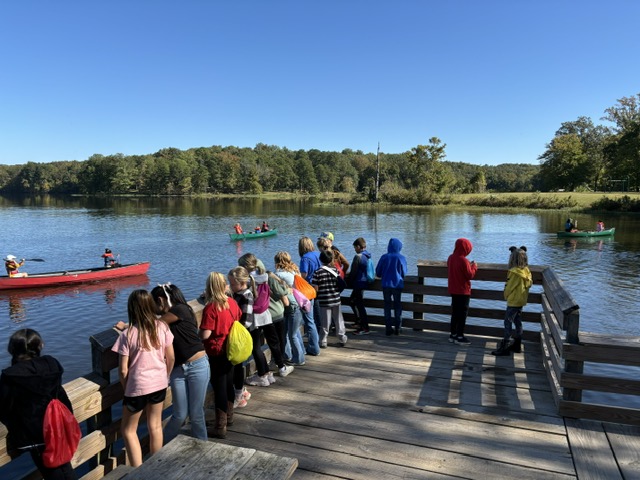
Today, as part of the work we do at the Southern Illinois University-Carbondale (SIUC) STEM Education Research Center’s Outreach program, we run programs bridging the classroom and the field that focus on the use of Illinois Natural Divisions as a framework, in which to set an array of curriculum subjects/concepts. This will be our fourth year with Murphysboro fourth graders, both visiting the classroom, and then engaging them in field experiences over two days, twice a year, at Lake Murphysboro State Park. They canoe, go fishing with Illinois Department of Natural Resources (IDNR) staff from the Little Grassy Fish Hatchery, learn beginning birding with the University of Illinois Extension, and dipnet for macroinvertebrates with Greater Egypt Regional Planning and Development Commission educators, hosted in partnership, by IDNR. A multi-agency partnership and model, fundamental to making these quality, experiential programs happen. This fall, the Illinois Environmental Protection Agency stepped in with support through their Dive-In program.
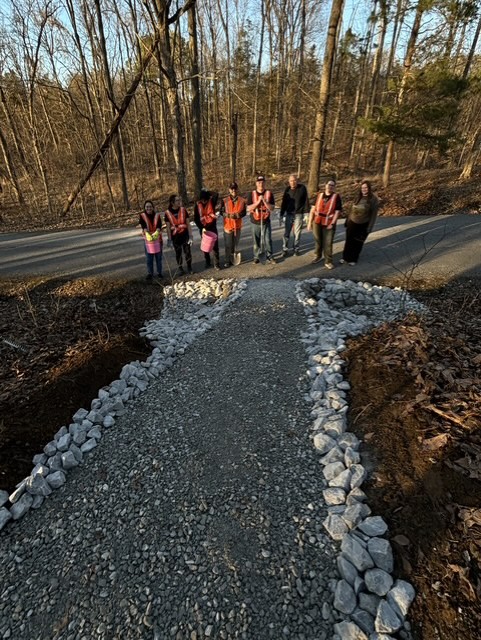
We also continue to expand service-learning and public education initiatives. Serving, teaching and learning at state and federal sites including Giant City and Lake Murphysboro state parks, Cache River Wetlands, Panther Den Wilderness and more. SIUC students and staff, STEM camps participants, campus groups including student organizations and conference participants, pre-service education students, schools and members of the public all engage in our initiatives. Our service-learning and public programs were recognized by IDNR this year with a Volunteer of the Year Award, and the SIUC Recreation Departments’ Recreation Service Award.
In June of 2026 we hosted our first three-day educator workshop, At Glacier’s End, with 22 K-12 classroom and non-formal educators, from a notably wide geographic distribution, training them directly in applying this concept/initiative into their curriculums. They had “the experience” themselves. We believe natural divisions education, passive, on signage at nature centers and natural areas, and active, with formal educators in the classroom and non-formal educators in the field, is a worthy initiative for pursuit across the State of Illinois and beyond. We are providing connections for life-long learners by which we assemble concepts, content and landscapes into a framework that relates to us all.
Recently, the writer, farmer, and naturalist Wendell Berry passed. He wrote, “The world cannot be discovered by a journey of miles, no matter how long, but only by a spiritual journey, a journey of one inch, very arduous, and humbling and joyful, by which we arrive at the ground beneath our feet and learn to be at home.” If we pair that with a quote from Carbondale strawberry farmer, classroom educator, and first director of the Illinois Natural History Survey (INHS), Stephen Forbes, we get a combination of personal, place and experience-based education, and science-based observation and documentation. Ecological knowledge, that Forbes believed was “fundamental for human well-being.”
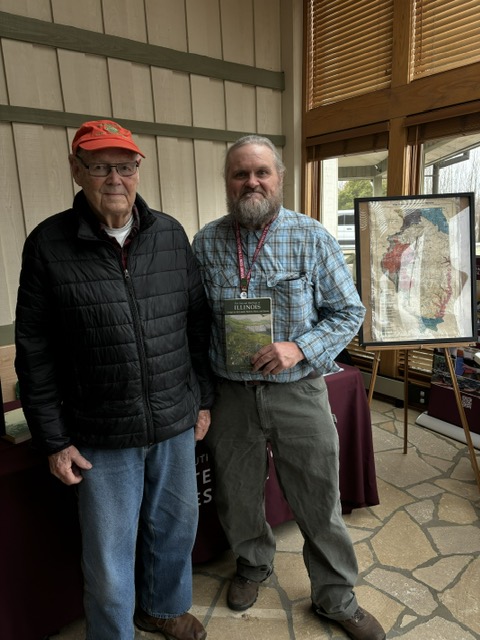
INHS published the Natural Divisions in 1973 with John Schwegman and others. Much of the research, information and educational resources that have followed are available to any educator interested in utilizing them. In both formal (Next Generation Science Standards) and non-formal (National Association of Interpretation) education methodologies, we find core principles that direct us all as educators to best teach by connecting content to learners through their personal interests, life experiences and societal and/or personal concerns. Connecting the Learner to the Landscape provides opportunities to engage learners, educators and volunteers/stewards in all these ways and more. Along with our partners from River-to-River Environmental Education Providers and many others, including the SIU Physics, Earth Systems, Honors, Education, Recreation, Forestry and CESL departments, and the Buckminster Fuller Dome Home Museum, we are teaching learners and stewards of many kinds and ages from the Universe to the Earth’s core, and back!
On a journey of one inch.
“Never Finished, Just Begun.” – L.B. Sharp
See you out there, Steve.
Steve Gariepy is an outdoor, interpretive, non-formal educator, teaching, learning and serving in and about the landscapes of southern Illinois and beyond. He is the Experiential Education Specialist, Outreach Coordinator, and a Researcher I, at the SIU STEM Education Research Center in Carbondale, the "Helm of Spaceship Earth."




Submit a question for the author