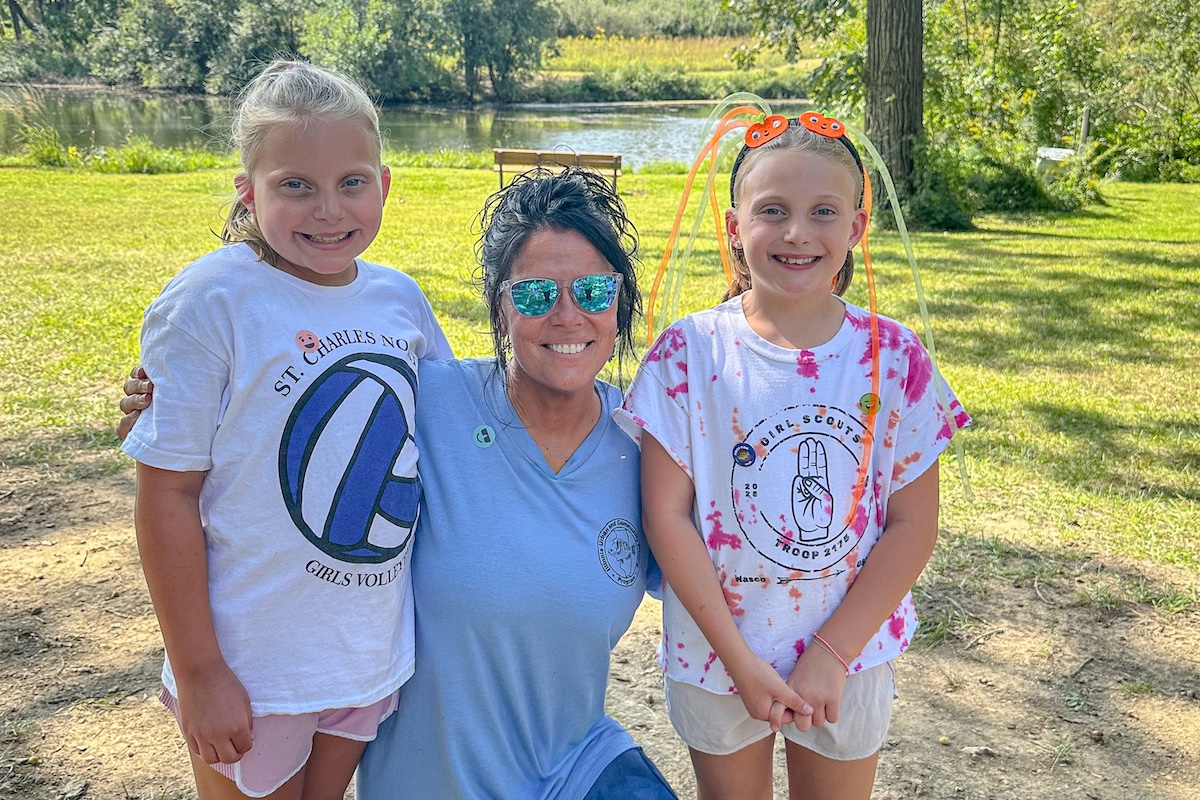
Girl Scouts of Northern Illinois Camp at Camp Dean in Big Rock. Cheryl Smith with Teagan and Amelia Semler. We fished with 40 campers, catching plenty of large bluegill along with white crappie and largemouth bass. I’ve had the special opportunity to watch Teagan and Amelia grow in their love and knowledge of the outdoors through education over the past three years, making moments like this even more meaningful. Photo by Emily Varsho, Fox Valley Service Unit Manager, Girl Scouts of Northern Illinois
Catching fish is exciting. Discovering the world that made that catch possible is where the real story begins.
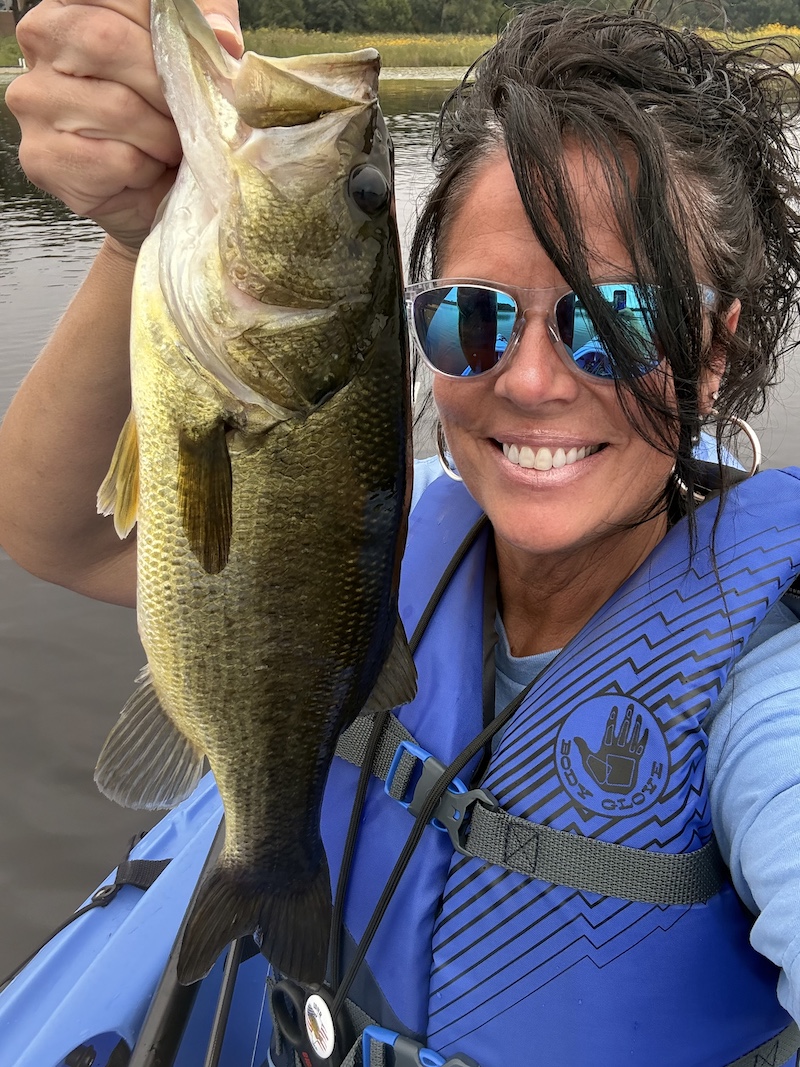
Moraine Hills State Park Kayak and Fish Program. As the program wrapped up and everyone safely made their way back to the dock, I made one last cast and landed this largemouth bass! It was the perfect ending to a great day on the water, with plenty of fish caught by participants throughout the program. Photo by Cheryl Smith, IDNR Fisheries.
I have been fishing since I was six years old. I spent 20 years working in the fishing industry and 15 years in interpretive conservation education. This past June, I brought those two worlds together when I became a Conservation Education Representative – Fishing Instructor with the Illinois Department of Natural Resources’ Urban and Community Fishing Program.
Now, I have the pleasure of introducing people of all ages to the natural world through a sport I have loved nearly my entire life: fishing.
When non-anglers think about fishing they may picture someone sitting on the bank waiting for a fish to bite. Fishing involves much more than what happens at the end of the line.
For me, fishing opens the door to an entire aquatic world.
Of course, I want every participant to feel that tug on the line and the excitement of catching their first fish—or even their first fish of a particular species. But the action and events around us while we’re waiting for a bite are what make our programs truly exciting.
Imagine stepping into a quiet bubble where, for a little while, the noise of the outside world simply stops.
You’re standing by the water waiting for a bite. Wildflowers bloom along the shoreline. Beneath the surface is an entire community of life—tiny organisms, aquatic insects, amphibians and fish. Birds dot the shoreline and fly overhead. A great blue heron may be stalking its next meal. A belted kingfisher chatters as it flies past, or an osprey circles overhead.
Water brings forth life, and when we take time to observe, the connections are everywhere.
That’s what I get to teach.
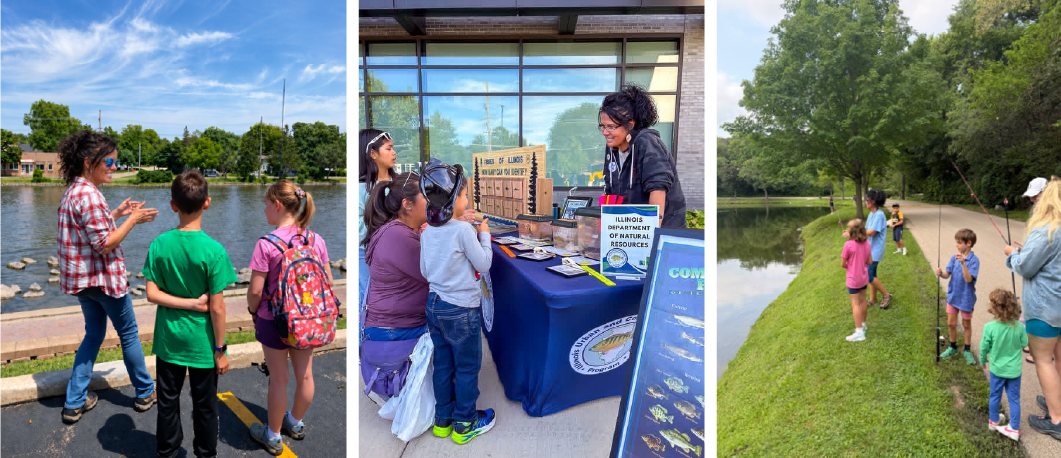
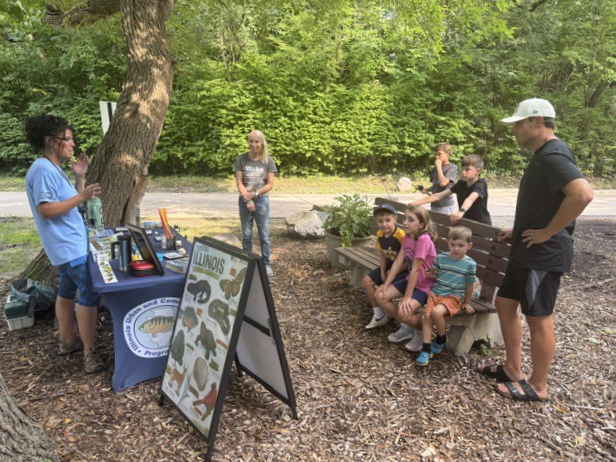
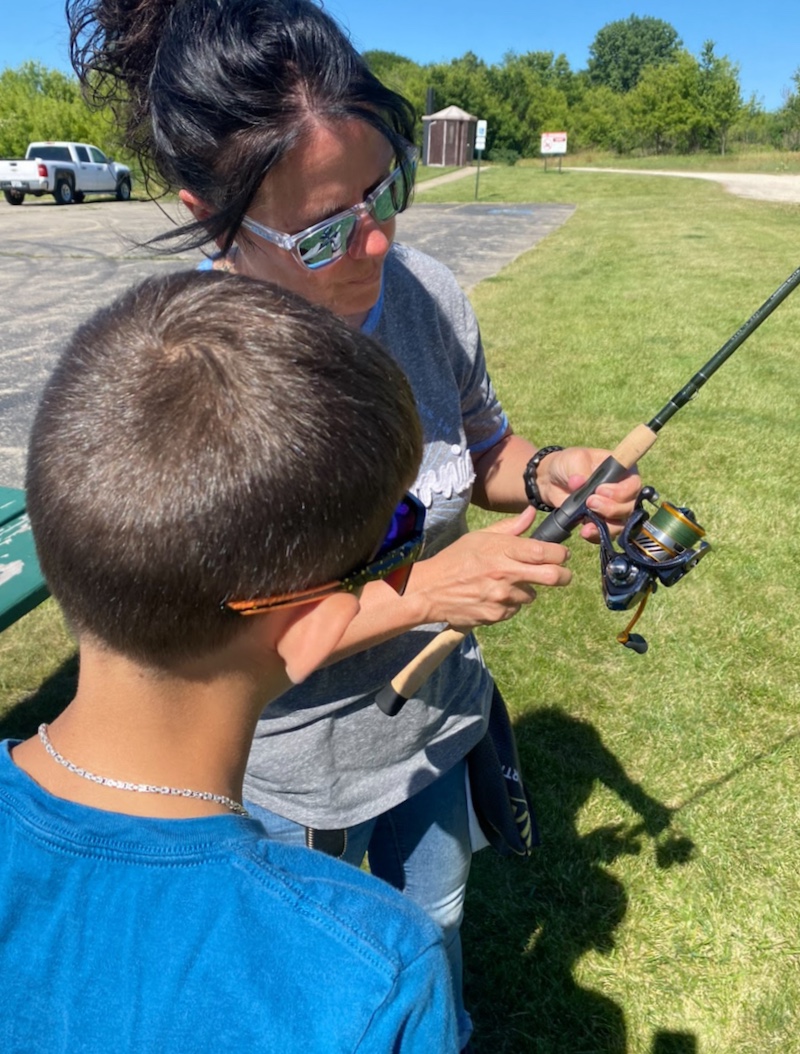
Left: Teaching to Read the Water with Carter Gallucci and Samantha Varsho. I teach young anglers to look beyond their bait and learn to “read the water”—understanding where fish find food, cover and comfortable habitat, and how water temperature, depth and season can influence where fish are found. Learning the why behind where they cast builds confidence and can lead to more successful fishing experiences. Photo by Dawn Gallucci. Middle: Mt. Prospect Five-O Family Fest. More than 200 people stopped by our table, where live native animals—including an eastern tiger salamander, painted turtle and American toad—were a huge hit! Along with our interactive fish identification board, these animals helped spark conversations about fish identification, habitat, food webs and ethical angling. Photo by Mt. Prospect Park District staff. Right: More than 30 residents joined us for a fishing program in Trout Valley, Cary. It was a wonderful example of community families coming together to enjoy fishing, nature and time outdoors. Photo by David Hall, Village of Trout Valley Trustee.
The fish we hope to catch depend on the insects, smaller fish and other organisms they eat. Those organisms depend on healthy water and habitat. Birds and other wildlife depend on the fish. And we, as anglers, become part of that interconnected world the moment we cast a line.
Understanding those connections can make someone a better angler. More importantly, once participants realize how important other organisms are to the fish they are trying to catch, it gives them more reasons to care about the resource. Conservation no longer feels like a separate lesson. It becomes part of fishing.
It All Starts with a Mayfly
Our program offers many different fishing experiences. Sometimes I have an entire program to make those connections. Other times, I may have only a few minutes. Either way, every interaction is an opportunity.
Over the years, I’ve learned to watch for that moment when curiosity takes over—the question, observation or discovery that makes someone light up. Educators often refer to these as teachable moments.
Recently, I was fishing from a pier with a young girl, about seven years old, when she suddenly exclaimed, “Eww! Look at that bug! There are bugs on the water!”
I knew immediately: There’s my moment.
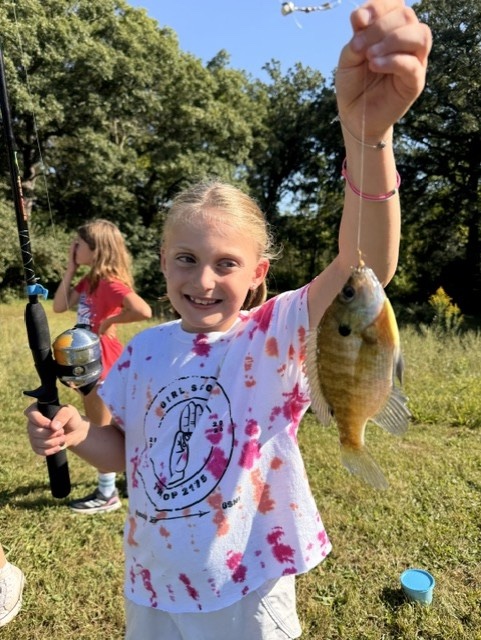
Northern Illinois Girl Scout Camp. Amelia Semler with a beautiful bluegill. For many of these girls, the program brought the excitement of catching their first fish. By the end, they were already asking when we could come back and fish with them again. Photo by Tara Semler.
Instead of swatting the bugs away or moving to a new spot, we took a closer look at the bug.
The tiny insect she noticed was a mayfly, an important food source for many fish, and that “eww” quickly became an opportunity to discuss aquatic food webs.
“See that little insect sitting on the water? That’s fish food,” I replied.
A bluegill isn’t simply swimming around the pond hoping to find the worm on our hook. It’s constantly looking for opportunities to eat, including the aquatic insects emerging at the surface.
“Who eats the mayfly?” she asked.
“A bluegill might,” I responded.
What might eat the bluegill? A largemouth bass.
And what might be watching that same bluegill from above? Perhaps a great blue heron along the shoreline or an osprey circling overhead.
And who is standing on the pier trying to catch one? We are.
In just a few minutes, a tiny insect that caused an “eww” helped us envision an entire food web.
That’s the beauty of teaching fishing. Sometimes the biggest lesson at the pond starts with the smallest thing on the water.
Bringing the Aquatic World to Life
Of course, nature doesn’t always deliver the perfect teaching moment right on cue. That’s why the Urban and Community Fishing Program uses biomaterials and interpretive tools to further our participants’ understanding of the aquatic world bringing those connections to life.
Occasionally, our team incorporates live aquatic life into our programs, allowing participants to observe native fish, amphibians and reptiles up close. When live specimens aren’t available, there are still plenty of tools at our disposal.
Fishing Program Trout Valley, Cary. Safety is always our first priority. Before the first cast, we take time to cover safe casting, hook awareness, proper fish handling and being responsible around the water. We also remind participants that a pond is more than just water filled with fish—it’s a delicate ecosystem, and safe, responsible anglers play an important role in protecting it. Photo by David Hall, Village of Trout Valley Trustee.
One tool we regularly use is laminated posters that showcase common fish, fish anatomy and aquatic food webs. When someone catches a fish, we go beyond identifying it as a bluegill or largemouth bass. We look at its body shape, fins and mouth and ask why those features matter. Suddenly, identifying a fish becomes an opportunity to understand how that animal lives, feeds and survives. It becomes a lesson not just in identification, but in adaptations and survival.
I expand that connection to other groups of animals as well. At many programs, I bring bird skulls and identification cards featuring familiar fish-eating birds, including the great blue heron, double-crested cormorant and belted kingfisher. These specimens let participants look closely at adaptations they might never notice from a distance and spark larger conversations about how these birds use their unique adaptations to capture the same fish we’re trying to catch.
I use that same approach when teaching people where to fish. Instead of simply saying, “Cast over there,” I give them clues related to fish habitat and behavior.
If you were a bluegill and needed food, protection from predators and a comfortable place to live, where would you go?
My participants start looking at the pond differently. They begin to notice vegetation, shade, structure, insects, weather and water conditions. They are no longer simply hoping a fish swims past their bait. They are no longer just fishing; they are understanding the art of angling.
Whether the teaching tool is a live aquatic animal, a poster, a bird skull, a freshly caught fish or a tiny mayfly floating on the surface, the goal is the same: turn observation into curiosity, and curiosity into connection—something the Urban and Community Fishing Program is very good at!
More Than Catching Fish
Photo of Cheryl Smith and Carter Gallucci. I have been mentoring Carter for three years in fishing. He makes me proud with every cast and catch. Photo by Dawn Gallucci.
And sometimes that connection has very little to do with the fish.
Recently, I was working with a group when one young man became increasingly frustrated with casting. His line kept wrapping around the tip of his rod. I calmly walked over and asked if I could help untangle it. He handed me the rod, and while I worked on the line, I asked him to listen.
“Do you hear all those birds calling? Those are alarm calls. Can you find the predator causing them to make that noise?”
He calmed himself, looked up and scanned the sky. His attention shifted away from the tangled line and toward the natural world around him.
“THERE!”, he pointed excitedly at a red-tailed hawk circling overhead.
We watched it for a moment, and I explained that learning something new can sometimes be frustrating. When that happens, it can help to stop, take a deep breath and calm our mind.
We went back to his fishing rod.
I showed him what had been happening. He was reeling his bobber all the way to the rod tip, allowing the line to wrap around it. By leaving more line between the rod tip and his bobber, tangles would be less of a problem.
He tried again and made several tangle-free casts.
Before long, his frustration was gone. He was casting confidently and started catching fish.
That student not only learned how to cast and prevent tangled rod tips, he learned about a common bird of prey we often see while fishing. He also discovered something even more valuable: when frustration starts to take over, sometimes the best thing we can do is stop, breathe and focus on something calming before trying again.
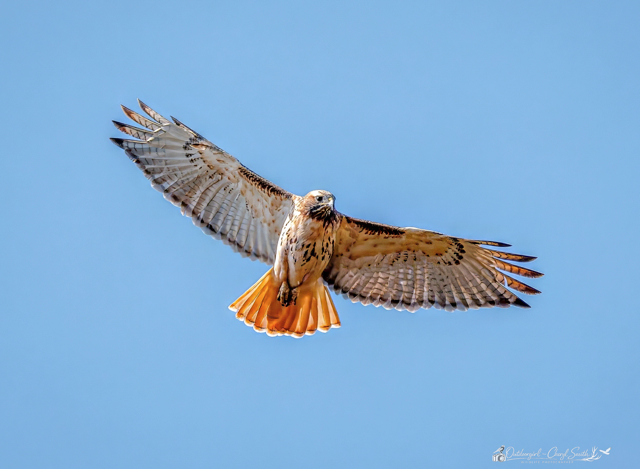
Red-tailed hawk, McHenry County. Fishing gives us a chance to slow down, quiet our minds and notice the natural world around us. Sometimes looking up from the water and watching a red-tailed hawk soar overhead is just as memorable as the fish we catch. Photo by Cheryl Smith, IDNR Fisheries.
Fishing is about more than just catching fish. It teaches us to slow down and center ourselves. It reminds us of the power of quiet observation.
That’s what makes teaching through the Urban and Community Fishing Program so rewarding to me. We may begin with a fishing rod in someone’s hand, but we never really know where that first cast might lead.
Maybe they’ll leave knowing how to identify a bluegill, why it’s our state fish or why it has such a small mouth. Maybe they’ll understand that a mayfly is an important food source for fish instead of saying “eww” and walking past it. Maybe they’ll look up when they hear birds sounding an alarm and search the sky for a hawk or other bird of prey. Or maybe they’ll discover a place beside the water where they can slow down and reconnect with the world around them.
Each of those moments creates connection, and connection gives people a reason to care.
When we understand how much life depends on the water around us, and how all the organisms we observe depend on one another, conservation becomes more than something we’re told we should do. It becomes something we want to do.
With our program, that connection can begin with something as simple as a bobber, a fishing rod and that first tug on the line. The lessons and experiences that follow not only help create future anglers, but future conservationists who will help protect our aquatic resources.
Cheryl Smith, also known as OutdoorGirl, is a Conservation Education Representative - Fishing Instructor with the Illinois Department of Natural Resources’ Urban and Community Fishing Program. A lifelong angler and outdoor enthusiast, she brings more than 15 years of experience in fishing and interpretive conservation education to her work connecting people with the natural world. She is a certified Master Naturalist and wildlife rehabilitator with extensive experience in outdoor education, public outreach and working with birds of prey as a raptor trainer and educator. Her passions include wildlife photography, fishing, hiking and seeing wildlife thrive in its natural habitat. When she isn’t teaching or exploring the outdoors with a camera or fishing rod in hand, she enjoys spending time with her husband, Michael, and their two rescue cats, NaKoa and Mufasa.



Submit a question for the author