
A federally and state-listed northern long-eared bat from Birk 2 Mine. Photo by Joe Kath.

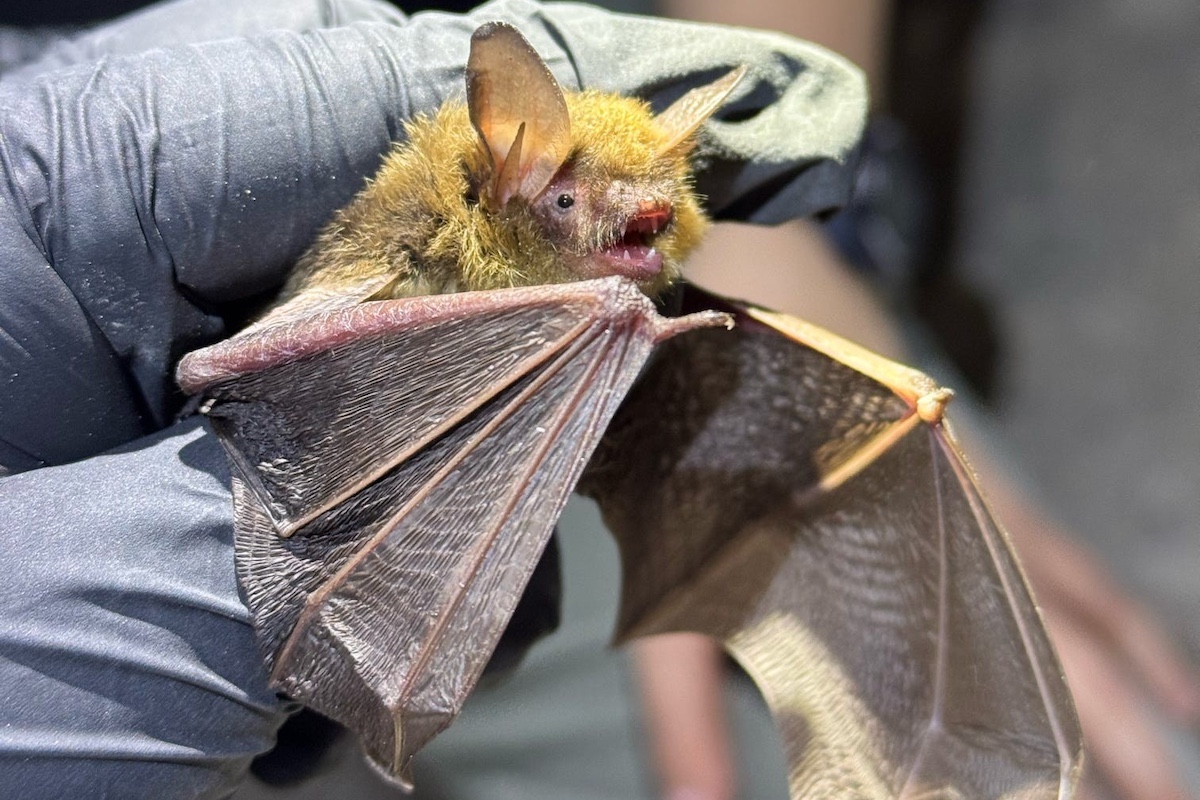

A federally and state-listed northern long-eared bat from Birk 2 Mine. Photo by Joe Kath.
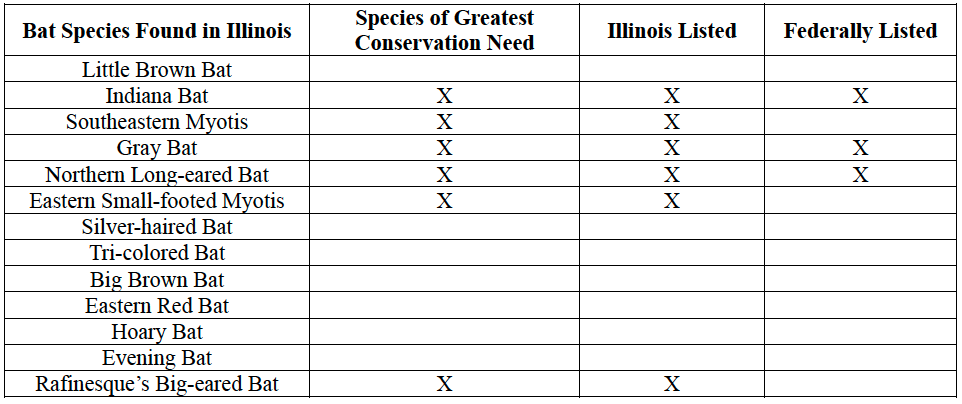
Throughout Illinois there are 13 bat species. Six of these species are Species of Greatest Conservation Need within the Illinois Wildlife Action Plan. Species of Greatest Conservation Need are species identified in the Illinois Wildlife Action Plan that are endangered, threatened, or have conservation status ranks indicating that they are at high or very high risk of extirpation in Illinois. All of these species are state listed in Illinois and three are federally listed.
To improve conservation for bat species in the Midwest, a partnership between the Illinois Department of Natural Resources (IDNR), the Illinois Natural History Survey (INHS), the Iowa Department of Natural Resources, and Iowa State University was formed and continues work on Bat Conservation in Iowa and Illinois. The funding for this project came from the Competitive State Wildlife Grants Program through the U.S. Fish and Wildlife Service.

The first phase of this project (U-4-D-1) occurring from 2022-2024 and the current phase (U-6-D-1) will run from 2025-2027. This work continues and expands acoustic monitoring in both states and provides information to the North American Bat Monitoring (NABat) Program whose goal is to assemble data to deliver status and trends on North American bats. In addition, the results from this project inform IDNRs’ Endangered Species Program about the location of bats in Illinois.
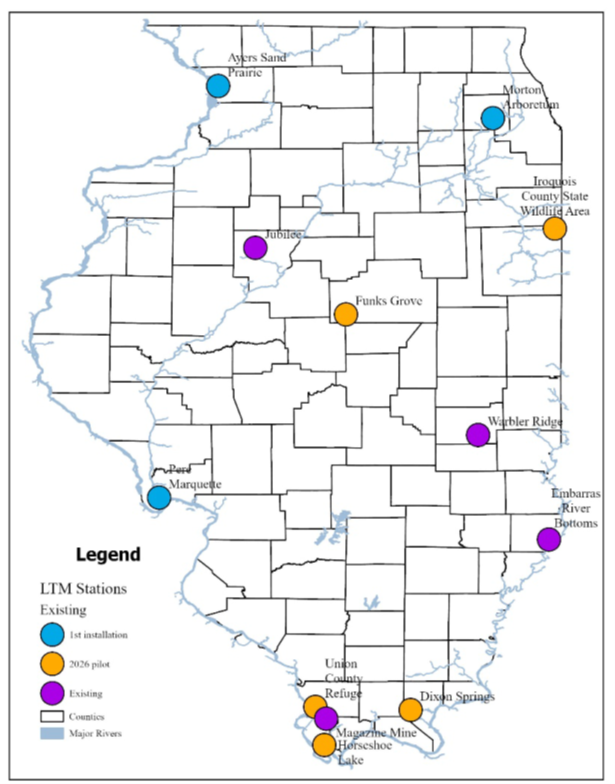
One objective of this project is to expand the number of Long-Term Acoustic Monitoring Stations in Illinois. These stations provide co-located weather data and acoustic information outside of the standard NABat monitoring period (generally the summer active period) which allows for information to be gathered during migratory periods. Prior to the second phase of this project, there were four Long-term Acoustic stations in Illinois located at Jubilee College State Park, Warbler Ridge, Embarras River Bottoms and Magazine Mine. In 2026, new long-term acoustic stations were scheduled to be set up at Ayers Sand Prairie State Nature Preserve, Pere Marquette State Park and Morton Arboretum. The long-term acoustic monitoring station at Morton Arboretum was set up and has been active since June 18, 2026. The other two long-term acoustic stations are awaiting final approval of their installation locations.
Each of five pilot locations located in Iroquois County State Wildlife Area, Funks Grove, Dixon Springs State Park, Union County State Fish and Wildlife Area and Horseshoe Lake State Fish and Wildlife Area had temporary acoustic monitors installed in the spring of 2026 to inform site selection for future Long-Term Acoustic Monitoring Station Placement (Figure 3).
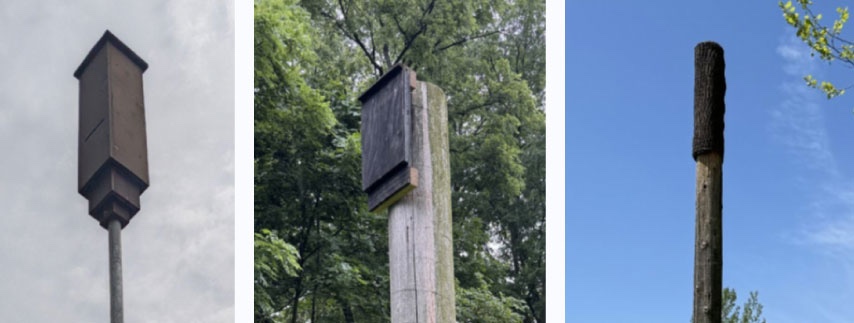
Another objective of this cooperative project is to examine the effectiveness of artificial roosting habitat use by bat species in Illinois. This project utilizes three different artificial roost types, including the chamber box, BrandenBarkTM and rocket box.
Chamber boxes are the classic “backyard bat house” with wooden sheets for the bats to roost between. BrandenBarkTM mimics loose bark on a dead tree. Rocket boxes are similar to the chamber box, but they wrap around a steel pole so bats can easily move around and select a preferred temperature within the box.
Three artificial habitat structures were installed at Forbes State Park in 2026, and the researchers will continue to identify suitable locations to place these bat boxes at Orient Bottoms State Fish & Wildlife Area and Pyramid State Recreation Area.
INHS researchers also conducted DNA analysis to determine which species were using the roosts. Twenty-one guano samples were collected and assessed from below roosts at Trail of Tears State Forest, Amboy Marsh, Sangamon River Forest Preserve, Lake of the Woods Forest Preserve and Siloam Springs State Park. The assessment was able to identify big brown bats (Eptesicus fuscus) and little brown bats (Myotis lucifugus) from these samples. Emergence counts were also conducted to determine how many individual bats were using these roosting sites. At two out of the five sites where emergence counts were completed, bats were seen emerging from the artificial roosting structures. This work helps us understand which species will use these roosts and determine the best management practices to conserve these species.
Teya Broyles is a Graduate Public Service Intern at the Illinois Department of Natural Resources working in the Division of Natural Heritage. She is currently pursuing a master’s degree in Environmental Science with a concentration in Sustainable Development and Policy at the University of Illinois Springfield. She received her bachelor’s degree at the University of Illinois Springfield receiving a double major in Environmental Studies and Communication.





Submit a question for the author