Photo courtesy of Kinzee Macho

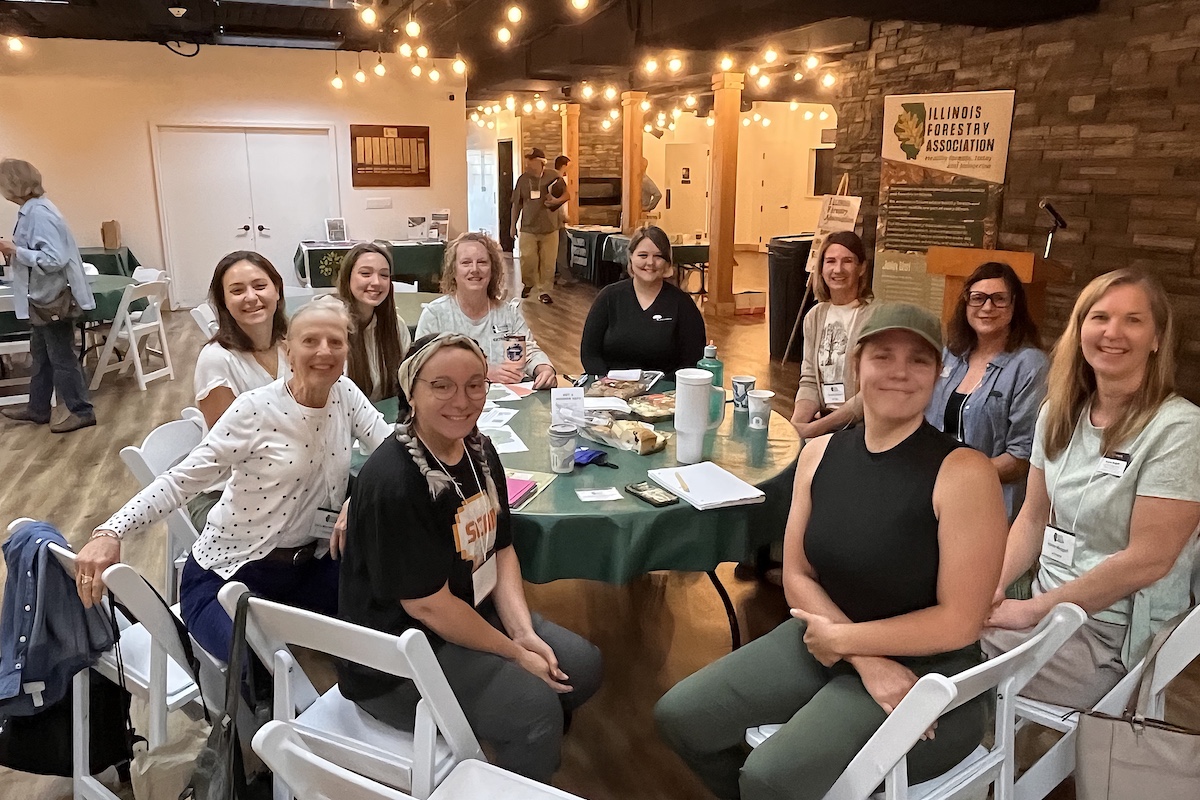
Photo courtesy of Kinzee Macho
There’s a new and growing network focused on forest management spreading its roots throughout Illinois. It goes by the fitting acronym WOW, which stands for Women Owning Woodlands, a national effort to address the barriers that women landowners face as they manage their families’ private forests and woodlands. The network is engaging an expanding community of women land stewards through educational opportunities, pointing women towards appropriate technical assistance and providing safe spaces for learning from each other.
Recently, Women Owning Woodlands Illinois (IL WOW) formed through a collaborative partnership involving the Illinois Forestry Association, University of Illinois Extension, Illinois Department of Natural Resources (IDNR), Trees Forever, IDNR’s Becoming an Outdoors Woman, Clifftop and other groups.
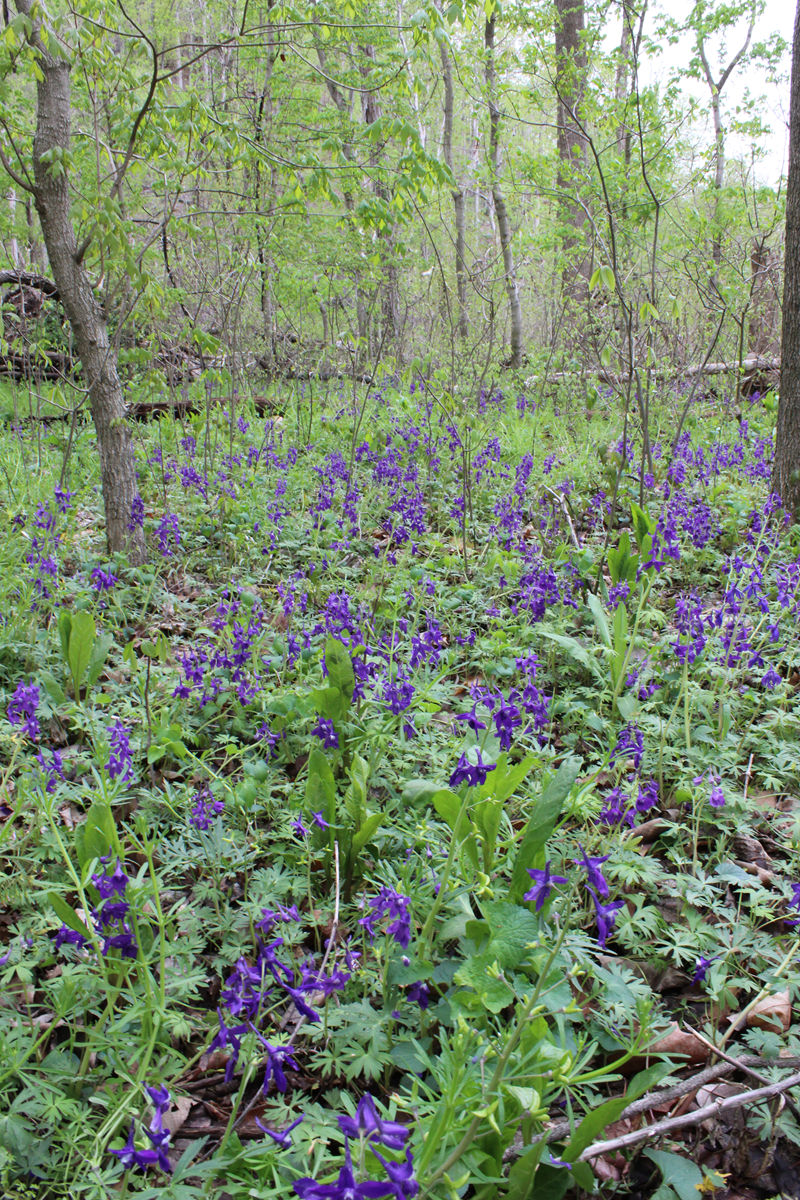
Approximately 60 percent of the forested land in the United States (excluding Interior Alaska) is privately owned. The National Woodland Owner Survey, the official survey of private forest owners in the United States, estimates that 272 million acres of forest land are held by 9.6 million family ownerships (families, individuals and trusts) owning one or more acres of forest. Of these ownerships, 38 percent control 10 or more acres of forested land. In Illinois, almost 83 percent of the 4.8 million acres of forest lands are privately owned.
It is estimated nationally that women currently serve as the primary decision maker for 20 to 24 percent of these family forests. And since more than 55 percent of family forest ownerships include a female co-owner, women also share a stake in how these woodlands are currently managed. Additionally, many more women will inherit management responsibilities within the coming years.
Women cite multiple reasons for owning woodlands: aesthetic benefits; conserving wildlife habitat; recreational opportunities such as hunting, trapping and wildlife watching; timber harvest as a source of income; and leaving a legacy for family or the local community. Reaching these diverse (and sometimes competing) goals successfully requires a plan. And with all the challenges facing forests these days, science-based forest management is needed. But knowing where to start can be daunting and making misinformed decisions can have long-term consequences.
The IL WOW network understands that is important to engage women in woodland management to help them fill in their self-described knowledge and confidence gaps. Many women landowners value technical assistance with stewardship activities such as prescribed burns, boundary identification, map reading and herbicide application.
Women-focused programs are important for several reasons. Historically conventional forestry and timber programs have been geared toward a male-dominated audience. Women often have different management objectives than men, and they may not have as much experience in navigating conservation-based estate planning. Additionally, the woodlands being managed today have a host of their own challenges.
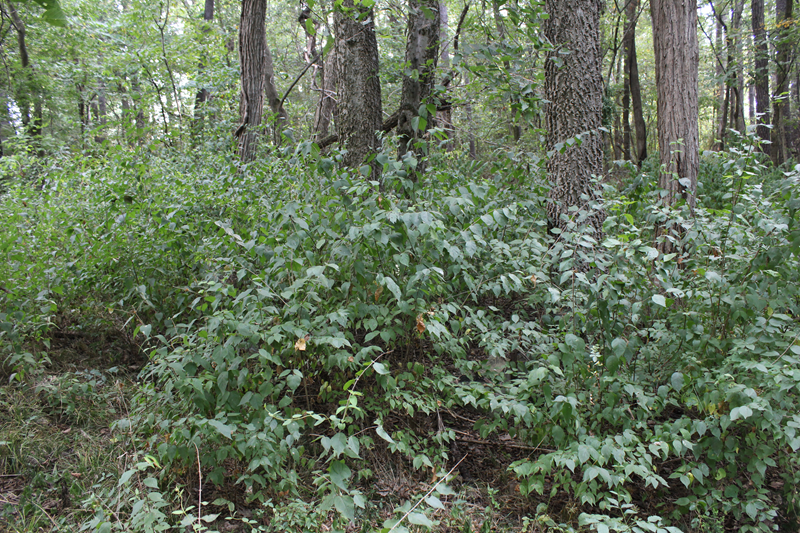
Forests and woodlands in Illinois, as in many Midwestern states, are facing a myriad of challenges. Climate change, threats from flooding and drought, competition from herbaceous and woody invasive plants, disease, and regenerative burden caused by over browsing deer and rabbits are all putting pressure on forests.
The Illinois Forest Health Highlights documents ongoing forest health issues including herbicide drift damage to oaks and other hardwood trees, the decline of spruces and pines and monitoring for Sudden Oak Death. The report also brings attention to new and emerging exotic pests and diseases such as the spotted lanternfly, elm zigzag sawfly, laurel wilt and box tree moth.
The IL WOW chapter hosted its official inaugural public gathering via a free lunchtime webinar hosted by Illinois Extension on August 5, 2026. That event featured guest speaker Dr. Emily Silver, a quantitative social scientist who studies family forest owners, who presented on why women landowners have unique needs and land management ideas as well as lessons learned from peer WOW networks.
The next talk in the series was given in September by Stacy Lindemann from the National Wild Turkey Federation. The discussion that day focused on an introduction to owning woodlands and covered:
The October talk was given by Taryn Bieri, IDNR District Forester, discussing some of the basic tips and tricks for identifying woody plants. That session focused on helping participants identify trees shrubs by their bark, branches and buds.
When I asked Bieri how she got involved with the IL WOW network she replied that when discussion began of starting an IL WOW chapter at last year’s Illinois Forestry Association meeting, she and Jenny Lesko, another district forester with IDNR, made sure to let the main organizers know that they wanted to be part of this awesome endeavor.
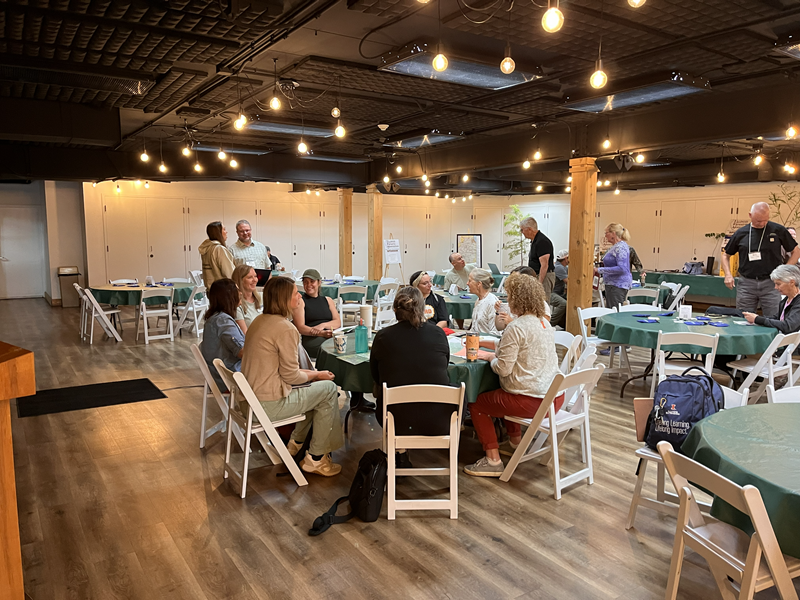
The excitement to participate is growing. The talks have been well attended so far and there is always room for new participants to join the network. The WOW partners hope to bring together women who own, inherit, steward, or simply care about woodlands, but the group is open to anyone who would like to join.
Since launching with the August Lunch & Learn this year, the IL WOW network has already grown to more than 200 people across Illinois. That number is sure to grow as more people learn about the programming being offered.
The November 2026 Lunch & Learn will be online on Wednesday, November 4 at noon for a panel discussion of experts who will address questions about IL WOW and field participant questions about their woodlands. You can register for the event at: https://go.illinois.edu/ILWOW_Nov2026
The December 2026 Lunch & Learn will take place on December 2 online featuring Jenny Lesko, Illinois DNR District Forester, who will discuss State and Federal Funding programs available to woodland owners. Register for the December Lunch & Learn at: https://go.illinois.edu/ILWOW_Dec2026
Have questions in the meantime or just want to connect with the network? According to Berg, currently the best way to stay informed about IL WOW events and activities is to subscribe to their email list at https://go.illinois.edu/ILWOWsubscribe. You can also email IllinoisWOW@illinois.edu or reach out directly to the program contacts:
Laura Kammin is a Natural Resources Specialist with the National Great Rivers Research and Education Center. She formerly held positions at Illinois-Indiana Sea Grant, University of Illinois Extension, Prairie Rivers Network and the Illinois Natural History Survey. She received her master’s degree in wildlife ecology from the University of Illinois, Urbana-Champaign.



Submit a question for the author