
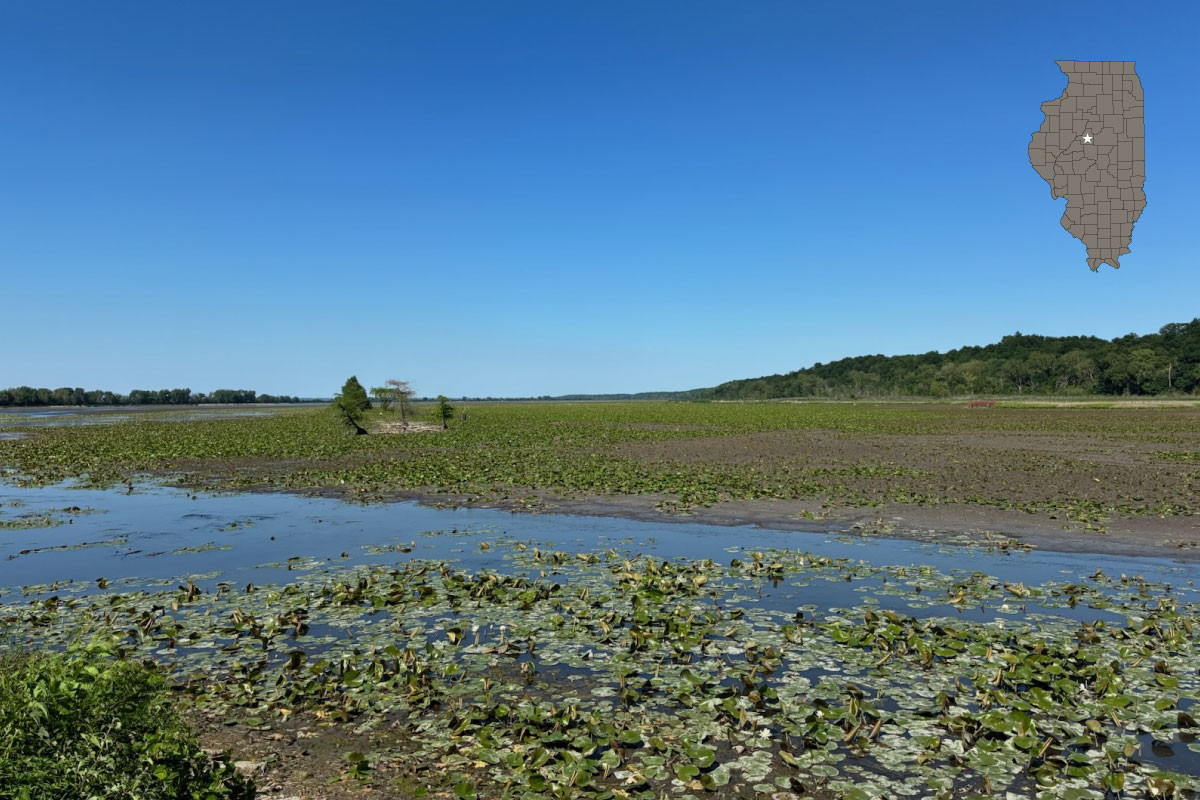
Looking for nests at Nachusa Grasslands in July. Photo by Heather Herakovich.

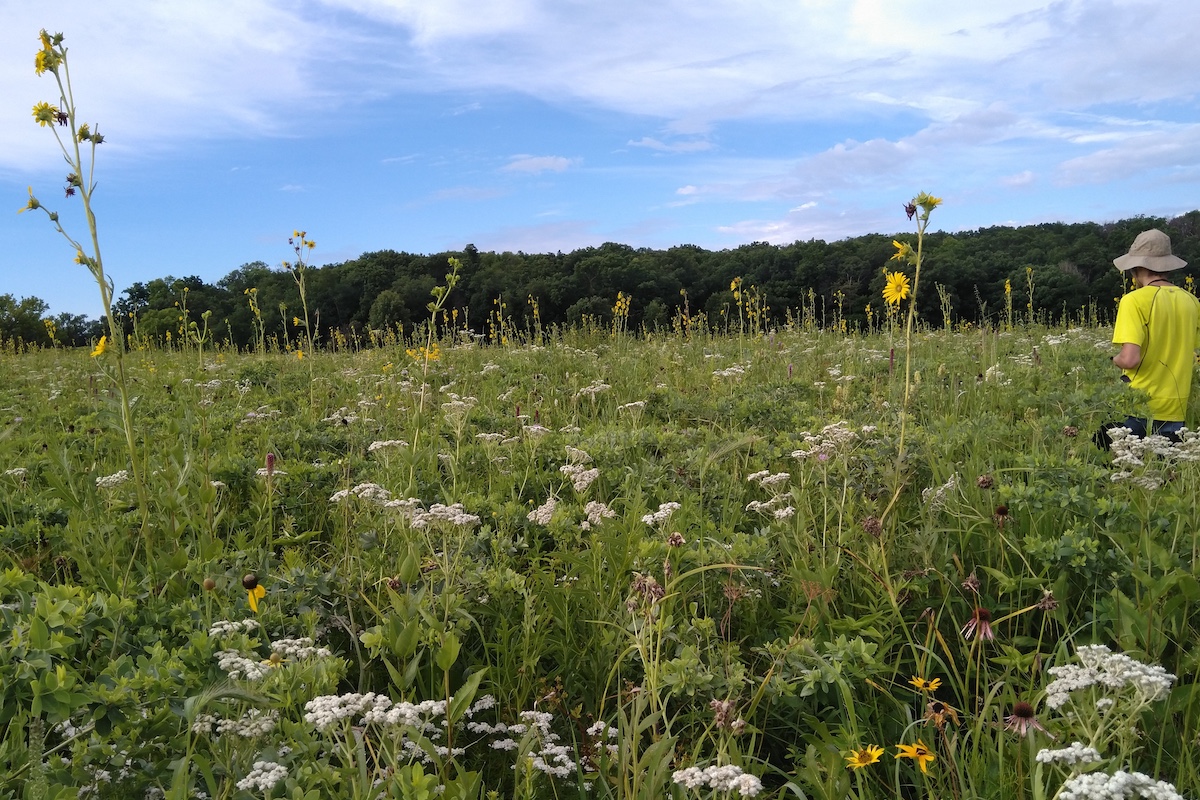
Looking for nests at Nachusa Grasslands in July. Photo by Heather Herakovich.
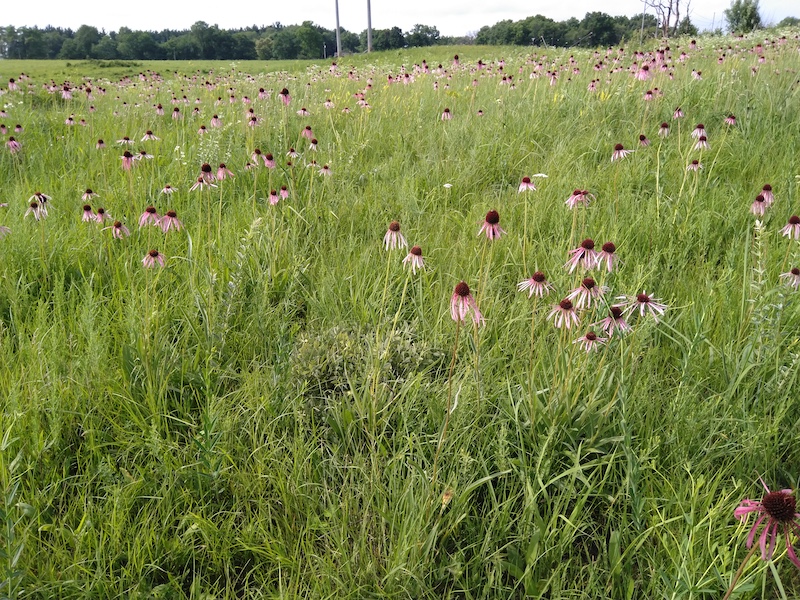
Grassland (prairie) birds are declining at a faster rate than most bird species, and a majority of this has been caused by habitat loss due in part to grassland conversion to agriculture (Douglas et al., 2025; Rosenberg et al., 2019). Illinois is the “Prairie State,” but only one hundredth of its original prairie remains (Samson and Knopf, 1994). Private- and public-land restoration and conservation have helped increase this percentage but require active management to maintain grassland plant species diversity and therefore habitat for these declining birds.
I have spent many early mornings scouring the prairie looking for bird nests on the ground and within the vegetation. Following strict protocol, I used the success of nests (chicks leaving the nest) to determine if certain land management decisions at The Nature Conservancy’s Nachusa Grasslands had an impact on these declining birds for my graduate research under Dr. Holly Jones in the Evidence-Based Restoration Lab at Northern Illinois University. A recent OutdoorIllinois Journal article summarized other bird and vegetation studies at Nachusa Grasslands.
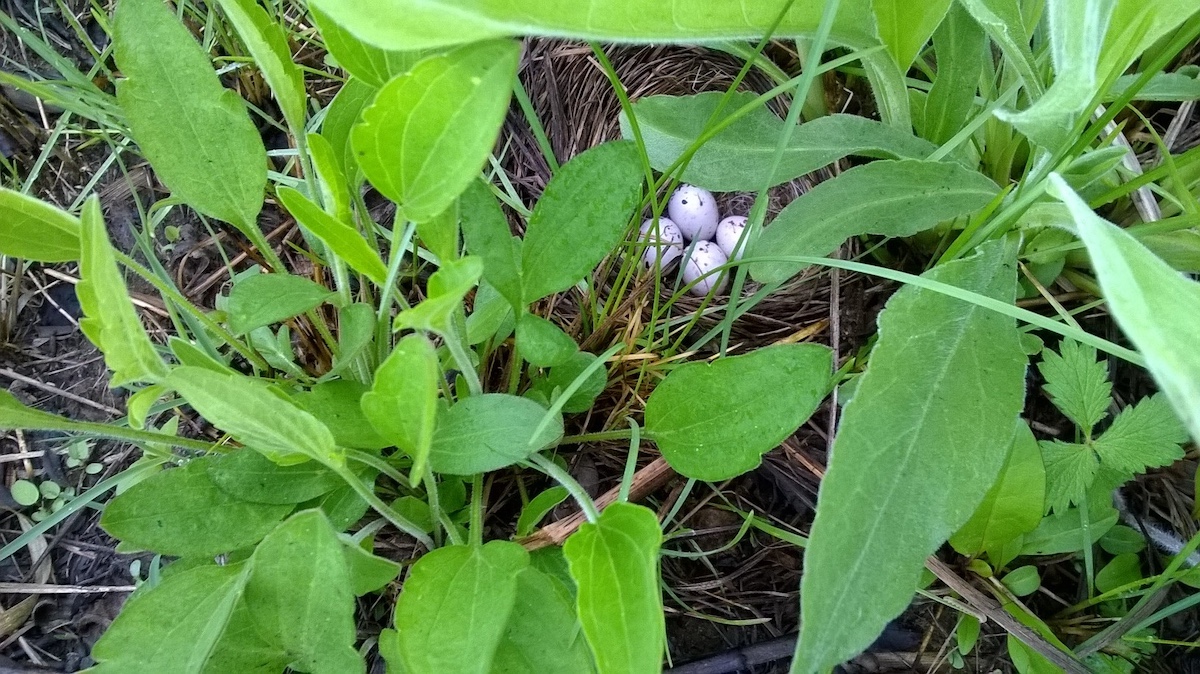
These nests are like the proverbially “needle in a haystack.” Typically, no larger than a doughnut these nests can be homes for several bird progeny and extremely difficult to find. Species range from the boisterous red-winged blackbird, which almost points you in the direction of their nest, to the very secretive grasshopper sparrow that remains low in the vegetation when being flushed from the nest.
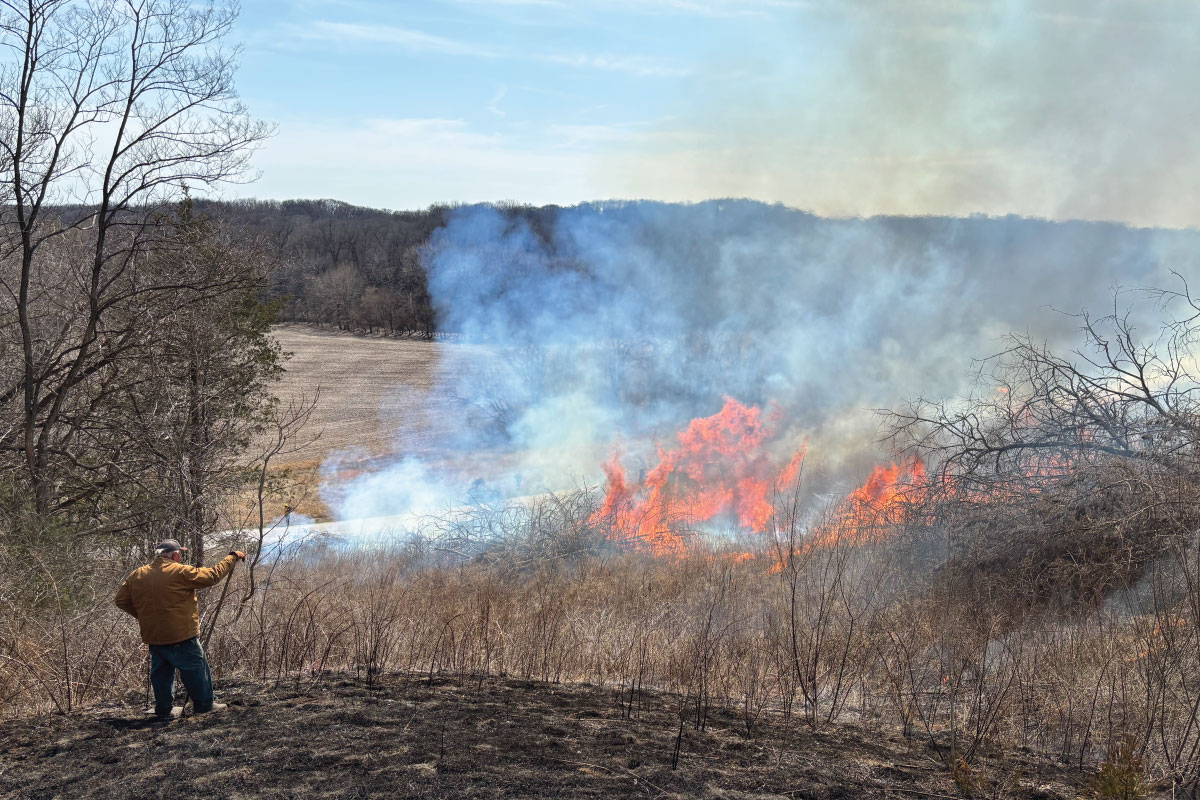
Impacts from management on grassland birds can be both direct and indirect, as well as both negative and positive. During the nesting season, nests are typically affected negatively by any active land management that directly removes or flattens vegetation. Examples include mowing, grazing, discing, haying, growing season prescribed fire, driving or walking. These activities increase the probability that an active nest will be crushed, dislodged or destroyed. In addition, the removal of vegetation eliminates nesting habitat decreasing the likelihood of future nesting attempts that season.
Indirect impacts on grassland bird nests arise from changes in vegetation that lead to either better or worse nesting outcomes without any manipulation of the nest itself. These impacts come from the above land management activities plus any other vegetation managment both within the nesting season and outside of it, including herbicide application and dormant season prescribed fire. Whether vegetation manipulation has a positive or negative indirect impact on grassland birds depends on the species as they have their own species-specific response to vegetation height and density (Fuhlendorf et al., 2009).
Although the management I was looking at—low intensity bison grazing and burn frequency—had a negligible direct and indirect impact on the overall nest success of all species, bison grazing did increase the nest success of field sparrows (Herakovich et al., 2021). It is rare for land to be managed for a certain grassland songbird. Therefore, the overall increase of field sparrows is not as much of a useful result as the overall nest success of a site.
For a large site, land management was not severely impacting these species. However, most privately owned lands are orders of magnitude smaller than the overall size of Nachusa Grasslands, at 4,000 acres.
As the size of the grassland field decreases, even the low intensity land management can have an impact. Positive indirect impacts on grassland bird nests on fields smaller than 40 acres, as described in a previous post by Dr. Justin Shew, can happen when management is done outside the nesting season and manipulates the vegetation just enough for a positive impact on a variety of species.
Removing direct impacts on bird nests means removing any land management done during nesting season that may crush or dislodge nests. In addition, you will eliminate any negative indirect impact, such as nest depredation and parasitism, because you are not manipulating the vegetation (Patten et al., 2006; Lyons et al., 2015).
Reducing or eliminating any management related disturbance during the Primary Nesting Season of your state is how the Farm Service Agency and Natural Resource Conservation Service (NRCS) can manage direct impacts to declining and economically significant bird species. Participants enrolled in Farm Bill programs in Illinois are used to halting some of their management during the period of April 15 to August 1 to minimize their impacts on nesting birds. Each state has a different Primary Nesting Season.
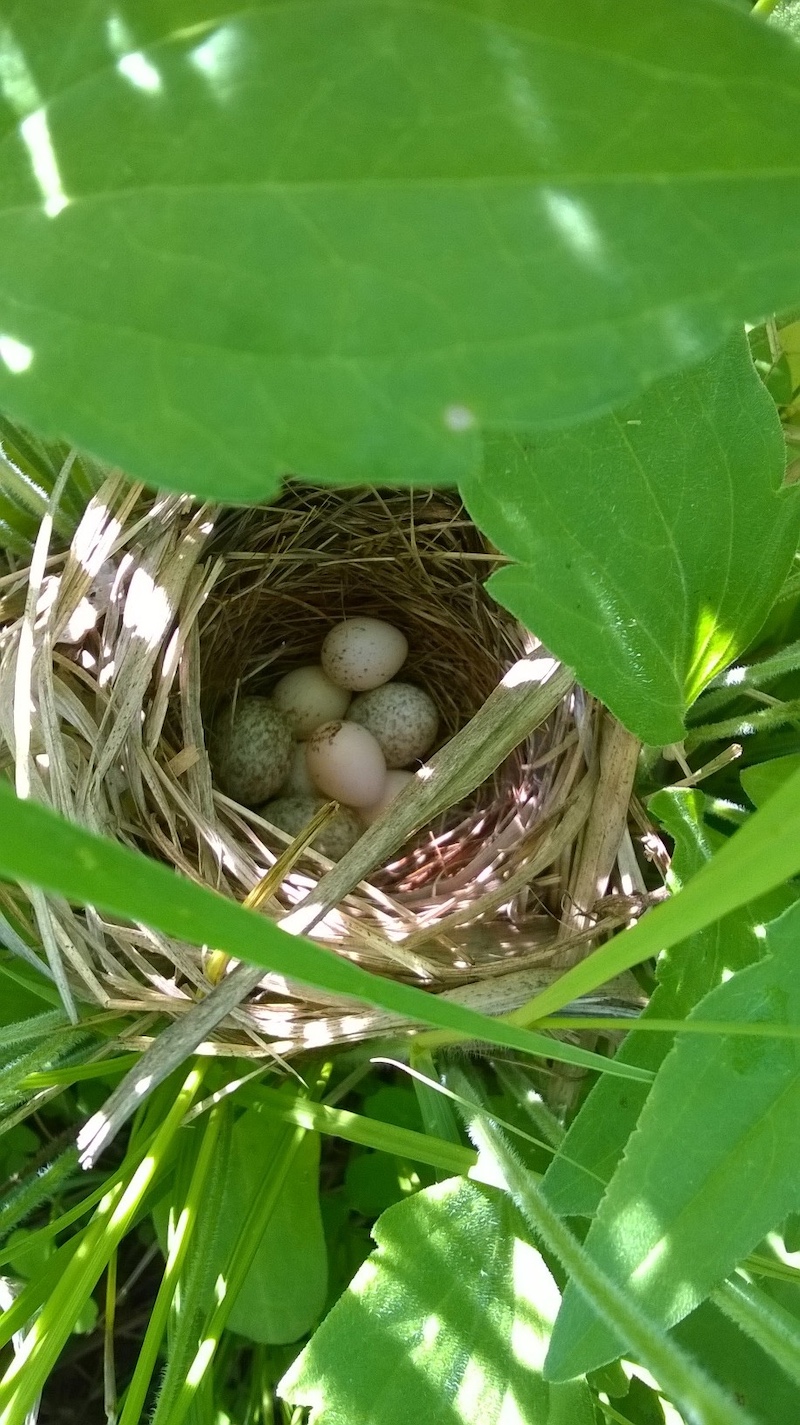
Primary Nesting Season does not mean you need to halt all activities, but it does mean that any management activity during this time needs to be approved by NRCS. As a Land Conservation Specialist with the National Great Rivers Research and Education Center, I make sure landowners understand that management during the Primary Nesting Season is still necessary for healthy habitat, but care is required to avoid nesting species. It is not always obvious that you are near or impacting a nest. The nest is small and camouflaged, and most birds take great care in not making a scene if someone is nearby. Each field, bird species composition, and their associated management needs are different, so it is important to talk to your local service agents before doing any work or deciding not to do the work.
Private landowners who have enrolled their farm ground into grassland have already helped the birds that rely on this habitat by increasing its overall abundance. Being good stewards of the land and good stewards of wildlife go hand in hand. To further increase the populations of this declining species, it is ideal to avoid potentially impacting their nests during land management. However, lack of management during this time frame may be worse, especially if you are dealing with invasive plants, such as sericea lespedeza.
Careful consideration of the benefits and drawbacks of land management during the Primary Nesting Season is needed before management occurs. With the help of the knowledgeable staff at your local USDA Service Center, the pros and cons of the action can be weighed and mitigated.
A Global Review Identifies Agriculture as the Main Threat to Declining Grassland Birds (Douglas et al., 2025)
Decline of the North American Avifauna (Rosenberg et al., 2019)
Prairie Conservation in North America (Samson and Knopf, 1994)
Impacts of a Recent Bison Reintroduction on Grassland Bird Nests and Potential Mechanisms for These Effects (Herakovich et al., 2021)
Pyric Herbivory: Rewilding Landscapes through the Recoupling of Fire and Grazing (Fuhlendorf et al., 2009)
Habitat Edge, Land Management, and Rates of Brood Parasitism in Tallgrass Prairie (Patten et al., 2006)
Predator Identity Influences the Effect of Habitat Management on Nest Predation (Lyons et al., 2015)
Dr. Heather Herakovich is a Land Conservation Specialist with the National Great Rivers Research and Education Center. She is also a Summer Interpreter at The Nature Conservancy's Nachusa Grasslands and on the Board of Directors for Friends of Nachusa Grasslands. She lives in DeKalb and enjoys hiking, learning new species and sharing that knowledge with others.



Prześlij pytanie do autora
Question: After my last retiree horse passed away a few years ago, I have slowly experimented with 5 of my pastures to promote a better habitat for birds, snakes, terps, and various small critters.
I don’t really know when to mow or if to mow. I volunteer with IDNR controlled burns and wonder if I should have my pastures burned, or not. My property is organic and I love seeing bobwhites & meadowlarks again! The dickcissels came last yr first time in ages! The prairie king snake is back, etc. We find SO many varied nests during winter when the foliage is off the tiny tree sapling “volunteers” amongst the pasture grasses. All kinds of nests. Nests on the sides of little bluestem stalks and orchard grass stalks. Nest on the ground under the grass. How do we keep enhancing this wonderful ecosystem while maintaining a healthy grassland pasture? (We remove serecia lespedeza by hand before blooming. It is under control) I am getting too much foxtail and johnson grass. It has come in slowly from township mowing the roadside rightofway. I dont know whether to mow the fields in March before nesting? Leave them be? I did not mow last year at all. We had a bad drought so i am glad I chose not to mow. How to we best manage our acreage to help the birds?