Pale purple coneflowers at Revis Hill Prairie Nature Preserve. Photo by Dan Moorehouse.

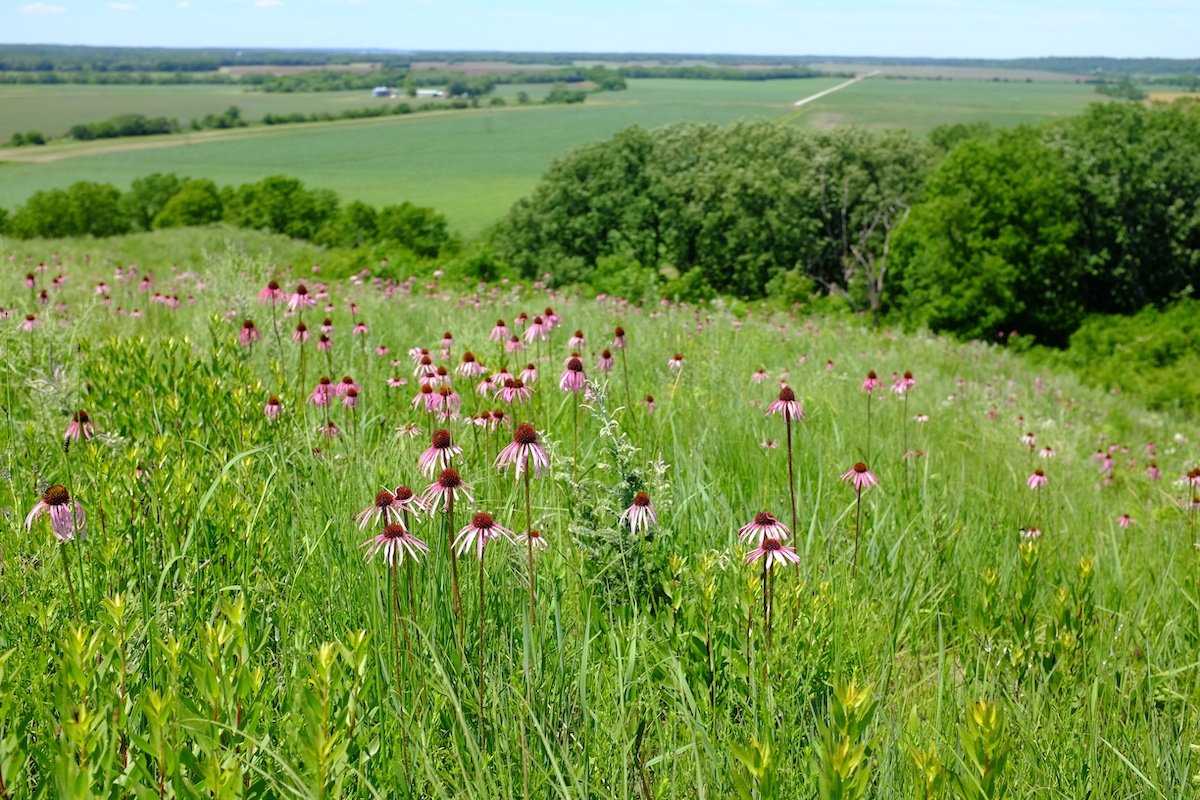
Pale purple coneflowers at Revis Hill Prairie Nature Preserve. Photo by Dan Moorehouse.
In the early 1800s more than 60 percent of Illinois—approximately 22 million acres—was covered in prairie. Large swaths of the iconic black-soil tallgrass prairie, with 12-foot-tall big bluestem and other grasses that became known as the ‘sea of grass,’ greeted early settlers. Today ecologists recognize a variety of prairies, based on soil conditions and other factors. There are wet prairies, hill prairies and sand prairies. And dolomite prairies and gravel prairies and shrub prairies. Within those communities often exist unique assemblages of plants, such as the cordgrass found in moist soils, bearberry and prickly pear cactus in sand prairies and running pine and lowbush blueberry in shrub prairies. Likewise, prairie ecosystems provide the life requisites for some of Illinois’ rarest animals, including the greater prairie-chicken, upland sandpiper, Henslow’s sparrow, ornate box turtle, Franklin’s ground squirrel, Illinois chorus frog…and once upon a time the American bison and white-tailed jackrabbit, both now extirpated from Illinois.
Each of those prairie ecosystems also contains unique invertebrates, and in particular, insects. Small and often silent, insects are frequently overlooked by casual visitors. Some visitors, however, are scientists with a passion for insects. Thanks to their expertise and dedication, in 2025 the Illinois Endangered and Threatened Species List was reviewed and revisions were approved for the inclusion of a number of prairie insects.
Dr. Philip Willink, a fisheries biologist with the Illinois Natural History Survey, has served on the Illinois Endangered Species Protection Board for many years, including a stint as Secretary. In August 2025 he was named Chairman.
“While the nine people serving on the ESPB at any one point in time have diverse natural resource backgrounds, their areas of expertise won’t necessarily cover all taxonomic units,” Willink explained. “The Board’s decisions are based on scientific evidence and making decisions on listing or delisting any species depends on input from members of an Endangered Species Technical Advisory Committee (ESTAC).”
ESTACs are composed of taxonomic experts in specific fields: plants, mammals, birds, amphibians and reptiles, fish, terrestrial invertebrates or aquatic invertebrates. Most ESTAC members are employed by a university, non-profit organization or a county, state or federal natural resource agency.
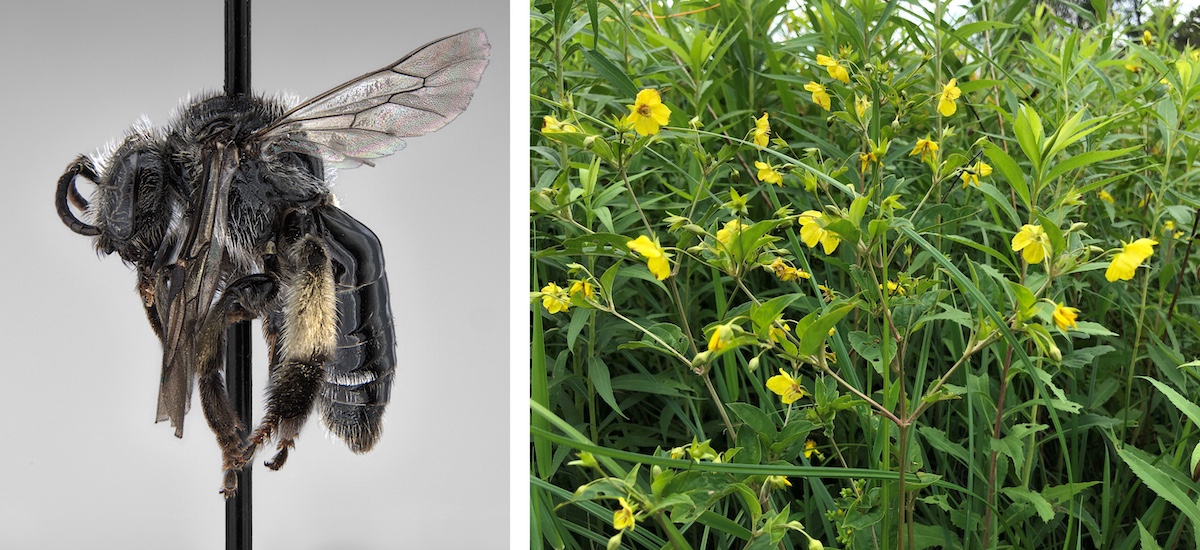
“A wealth of information exists for some taxonomic groups, such as Illinois birds and mammals which have been studied extensively for more than 200 years,” Willink explained. “Some groups of organisms, such as insects, have not been as well studied. The realization that bees and other pollinators are declining at an alarming rate has elevated the realization that key information on their abundance and distribution needs to be collected and collected now.”
An entomologist with more than 30 years of experience, Chris Dietrich serves as the Illinois State Entomologist, a position housed within the Illinois Natural History Survey (INHS). Dietrich’s research interest is insect systematics, evolution and biodiversity, and specifically studying a group of true bugs (Hemiptera) known commonly as leafhoppers.
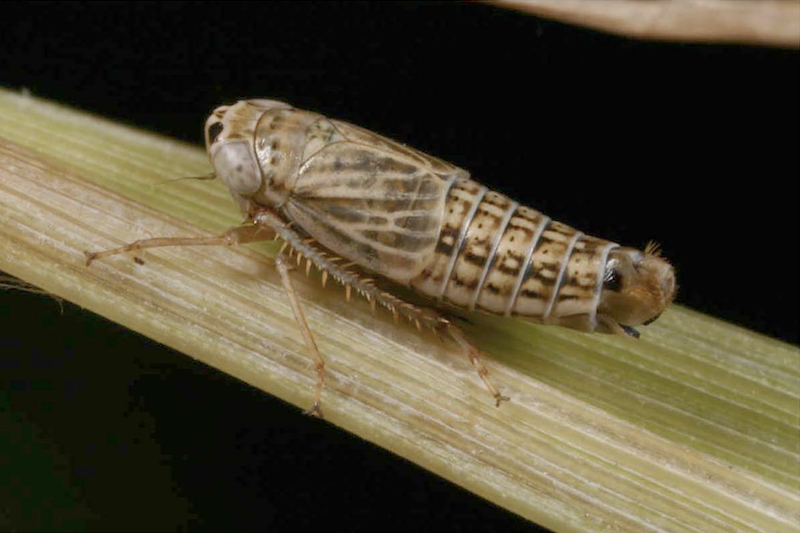
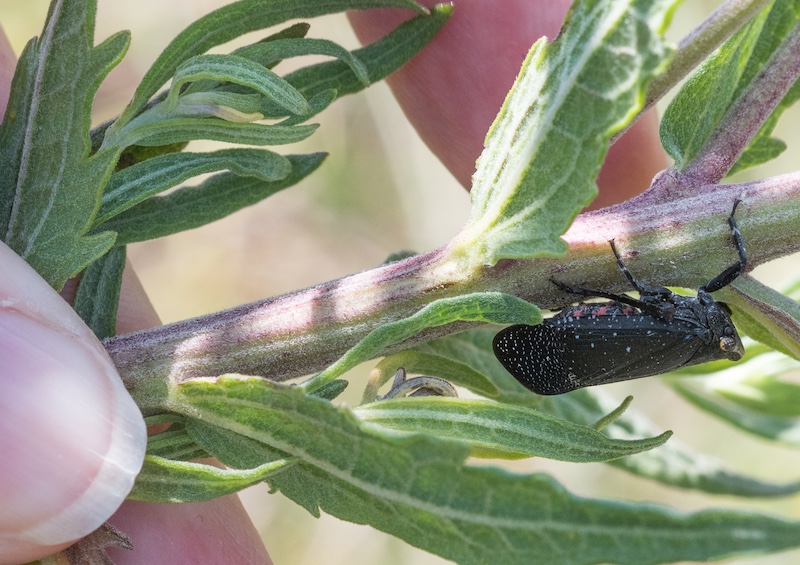
In the mid-1990s Dietrich started developing a database on the distribution and species composition of leafhoppers within Illinois’ prairie remnants, using the 1949 Illinois Natural History Survey publication “The Leafhoppers of Illinois” as the baseline for his work. That research, plus the INHS insect collection which contains more than 100 years of data on the locations and collection dates for insects collected within the state and decades of personal observations, allowed for the petition for the inclusion of additional leafhoppers as endangered or threatened species. Two leafhoppers were on the existing endangered and threatened list, with seven more species of leafhoppers and closely related planthoppers added in 2025, three as endangered and four as threatened species.
One species Dietrich has been tracking is Athysanella incongrua, known from a single Illinois hill prairie.
“I first found A. incongrua in 1998 and documented it for several subsequent years,” he recalled. “Then it seemingly disappeared for many years, only to be found again in 2025 by a student resurveying the insect community of that hill prairie. Unfortunately, we have never located enough individuals of this species to be able to document its preferred plant host.”
Another leafhopper recently listed is Athysanella balli, which is a specialist on Sporobolus spp., a group of warm season grasses, and specifically on those plants found on dolomite prairies in northeastern Illinois.
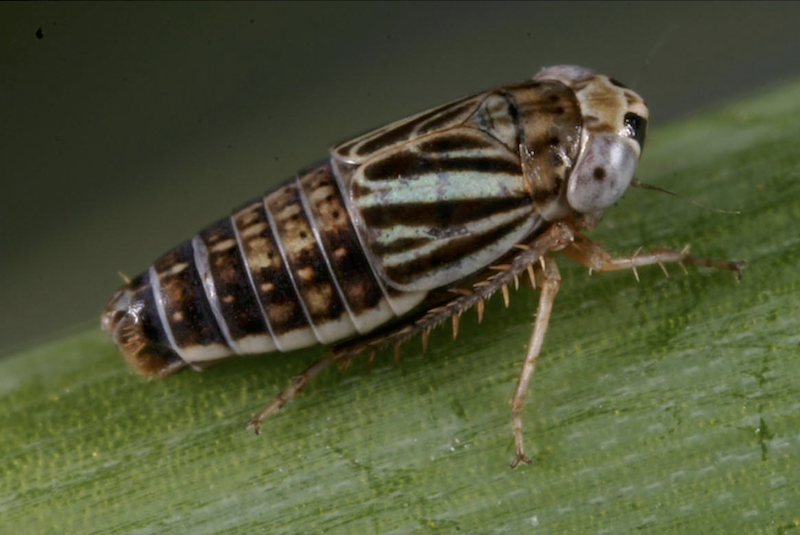
Leafhoppers typically lay their eggs in a specific type of grass during the summer months and then overwinter (diapause) as an egg, hatching in the spring once the grass starts to grow.
“Less than 0.01 percent of Illinois’ prairie habitat remains, he concluded. “As a result, many prairie species are vulnerable to extinction and that is exactly what we are seeing—insect species are limited to a few isolated sites with very low populations that just wink out over time. For some species, such as leafhoppers, butterflies, large moths and bees, we have a reasonably good idea about which species have disappeared. Unfortunately, other groups of prairie insects haven’t been well documented and insufficient historical information exists to assess their conservation status.”
Dietrich champions for the protection of functioning ecosystems.
“Preserved prairies provide habitats for endangered and threatened species as well as other prairie-dependent species,” he explained. “Our challenge now is to learn more about the abundance, distribution and habitat requirements of most of the species present so we can confidently assess their conservation status.”
Laura Rericha-Anchor can be found in the field as soon as the growing season starts, which may start as early as March 1 and run through the second to third week of October.
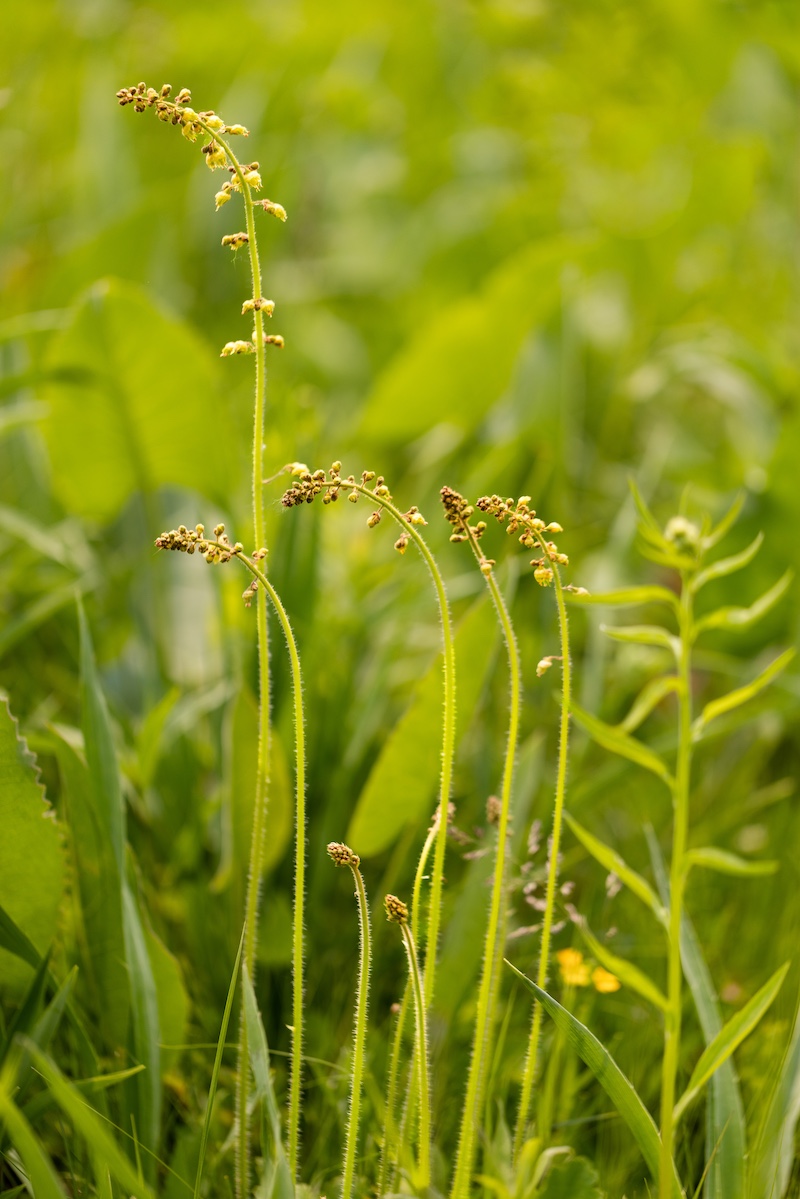
“It can be brutal and intense work, but it is critical that I arrive at a site when the pollen host for a particular bee comes into flower,” she said. “There is a narrow window of opportunity to locate bees as some of the host plants bloom for only a couple of weeks.”
That arduous field work is the first step in the process of deciding which species should be considered for listing as an Illinois endangered or threatened species.
“A lot of work takes place before a petition for designation can be prepared,” she explained. “Multiple meetings take place and a tremendous amount of collaboration occurs between colleagues before the information can be presented to the Illinois Endangered Species Protection Board.”
A Wildlife Biologist with the Cook County Forest Preserve District, Research Associate with the Conservation Research Institute she co-authored the Flora of the Chicago Region (2017). Rericha-Anchor’s interest in the tenuous relationships between bees, plants and habitats is evident in her soon-to-be released second book, Bees of the Southern Lake Michigan Region, which includes northern Illinois.
“Drought, heat waves and other changes related to climate change can alter the timing for when plants bloom, or can result in a plant failing to bloom,” she explained. “If a mismatch occurs in an already short time span when a plant typically blooms, emerging specialist bees may not find adequate pollen/nectar to feed on and then likely are unable to produce young.”
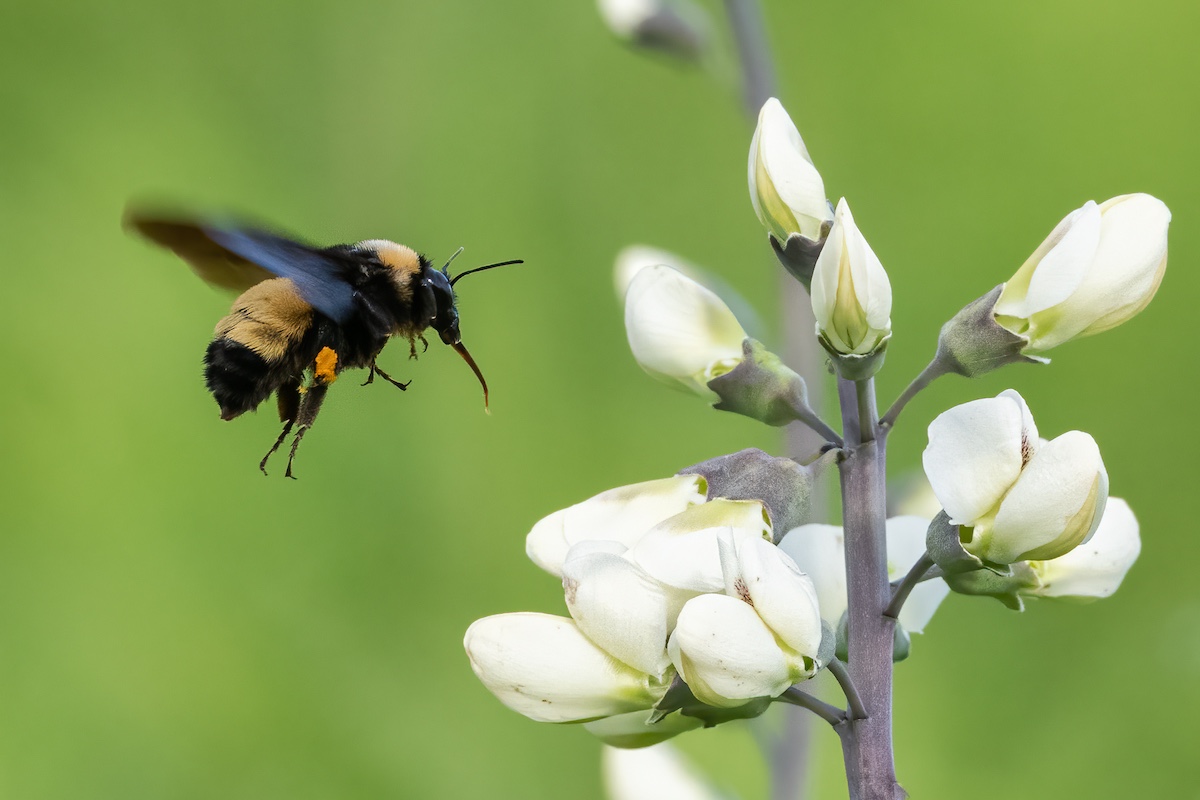
There are about 20 species of bumblebees in the southern Lake Michigan Region but only three or four are seen on a regular basis. Eight bees received endangered species status with the 2025 action, and another four species were listed as threatened. A ninth species (Bombus affinis) is federally endangered and automatically becomes state endangered in Illinois.
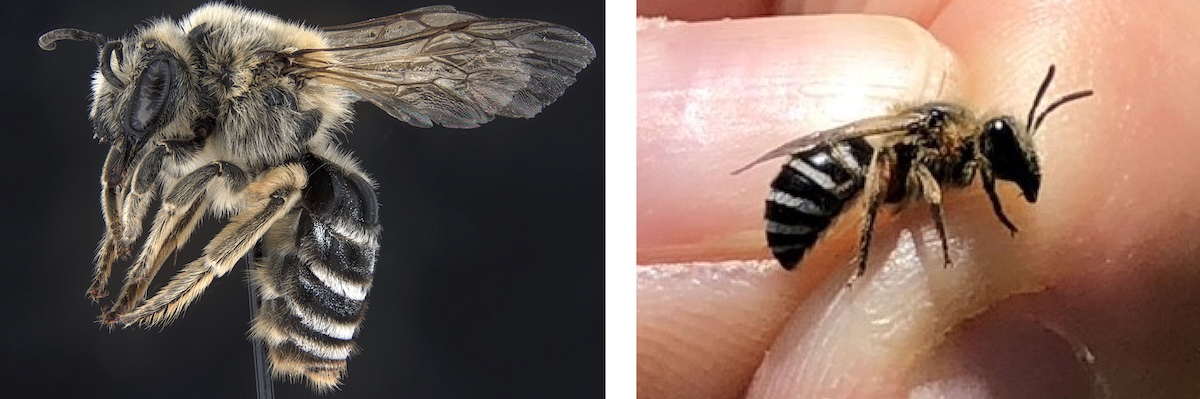
While Rericha-Anchor considers all bees quite amazing, one bee newly listed as state-endangered is of particular interest.
“Andrews’ cellophane bee (Colletes andrewsi) only takes pollen from prairie alumroot (H. richardsonii), which occurs in moist to dry prairie habitats that are of the highest quality,” she explained. “It primarily is a Great Plains species and Illinois is at the eastern edge of its range.”
“Many bee species are extremely rare and it makes understanding and conserving these species, and the areas they depend on, more difficult,” she said. “When we protect an area for one species a blanket effect occurs and other species in that habitat benefit.”
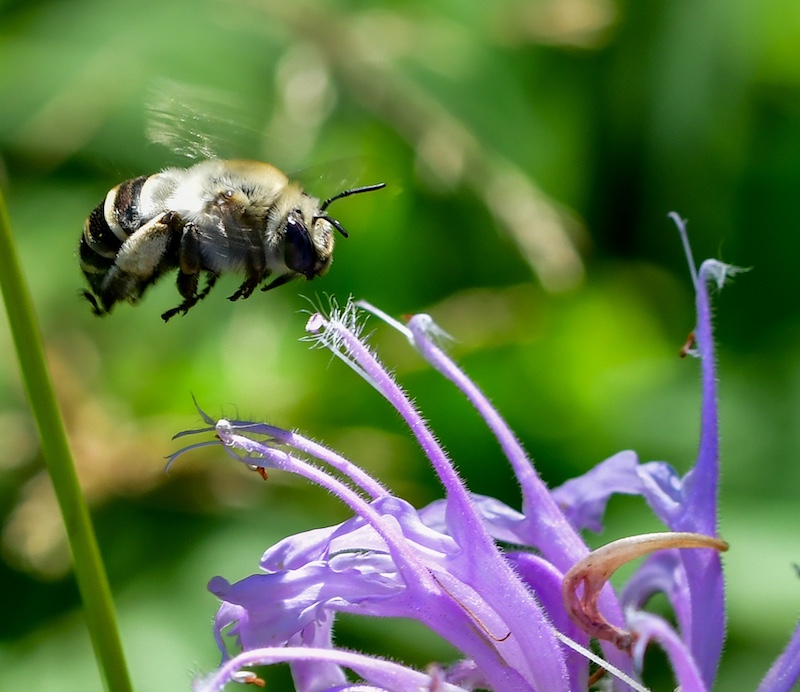
Since 2014 Angella Moorehouse has been photographing insects and their associated with flowering plants that she encounters during her visits to Illinois nature preserves and land and water reserves. With more than 200,000 photographs now cataloged, she has an extensive record of the insects seen, where they were located and what plant they were visiting.
A field representative for the Illinois Nature Preserve Commission for nearly 30 years, Moorehouse also records her collection data to iNaturalist and BugGuide so she, and others, can search the data records.
With a career focused on rare insects, for 5 years Moorehouse has served as the special lead for the Illinois-threatened regal fritillary. For 25 years she has conducted annual surveys for this species in sand prairies, tallgrass prairies, savannas, dunes and other wet sandy areas where the butterfly larvae eat violet (Viola spp.) leaves. She also serves as the chairperson for the Illinois Endangered Species Protection Board’s Terrestrial/Invertebrates Endangered Species Technical Advisory Committee.
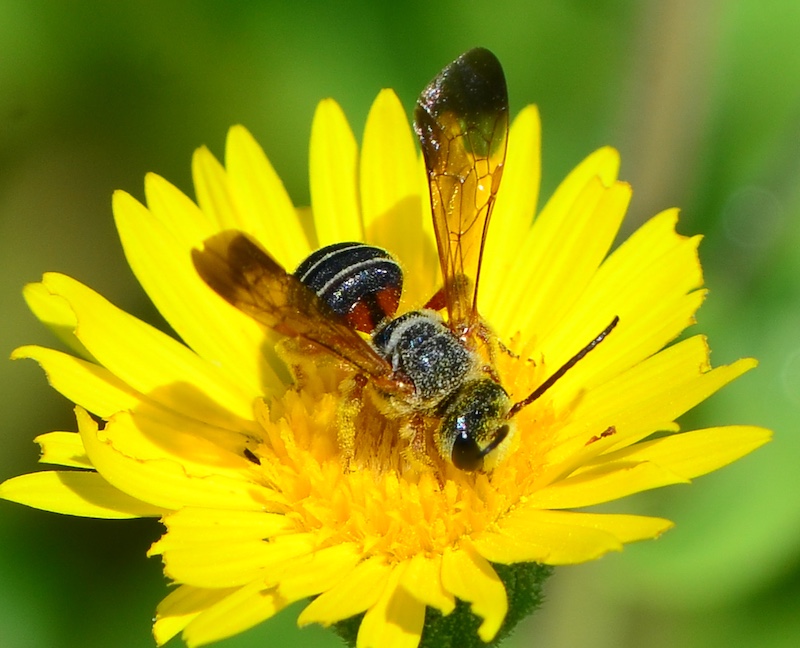
“I view the inventory of insects I have created as a tool that other researchers can utilize when assessing the abundance or rarity of insects,” Moorehouse explained.
Finding a rare bee is a landmark moment for an entomologist and Moorehouse has had two such experiences.
“I found a rare bee species in my backyard, which is a reconstructed prairie,” she noted. “I view this sighting as hopeful that this species can expand its range from prairie remnants to reconstructed sites.”
And then there was the remarkable day in southern Illinois when she spotted a bee that had not been seen in Illinois in 100 to 120 years.
“I found a cleptoparasitic bee which is a species that parasitizes the nest of another bee,” she recalled. “That host bee is a specialist on lowbush blueberry (Vaccinium angustifolium) bushes. It’s the only record of this bee in Illinois in recent history and the question remains—does this species exist and simply has eluded researchers or was this sighting a fluke experience of a single individual well outside its normal range? Time will tell.”
The work to document prairie insects continues to prepare for 2030 when the Illinois endangered and threatened species list will once again be updated.
“Many people are in the field each year documenting occurrences and insect-plant relationships,” Moorehouse said. “We’ve got some of the best people helping to move this science forward and do what we can before more species are lost. Our work to understand the relationships between prairie-dependent insects and their host plants entails a variety of issues, including habitat loss, the threat of invasive species and the impact of chemical overspray.”
Willink credits the scientific validity of the Illinois Endangered and Threatened Species List on the teams of research professionals who are conducting comprehensive research on Illinois plants and animals, then summarizing that research in a petition for presentation to the Board.
“Some researchers work under the searing sun on a hard-to-access hill prairie,” he noted. “Others wade through mosquito-laden wetlands to assess rare plants or spend hours with their necks craned upward watching and intently listening to birds in the forest overstory. Regardless of the situation, it is their passion and dedication that is helping us understand how to preserve the rarest of species native to the Prairie State.”
Kathy Andrews Wright jest emerytowaną redaktorką magazynu Outdoor Illinois w Departamencie Zasobów Naturalnych Illinois. Obecnie pełni funkcję redaktorki OutdoorIllinois Journal.



Prześlij pytanie do autora
Question: Great article!